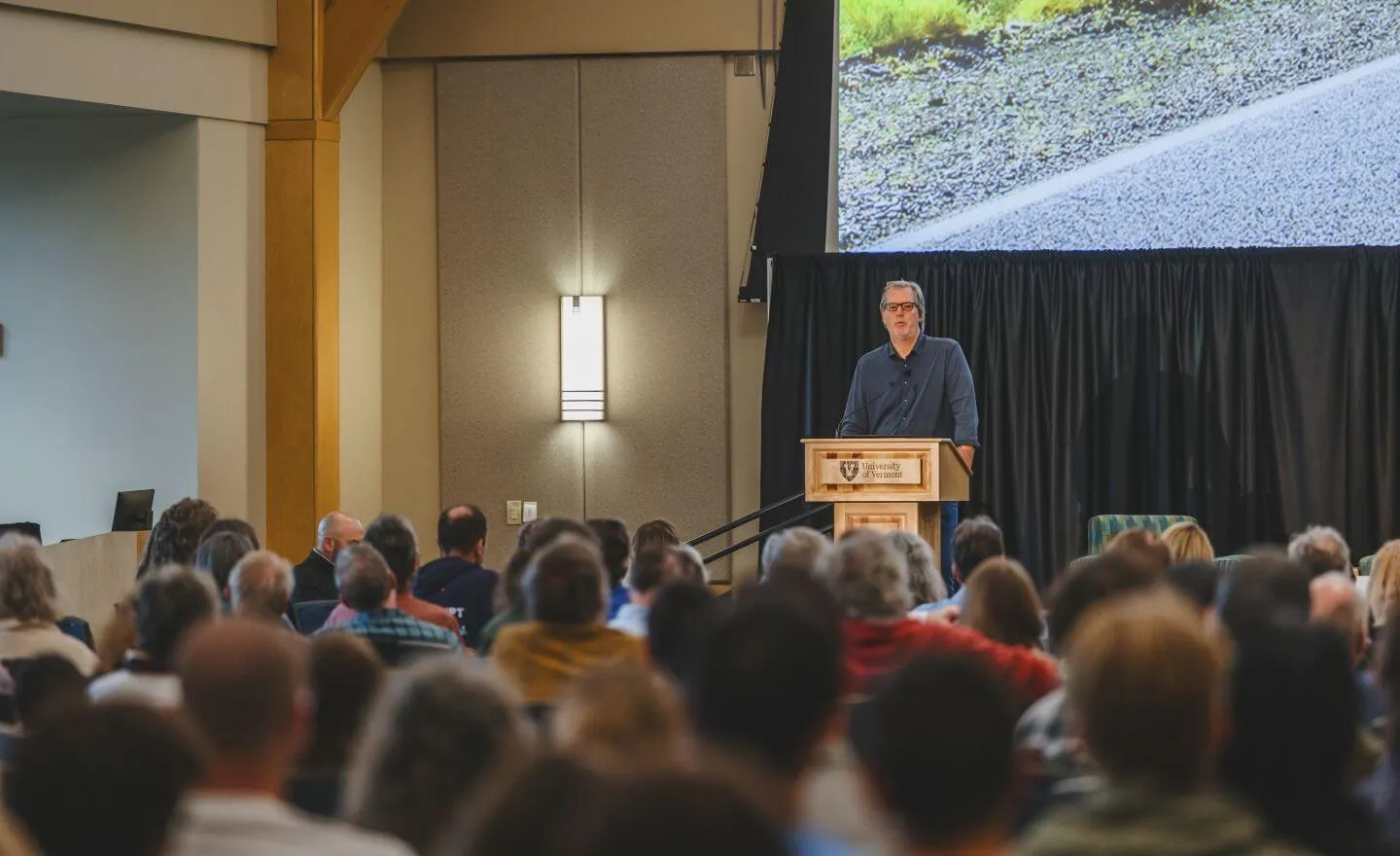
Nearly 500 people gathered for the Vermont Summit on September 29 at the Dudley H. Davis Center at UVM. The attendees included more than 250 undergraduate and graduate students along with business leaders, nonprofit organizers, state employees, elected officials, UVM faculty and staff, and community members from across Vermont. The free event, hosted by the Rubenstein School of Environment and Natural Resources with support from the Blittersdorf Family Foundation, focused on interconnected challenges in the areas of energy, health, and the economy and fostering meaningful dialogue across sectors and generations.
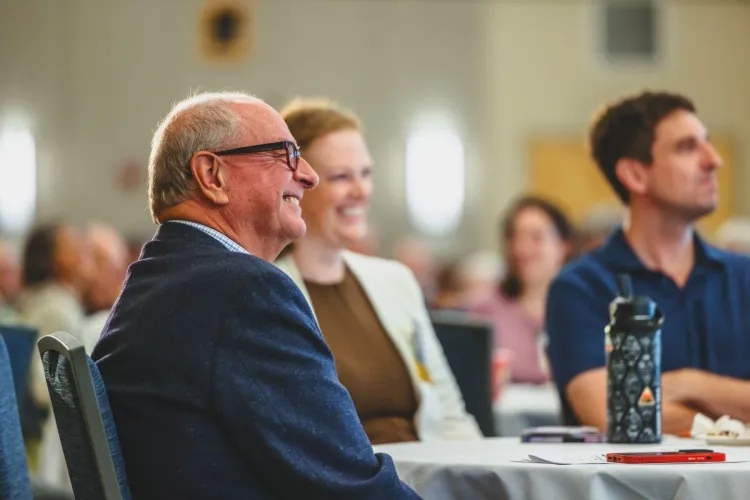
The summit featured a keynote address from Nate Hagens, PhD, a graduate alumnus of the Rubenstein School and the executive director of The Institute for the Study of Energy & Our Future. In his presentation, “Reality 101,” Hagens examined the complex global forces shaping society today, including climate change, economic instability, inequality, pollution, biodiversity loss, and resource constraints. Drawing on systems thinking and sustainability scholarship, he encouraged participants to consider how Vermont could be a pilot for approaching these challenges in a new way.
A recording of the event's opening remarks, given by Peter Newman, Dean of the Rubenstein School, and the keynote presentation by Dr. Hagens, is available on the Rubenstein School YouTube channel and featured below.
Throughout the remainder of the day, attendees engaged in discussions, and collaborative learning. The afternoon sessions included a documentary film screening, a panel discussion titled “Tackling Vermont’s Reality," and facilitated roundtable conversations led by the Wellbeing Economy Alliance of Vermont (WEAV).
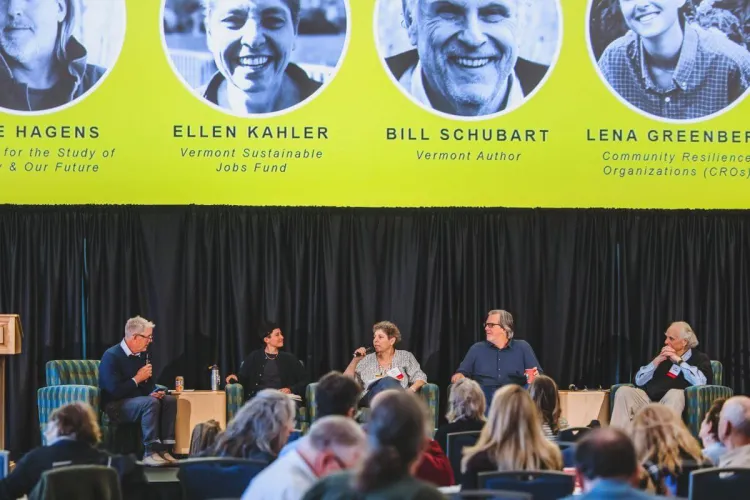
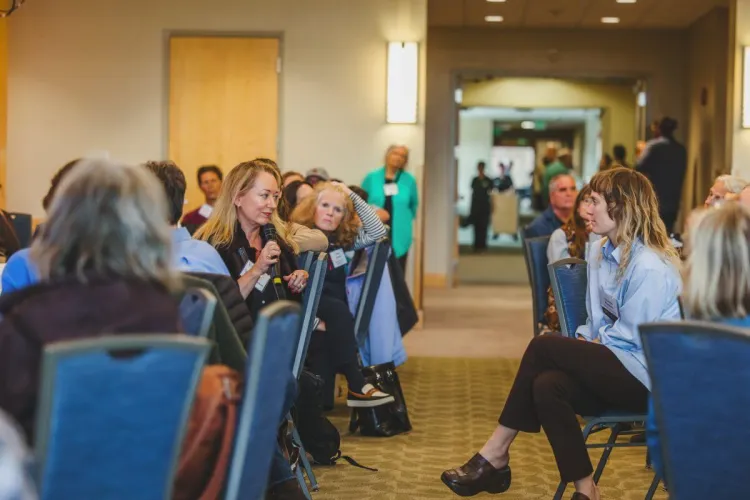
Participants reflected on the morning’s discussions and explored questions about the goals of Vermont’s energy, health, and economic systems. Together, they considered ways to measure progress, identify opportunities for system-level change, and envision a more sustainable and equitable future for the state.
Continuing the work
The actions and links below are excellent next steps for those interested in continuing to learn and connect on topics highlighted during the summit.
Connect Virtually
Join a newly-launched place-based online community for Vermonters seeking connection, shared understanding, and meaningful local engagement in a rapidly changing world. This Hylo group serves as a virtual gathering space to exchange ideas and resources, build relationships, organize in-person gatherings, and explore opportunities for local collaboration and community action. This group is still a work in progress with more to come.
Tune into Nate’s podcast
Listen to The Great Simplification podcast to stay up to date on Nate Hagen’s work.
Learn more about Ecological Economics at UVM
Expand your understanding of ecological economics (EE) through events, published research, and graduate programs in the Gund Institute for Environment and the Rubenstein School of Environment and Natural Resources at UVM.