He will be educating local children about the migratory birds and other wildlife that live in the nearby Creamer's Field Migratory Wildlife Refuge. It's a big leap for Carlos, and not just because of the distance--but because of the subject matter.
Despite not having much experience with birds, Carlos was thrilled to accept the position. "I've always wanted to move to Alaska; I've been there before and think it's fascinating," Carlos explained. "I know a lot about Vermont ecosystems and now I want to experience a new place, and I want to struggle. I want to learn more about the world and the places I'll be teaching in."
Carlos's willingness to struggle and work outside of his comfort zone resulted in him juggling multiple offers for post-grad employment. Alaska won out because of his previous interest in living there, but also because it offered him a chance to experience the thrill of discovering a new place, something he already knew he enjoyed and deeply valued.
Carlos was born in Maine but moved to Wyoming with his family as a teenager. "Living in Wyoming was amazing," Carlos said. "That's where I discovered my interest in the environment. I had that same feeling of discovery and excitement when I got into UVM, because Vermont was a new place and a new environment to explore and learn more about."
One might wonder why a student with such a strong passion for education chose to enroll in the Rubenstein School, rather than the College of Education and Social Services. Like many of his peers, Carlos's path to his chosen field of study was not linear.
"I came in as a data science major wanting to focus on the environment, but in a way that involved data and math," Carlos explained. He was an especially gifted math student in high school, taking more math courses than his school offered. He realized fairly quickly that data science wasn't a fit for him, and he switched into the Rubenstein School during his first week of freshman year.
"In the spring, I realized how much I enjoyed education," Carlos recalled. "I was about to start a job in environmental education at Vermont Fish and Wildlife. I felt like the Parks, Recreation, and Tourism (PRT) program was the closest I could get to both the environment and education."
The PRT program integrates foundational knowledge in the social sciences, humanities, and natural sciences with professional skills in planning, business operations, and managerial skills. The program's multi-faceted, people-forward approach appealed to Carlos. "I'm focused on how people interact with the environment, and how humans impact it," Carlos said. "PRT has this interaction with tourists, and many tourists are looking to learn. They're there for a reason. They want to know more."
That desire to foster curiosity and exploration is one of the reasons Carlos loves being an educator. He has experience with lots of different age groups, but, in line with his fearlessness and desire to struggle, middle schoolers are his favorite group of students to work with. "They're so much fun," Carlos said. "They have issues and challenges that are unique to their age group. They can be really silly, but they're not jaded or too cool for things. They're very curious."
All PRT students must complete an internship related to their studies in order to graduate. Carlos worked as summer camp director in Woodbury, Vermont to fulfill his requirement. "We provide kids with hunter education as well as fishing and wildlife skills, orienteering, and management, such as how to manage deer or fish populations," Carlos explained. The camp is affordable and serves many low-income rural families who may not have access to this kind of education or level of quality childcare.
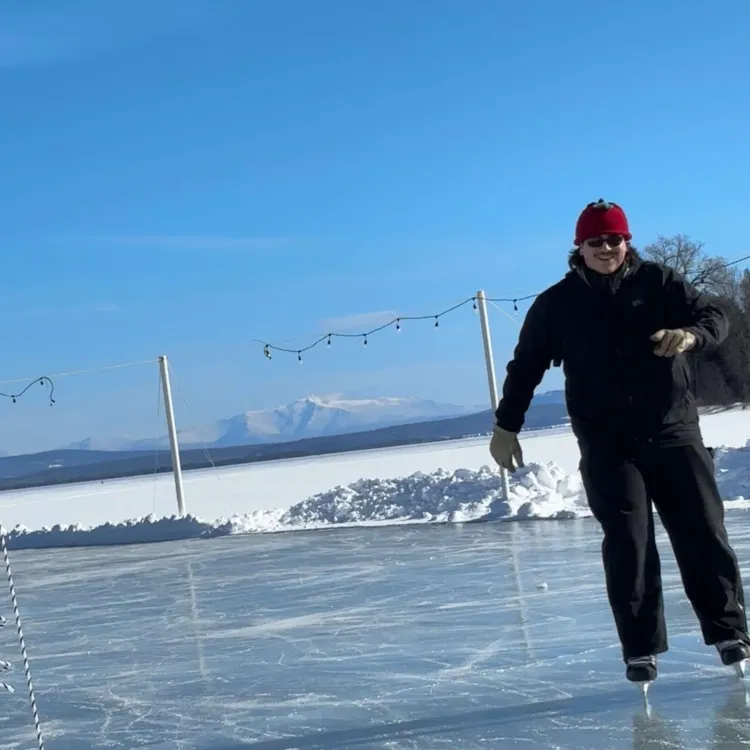
Carlos had never seen or fired a gun before he started working at camp. But he was willing to step out of his comfort zone in order to teach his campers skills they could use to thrive in their environments and future careers. "I went from having never held a gun to learning how to teach firearm safety, thanks so the Vermont hunter ed staff," Carlos said. "After passing the test, I was prepared to get kids hunter ed certified, which is so awesome and rewarding."
Several of Carlos's UVM courses gave him a strong foundation for a career in outdoor and environmental education. "The Foundations of Place-Based Ed course changed my perspective on how I should be framing lessons, especially moving forward in my career when I'm not in Vermont," Carlos said. "That course really taught me how to think about place when I'm educating others, which came up a lot in my interviews for post-grad jobs."
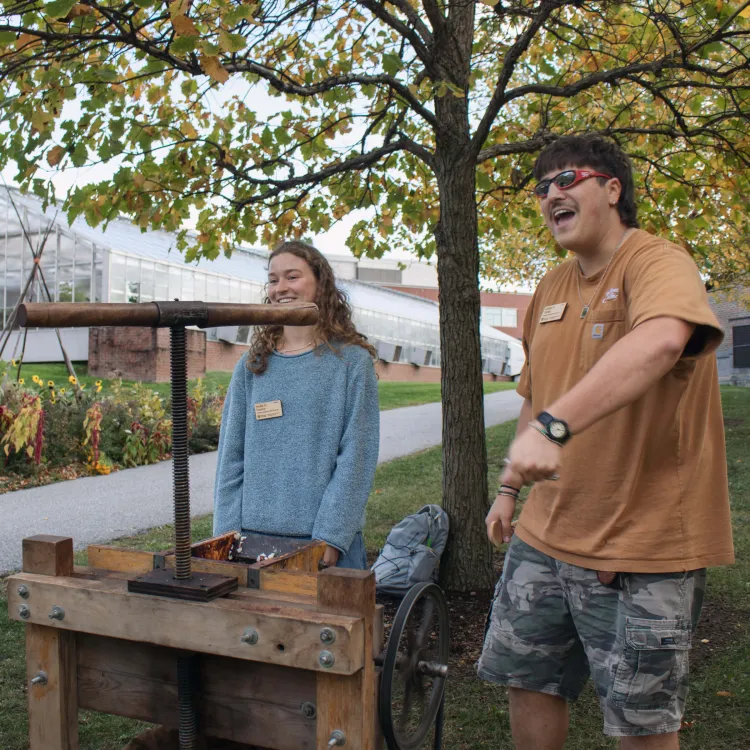
Carlos was diligent about seizing every opportunity to gain experience as an educator and to learn as much as he could about teaching practices. During his junior year, he spent many hours volunteering with a program Shelburne Farms was running at local high schools called Field and Forest. "It's a place-based class for high school students," Carlos explained. "I would go to their school and help them, and join them on field trips to Shelburne Farms a lot. It was really valuable to shadow the teachers and see how they taught."
There were also opportunities within the wider Rubenstein School community for Carlos to hone his skills. He spent time facilitating stream-side education for local students with Lake Champlain Sea Grant (LCSG). "Working with LCSG and learning a lot from Ashley Eaton and her team, seeing how they educate, and getting the chance to go on the research vessel and work on the boat were awesome opportunities," Carlos said. "Seeing the lake from that perspective and focusing specifically on stream-side education were great ways to prepare for what I'll be doing in Alaska."
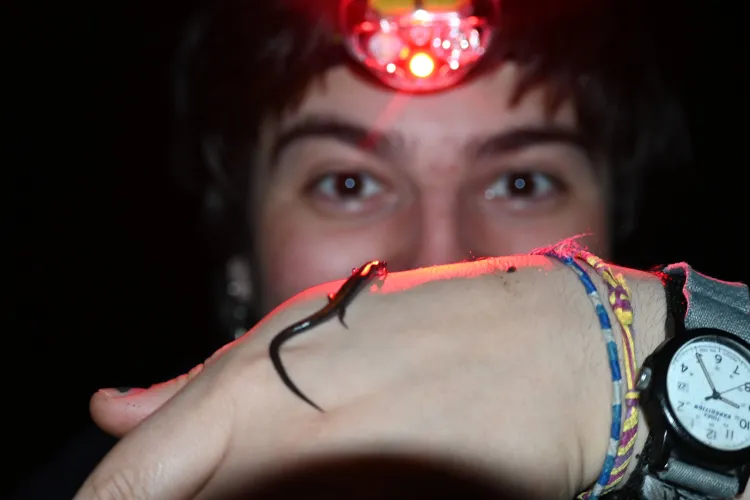
Carlos has some words of wisdom to share with job-seeking peers and younger Rubenstein School students who are considering looking for internships and jobs. "Something that I really hold dear to my heart and my educational experiences and my growth is intentionally making myself uncomfortable, and looking for situations and opportunities that might not be perfectly aligned with your imagined path or trajectory," Carlos said. "Maybe it's something you would have loved five years ago, or as a kid, but now you're concerned that it isn't close enough to what you studied. I think being uncomfortable is where you learn. Being uncomfortable is where you experience hardship and you see what the real world is like," Carlos said.
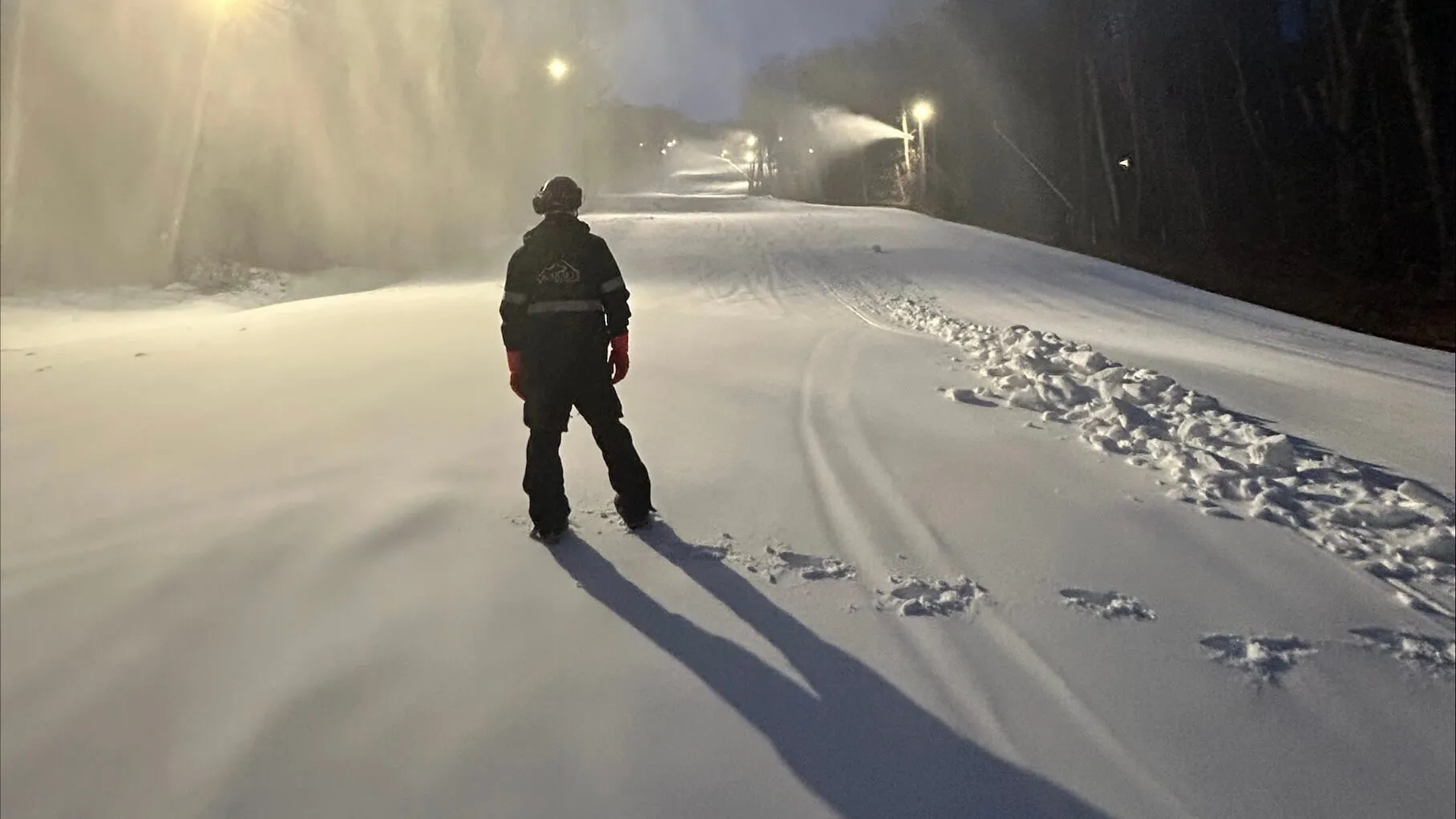
With so many new memories about to be made in Alaska, Carlos took a moment to reflect on his treasured UVM moments and experiences. "I remember the first time it snowed freshman year," he said. "Everybody freaked out. It wasn't even that much. It was just a few flakes flying in October or November and three hundred of us ran outside to where the bus stops on Redstone Campus. And we're just looking up and people are catching snowflakes on their tongue. 90% of these people had seen snow before," he laughed, "but it felt really special. It felt like 'whoa, things are changing.' Freshman year had started, everything in those first couple months happens so quickly. But then winter suddenly started and people thought, "oh my goodness, time is progressing. We're in this for real."
all photos courtesy of Carlos Canny or by UVM/Maddie Cross