200K FIRE Grant Awards
Our FIRE Grant Program offers $200,000 over two years for interdisciplinary cardiovascular and brain health research, funding pairs of complementary investigators.
200K FIRE Grant Awards
Our FIRE Grant Program offers $200,000 over two years for interdisciplinary cardiovascular and brain health research, funding pairs of complementary investigators.
Current FIRE Grant Award Recipients
Previous FIRE Grant Award Recipients
2024 FIRE Grant Award Recipient: Kathryn Morelli, PhD

Project Leader
Dr. Kathryn Morelli is an Assistant Professor in the Department of Neurological Sciences at the University of Vermont. She received her PhD in Biomedical Sciences and Engineering from the University of Maine, completing her dissertation at The Jackson Laboratory. Dr Morelli did her postdoctoral training at the University of California, San Diego. Her research focuses on understanding how RNA metabolism influences cellular function in neurodegenerative disorders. Dr. Morelli has developed cutting-edge RNA-targeting therapies and uses advanced techniques to study RNA-protein interactions in the brain. These techniques include 3D organoid models and high-throughput genomics.
Project Description
This project aims to develop new treatments for Frontotemporal Dementia (FTD). FTD is a debilitating brain disease that affects behavior, language, and cognitive functions. We are using advanced 3D models made from patients' stem cells that mimic parts of the brain and the blood-brain barrier. Our goal is to test a promising new therapy, called an RNA-targeting zinc finger protein. This protein targets and degrades harmful RNA molecules seen with FTD. We hope this therapy might halt the progression of FTD and someday provide an effective treatment.
2024 FIRE Grant Award Recipients: James Stafford, PhD, and Masayo Koide, PhD

Project Leaders
Dr. Masayo Koide's overall research goal is to understand the role of cerebral small vessel function as mechanism underlying physiological and pathophysiological cerebral blood flow (CBF) regulation, specifically CBF adaptations in response to phenomena such as neuronal activation (functional hyperemia) and blood pressure fluctuation (cerebral autoregulation).
Dr. James Stafford's lab studies how changes in gene expression (e.g., epigenetic changes) in the brain contribute to neurological and psychiatric disease with an emphasis on model systems that enable us to identify interventions that can prevent or reverse the epigenetic roots of disease.
Project Description
Dementia is a condition that affects memory, problem-solving, language, and behavior. Recent research indicates that over 80% of people with dementia have issues related to cerebral blood vessels, the brain's blood supply. Early blood vessel dysfunction disrupts blood flow to the brain, leading to damage of brain cells like neurons. Most studies on blood vessel function and cerebral blood flow have focused on the cortex. However, cognition involves the coordinated activity of multiple brain regions. This study investigates a mouse model of cerebral small vessel disease, the most common type of vascular dementia. We examine how changes in deep brain regions may serve as early indicators cognitive problems. We hope to identify vascular alterations that contribute to brain cell problems and ultimately cognitive decline. This can suggest opportunities for early treatments to reduce dementia.
Pilot Grant Award Winners
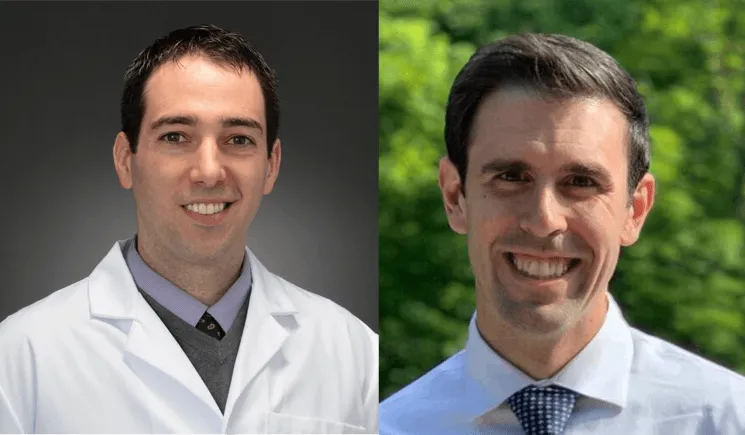
2023 Pilot Grant Award Recipients: Adam Sprouse-Blum, MD, PhD and Nicholas Klug, PhD
Pilot Project Leaders
Dr. Adam Sprouse-Blum is an Assistant Professor of Neurological Sciences, an attending physician, a PhD in Clinical & Translational Science, and a Pipeline Investigator in our Center. His current research centers on understanding migraine pathophysiology through both human and animal studies with the goal of translating these findings into clinical use.
Dr. Nicholas Klug is an Assistant Professor, Research Scholar Track, in the Department of Pharmacology. His current research centers on the role capillary pericytes and endothelial cells play in sensing and signaling within their respective tissues, such as the central nervous system or meninges to determine how ion channels and associated signaling pathways regulate cerebral blood flow, vascular inflammation, and overall tissue homeostasis.
Project Description
Migraine is a neurovascular disorder and the second leading cause of global disability. Unfortunately, the pathophysiology of migraine is incompletely understood, which has hampered our ability to effectively treat it. One of the largest unanswered questions that remains is, where does the head pain of migraine come from? Current theories suggest the head pain of migraine results from changes that occur in the dura mater. The dura is a protective layer that surrounds the brain and spinal cord. It contains a dense network of tiny blood vessels, called capillaries. This dense capillary network provides an enormous surface area in which head pain in migraine may be detected or transmitted, possibly through actions of pericytes – small cells that line capillaries and regulate their diameter and permeability. In this study, we will begin to examine the role dural capillaries may play in migraine pathophysiology utilizing modern imaging and electrophysiology techniques to measure capillary changes before and after application of CGRP or PACAP, molecules that have been implicated in migraine pathophysiology and that are targets for several novel migraine-specific medications.
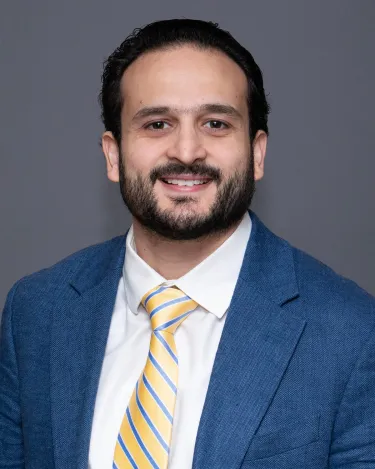
2022 Pilot Grant Award Recipient: Mansour Gergi, MD
Pilot Project Leaders
Dr. Mansour Gergi is an Assistant Professor in the Department of Medicine, Hematology/Oncology Division and is a Pipeline Investigator in our Center. His work focuses on balancing risks for bleeding and clot formation in cancer patients with cardiovascular disease.
Project Description
Project title: Evaluating Cardiovascular Care Delivery in Cancer Patients and Its Complications
There is a significant clinical knowledge gap on how to balance the risk of bleeding in people with cancer that are at risk for developing blood clots or thrombi. People with cardiovascular disease (CVD) are at greater risk for developing thrombi. The objective of my research is to study how cancer diagnoses affect care for patients under treatment for CVD with antithrombotics. Antithrombotics are drugs that reduce the formation of thrombi in the cardiovascular system. A comparison of antithrombotic therapy outcomes for CVD patients with and without Cancer will be conducted to determine if those with Cancer are at greater risk for bleeding and are treated appropriately to minimize this risk. The goal of this work is to identify cancer-specific risk factors for bleeding in this patient population. These factors will allow clinicians to better assess risks versus benefits when developing a treatment plan for patients with Cancer and CVD.
2022 Pilot Grant Award Recipient: Matthew Caporizzo, PhD

Pilot Project Leader
Dr. Matthew Caporizzo is an Assistant Professor in the Department of Molecular Physiology and Biophysics and is a former Research Project Leader in our Center. His work focuses on the molecular mechanisms that stiffen the failing heart and developing a program to test new therapies that reverse pathological stiffening of the heart.
Project Description
Project title: Mimicking Exercise Intolerance in Human Cardiac Slice Preparations
Exertional intolerance is a common early feature of heart disease caused by stiffening of the heart. Developing therapies to soften the failing heart has been hindered by a lack of experimental techniques capable of measuring exertional capacity in isolated cardiac tissue. The aim of this proposal is to develop the first-of-its-kind working cardiac tissue preparation to assess the role of stiffness on exertional tolerance. Having recently identified microtubule stabilization as a source of stiffness in the failing heart, the Caporizzo lab will leverage this methodology to determine the potential of microtubule-based therapies to improve cardiac performance in an established rat model of heart failure. To determine the translational potential of microtubule destabilization therapies to the clinic, the Caporizzo Lab will adapt their platform accordingly to assess exertional tolerance in cardiac biopsy samples. This will enable identification of patient pools most-likely to benefit from microtubule destabilization therapies. If successful, our work will provide new pharmaceutical targets and guidance for novel microtubule-based therapy trials currently under development for the treatment of heart disease.
2021 Pilot Grant Award Recipients: Yangguang Ou, PhD, and David Punihaole, PhD

Pilot Project Leaders
Drs. Yangguang Ou and David Punihaole are Assistant Professors in the Department of Chemistry and are respectively a Pipeline Investigator and Research Project Leader in our Center. Their research focused on the use of novel chemical imaging and rapid electrochemical sensing techniques to assess the pathophysiology of variant amyloid-β fibrils involved in Alzheimer’s Disease and Cerebral Amyloid Angiopathy and is summarized below:
Project Description
Abnormal function of brain blood vessels and loss of function of brain cells contribute to cognitive decline in older people. These abnormalities are present in two related brain diseases, Alzheimer’s disease and cerebral amyloid angiopathy. In these disorders, fibrils made up of amyloid-b (Ab) peptides are deposited in the brain. These fibrils damage the cells and blood vessels in the brain. They may cause these diseases and contribute to their severity. This research has two aims. We will develop bioanalytical methods to 1) monitor how Ab fibrils interact with cell membranes in brain tissue and brain blood vessels, and 2) measure molecules released from these interactions that contribute to cell death. We will develop novel chemical imaging and rapid electrochemical sensing techniques to do this. We hope to understand the effects of Ab fibrils on the progression and outcome of Alzheimer’s disease and cerebral amyloid angiopathy. Our long-term goal is to better understand causes of Alzheimer’s disease and cerebral amyloid angiopathy. We hope that this will guide the development of medications for prevention and treatment of these conditions.

SEED Grants: Seeding the future of research
VCCBH Seed Grants provide funding to determine the feasibility of a concept, support early-stage project development, gather additional preliminary evidence for applications with promising but non-fundable scores, expand into new areas of research or procure equipment for an ongoing project.
SEED Grant Award Recipients
Project Leader: Emmett E. Whitaker III, M.D.
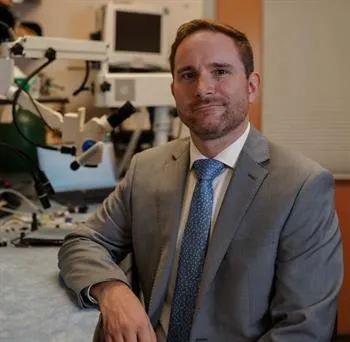
Dr. Emmett Whitaker, FAAP is a fellowship-trained pediatric anesthesiologist and clinician-scientist at John Hopkins University. His research centers on Anesthetic care for infants, anesthetic care for neonates and infant spinal anesthesia, blood pressure, blood flow, organ perfusion.
Project Description
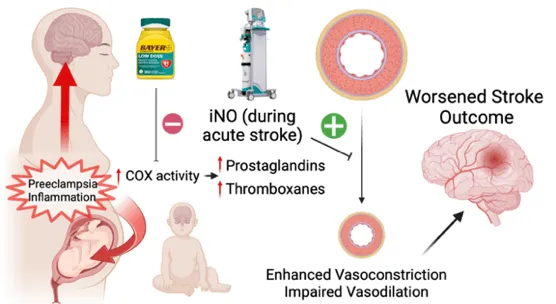
Vascular Determinants of Ischemic Stroke Severity in Preeclamptic Mothers and their Offspring
Postpartum women with preeclampsia and their offspring are at 4-fold increased risk for ischemic stroke - a source of devastating morbidity and mortality. An understanding of how features of preeclampsia lead to poor stroke outcomes in postpartum women and their offspring is urgently needed to effectively treat ischemic stroke in these patients. We propose a combination of complementary in vitro and in vivo approaches to investigate how cerebrovascular dysfunction in preeclampsia affects stroke severity.
Project Figure
Text description of image: A schematic shows that clonal hematopoiesis is linked to myelodysplasia via expansion of mutated stem and progenitor cells, which is enhanced by inflammation. At the same time, clonal hematopoiesis results in inflammation which is associated with cardiovascular disease as myocardial infarction, heart failure, or atherosclerosis. In this way, inflammation is shown pictorially to be both linked to expansion of mutated cell clones, which leads to myelodysplasia, and the pathogenesis of heart disease.