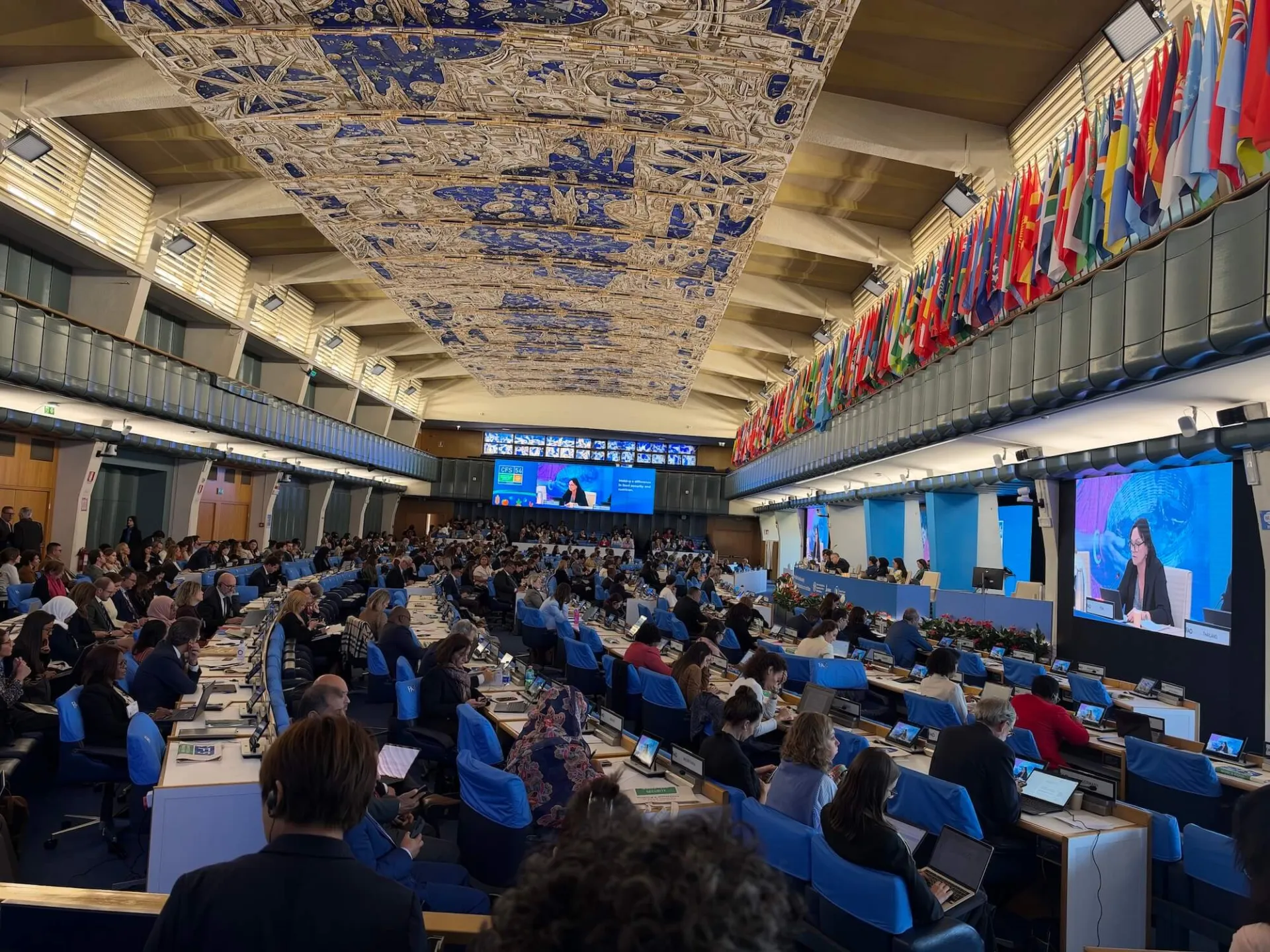
This past October, staff members and affiliates of the UVM Institute for Agroecology gathered for the Civil Society and Indigenous Peoples’ Mechanism (CSIPM) Forum and 54th Plenary Session of the United Nations Committee on World Food Security (CFS).
Held annually just before the CFS Plenary, the two-day, in-person CSIPM Forum invites all interested civil society and Indigenous Peoples’ organizations to evaluate past work, identify key challenges, and set next steps. It’s an opportunity for participants to shape global food and agricultural policies through the lens of the right to food and food sovereignty. The positions they refine are subsequently presented at the Plenary, which convenes national delegates, UN agencies, philanthropic foundations, researchers, and private sector representatives.
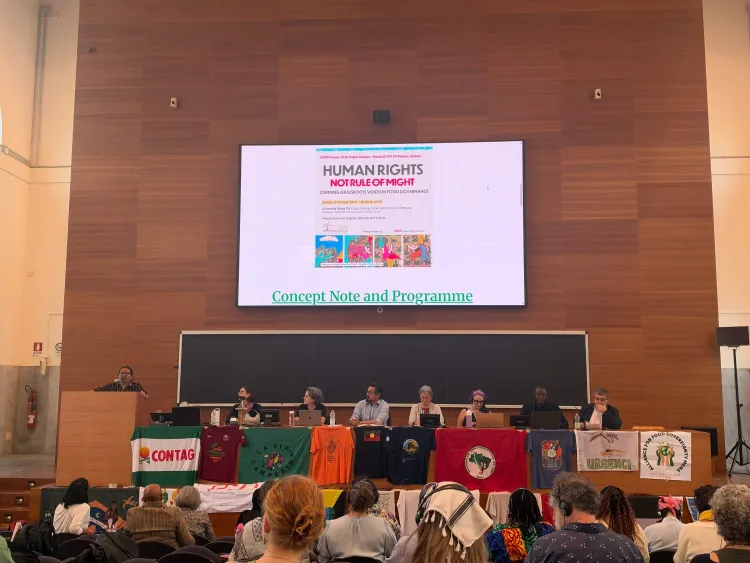
This year, CSIPM messaging pushed for rights-based, people-centered food policy over corporate-driven approaches. Participants voiced concern that several governments, notably Paraguay, Argentina, Morocco, and the United States, are challenging the recognition of human rights and gender equality, despite long-standing CFS agreements on both.
“Pushback on these agreements is very alarming and violates the core purpose of CFS,” says Molly Anderson, an IFA Affiliate researcher, advocate, and a long-time attendee of the CFS. “It is an effort to undermine the ability of CFS to continue developing progressive policy recommendations that would encourage global food security and from the CSIPM’s perspective, it is essential that the next Director General of FAO explicitly support human rights."
Major revisions were suggested for CFS’ Policy Recommendations on Building Resilient Food Systems, a text that had not yet reached agreement because of contested points over “equity”, which the US rejects, and time pressure. CSIPM participants called for reintroducing concepts like Equitable Transformative Resilience, central to the 2025 report from the UN High Level Panel of Experts (HLPE). Other priorities included:
addressing colonial legacies and the weaponization of food
rejecting the conflation of Indigenous Peoples with local communities
advancing agroecology as a framework instead of the ambiguous use of ‘sustainable intensification’
strengthening social and solidarity economies
protecting farmers’ seed-saving from international trade rules
meaningful participation of rightsholders in decision-making
“At a time when powerful actors are working to erode hard-won gains in multilateral spaces, this year's discussions once again highlighted the essential role of the CSIPM in keeping the priorities and perspectives of rights-holders at the heart of debates on the future of food and agriculture,” reflects Colin Anderson, IFA Co-Director and member of the drafting team for the HLPE Report on Building Resilient Food Systems.
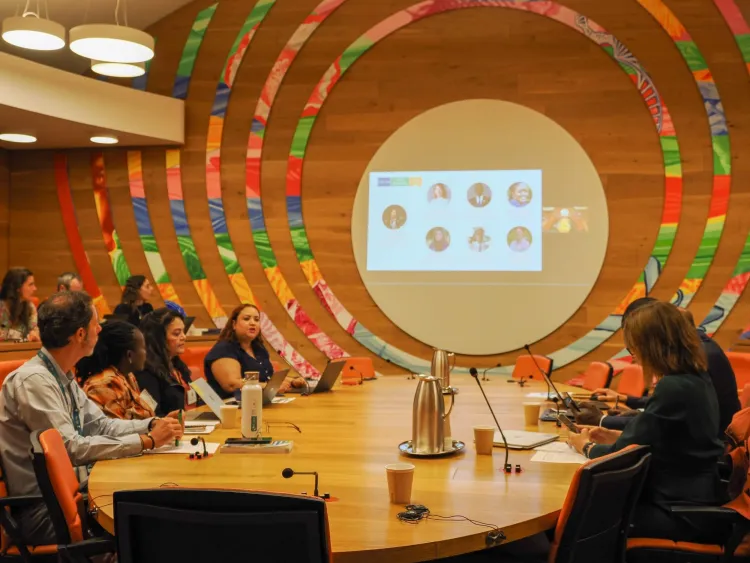
Beyond the formal sessions, CFS, CSIPM, the Food and Agriculture Organization (FAO), the UNDP Food and Power Initiative, the Conscious Food Systems Alliance, and others hosted side events. Schola Campesina, an Italy-based international agroecology school, and its Grassroots Innovations Assembly for Agroecology (GIAA) led an informal conversation on digital sovereignty and on reshaping the mainstream narrative on innovation.
As the week closed, attention turned to the CFS’s longer-term direction through 2030, including calls for equitable governance of digital innovation and artificial intelligence. Even more prominent was CSIPM’s insistence that governments implement existing policy documents rather than produce new outcomes every year.
For attendees, the week was a reminder of who holds power in food systems and who decides. For communities around the world, policy spaces like the CFS Plenary are contested ground, where rights-based language must be defended relentlessly.
"When the nations of the world gather to address food security, it’s important to acknowledge that the need for food policy has been recognized for a long time and it is clear that food choices that benefit both people and the planet cannot be shaped solely by individual preferences and market transactions,” argues Nessa Richman, executive director of the Rhode Island Food Policy Council and author of Food Policy Councils: Building Civic Engagement and Community Well-Being. “The combined effects of these private decisions lead to systemic impacts that have public repercussions and, in many cases, result in outcomes that undermine basic human rights. As economic inequalities and the effects of climate change continue to escalate, it has become critically urgent to use policy to guarantee the right to food and drive a large-scale transition toward agroecological practices."