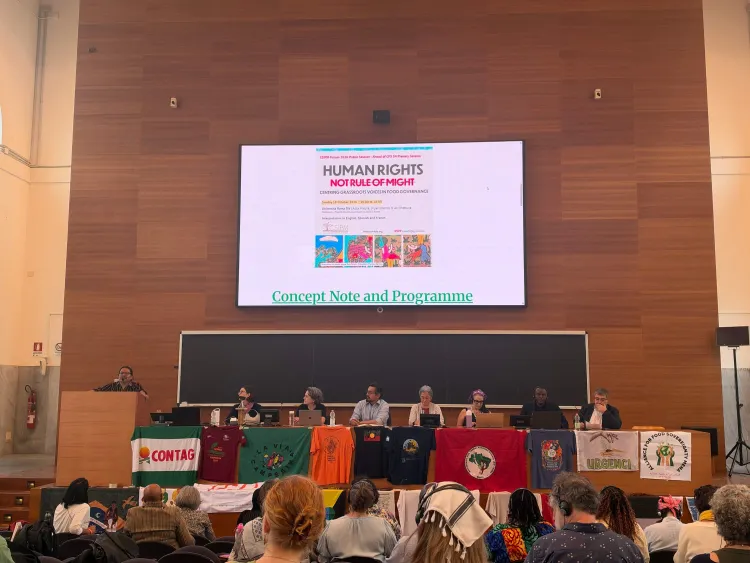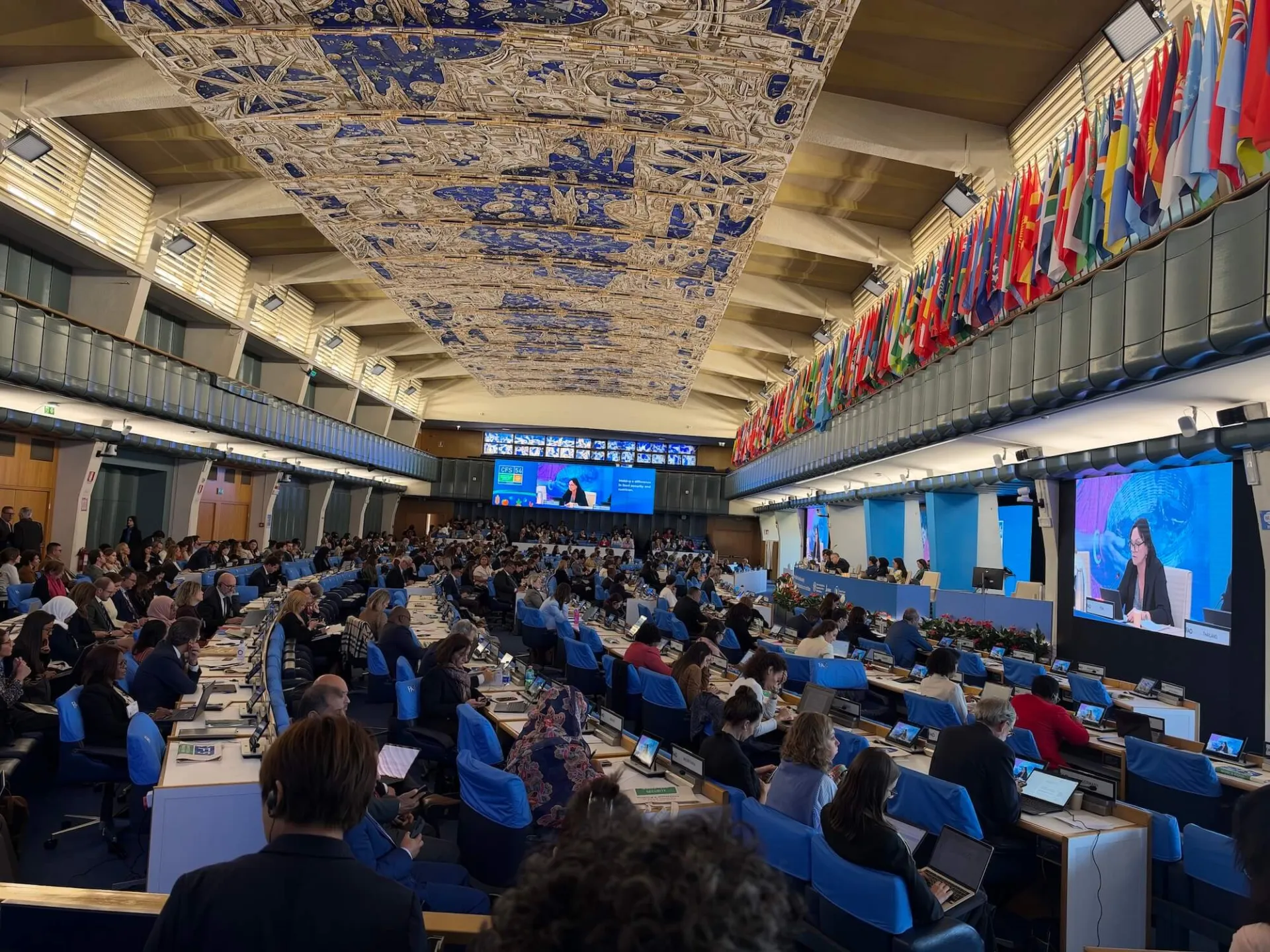
Editors Note: This past October, staff members and affiliates of the Institute for Agroecology gathered for the 54th Plenary Session of the United Nations Committee on World Food Security (CFS). Member nations, including the United States, spent their time debating long-standing agreements on human rights and gender equity, implementing existing policy documents at home, and more.
Molly Anderson, an IFA Affiliate, academic, and civil society advocate attended this year's CFS and shares her reflections.
I have been following and studying the United Nations Committee on World Food Security (CFS) for over 15 years as one of the most inclusive spaces of global governance and an important space to guide policies related to food and agriculture around the world.
Being at this year’s annual meeting of the CFS in Rome this past October was painful.
Painful to see that my country, the United States, has chosen to make itself a pariah.
Painful to hear the U.S. Ambassador speak so dismissively of the CFS and consensus decision-making. These tenets have been pivotal for bringing forward international agreements and guidance on critically important issues such as Land Tenure and Food Systems and Nutrition.
Painful to listen to the ambassador boast that the U.S. is a “leader in global food security” when we have eliminated humanitarian aid that would have helped many of the countries whose delegates were in the audience, while also drastically reducing federal food assistance for at least 13 percent of food-insecure members of our own population.
Painful that the members of the U.S. Mission to the UN Agencies in Rome are reacting in a knee-jerk fashion to CFS documents using terms such as “equity” and “human rights” and “agroecology.” AND that they admit that the U.S. has “no mechanism” for implementing CFS policy recommendations back home.
Since 2009 I have been attending the CFS as a scholar and an advocate, the year that the CFS was reformed to allow civil society organizations to have a voice equal to that of state delegates, the private sector, finance and philanthropic representatives, and people from other UN agencies. It was at this point that, finally, the people whose rights were being violated and who should actually be the focus of all CFS deliberations were able to speak for themselves.
I have been tremendously grateful for the dedication of those representing fisher-peoples, pastoralists, women, small farmers and other oppressed groups around the world. Each year since 2009 they travel to the CFS as a part of the Civil Society and Indigenous Peoples’ Mechanism to share their experiences with other civil society members and governments, sometimes at great hardship and expense to their communities. Their dedication to speaking truth to power and ensuring that their community’s stories are heard is what makes the CFS such a unique space within the international political arena.
I was ashamed of the U.S. delegates and wanted to jump up and shout “Not in my name!”, when the USDA Ambassador spoke on the first day to criticize CFS so vehemently. It was illustrative of just how isolated the US’s position is, that nobody in the entire plenary clapped for the U.S., unlike the reactions to statements from almost all other governments. My heart was broken by the statements of great harm caused by U.S. wars and the weaponization of food, in violation of the Food and Agriculture Organization of the United Nations’ founding principles.
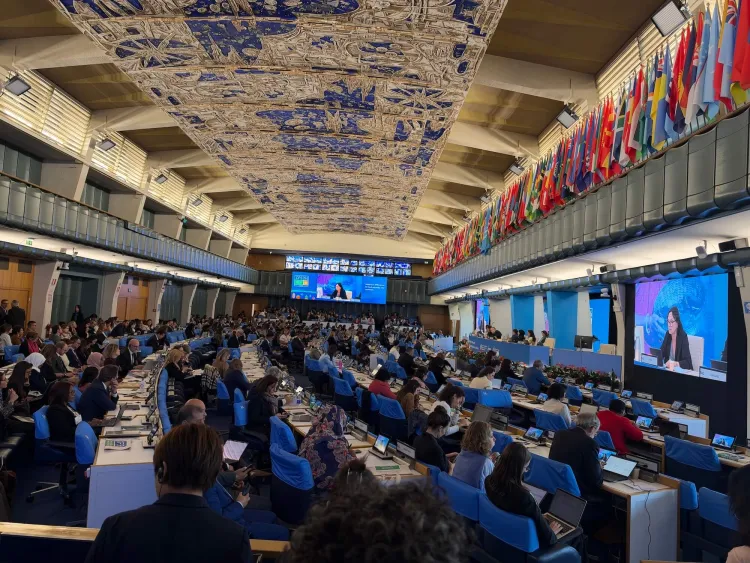
When a group of us from U.S. civil society organizations met with the U.S. Mission to the UN Agencies in Rome and members from U.S. departments of Agriculture and State, they asked what the U.S. can get from CFS. We pointed out that there is much that we can learn from other countries about issues such as implementation of the right to food, agroecology, and protection of small farmers.
But the U.S. representatives seem to look at CFS in purely transactional terms, measuring what we can “get” from other countries and whether “the juice is worth the squeeze” instead of what we can learn. This was all said regardless of the fact that the U.S. (or at least, wealthy people here) is already getting so much from other countries, whether through trade on unequal terms, debt repayments, or outright theft via resource grabs. It brings me to tears that my country has sunk so low that it doesn’t even know what it is missing in its ignorance, and that cooperation and compromise are seen as signs of weakness rather than strength.
CFS is far from perfect, but it is one of the best fora available for negotiating policy because of its inclusivity. I don’t know what will come of efforts to reform it, nor what the future holds for attempts to address geopolitical tensions, climate change, and the destruction of food systems around the world. But I would hate for the U.S. to withdraw from CFS, as we have already withdrawn from so many other spaces where people are trying to solve problems instead of just criticizing others’ efforts.
Much of the future of U.S. relations with CFS hinges on who is behind the wheel of our national government and their commitments to the rule of law, democracy and international cooperation to create a more sustainable and just world. Of course, given the power of ultra-rich people and dark money to influence our government, the legitimacy of our democracy is highly questionable. But I believe that more and more people are waking up to the dangers of nationalist and regressive governments around the world. The CFS is one of the places where we can hear about their consequences loud and clear. I sincerely hope that we will listen and act to decrease human suffering and to help fulfill the right to food for everyone, here and abroad.