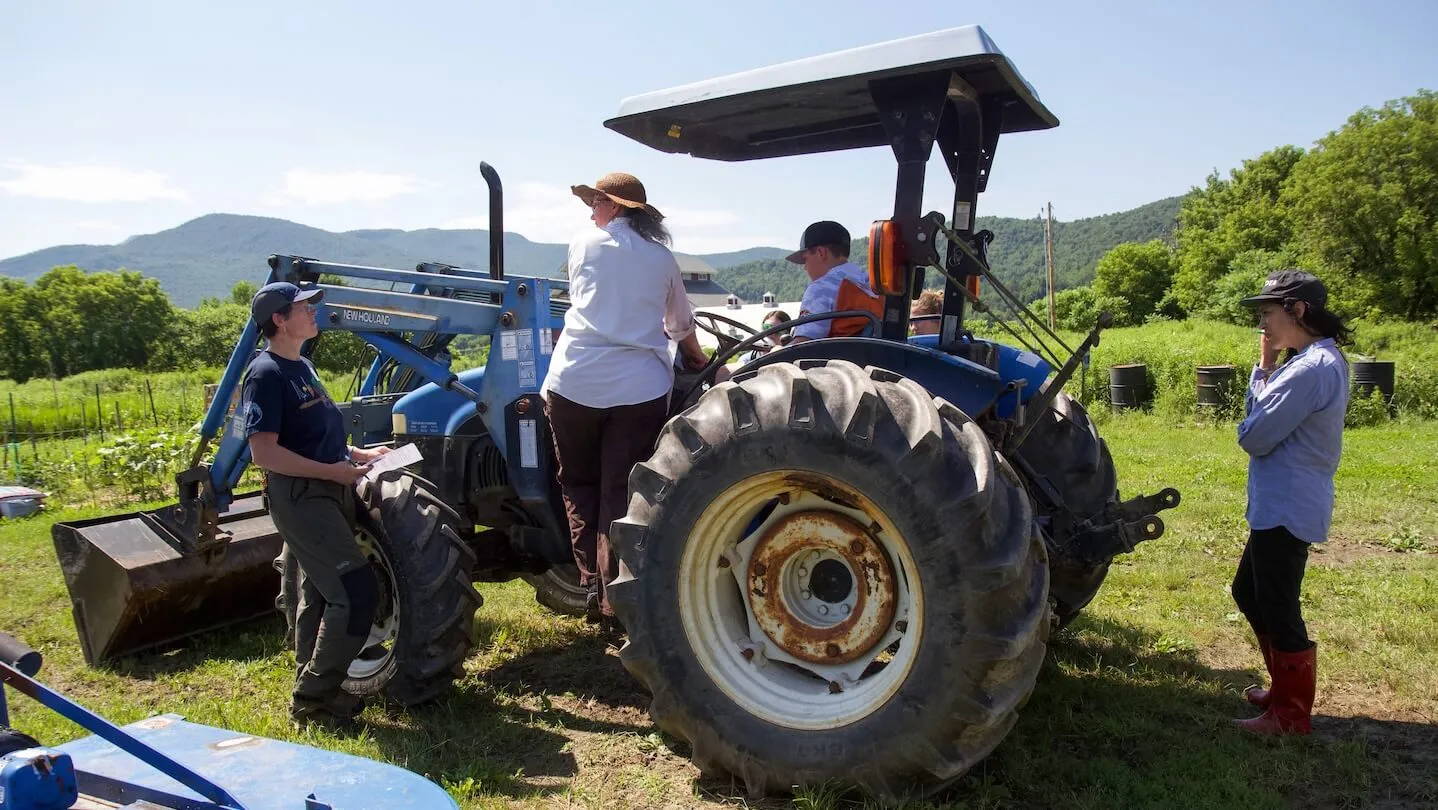
They were there to learn and practice the tractor skills they would need should they ever, for example, hay a field.
UVM Extension 4-H, Rural Vermont, the People's Agroecology School and Vermont Woodlands Association hosted the "Women and Youth Tractor Safety Day" workshop on July 1.
Attendees of all ages signed up for all kinds of reasons. One teenager came because she helps her grandfather on-farm, and he wants her to be able to mow.
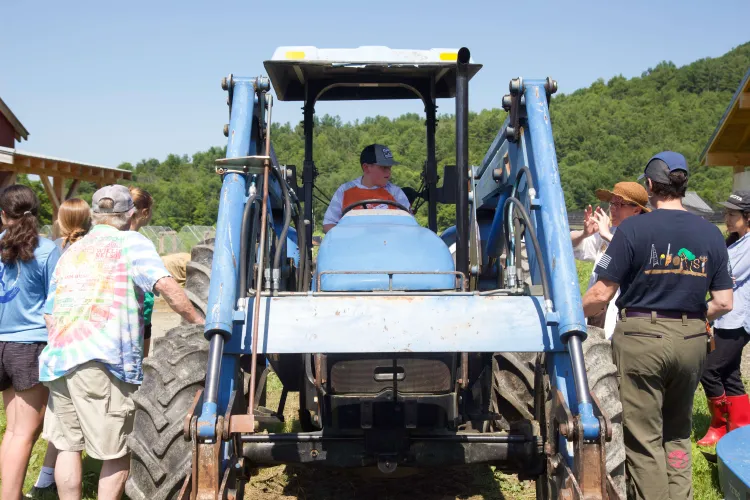
Lincoln resident Bear LeVangie, meanwhile, wanted to be able to remove stumps from the yard.
LeVangie has also generally wanted to know how to operate a tractor ever since watching a neighbor use one to plow.
"I used to just watch him in awe, and he would just whip around, and it'd be done in a blink of an eyeball, and so I asked him if I could learn how to do it," LeVangie said. "And he said, 'Eventually, eventually, eventually'...and I never got the opportunity."
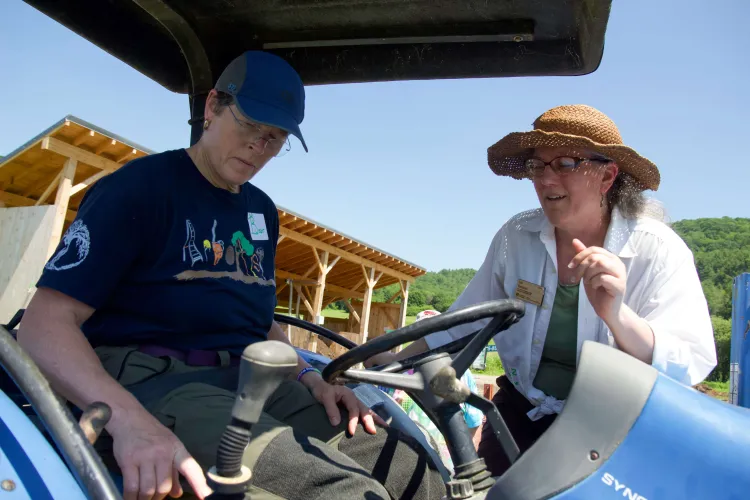
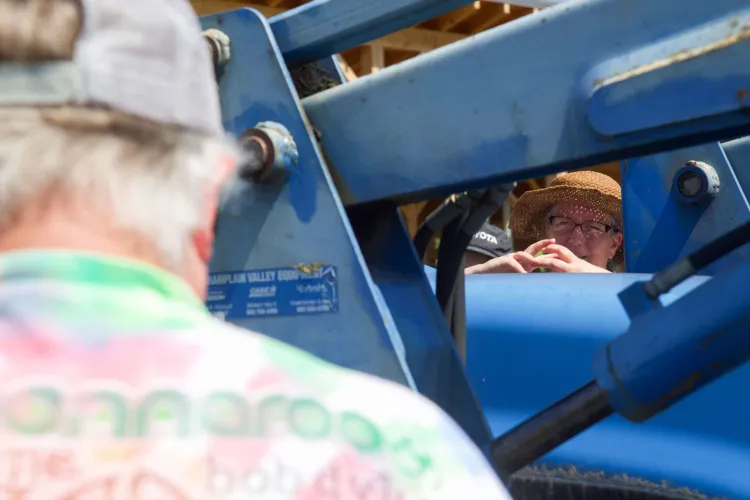
Only an hour passed at the workshop before LeVangie got to climb up, with the recommended three points of contact at all times, into an azure blue New Holland tractor. 4-H Youth Agriculture Project Coordinator Liz Kenton provided step-by-step instructions from the ground: seatbelt adjustment, ear protection, clutch, gearshift, throttle, hydraulics for the front bucket and back hitch, regular brakes and the emergency brake.
"We'll get you lined up along the driveway, that's your ending position," Kenton told LeVangie. "And we won't run over any cars or gardens, that's our goal."
Together, teacher and student hit that goal, no problem.
"I thought it was gonna be a lot scarier than it was," LeVangie said. "It was super fun."
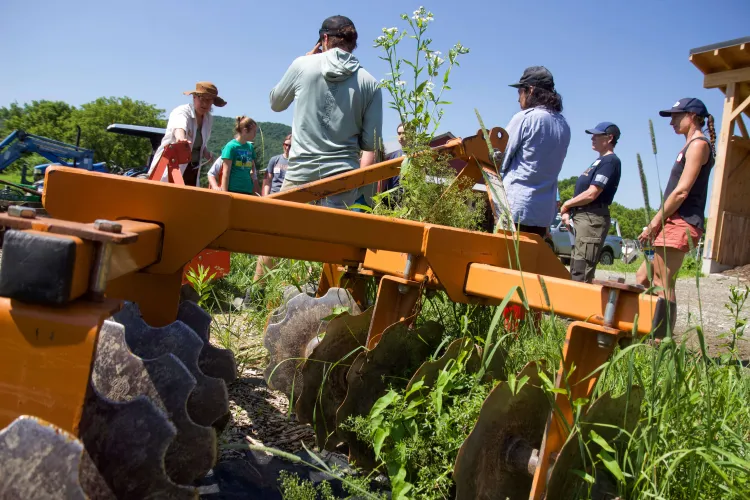
While they don't need to be intimidating to new users, tractors certainly can be dangerous, and safety served as the focal point for the day's lessons.
Liz Kenton with 4-H warned about what power take-off (PTO), a shaft on the back of a tractor that can rotate between 540 and 1,000 revolutions per minute, can do if clothing or a person's limbs gets caught by it.
"I know someone that saw that happen to a friend of theirs, their insides were on their outside," Kenton said. "This is serious."
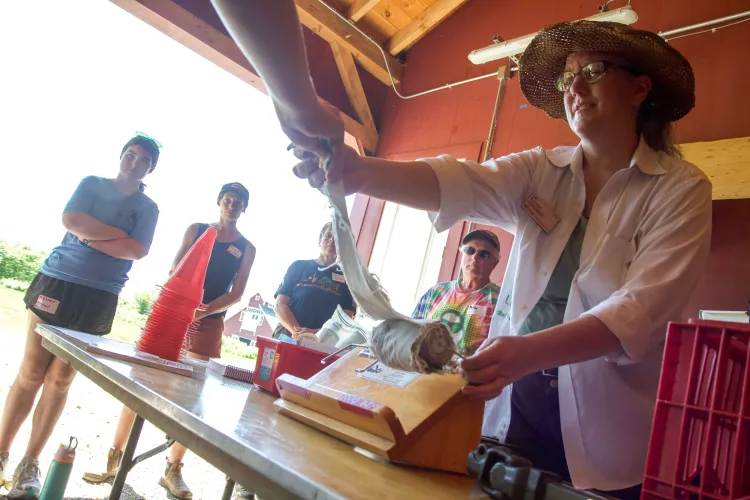
She suggested people never step over the PTO, but walk around it.
"[Keep] as many layers between you and an accident as possible," Kenton said. "So what that means is, turn the machine off, don't have flappy clothing."
She also pointed out that tractor rollovers are the most common way people get hurt, and shared the risk factors to be aware of: changing direction, changes in speed, and changes in the tractor's center of gravity, all of which can lift tires off the ground.
"The frame of stability is from where the tires touch the roads," Kenton said.
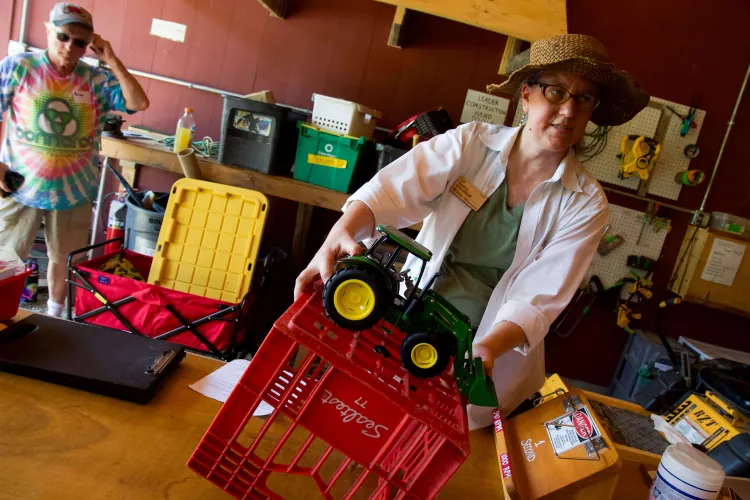
In addition to physical risk factors, "Women and Youth Tractor Safety Day" participants discussed social risk factors, like an operator's mental state. And: peer pressure to have people ride on tractors where there's no seat or seat belt, which could lead to falling off, and getting run over.
"Don't do it," said SG Groat, an independent tractor safety instructor who also provided education during the workshop, with a fire-orange Kubota. "As operators, it's your unfortunate job to say, 'No, I'm sorry, you have to walk.'"
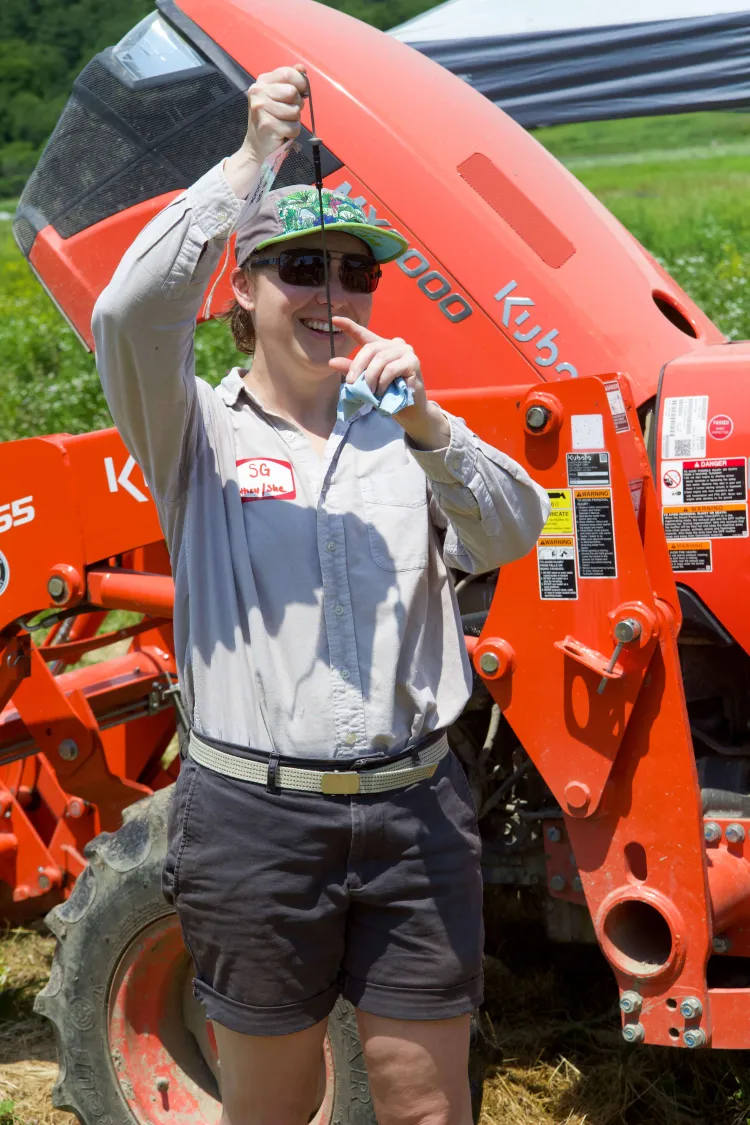
A more fortunate part of the tractor operator job? Hitching and unhitching equipment. With guidance from Groat, Sela Flores from Caledonia County practiced that part.
She showed up because she works on a livestock farm, and also has family with a tree farm, and she'd like to be able to contribute this skill to both operations.
Flores said it was easier to learn at the workshop, versus in the middle of completing a real task on-farm.
"To have the full rundown of what each mechanism is doing, and relaxed step-by-step directions, yeah, makes it stick better," she said.
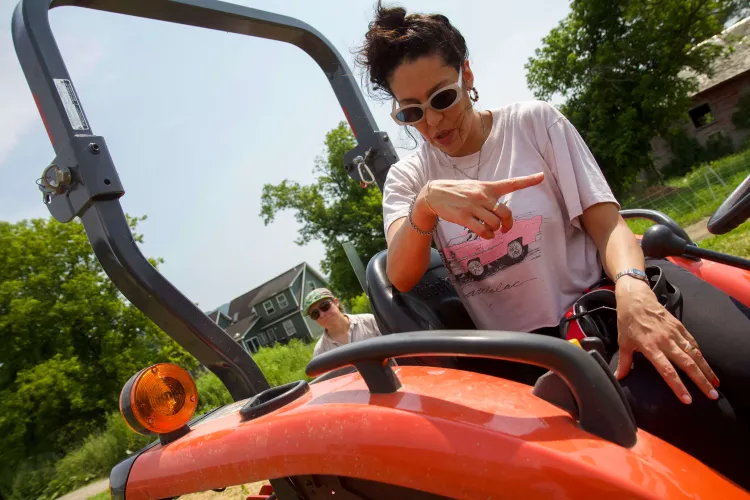
Facilitating a relaxed, approachable environment at "Women and Youth Tractor Safety Day" was the aim of its organizers.
Vermont Woodlands Association Education and Communication Coordinator Catie Raishart said the whole idea arose from an interview with a Vermont woman who was managing the forest on her property, but didn't know how to use a tractor.
"She was saying that she feels like being able to use tractors is an inherited skill, and that people who live here are learning through their grandfather," Raishart said. "And she didn't have anybody to teach her."
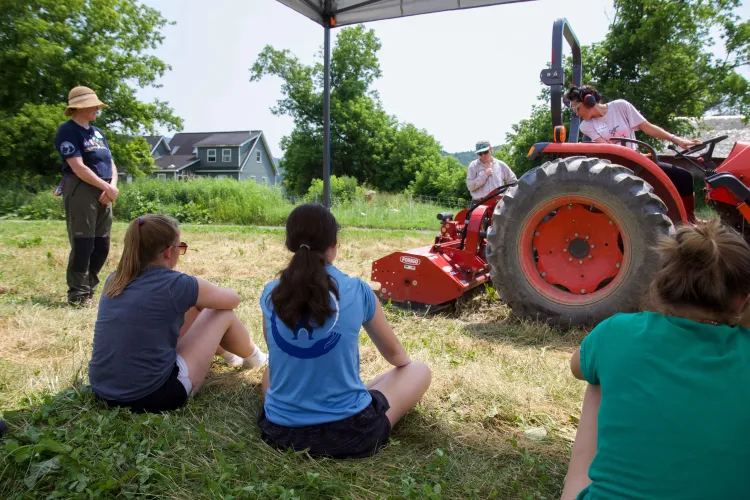
A total of 19 people, reached through the various partners' constituencies, signed up for this tractor safety workshop.
"I've already had people asking when the next one will be," Raishart said. She added that there will definitely be more to come.
Learn more about UVM Extension 4-H programming on its website.