The farm has a single, undulating field — with four distinct watersheds — that's being used to test out conservation practices for soil and water quality.
The project is called Discovery Acres. It's part of a multi-state program where farmers host water quality monitoring sites for researchers to produce credible information about effective environmental management that's compatible with profitable agriculture. This is done in partnership not only with farmers and UVM researchers, but with water quality organizations, state agencies and other stakeholders.
Discovery Acres is among Extension's efforts to find more sustainable agricultural practices, particularly around phosphorus.
The backstory
In Vermont, more than half of the state's agricultural industry is dairy farming. Dairy farmers apply manure to their fields to meet plant nutrient requirements. That can lead to soils being overloaded with phosphorus, and during rain and snowmelt events, the excess phosphorus can go into Vermont waterways. It then can create harmful algal blooms in the summertime.
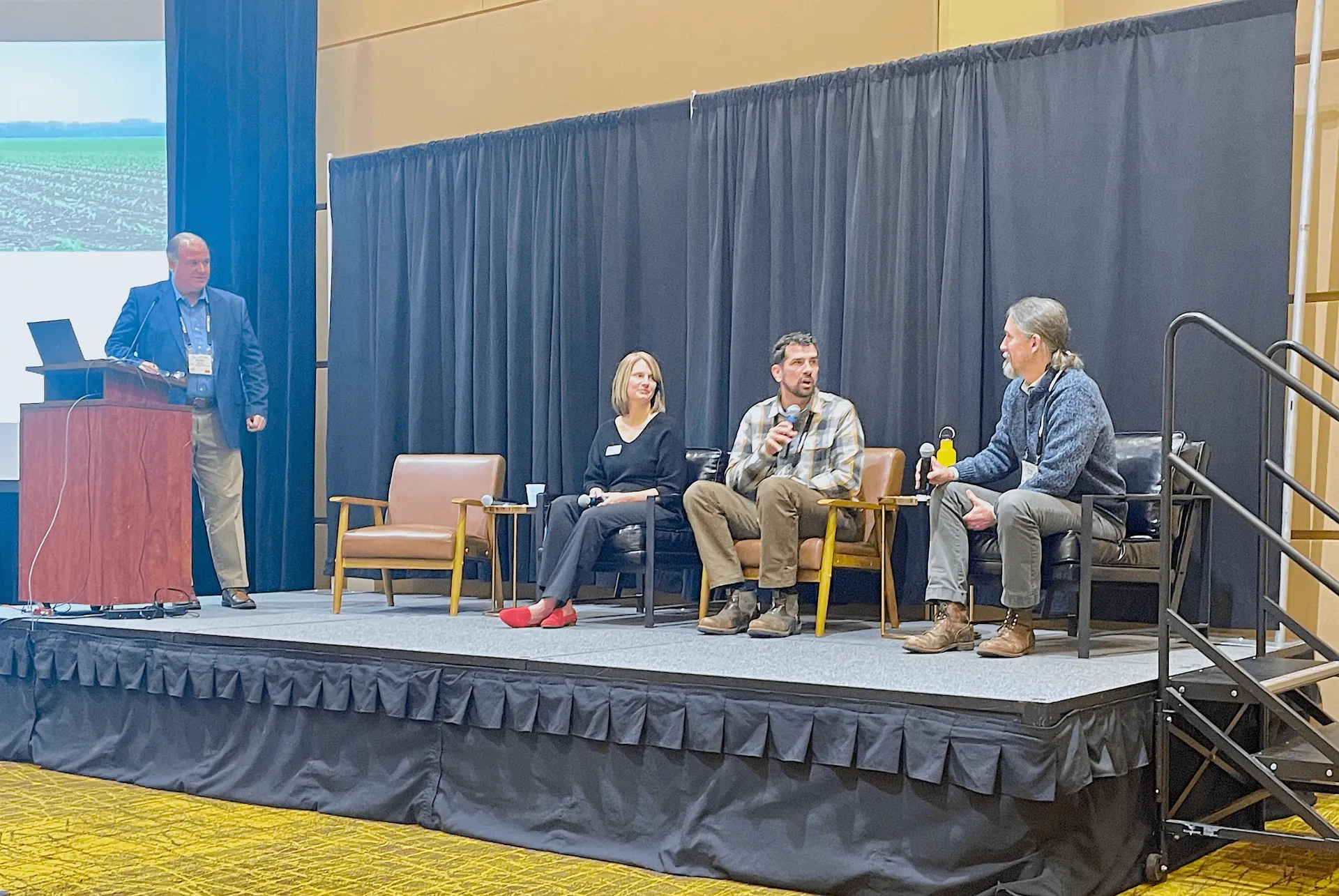
"Roughly 41% of total phosphorus load to Lake Champlain is coming from agricultural production," said UVM Extension Northwest Crops and Soils Water Quality Research Specialist and Ph.D. student Claire Benning during a recent webinar.
There's the added challenge of the Lake Champlain basin having heavy clay soils, which don't drain very well. That means more water and more phosphorus running off those soils' surface. While many Vermont dairy farmers have tried to mitigate this issue by installing drainage pipes below the surface of the soil, called tile drainage, tile drain water has phosphorus in it, too.
"Legacy phosphorus is a primary driver of phosphorus loss in poorly-drained soils with subsurface drainage, especially here in Vermont," Benning said in the webinar. "And due to shifting climates, we are seeing periodic snowmelt in winter, as well as rain-on-snow events, and shifting freeze-thaw cycles, which are increasing likelihood of nutrient losses during winter and early spring."
To address phosphorus polluting Vermont waterways, the state enacted stricter water quality regulations in the last decade, including more rules around tile drainage. And Vermont farmers, in the interest of reducing their impact on the environment, retaining nutrients in their soils, and also testing the effectiveness of regulations, wanted research into the matter.
"In particular, the Farmers Watershed Alliance," said UVM Extension Agronomic and Soils Specialist Heather Darby, also in that recent webinar. "That organization has driven the work at Discovery Acres, and really has driven accessing funding and the ability for us to do this work."
Discovery Acres belongs to the national Discovery Farms Network. Discovery Farms® is a farmer-led research and outreach program with members in Wisconsin, Minnesota, Arkansas, North Dakota and Vermont.
What's happening at Discovery Acres today?
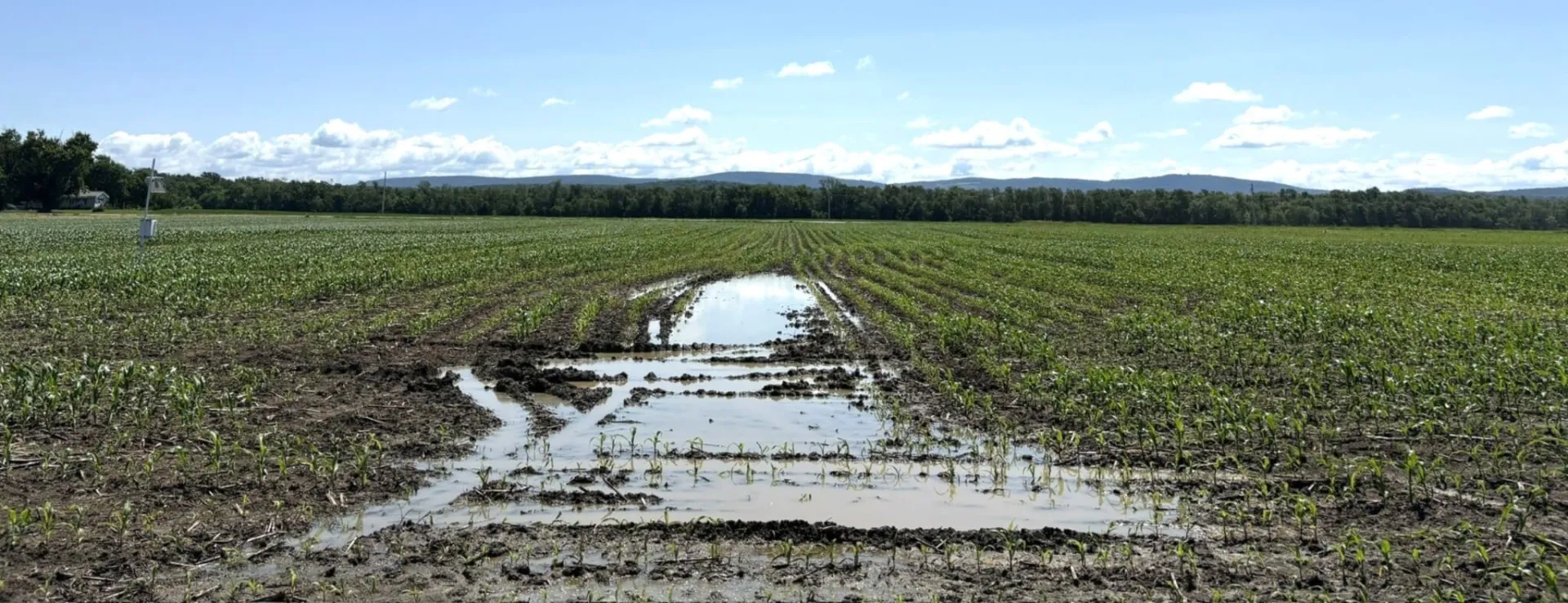
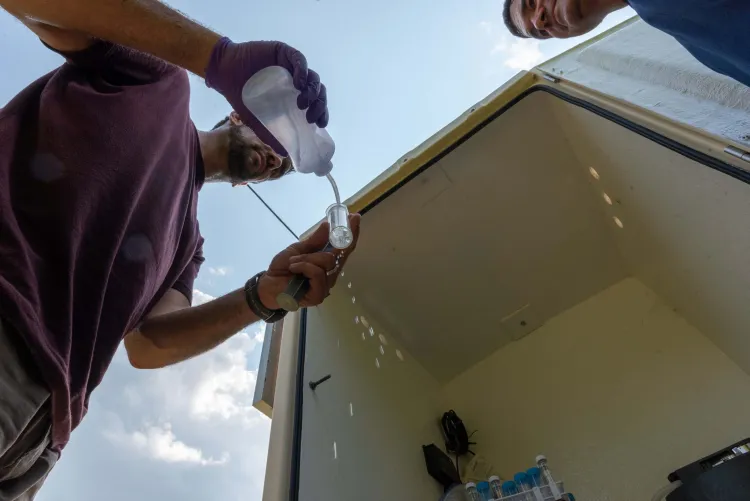
At the Discovery Acres site in St. Albans, there are water monitoring stations spread throughout that one field with four distinct watersheds. Each watershed is testing out different management practices — tile drainage vs. no tile drainage, tillage vs. no tillage, injecting manure vs. broadcasting manure — and how they affect water quality, soil health, crop yield and more.
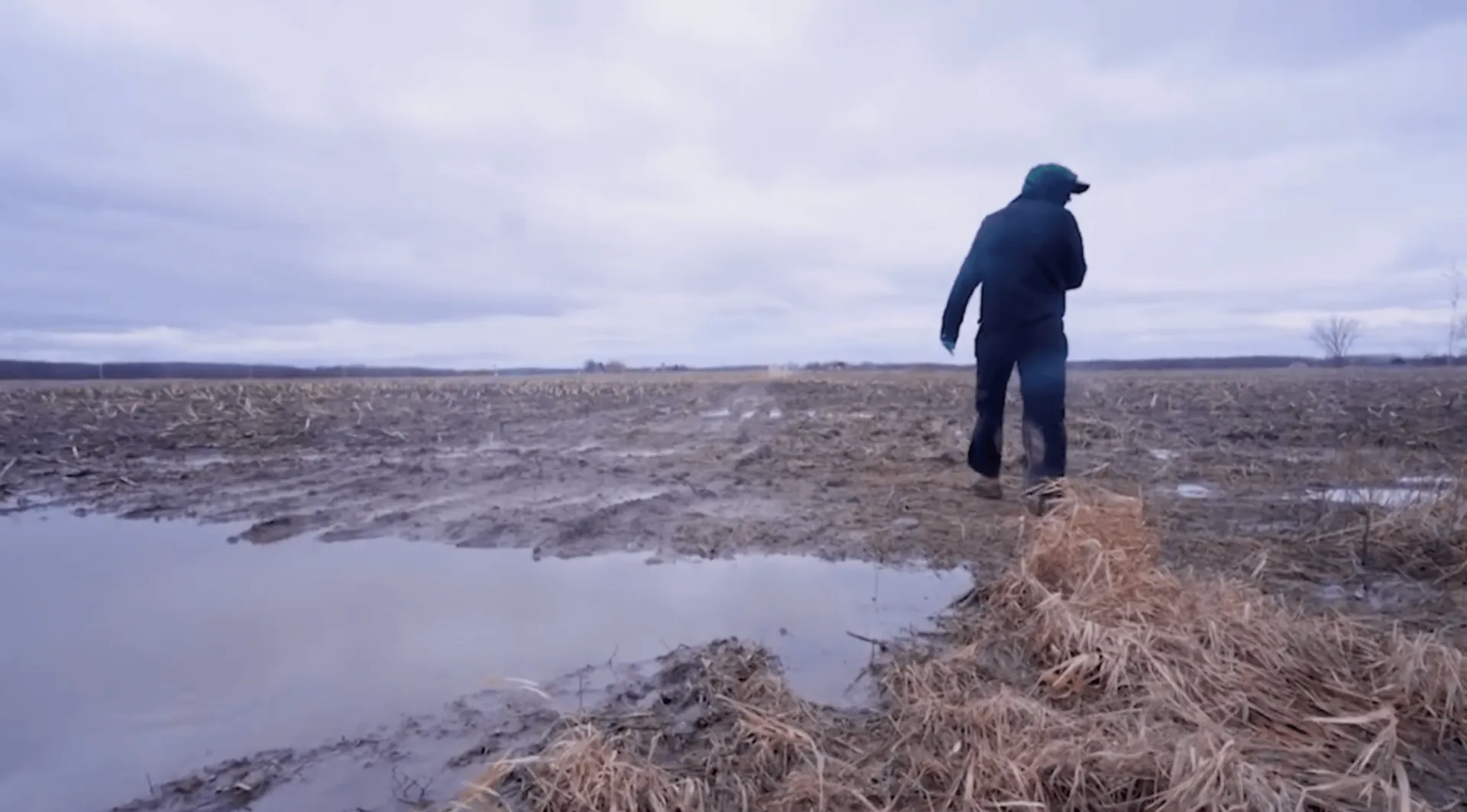
Claire Benning, the Ph.D. student and UVM Extension staffer, is collecting this data. In all kinds of weather, including on a particularly wet and muddy day this spring that Across the Fence joined her.
"A lot of nutrient management and nutrient runoff is driven by environmental variability," Benning told Across the Fence. "I'm learning just a lot about doing field research in these really tough conditions."
Why does this matter?
Studies show that extreme precipitation in the Northeastern U.S. has increased over time and is projected to continue increasing in tandem with climate change. Which as UVM Extension Center for Sustainable Agriculture Director Joshua Faulkner points out, makes examining the impacts of tile drainage all the more relevant.
"Farmers are using that practice more and more because growing seasons are getting wetter and wetter," Faulkner told Across the Fence. "It's an important practice for farm resilience, but we know there's some environmental questions and concerns."
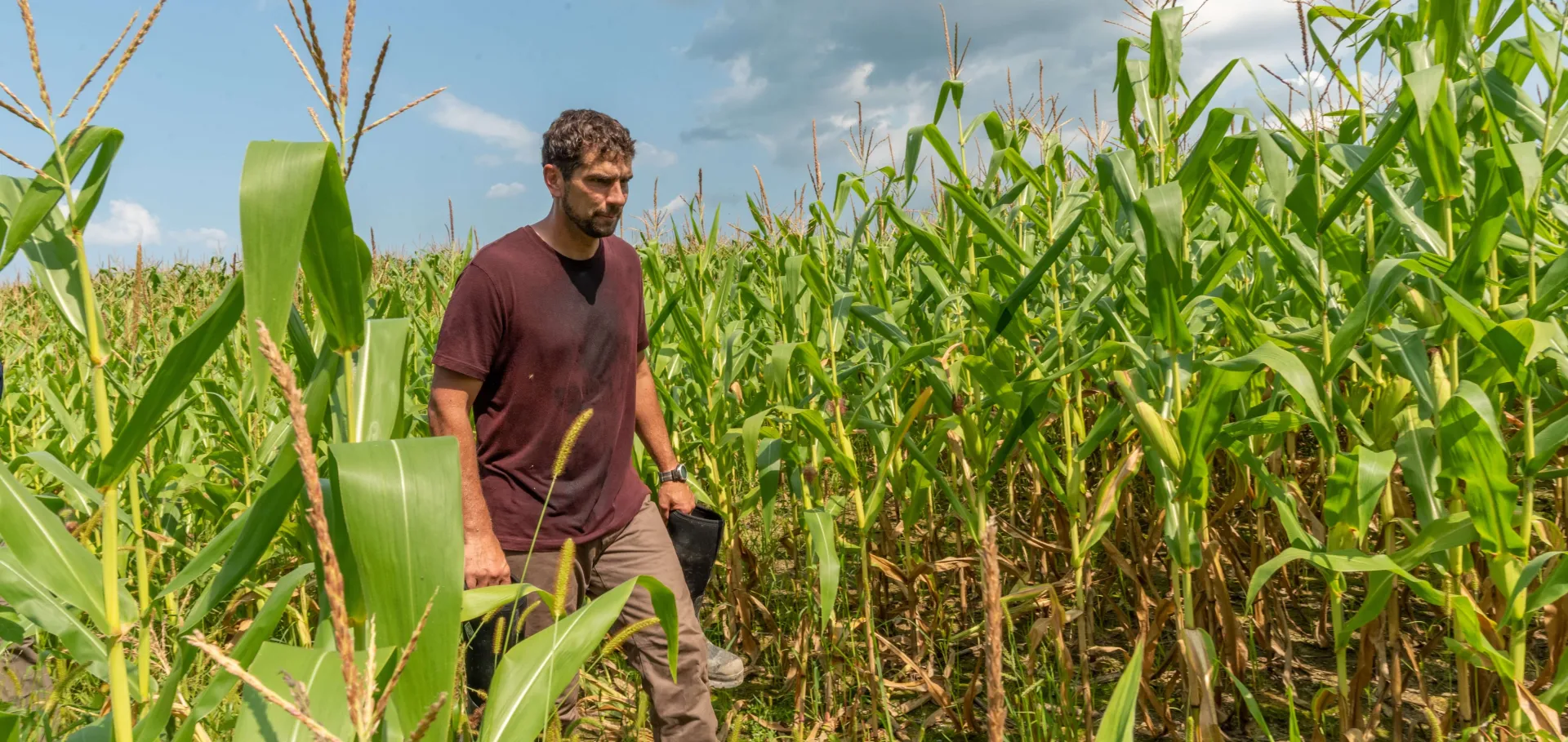
Faulkner, who is also a Faculty Fellow at the Gund Institute for Environment and Director of the UVM Agricultural and Environmental Testing Lab, has been examining dairy farm practices, phosphorus, soil health and water quality since arriving at the university 13 years ago. Now he's helping oversee the Discovery Acres experiment, and he's principal investigator for a similar on-farm, field-scale experiment in Addison County.
He told Across the Fence that both experiments are looking for solutions for phosphorus pollution.
"In Addison County, we're looking at, can we use filter systems to capture phosphorus at the outlet of a tile drainage system," Faulkner said. "In Claire's research [at Discovery Acres], it's like, what can the farm do on the surface of the soil with around nutrient management and soil management to help limit that phosphorus, before it even gets a chance to move down through the soil surface?"
And the experiment results?
It's too early to have conclusive results from these on-farm experiments around reducing phosphorus runoff, according to Faulkner. But in the meantime, he told Across the Fence that there's a lot of good data being collected toward addressing a big challenge that's been many years in the making.
"It's a big ship to turn, right? We've been farming in this basin for a long time," Faulkner said. "It's not necessarily going to benefit to our generation, but probably generations that come after us and generations after them."
He added that there will be multiple benefits for those future generations, if ours can figure out more sustainable approaches to phosphorus.
"It's a finite resource," Faulkner said. "We need to keep it on the landscape and use it to grow food instead of running off into our waterways."