It’s a challenging time to work in academia. We are seeing lower than normal public trust in and value of higher education and science, a dynamic and sparse extramural funding landscape, and an overall assault on intellectual freedom in the name of liberty. And yet, serving in a leadership role in University of Vermont Extension, I’m in a privileged position to actually do something about this. Extension sits at the intersection of academia and the community, and we have a significant role to play in what comes next and how that is determined.
I think it is important to recognize the time and situation in which we are seeking strategic clarity and meaningful action. Questions of relevance and value are important to hear and to answer. While it is important to always be responsive to change and to evolve, there is a particular need to rethink how we do our work as UVM in the current moment. The time is right for strategic planning. Right now.
President Tromp outlined four pillars in her initial strategic vision based on intense and thoughtful review of UVM and our position in this volatile landscape. These pillars prompted discussion around key questions. What will we do as UVM? How is it different from what we’ve done in the past? How will it recognize our history and also remain relevant and supportive of a better future? How is this unique and different from what others do?
As the representative for the College of Agriculture and Life Sciences (CALS) on the Strategic Planning Committee and as the Associate Director for Extension, I was eager to work with colleagues to answer these questions through the lens of our Land-Grant Mission and our obligations and commitments to the communities we work in, with, and for.
The four pillars of the strategic plan have emerged, evolved, and taken on new life through the work of the committee and the President. Each of the pillars speaks to me and gives me both hope and challenge as I think about what they look like in practice. I’ve come to see them as promises to Vermonters, and I have started to think about what will be needed to deliver on these promises in Extension.

Pillar 1: Forge Bold Futures: Student Connection, Purpose, and Impact – In Extension, our students are varied; from the 4-H youth member presenting and performing on stage at the Big-E to the forest owner in the Northeast Kingdom exploring water and carbon dynamics in their ecosystem to the dairy farmer scaling the seemingly impossible obstacles of economics, production, and environmental stewardship. The work of Extension is all about forging bold futures through better understanding and naming needs in the community, conducting applied research focused on improving practice, and translating that research and more into action through accessible and meaningful educational opportunities that meet our students where they are. It doesn’t stop there. We track the outcomes of this collaborative work and measure the impact to ensure we were on target and to identify the next big question.
Pillar 2: Study What Matters: Values-Driven Learning, Research, and Practice – With Extension embedded throughout the state, our learning and research are driven by community values. We study what matters to the communities we work in, with, and for. Using participatory action research methods, peer-to-peer learning, and direct technical assistance models, our students are partners in research and we are learners with them. Through this connection to communities, we strive for relevant research and education that delivers knowledge and action where and when it is needed.
This pillar resonates with me for another reason. With funding support from the Leahy Institute for Rural Partnerships, we are embarking on a first-of-its-kind Vermont Assessment of Assets, Angles, and Need (VAAAN). This statewide assessment will explore not only what is needed across a broad range of basic social themes, but the assets we already have, and how we perceive both needs and assets in our communities. I’m excited to explore this topic with the project team, using a mixed-methods approach that leans on review of literature in traditional and non-traditional ways to lay the groundwork for conversations in community. Another exciting aspect of this work is the inclusion of not only advisory committees coming from positions of decision-making power and relative wealth of resources, but also inclusion of people working on these issues at the grassroots level, directly engaged through the power of very local communities.
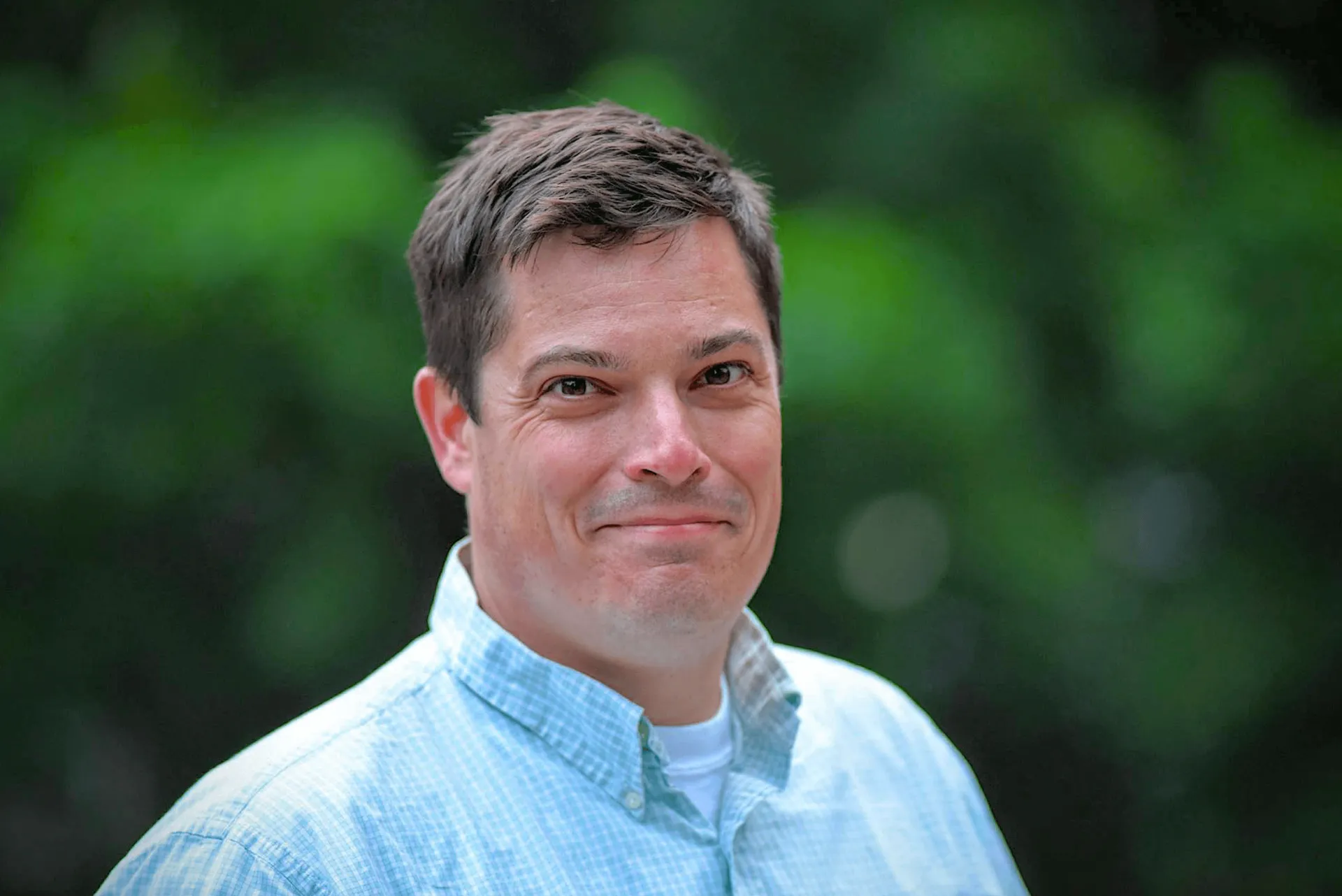
"I see Extension serving as ambassadors for the University in the community and ambassadors of communities in the University." — Chris Callahan, Interim Director of Extension
Pillar 3: Create Opportunity: Access, Engagement, and Partnerships – Continuing a long history of accessibility, I see Extension serving as ambassadors for the University in the community and ambassadors of communities in the University. Together with other community-facing units such as the Leahy Institute for Rural Partnerships and Professional and Continuing Education, we strive to not only maintain access for all Vermonters, but also invite and welcome students of all ages and interests to partner in research and education with us. UVM is for you.
Pillar 4: Enable Excellence: Campus Community, Systems, and Infrastructure – As a “big ship,” UVM can sometimes be hard to steer. Systems meant to provide oversight and protect public investment can sometimes be bureaucratic and opaque. However, as an engineer, I was thrilled to see a focus on infrastructure and systems emerge in this planning process alongside campus community. Our built environment influences how we do our work and is a critical part of what we consider possible. I see this taking form in the spirit of continuous improvement, effective use of resources, and clearing the path for excellence in community engagement, research, and education. It should be easier for community partners to “do business” with UVM.

Someone asked me recently, “How many strategic plans have you been part of?” I don’t keep track, but it is probably dozens across corporations, municipal government, and nonprofits. Strategic planning initiatives are often met more with a mixture of concern, fatigue and apathy than excitement, promise, and joy. Although that makes me sad as a planner and champion of long-range thinking, I wasn’t surprised by some of the less enthused perspectives colleagues shared when we kicked off UVM’s strategic planning process last fall.
But I don’t see this as just another strategic plan. I see this process as the University of Vermont’s understanding that this is not a time to keep doing what we’ve always done.
In a February 2026 Gallup poll, 72% of respondents were not satisfied with “how things are going in the US.” It hasn’t been much better than that in over two decades.
Similarly, when asked, “What do you think is the most important problem facing this country today?” the top answer (20-32%) for more than a year has been some form of “Government.” So, this is not a time to become isolated from each other or the joint work we have to do. This is a time when great things need to happen and can only happen if we collaborate with purpose and compassion in our local communities, however we define them.
I’ve been given a gift – I’ve been able to be part of one of the greatest experiments the federal and state governments in our country have ever agreed to. While the foundational resources used to fund this experiment came at great cost to Indigenous peoples in the United States, and while it is far from perfect, that history provides an obligation to deliver on the promise of the Land-Grant University Mission. We can leverage community-driven research through relevant and accessible education that enables learners of all kinds to improve their lives.
This is distinctly not, “just another strategic plan.” It is a great next step in this evolving thing we call the University of Vermont.