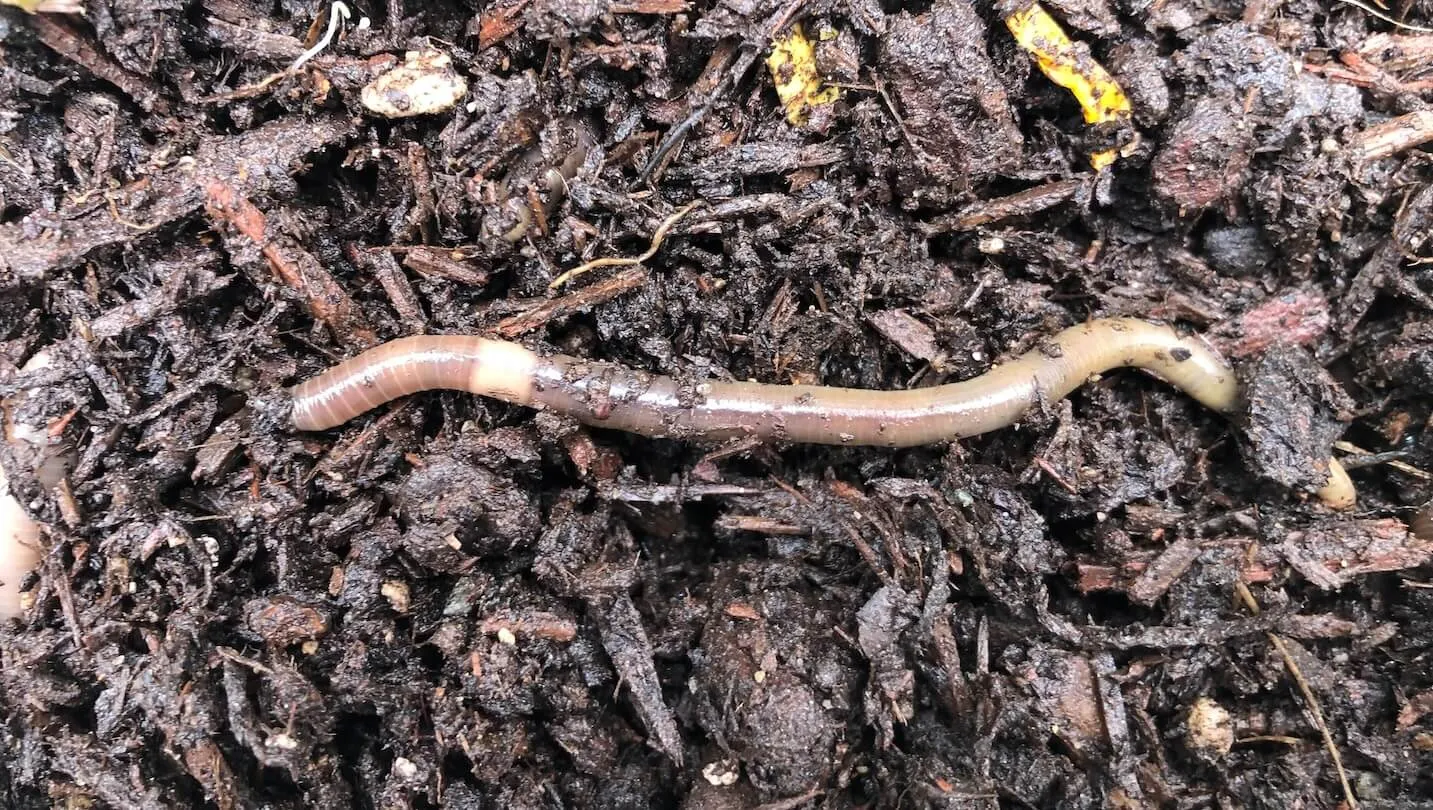
Jumping worms are the newest earthworms to appear in Vermont. The earthworms we commonly recognize as nightcrawlers (Lumbricus terrestris) arrived with European colonists. Jumping worms, by contrast, evolved locally in East-Central Asia, but have been present in the U.S. since at least the 1950s.
Three different jumping worm species have been identified in Vermont: Amynthas tokioensis, Amynthas agrestis, and Metaphire hilgendorfi.
Unlike European earthworms, which can live four to eight years, jumping worms complete their lifecycle in one year. This means that any full-grown worms you see during the spring are very unlikely to be jumping worms.
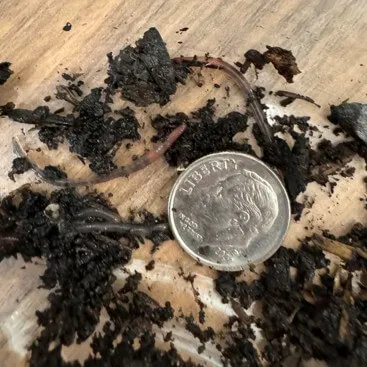
Jumping worm cocoons are difficult to detect because they are small (about the size of a mustard seed) and brown in color. They can survive the winter and remain viable for two to three years. Hatchlings begin to emerge from cocoons in the spring, when soil temperatures reach about 50°F.
Juvenile populations typically peak from late June into July. At this stage, they are still difficult to identify as they have not yet developed their telltale clitellum, the band or ring encircling the worm’s body. However, they do exhibit characteristically jumpy, erratic movement and are usually found in the top 2 to 3 inches of soil.
Jumping worms begin maturing into adults starting in July. Adults are the easiest to identify by their cream-colored clitellum that completely wraps around the body. In contrast, the clitellum of the European earthworm appears as a cuff or saddle and does not fully encircle the body.
Worms continue to mature throughout the summer and fall, producing cocoons. Adult populations peak in August and early September, making this the most likely time to detect them. Most jumping worm adults die with the first frost.
If you think you have detected jumping worms in your garden, consider reporting them through iNaturalist at: www.inaturalist.org. These observations help researchers and state officials track their spread.
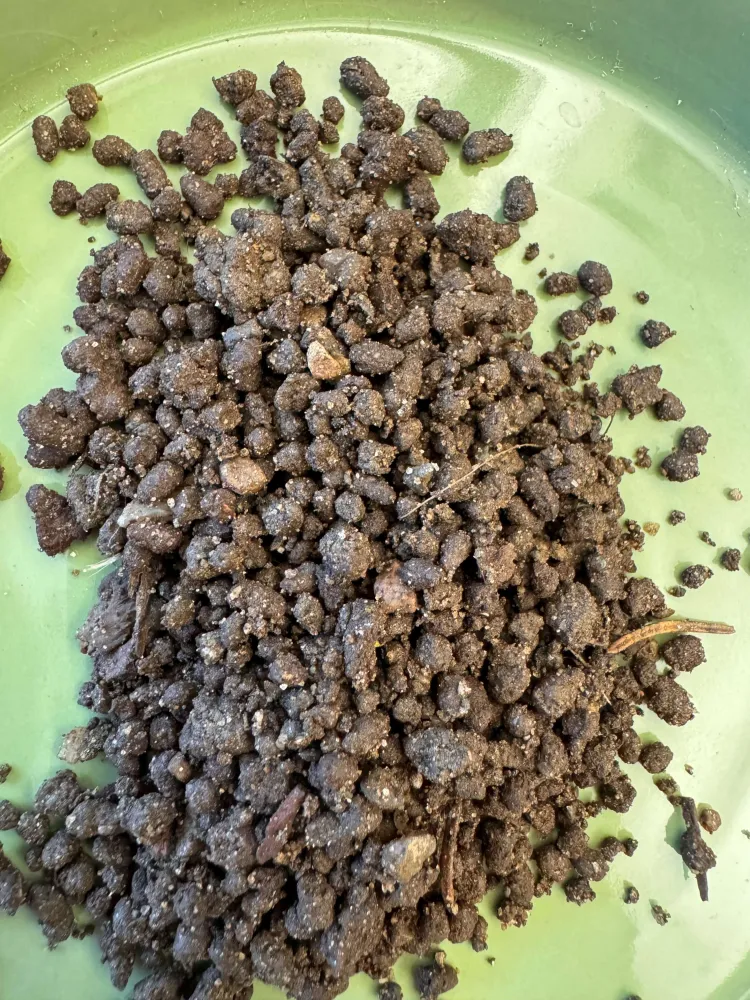
Another telltale sign of jumping worms is their castings (earthworm droppings). Because jumping worms rapidly consume organic matter, they produce abundant castings that resemble coffee grounds or ground hamburger. Their castings and their high consumption of organic matter can impact soil health.
If your garden does contain jumping worms, try not to despair. While their presence can be upsetting, many gardeners have learned to co-exist with them. Currently, there are no approved products labeled to kill jumping worms. Using unapproved products is not only illegal but can also harm the environment and other species. The good news is that UVM researchers Drs. Maryam Nouri-Aiin and Josef Görres continue to investigate jumping worm controls through a Northeast Sustainable Agriculture Research and Education grant (SARE LNE25-489).
Gardeners can play an important role in slowing the spread of jumping worms. Choose worm-free plants when possible; bare-root plants or those you start from seed or cuttings are good options. Be cautious with soil amendments such as mulch, compost, soils, and wood chips as they can carry cocoons. When feasible, solarize these materials to kill worms and cocoons.
Never use jumping worms for fishing bait or vermicomposting, and do not dispose garden waste in the woods or natural areas.
Cocoons can easily spread through soil stuck to boots, tools and equipment. Cleaning these items before and after visiting your and other gardens helps prevent further spread.
For more information about jumping worms, visit: https://go.uvm.edu/jumpingworm or contact the Extension Master Gardener helpline at go.uvm.edu/gardenhelpline.