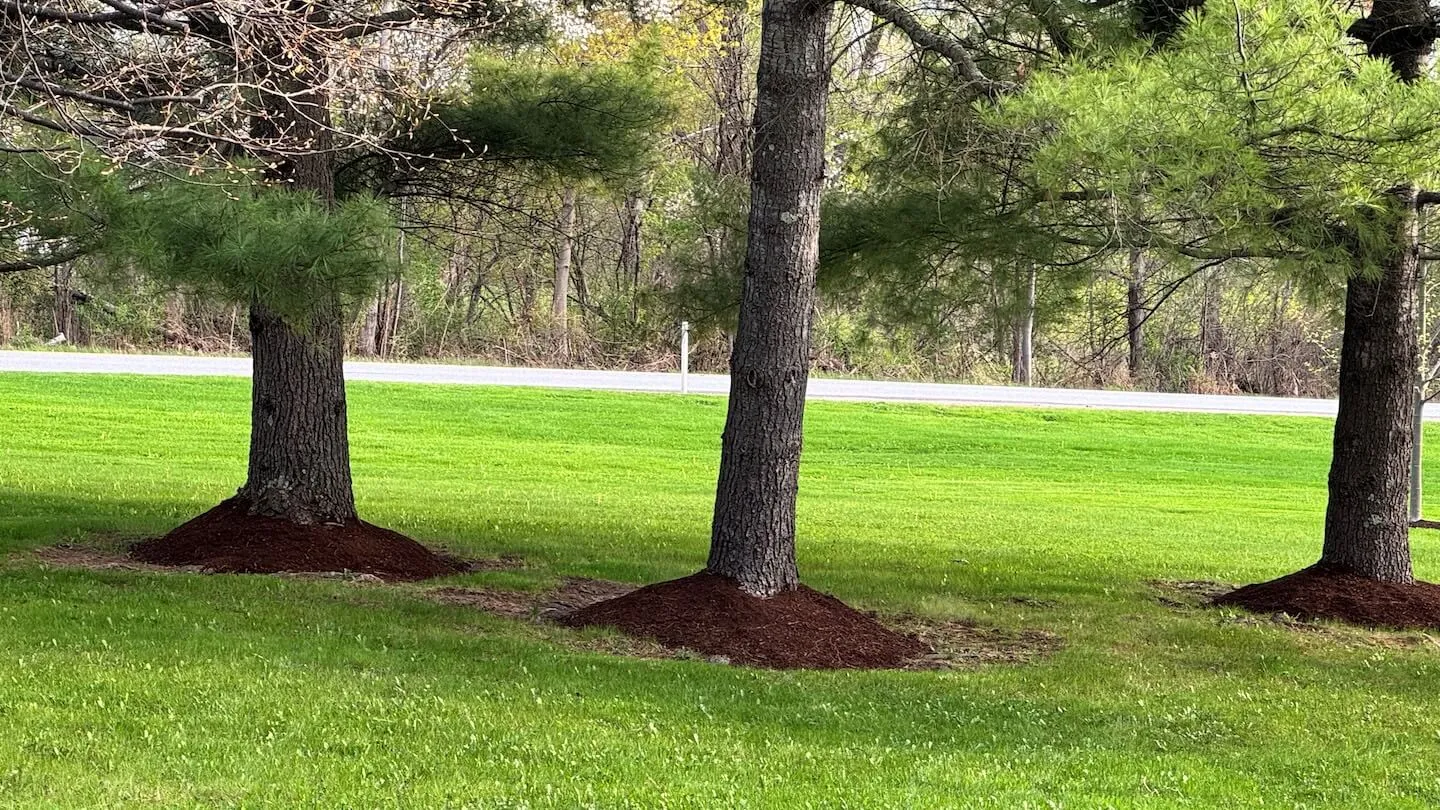
This common mistake happens when mulch is piled high onto the tree’s trunk, forming a cone-shaped mound resembling Mount Vesuvius. Unfortunately, this practice is harmful to trees, causing premature decline of these prized landscape plants.
Mulch should never touch the tree’s trunk. When piled against the bark, it traps moisture, encouraging decay and providing entry points for insects and diseases. Volcano mulching can also bury the tree’s root flare, a special part of the tree where the trunk expands and transitions to the root system. The flare should remain visible above the soil line to allow for proper oxygen exchange for the roots. It also helps provide stability. Keeping mulch away from the flare ensures the roots have adequate oxygen for good growth and development.
The depth of mulch matters too. Applying more than 4 inches can encourage adventitious roots, those that grow from the trunk instead of the root system. Over time, adventitious roots can girdle the tree and interfere with water and nutrient movement through the trunk.
Volcano mulching can also create habitat for rodents like voles, giving them cover and easy access to chew and girdle the tree’s trunk.
When applied properly, mulching does offer a number of benefits to trees. It helps retain moisture, moderates soil temperatures, and prevents soil compaction. Mulches can suppress weeds that compete with the tree for water and nutrients. Importantly, mulches provide physical and visual buffers that keep lawn mowers and string trimmers at a safe distance from the tree’s trunk and roots. And, of course, many people enjoy the look of a well-mulched tree.
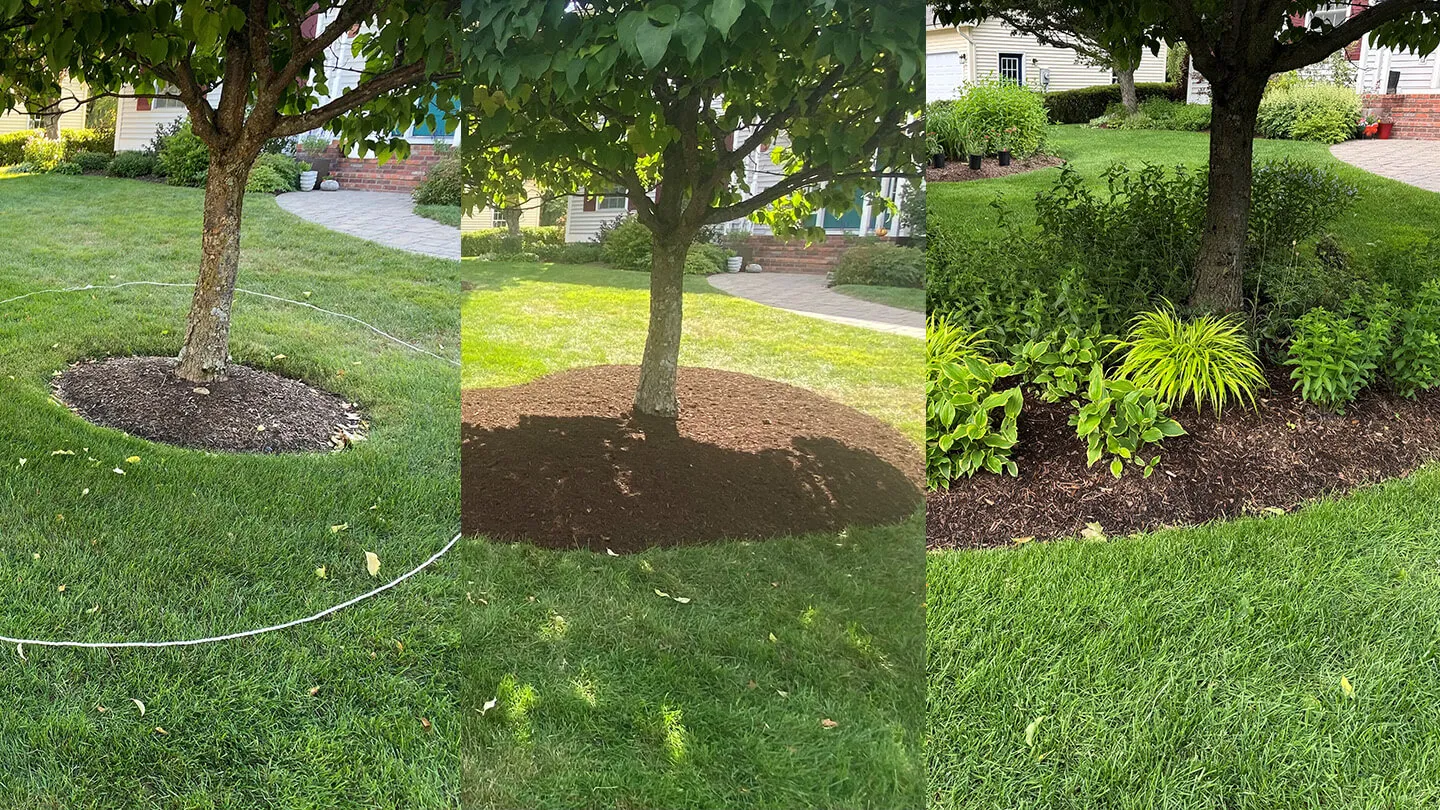
To avoid mulch volcanoes, there are some easy steps to take. First, take stock of the mulch already surrounding your trees. Bark mulch breaks down slowly and your trees may have ample mulch still in place. You can rake it out and refresh with a sprinkle of fresh mulch.
Instead of volcano, think donut! Mulch should be applied in a wide, even ring around the tree, at least 3 inches away from the root flare and extending to the tree’s drip zone, the area beneath the tree’s outermost canopy. It should be applied no more than 2 to 4 inches deep. Many arborists recommend the 3-3-3 method of mulching to mature trees: at least 3 inches from the trunk, no more than 3 inches deep, and 3 feet in diameter to protect the majority of the root zone.
A simple shift from “volcano” to “donut” mulching can make all the difference to protect your trees and support their long-term growth. For more information on tree care, visit the Vermont Urban and Community Forestry program at: https://vtcommunityforestry.org.
For answers to home gardening and landscape questions, contact the University of Vermont Extension Master Gardener Helpline online at https://go.uvm.edu/gardenhelpline or by phone at 802-656-5421 on Thursdays, from 9 a.m. to 12 p.m..