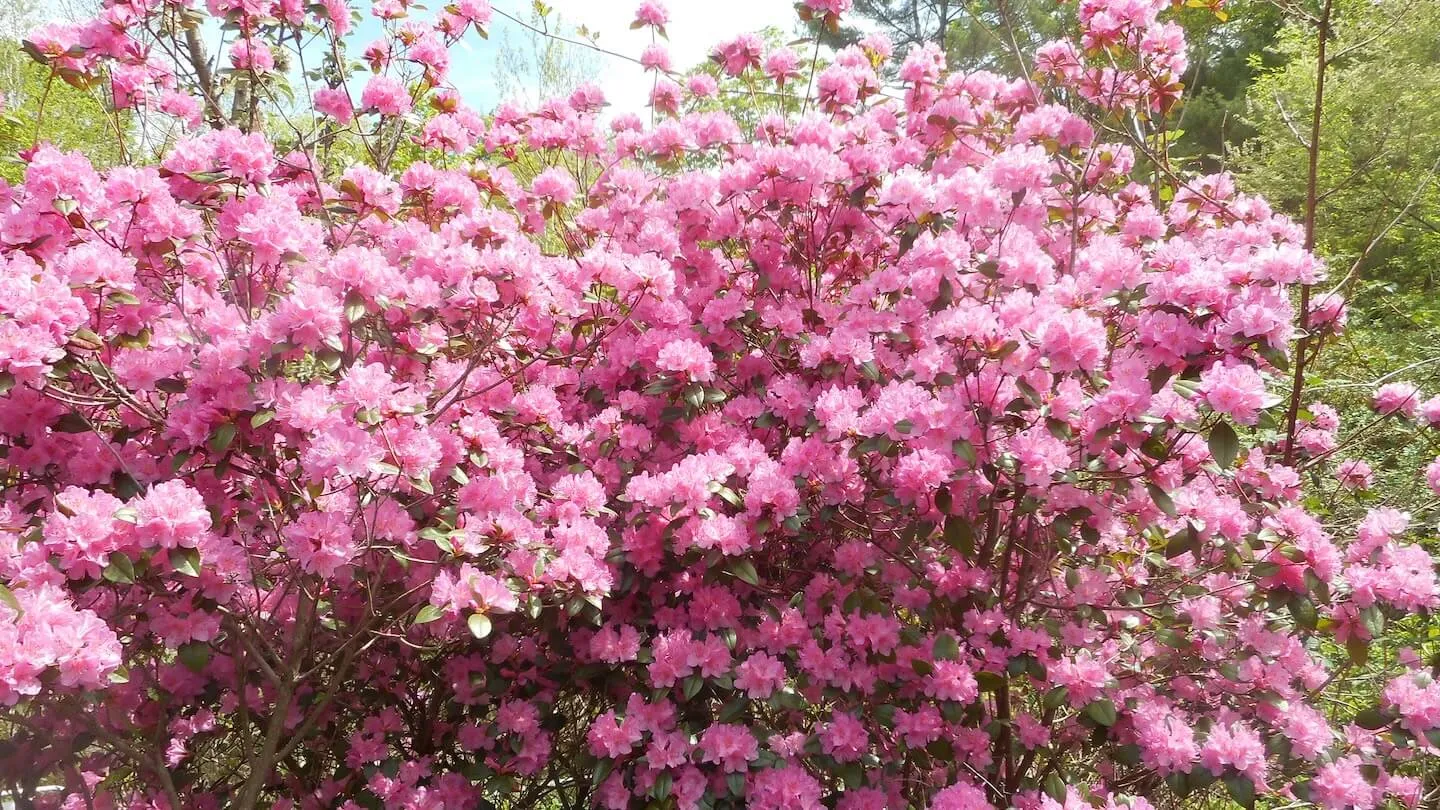
It might surprise you to learn that all azaleas (Rhododendron spp.) are, in fact, rhododendrons, though all rhododendrons are not azaleas. Azaleas tend to be smaller shrubs (around 5’ tall) and their leaves more petite and less leathery.
Both azaleas and rhododendrons include evergreen and deciduous varieties. Evergreen azaleas are native to Asia and retain their leaves through winter. The leaves of deciduous azaleas may change color before dropping in autumn. They’re native to North America and Europe.
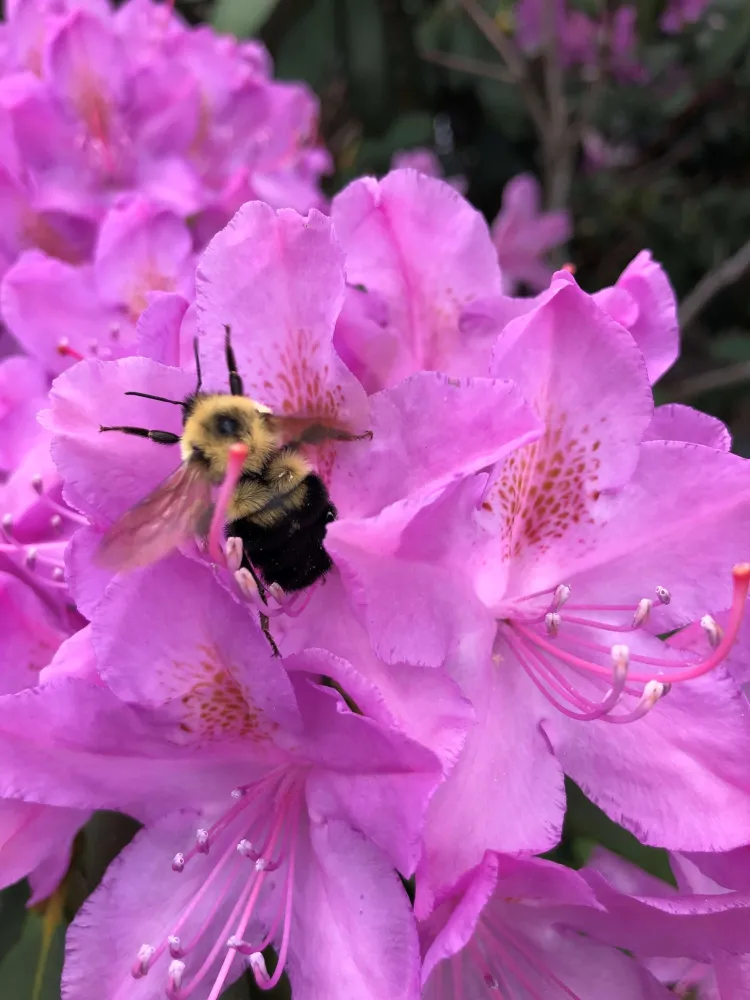
Their flowers have five lobes and are bell- or funnel-shaped. They might be purple or pink, red, orange, yellow, or white. If the flower has five stamens, it’s an azalea. If you count 10 (or more), it’s a rhododendron.
Most azaleas are hardy in United States Department of Agriculture Hardiness Zones 6 to 9, but there are cold-hardy varieties that do well in areas as cold as Zone 3. Rhododendrons are hardy in Zones 4 to 8, also with some hardy to Zone 3.
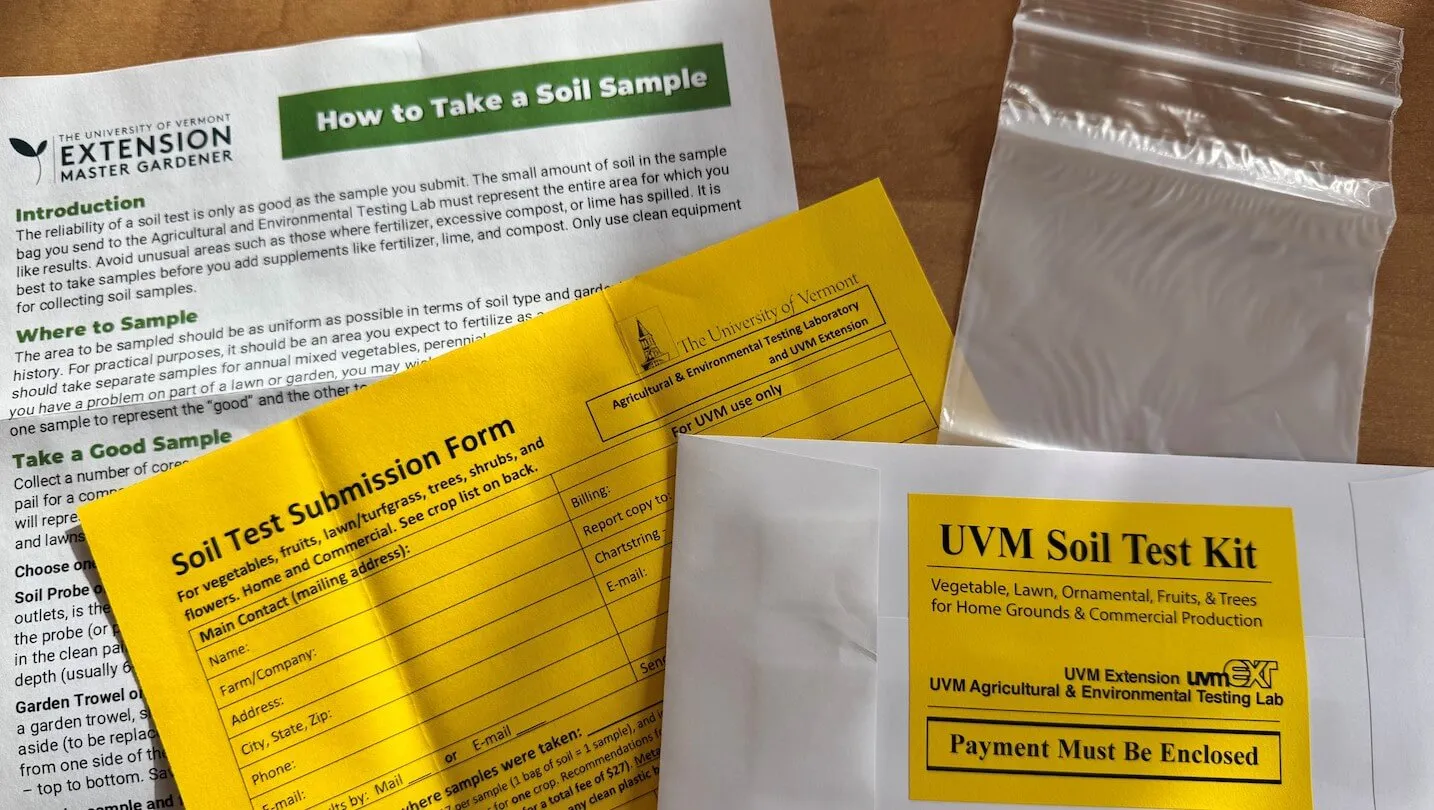
Both prefer acidic soil (pH 4.5-6.0). If you’re not sure of your soil type or pH, consider having a sample of your soil tested. It’s easy and inexpensive. See: https://go.uvm.edu/soiltest for more information.
Plant azaleas and rhododendrons in early spring or autumn. Choose a location that receives the recommended hours of sunlight for the variety you’ve chosen. Light requirements can vary from part shade to part sun. Select an area with good drainage. You can amend heavy soils with compost, peat moss, composted leaves, pine needles, or pine bark to increase drainage. Evergreen rhododendrons can suffer from winter desiccation, so be sure to plant them in a protected site where there is not a lot of wind.
After planting, water well and apply a layer of mulch to help retain moisture. Water consistently during the first year, especially during the heat of summer.
Azaleas and rhododendrons are easy-care additions to the garden. In late winter or early spring, prune any damaged or diseased parts. Any other pruning—including for size or shape—should wait until immediately after flowering. Pruning too late can remove buds for next year’s flowers, which form soon after this year’s flowers have faded.
There’s no need to deadhead spent flowers: they’ll fall on their own. If you choose to fertilize your azaleas, do so after flowering. Fertilize according to package directions using a balanced, slow-release fertilizer for acid-loving plants.
To keep azaleas and rhododendrons happy over the winter months, give them a good, deep drink before the ground freezes and apply a layer of mulch to protect the roots and retain moisture.
If your rhododendron is an evergreen variety, you may have noticed that during the coldest days of winter its leaves curl into tight rolls. The curling leaves reduce the surface area and exposure to harsh environmental conditions that could result in water loss (transpiration) and lead to winter damage.
A word of caution if you have small children or pets that might eat any part of the plant: all parts of rhododendrons and azaleas contain toxins and can be harmful if eaten. That doesn’t, however, make them a “deer resistant” plant for home gardens. On the contrary, deer often dine on their leaves and buds.
Deer nibbles and other hazards aside, azaleas and rhododendrons can live 30 to 50 years (or more), bringing decades of color and fragrance to your garden.
For home gardening questions, contact the University of Vermont Extension Master Gardener Helpline online, at https://go.uvm.edu/gardenhelpline, or by phone, at 802-656-5421 on Thursdays between 9 a.m. to 12 p.m. from April to October.