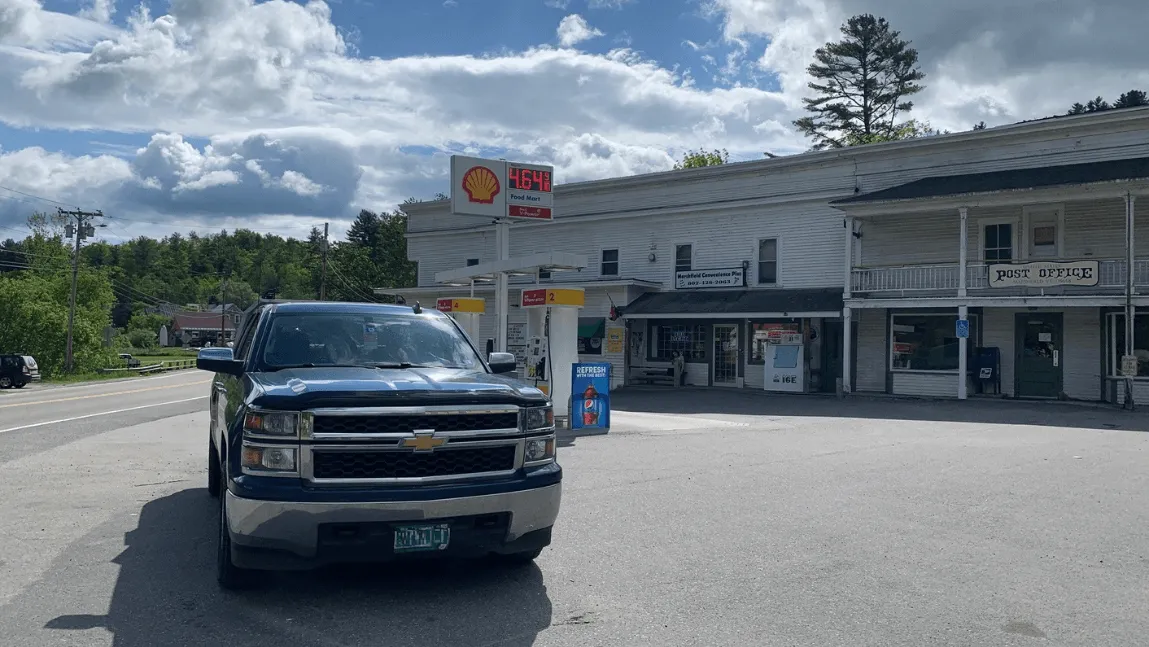
Reducing the environmental impact of travel in small and rural communities will be necessary to meet U.S. climate goals. To address this need, The National Science Foundation (NSF) has awarded the University of Vermont funding for a three-year project to engage in transformative research aimed at strengthening America’s infrastructure. Dana Rowangould, Assistant Professor in the College of Engineering and Mathematical Sciences (CEMS), is the project’s principal investigator.
Rowangould, along with her CEMS colleagues Greg Rowangould and Liz Doran, are working with Jonathan Rubin from the University of Maine as part of Strengthening American Infrastructure (SAI), a NSF Program. Effective infrastructure provides a strong foundation for socioeconomic vitality and broad quality of life improvement. Strong, reliable, and effective infrastructure spurs private-sector innovation, grows the economy, creates jobs, makes public-sector service provision more efficient, strengthens communities, promotes equal opportunity, protects the natural environment, enhances national security, and fuels American leadership.
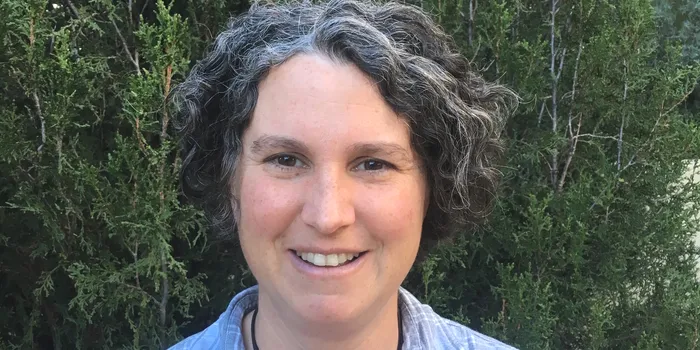
“Transportation systems are fundamental to people’s day-to-day lives,” Rowangould says. “An ineffective transportation system can leave people stranded and unable to reach jobs, education, healthcare, food, or family and friends. Or for those who are able to get around, it can be really expensive or difficult logistically. At the same time, the transportation sector is the largest source of greenhouse gas emissions (GHGs) in the U.S., and it’s an even larger source in rural places like Vermont. We need to reduce these emissions as quickly as possible to avoid catastrophic climate change impacts, and many of the ways that we know can reduce these emissions from transportation (like using transit, walking and biking, traveling shorter distances, or using electric vehicles) are harder to do in rural contexts.”
Rowangould works as part of the UVM Transportation Research Center (TRC), which conducts research that advances the science of understanding how we travel, the design of resilient transportation systems, and the impact of transportation on the environment, our health and wellbeing, and the economic prosperity of diverse communities.
Location, Location, Location
Transportation GHGs are particularly significant in small and rural communities where 30% of U.S. auto-travel occurs and the average person travels 40% farther that their urban counterparts. However, the vast majority of research that focuses on reducing transportation GHGs has been conducted in urban areas despite important differences in the physical and social contexts of rural communities.
Rowangould puts this discrepancy into context: “in many rural communities, it’s already harder to get around, and its going to be harder to reduce our reliance on fossil fuels. And it turns out that most of the academic research that has established how to reduce transportation emissions doesn’t look at rural areas. There’s a risk that we spend a lot of money on strategies that were developed in places like San Francisco or Boston, and they may not work in places like Vermont. And even here in Vermont, rural communities don’t all look the same -- what works in Brattleboro may not work in Island Pond.”
A clear understanding of those differences is needed in order to design GHG reduction strategies that work in rural contexts. The lack of rural travel behavior research stems in part from a lack of robust information about where, why and how people who live in rural places travel. This project strengthens our understanding of travel behavior in small and rural communities by first building a powerful new rural travel dataset and then using it to uncover the factors that influence how people travel in rural communities. This project also evaluates the effects of infrastructure investments and policies on the travel decisions and transportation GHGs of people in small and rural communities.
This project fills a critical gap in knowledge about rural travel behavior by creating a novel panel dataset that fuses spatially detailed data from three sources: vehicle observations, transportation infrastructure data, and individual-level survey data. And its collaborative aspect gives rise to rich opportunity.
Bridging Gaps Across Disciplines
Achieving these objectives requires the integration of expertise from across all science and engineering disciplines. SAI focuses on how fundamental knowledge about human reasoning and decision-making, governance, and social and cultural processes enables the building and maintenance of effective infrastructure that improves lives and society and builds on advances in technology and engineering.
“This project brings together researchers in Vermont and Maine with expertise that span transportation engineering, economics, and human behavior,” Rowangould says. “The strengths of this multi-disciplinary team will allow us to understand the effects of policies in a more wholistic way. We’ll be able to evaluate a broader range of types of policies to address climate change. And we’re not just looking at whether a policy is effectively reducing greenhouse gas emissions, but also – does it do so in a way that is equitable and supports people’s ability to get where they need to go? This is really important for making sure that climate policies work and also that they support economic opportunity and wellbeing across the board.”
The data are evaluated using a convergent human behavioral framework drawn from the fields of transportation planning and engineering, economics, and behavioral sciences. Importantly, the dataset tracks changes in travel behavior over time, supporting an analysis of peoples’ responses to interventions such as changes in energy prices, electric vehicle (EV) purchase incentives, the availability of broadband internet, changes in land use, and the location of EV charging infrastructure.
This research will help small and rural communities achieve deep reductions in GHG emissions by providing insights into how to leverage transportation infrastructure investments, technology, and policies to reduce GHGs while supporting economic vitality, mobility, and equity. As Rowangould says, “This project will dig more deeply into how to equitably and effectively reduce transportation emissions in rural communities so that we can more transition to a low-carbon transportation future while growing our economy and improving people’s wellbeing.”
The potential long-term benefits of this project are clear. “We’re building a really powerful dataset that will give us the ability to support the design of policies that will help us transition to a low-carbon transportation future in Vermont, Maine, and rural communities across the U.S.,” Rowangould says. “We’ll be able to design policies to reduce transportation emissions, and as new policies roll out, we’ll be able to evaluate how well they are working and suggest adjustments to help them to be more effective and equitable.”