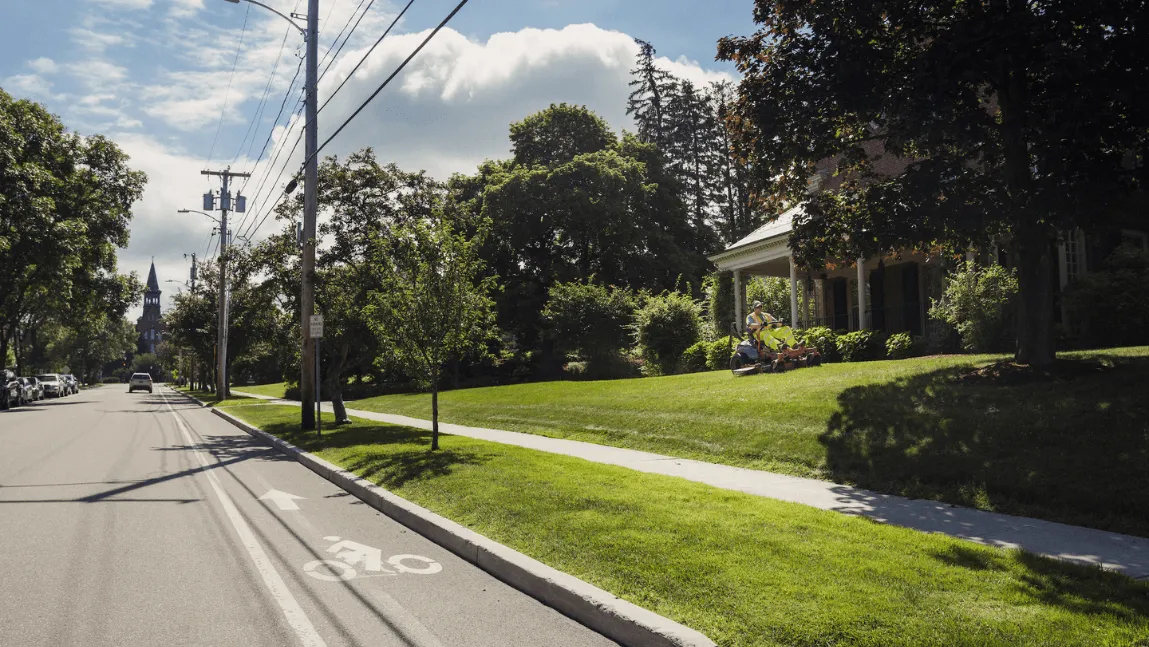
The U.S. Department of Transportation (DOT) recently awarded $20 million to the National Center for Sustainable Transportation (NCST) to study transportation’s effects on the environment. The University of Vermont (UVM), one of the original members of the NCST consortium, will play a key role in research focused on sustainable and equitable solutions to rural travel.
Greg Rowangould, Director of UVM’s Transportation Research Center (TRC) and Associate Professor of Civil and Environmental Engineering, understands how transformative this funding can be. “This funding will not only continue our partnership with some of the world’s top sustainable transportation research centers, but it also sets up UVM to play a leading role in research that aims to transform the sustainability of travel in smaller communities and rural areas.” DOT’s funding will allow Rowangould and the TRC to expand their research into solutions for communities in rural states like Vermont where transportation challenges are often even more complex than in the large urban areas that have been the focus of most transportation research over the past several decades.
For over 15 years, the TRC has been a hub for cutting edge, multidisciplinary transportation research, innovative outreach programs, and education of our future leaders—with a focus on sustainable and equitable solutions for smaller cities and rural communities in Vermont, New England, and beyond. It is an actively engaged member of the NCST team.
In addition to UVM, the NCST is led by and housed in the UC Davis Institute of Transportation Studies, and is comprised of California State University Long Beach, Georgia Institute of Technology, University of California Riverside, University of Southern California, and Texas Southern University.
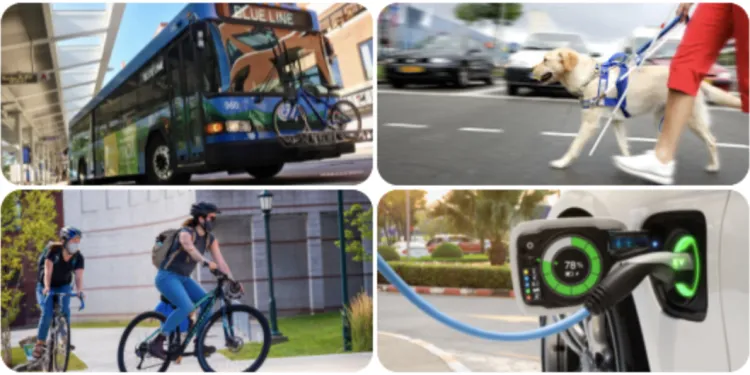
Since its establishment in 2013, the NCST has helped to organize and fund research addressing urgent and critical transportation challenges, and its researchers have partnered with thought leaders and stakeholder groups to provide national leadership for advancing an environmentally sustainable transportation system.
The DOT’s $20 million grant ($4 million per year over 5 years) will allow researchers to focus on accelerating equitable decarbonization that benefits both the transportation system and the well-being of people in overburdened and historically disadvantaged communities. Research activities will concentrate in three critical domains: vehicle technology, infrastructure provision, and reshaping travel demand to accelerate reductions in greenhouse gas emissions.
“Reducing greenhouse gas emissions from transportation is one of the most important and challenging problems we face. Even here in Vermont, a state with a long history of climate action and aggressive climate goals, we have seen very little progress in cutting greenhouse gas emissions from transportation over the past two decades. Our research will focus on how we can reduce greenhouse gas emissions while also better meeting the mobility and transportation needs of all communities and people.”
Director of the NCST and UC Davis Professor Susan Handy agrees. “Finding a way to decarbonize transportation that does not exacerbate existing inequities is one of the most significant societal challenges we face,” she said. “With the new grant, we will expand our focus on equity and justice and launch new initiatives on rural mobility, vehicle electrification, and sustainable freight.”
The funding was granted as part of the Department of Transportation’s University Transportation Center (UTC) program. This year’s grant competition included a total of 230 applications, representing the largest number of applications ever submitted in the 35-year history of the UTC Program. The NCST is one of only five national transportation centers awarded under the UTC program, and the only one focused on the DOT research priority of Preserving the Environment.
Being an essential part of this network is crucial to Rowangould and his team at the TRC—as is their work educating our future leaders. “Students are a fundamental part of everything we do at the TRC. This grant will also allow us expand our current student research and educational programs, launch a new sustainable transportation summer research experience for undergraduates, and develop new tools and resources to support policy and decision makers.”