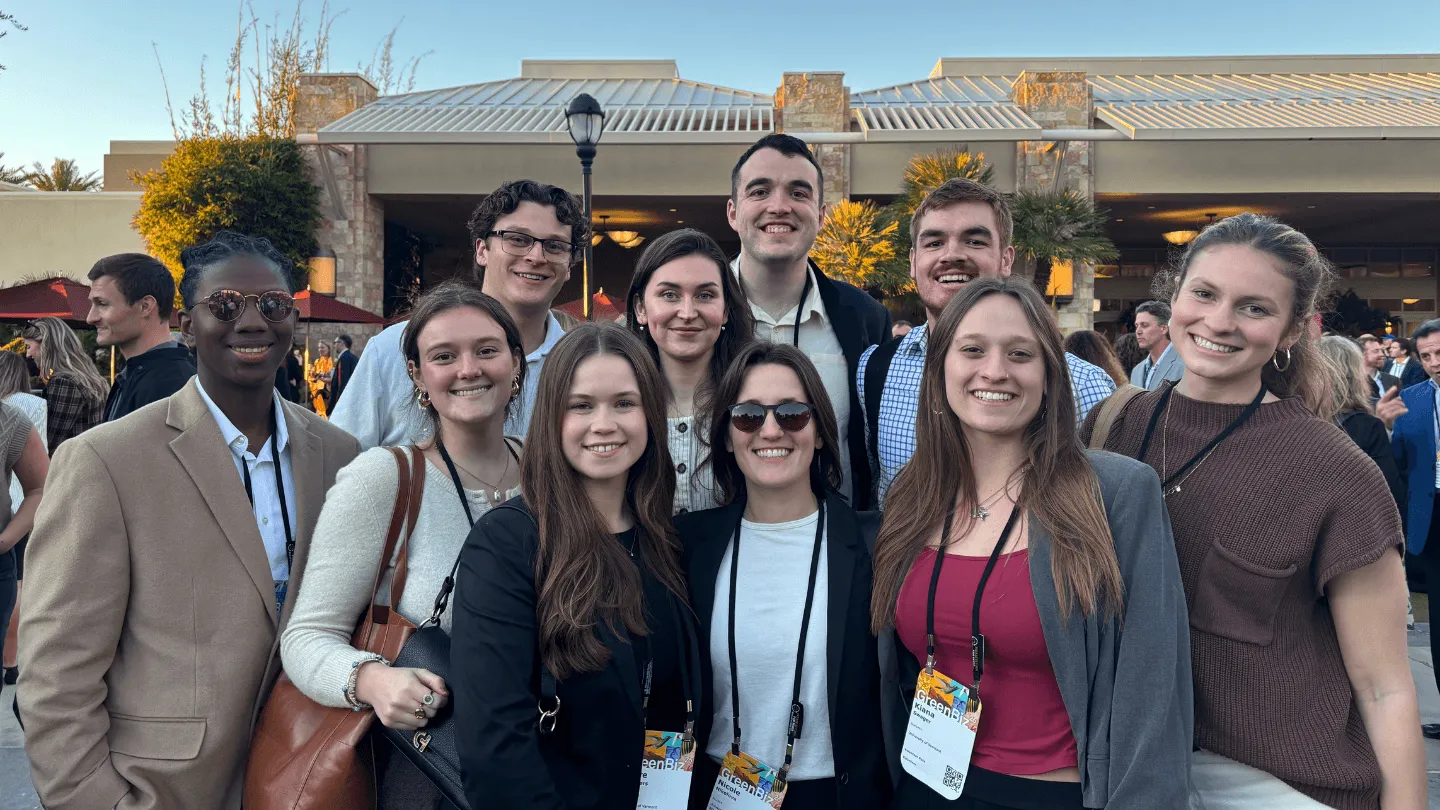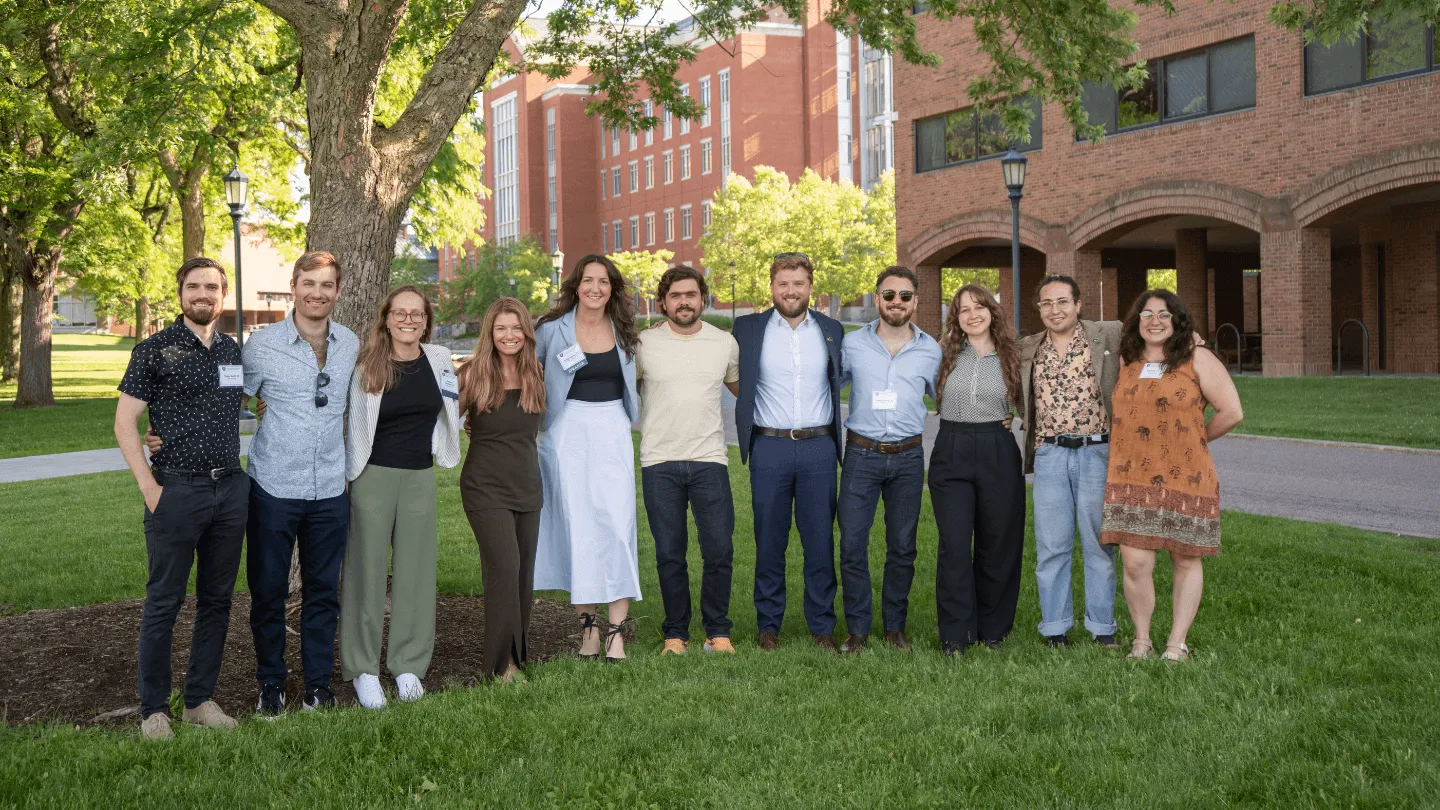
The Sustainable Innovation MBA (SI-MBA) program at the Grossman School of Business at UVM convened students, alumni, and industry leaders for the first SI-MBA Learning and Connection Summit, a weekend grounded in connection, learning, and practical action.
Designed to bridge classroom learning with real-world impact, the Summit brought together voices from across sectors to explore how businesses can drive meaningful and lasting change. View all photos from the event on PhotoShelter.
“This experience is about learning directly from the people doing the work,” said John Kim, SI-MBA Career Advisor. “Every person in the room shares a belief that business can and should be a force for good. That shared conviction is what makes this community so powerful.”
This inaugural gathering was made possible through the generosity of community and business partners, including a lead gift from Greg '79 and Susan Hunt. Additional support came from Cabot Cooperative Creamery (Coffee Break Sponsor), EastRise Credit Union (Meal Sponsor), Rhino Foods (Reception Sponsor), Seventh Generation (Breakfast Sponsor), Vermont Community Foundation (Reception Sponsor), and Vermont First by Sodexo (Food and Beverage Sponsor). In-kind support was provided by Bivo, Cabot Hosiery Mills / Darn Tough, King Arthur Baking Company, and Vermont Green FC.
A Day of Insight and Application
A highlight of Saturday was the keynote address from Kyle Clark, CEO of BETA Technologies. Clark leads all technical and strategic components of the company, including the design, testing, certification strategy, and commercialization of the ALIA aircraft platform. Since founding BETA in 2018, he has remained deeply involved in the work, continuing as a test pilot across the company’s experimental aircraft.
Clark’s remarks, along with sessions across climate tech, impact investing, AI, and career design, reinforced the urgency and opportunity for businesses to innovate at scale. He challenged participants to think beyond short-term gains and toward long-term systems change, particularly in industries like clean energy and transportation.
“When you think in a long-form way… you don’t just dismiss things because they need policy change or regulatory change, or fundamental technology development… you start investing now, setting the foundation so you can build the house as those things come together.”
His perspective underscored a core reality of sustainability work: solving complex challenges requires sustained investment, cross-sector alignment, and patience.
Clark also emphasized the human side of innovation, highlighting the discipline required to stay committed to long-term progress:
“Persistence is much more active. It means you're doing something about it every day, and you're not getting the gratification that you expect.”
Together, his message grounded the day in a clear throughline—innovation is not a single breakthrough moment, but an ongoing commitment to building solutions that matter over time.
Throughout the Summit, participants engaged in panels, interactive sessions, and discussions that reflected the breadth of today’s business landscape:
Advancing climate tech and clean energy innovation
Redefining career trajectories through conversations on career pivots and the future of work
Leveraging capital for impact through sustainable finance
Exploring the intersection of AI and sustainability through applied learning
Speakers shared not only their expertise, but also candid reflections on challenges and trade-offs.
“In a time when output is cheap, it’s evaluation, critical thinking, and judgment that create value,” said Rochelle March, lecturer and AI workshop facilitator. “Those are the skills sustainability leaders need to build more resilient systems.”
Connecting Theory to Practice
For SI-MBA students and alumni, the Summit served as an extension of the program’s experiential learning model.
“It’s one thing to study sustainable innovation. It’s another to hear directly from leaders navigating these decisions every day,” said Emily Listowich, SI-MBA Class of 2025. “The program didn’t hand me answers. It pushed me to ask better questions and see business as a tool for impact.”
That mindset carried into a later conversation featuring Jeffrey Hollender, co-founder and former CEO of Seventh Generation, who sat down with Listowich to explore what it truly means to build a sustainable business.
Hollender challenged the idea that sustainability can be addressed through isolated initiatives, instead calling for a more holistic, systems-driven approach:
“This is not about one or two aspects of the business being sustainable… it’s about trying to create companies that are having, from a systemic perspective, a positive impact—not just on the environment, but on society.”
He also emphasized that long-term impact must include how value is created and shared:
“I don’t think a company could be sustainable or responsible if they’re not sharing the value they create with the people that create that value.”
Together, these insights expanded the Summit’s definition of innovation—not only as technological advancement, but as a rethinking of business systems, incentives, and outcomes.
Across sessions and informal conversations, attendees reflected on how their understanding of business has evolved over time.
“I used to be captivated by achievement. Now I’m captivated by people who build meaningful work and lives in the process,” shared Ruchi Nadkarni, SI-MBA Class of 2020. “Maybe sustainable innovation isn’t just about what we build, but who we become while building it.”
Community at the Center
A defining element of the Summit was the strength of the SI-MBA community. Alumni from across cohorts returned to Burlington, reconnecting with classmates and forming new relationships grounded in shared purpose.
“Being back on campus discussing how to use business as a force for good felt like home,” said Andria Reigneau, SI-MBA Class of 2023. “When impact is foundational, you connect instantly through shared values, no matter your background.”
That sense of connection extended across generations of alumni.
“Friends from the MBA Class of ’22, back together again,” said Sammy Fries, SI-MBA Class of 2022. “We showed up because we believe business can be better. Not just for shareholders, but for everyone.”
The Summit also created space for reflection on career journeys and personal growth.
“It reminded me to zoom out and think about the problem I’m trying to solve,” said Catherine Lange, SI-MBA Class of 2024. “We’re not bound to one path. We can change course and continue moving toward greater impact.”
Looking Ahead
The SI-MBA Summit reflects the program’s ongoing commitment to preparing leaders who can navigate complexity and create value for business and society.
With continued partnership from organizations across Vermont and beyond, the Summit continues to grow as a space where ideas turn into action and relationships turn into lasting impact.
As the SI-MBA community looks to the future, the momentum from this inaugural gathering is clear: a shared belief, a growing network, and a commitment to building a more sustainable and equitable economy.
The Sustainable Innovation MBA program is currently enrolling in the Class of 2027 through July 18. Prospective students are invited to join a community focused on redefining the role of business in addressing today’s most pressing challenges. Contact Travis Perry M.S. or Emily Battistoni in Graduate Student Services: si-mba@uvm.edu