Agriculture is about far more than growing food. For CJ Doherty, it has become a gateway to understanding everything from land use and environmental stewardship to global supply chains.
“It's not just about food production; it's about land use. It's about resource consumption. It's about partnership, trade, and supply chains. It's such a great intersection of so many interesting areas,” he said.
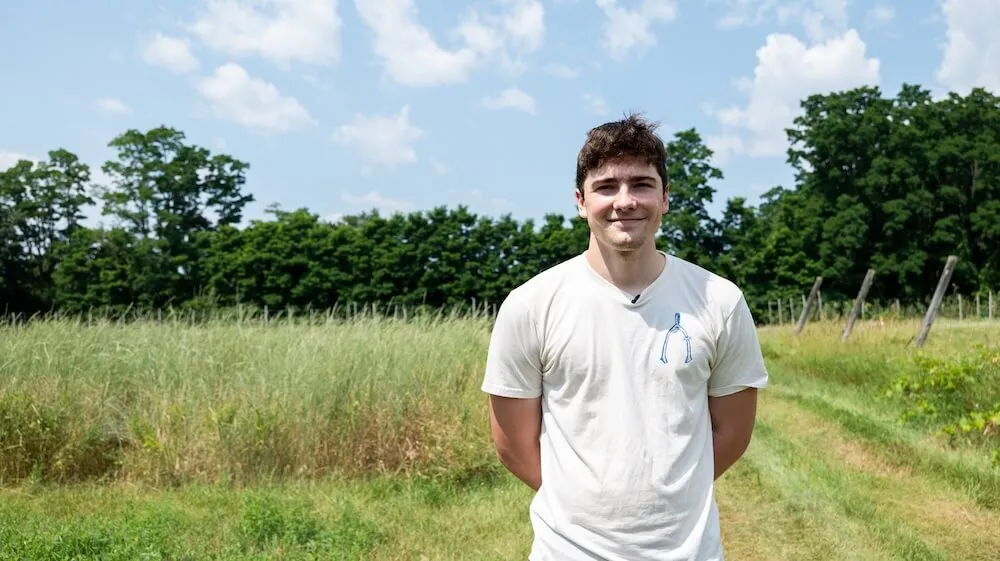
At the University of Vermont Horticultural Research and Education Center, he conducted hands-on agricultural research on an aspect of food production tied to all those things; researching the production of a grain that could be sustainable against changing geopolitics, climate, and economies.
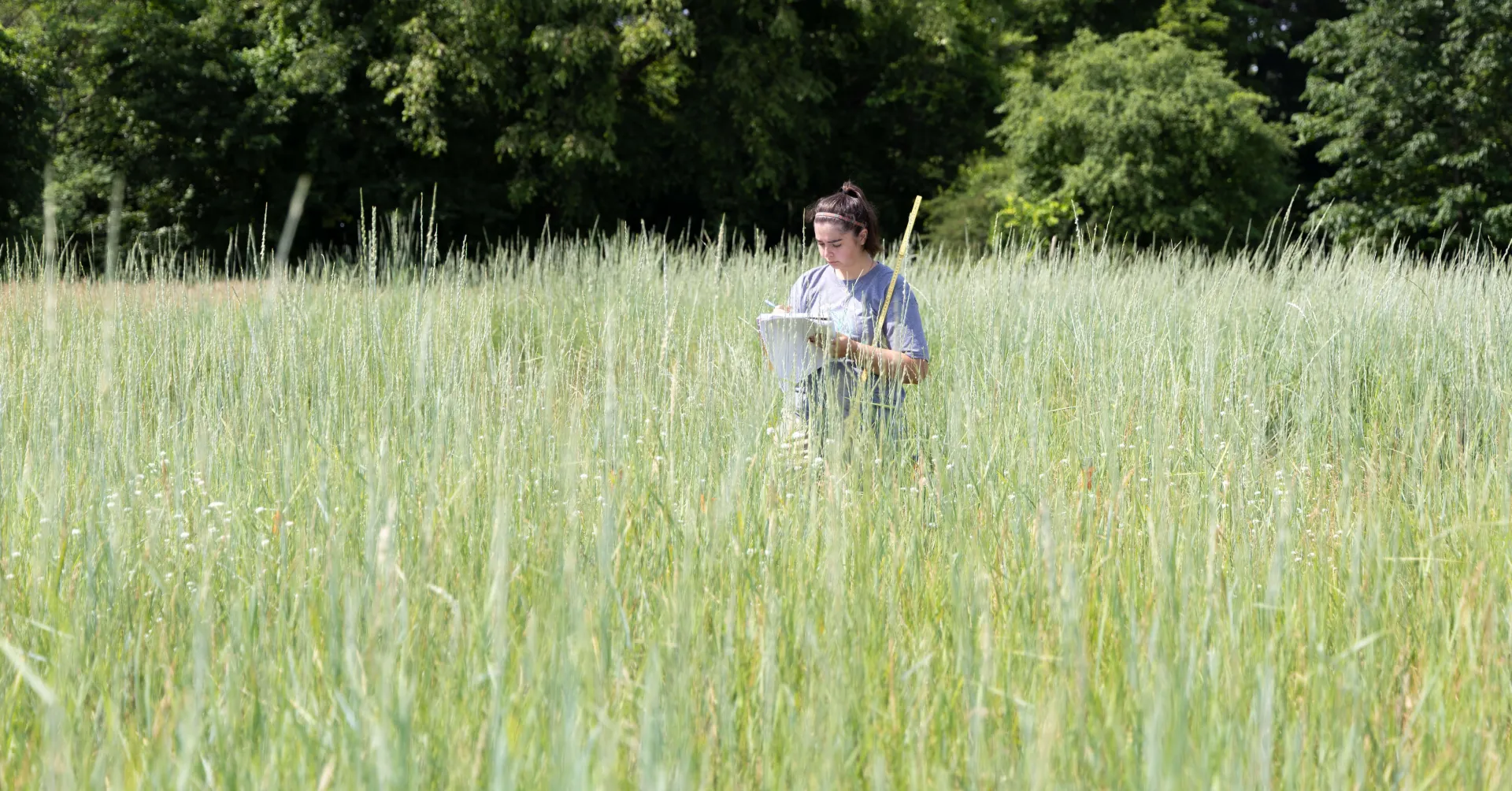
Doherty is a senior Community Development and Applied Economics major from Baltimore, Maryland. This summer, he worked with his faculty advisor Eric Bishop Von Wettberg on a project studying the productivity of kernza when intercropped with alfalfa.
Kernza is a perennial wheatgrass that has only been grown commercially for about the past decade. Researchers across the country are studying its potential as a more sustainable grain crop than wheat. Its deep root system helps it withstand drought, and because it is perennial, kernza does not need to be replanted each year. While kernza typically produces lower yields and can be more difficult to harvest than conventional grains, it may offer greater resilience in a changing climate. Doherty hopes it could be particularly well suited to Vermont, where its extensive root system may also help it survive the floods the state has experienced in recent years despite the currently low yield.
Kernza could also be economically beneficial to producers. Fertilizer costs have risen in recent years due to a range of factors, including global geopolitical disruptions, creating additional financial pressure for farmers. Synthetic fertilizer can also contribute to runoff and water pollution. The research compares fertilized and unfertilized kernza, as well as kernza intercropped with alfalfa. The team is investigating whether alfalfa can serve as a natural substitute for synthetic nitrogen fertilizer. As a legume, alfalfa fixes nitrogen, reducing the need for added fertilizer. It is also a high-protein forage crop for livestock, and its deep roots complement those of kernza.
Doherty says that finding innovative solutions to the problems plaguing global agriculture “all starts with research universities like UVM who are blazing trails in regard to new cultivars, new solutions, and new strategies.” The project is part of a long-term, multi-site NSF Biology Integration Institute and Multistate Hatch study involving partnerships with The Land Institute, the Donald Danforth Plant Science Center, the University of Missouri, the University of Kansas, and Washington University in St. Louis. Additional collaborators involved in developing the kernza varieties used in the study include the University of Minnesota, the University of Illinois Urbana-Champaign, Kansas State University, and the University of Nebraska-Lincoln.
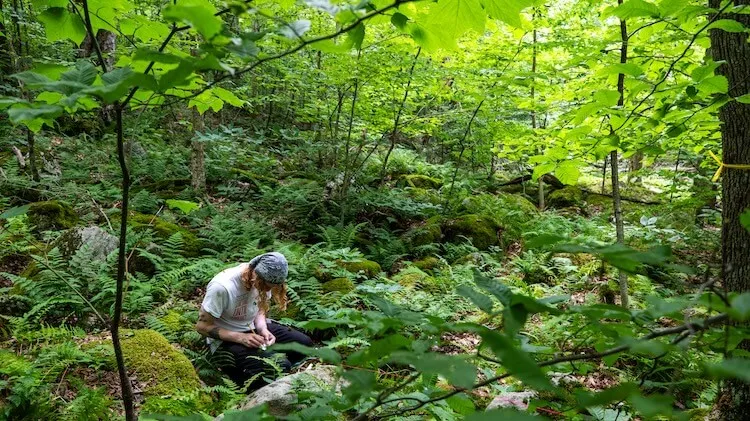
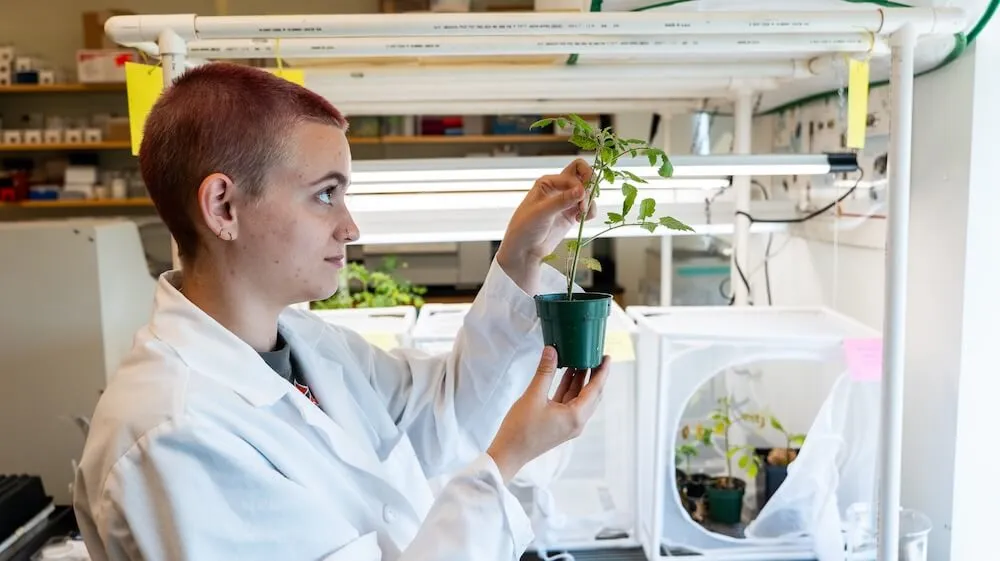
Doherty is one of a cohort of Undergraduate Research Fellows funded by the UVM Food Systems Research Institute each summer to gain hands-on experience working closely with UVM researchers to study impactful and pressing food systems issues relevant to Vermont. Their research encompasses the diversity of food systems research, spanning from pest control to food safety, and from the intricacies of diet culture to the significance of cover crops. These fellows play an important role in developing the knowledge and solutions needed for more sustainable agriculture and a resilient food system.
---
About the Food Systems Research Institute:
The Food Systems Research Institute (FSRI) at the University of Vermont (UVM) funds collaborative research that puts people and the planet first, unites disciplines and communities, and answers complex questions about food systems.
The FSRI gives researchers the freedom, resources, and time to engage community stakeholders, including decision-makers, farmers, and food systems actors, about issues and opportunities across our food system. This results in relevant, widely disseminated research that informs policies, practices, and programs locally and regionally for a more resilient and accessible food future for all.