The Opportunity
Medical innovation rarely begins in a boardroom or manufacturing plant. More often, it starts in a university laboratory, a clinic, or a conversation between researchers seeking answers to some of health care's most pressing challenges. At academic medical centers, discoveries that once ended with publication are increasingly advancing beyond the pages of scientific journals, finding new pathways to patients through technologies, treatments, startups, and industry partnerships. As the pace of biomedical innovation accelerates, the opportunity to translate research into real-world impact has never been greater.
According to a 2025 Precedence Research report, the global medical devices market size alone will grow from $678 billion in 2025 to nearly $1.14 trillion by 2034. Driven by aging populations, technological advancements, advanced diagnostic tools, minimally invasive solutions and connected health care devices, the opportunities to translate research into new therapies, policies and health care solutions that meaningfully impact lives and improve outcomes are numerous.
Faculty and scientists at the University of Vermont (UVM) and the Larner College of Medicine (Larner) have long been at the forefront of groundbreaking research. In 2025, as a result of sustained investment in cutting-edge research and development, faculty excellence, and academic innovation, UVM was designated as a R1 institution by the Carnegie Classification of Institutions of Higher Education.
Making Market-Ready
As a part of UVM’s ongoing investment in research, Corine Farewell, D.V.M., M.B.A., director of UVM Innovations, leads a team that provides guidance and support to the academic community on all aspects of protecting and commercializing university innovations. Across campus, Farewell’s team helps unearth the commercial potential of a discovery, brings together UVM faculty and researchers with intellectual property (IP) attorneys to protect IP, market it to potential licensees or help facilitate setting up a commercial enterprise or company.
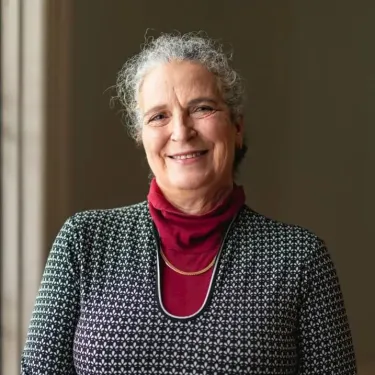
“Intellectual curiosity is the fuel for our knowledge-based economy, with intellectual property providing the tangible assets for successful technology translation from the lab to market,” said Farewell. “Innovation and entrepreneurship are a fast-growing component of everyday life at UVM and Larner.”
“Our role at UVM is to work with our faculty and their students, to help identify the outcomes of their research that are able to be translated into real-world use. For those who work with us and have the desire to see their research have impact beyond publications, it starts with identifying the technology and working with the researcher on the best path forwards,” said Farewell. “It could be a patent, it could be a copyright, it could be just publishing, or it could be open-source licensing. There are many different paths to take a technology from being a wonderful idea and move it forward.”
Larner researchers have been particularly active contributors to UVM's innovation ecosystem. Since 2022, Larner faculty members have submitted 67 invention disclosures, received 26 U.S. patents, and helped launch seven health science and biotech-related startup companies. Of the 10 UVM-affiliated startups from the last five years, nine are health related and developing novel medical technologies, diagnostics, therapeutics, or digital health solutions.
UVM's commitment to accelerating research impact has recently been reinforced through two major federal awards. This fall, the university received a National Science Foundation (NSF) Accelerating Research Translation (ART) award to establish INVEST (Identifying and Nurturing Vermont's Emerging Strategic Technologies), a university-wide initiative designed to help researchers translate discoveries into practical applications, products, and companies while strengthening Vermont's innovation economy.
UVM also won the Growth Accelerator Fund Competition prize (GAFC) from the U.S. Small Business Administration (SBA) to support development of a cross-campus entrepreneurial hub focused on strengthening intellectual property management, researcher-to-entrepreneur pathways, and startup creation.
UVM researchers can draw on a growing network of entrepreneurial programs, including SPARK-VT, UVM Ventures, the IDeA Entrepreneurship program known as iTREP, and UVM's participation in the U.S. National Science Foundation Interior Northeast Innovation Corps Hub (I-Corps). Building on these efforts, the NSF-funded INVEST initiative is expanding opportunities for graduate students, postdoctoral fellows, faculty researchers, and clinicians to develop translational research and entrepreneurial skills.
For entrepreneurial learners seeking a formal academic pathway, Larner's new Biomedical Entrepreneurship micro-certificate of graduate study combines two online, applied courses: MED 5010, Foundations in Biomedical Entrepreneurship, and MED 5011, Biomedical Venture Development. Together, these offerings allow participants to progress from initial curiosity to advanced venture planning while connecting with UVM's broader innovation and commercialization ecosystem.
“These investments position UVM to build a more robust innovation ecosystem while creating economic opportunities throughout Vermont,” - Corine Farewell, DV.M., M.B.A.
“These outcomes illustrate the growing culture of intellectual property development, entrepreneurship, and translational research within the health sciences and demonstrate the value of providing researchers with clear pathways from discovery to societal impact.”
In the Marketplace
Recent examples of innovations launched commercially by Larner faculty include a portable, non-invasive, brain-cooling device from NeuroCool Technologies, targeted cancer therapeutics from TR Beta Oncology founded by Frances Carr, Ph.D., childhood mental health and emotional wellness digital health and wearable-sensor technologies from Biobe, a diagnostic test that identifies patients at higher and lower risk of thrombotic events (heart attack, stroke, and death) from Prolocor, and CoreMap—a startup company that just closed an oversubscribed Series C funding round—and who are focused on developing advanced tools to improve the treatment of atrial fibrillation (AFib) and enable patient-specific treatments.
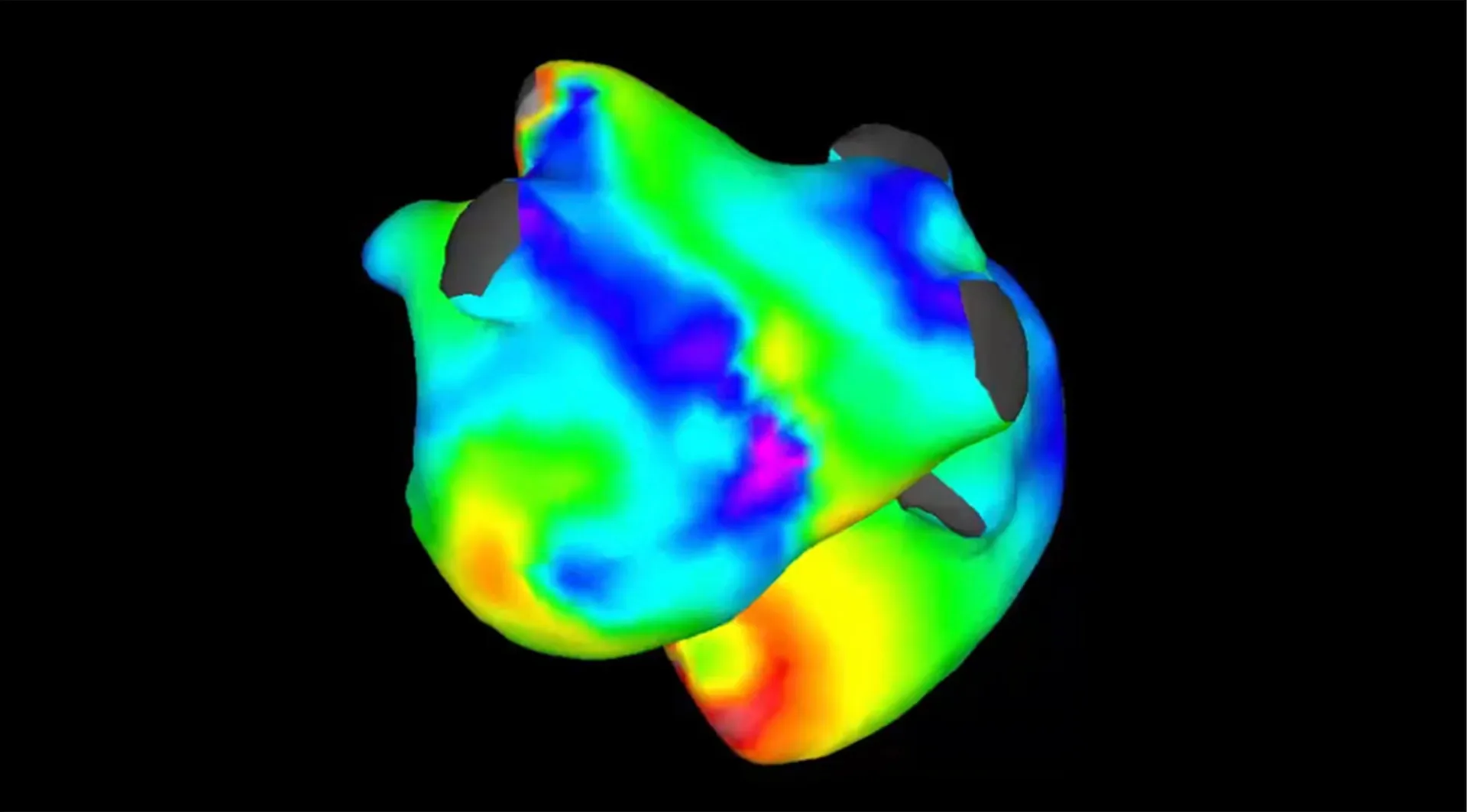
CoreMap was co-founded by Peter Spector, M.D., a Larner professor of medicine along with medical technology executive Sarah Kalil in 2016, based on research Spector was conducting at Larner. He had created a system for mapping the electrical activity in the heart during AFib, which allowed physicians to precisely identify the sites that perpetuate AFib and thus target those sites for treatment. Spector received a SPARK grant in 2018 to help move the platform a step closer to the marketplace. CoreMap is now funded completely by private investors.
The Series C financing round, which is a late-stage financing step meant to fuel aggressive growth and provide investors with an opportunity to buy equity, raised $37 million from several investors, reflecting strong confidence in the company. Health technology innovator Medtronic, which sells cardiac mapping and ablation systems, contributed the largest investment, along with other institutions and individuals from the Vermont investment community.
"I’m excited by the success and acceleration of several UVM startups and our ability to build an ecosystem of entrepreneurs, investors, industry partners, and translational research programs that can help discoveries reach the people who need them," Farewell said. "The recent NSF ART and SBA GAFC awards further validate the progress UVM has made in building a culture of innovation and entrepreneurship. Together, these investments allow us to better support faculty and students as they transform research discoveries into technologies, companies, and health care solutions that create public benefit for Vermont and beyond."