200K FIRE Grant Awards
Our FIRE Grant Program offers $200,000 over two years for interdisciplinary cardiovascular and brain health research, funding pairs of complementary investigators.
200K FIRE Grant Awards
Our FIRE Grant Program offers $200,000 over two years for interdisciplinary cardiovascular and brain health research, funding pairs of complementary investigators.
Current FIRE Grant Award Recipients
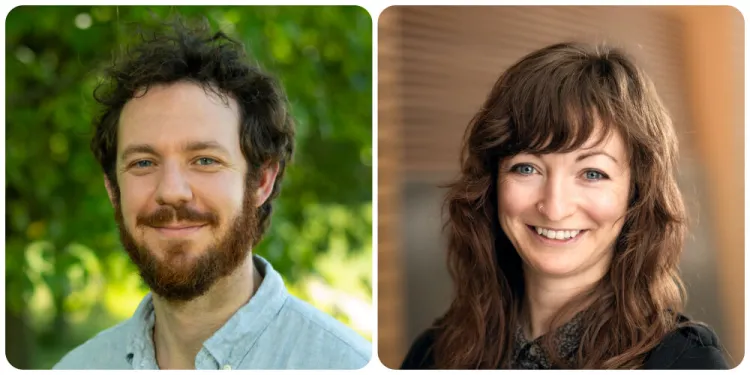
2026 FIRE Grant Award Recipients: Chris Skinner, PhD, and Molly Stanley, PhD
Project Leaders
Chris Skinner, PhD, is an Assistant Professor of Nutrition in the College of Agriculture and Life Sciences. His research focuses on interactions between diet and other factors, such as alcohol or exercise, and their combined impacts on cardiometabolic health.
Molly Stanley, PhD, is an Assistant Professor of Biology and Co-Director of Undergraduate Neuroscience in the College of Arts and Sciences. Her research focuses on understanding how the nervous system guides feeding decisions and how dietary choices impact brain health.
Project Description
Eating a Western-style diet, which is high in fat and sugar and low in fiber, can harm heart, body, and brain health. Binge drinking, which means having 4 to 5 or more drinks within 2 hours, can also damage health. Scientists know these habits are harmful on their own, but they know much less about what happens when they occur together. In this study, we will examine how a Western diet and binge drinking affect the connection between the gut, liver, and brain over time. Using male and female mice, we will look for signs of disease, inflammation, and changes linked to brain damage. We will determine any differences by sex. Our goal is to better understand how these habits work together to affect health and to identify possible targets for future treatments.
2026 FIRE Grant Award Recipients: Jasmine Mirdamadi, PhD, and Michael Rosenberg, PhD

Project Leaders
Dr. Jasmine Mirdamadi is an Assistant Professor in the Department of Rehabilitation and Movement Science. Her research investigates how sensory and cognitive processes shape cortical control of balance in aging and neurological disease. She aims to develop clinically feasible biomarkers that inform clinical assessments and guide personalized fall-prevention and rehabilitation strategies.
Dr. Michael Rosenberg is an Assistant Professor in the Department of Electrical and Biomechanical Engineering. His research aims to develop techniques and principles to characterize gait impairment and personalize gait rehabilitation. His work integrates engineering, neuromechanics, and applied mathematics to study gait in people with biomechanical, motor, and cognitive deficits.
Project Description
Freezing of gait is a disabling symptom of Parkinson’s disease in which a person’s feet suddenly feel “stuck” while walking. Freezing can increase the risk of falls and reduce independence. Standing up and starting to walk requires the brain and cardiovascular system to work together. The brain controls movement, while the body quickly adjusts blood pressure to keep blood flowing to the brain. Problems with blood pressure regulation are common in Parkinson’s disease, but their role in freezing is not well understood.
This study will examine whether changes in heart, brain, and nervous system function are linked to freezing. In the laboratory, we will measure brain activity, heart rate, and blood pressure during movement tasks to understand how these systems interact. We will also analyze blood samples to identify markers associated with freezing risk. Participants will then wear small sensors at home for one week to track movement and heart rate during daily activities. These findings may lead to better ways to detect, understand, and treat freezing.

Seed Grants: Seeding the future of research
VCCBH Seed Grants provide funding to determine the feasibility of a concept, support early-stage project development, gather additional preliminary evidence for applications with promising but non-fundable scores, expand into new areas of research or procure equipment for an ongoing project.