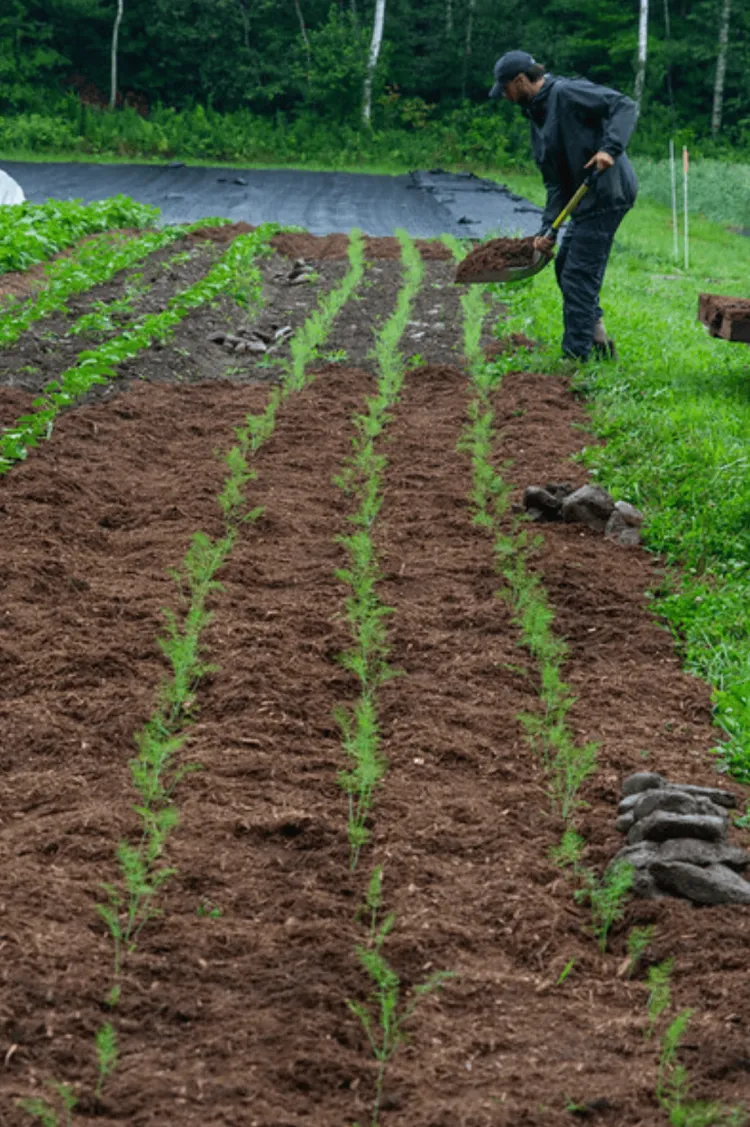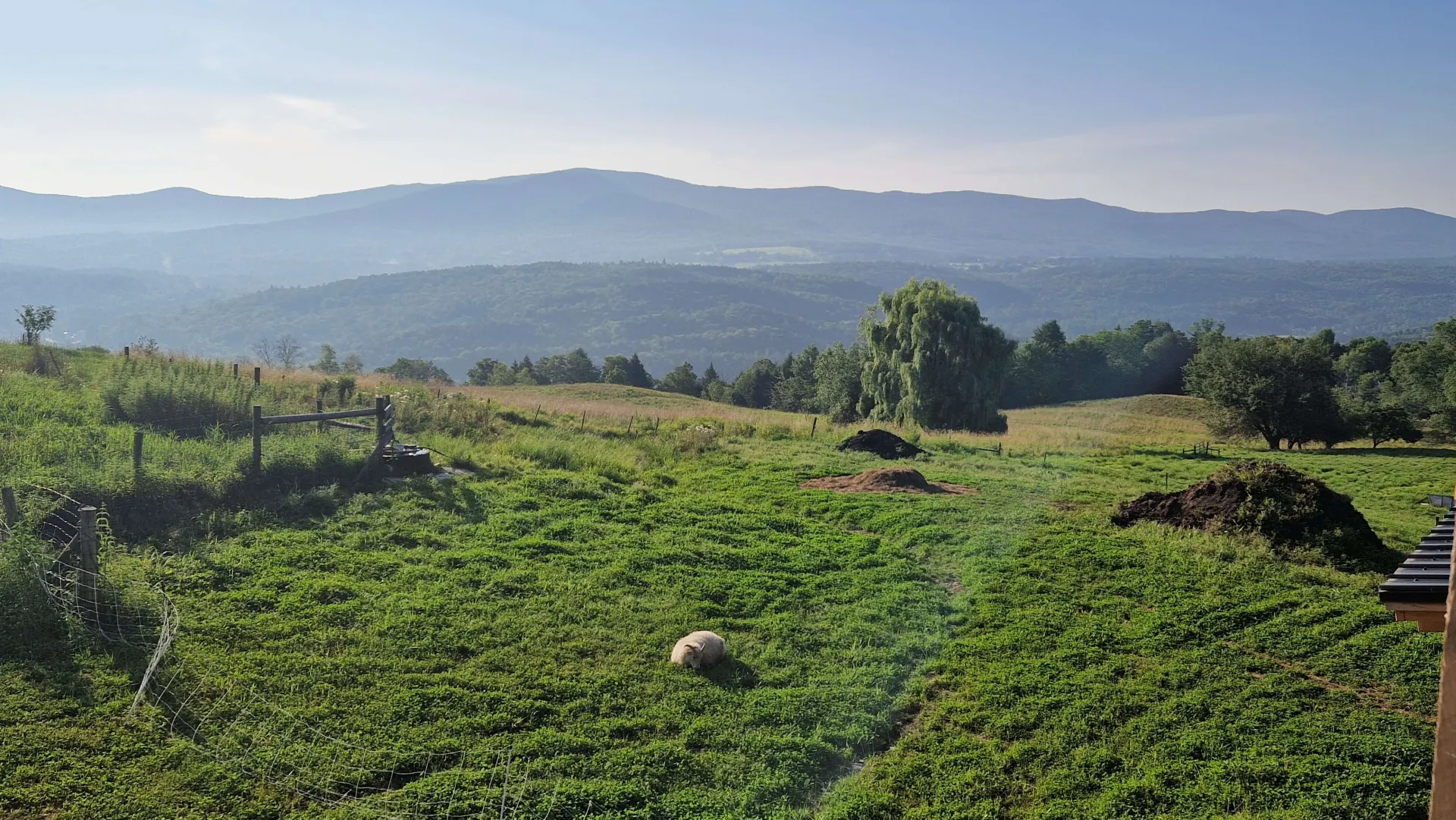
It’s early August in Shrewsbury, Vermont. The fields of Evening Song Farm are abundant with harvest and the heat of summer lingers in the air. Farm owners, Ryan and Kara Fitzbeauchamp, walk out to a recently planted bed, pausing to check on their broccoli. The small leaves, newly set into the dark soil, reach upward toward the sun, fragile and determined. This planting looks different from years past. Before transplanting, the crew crimped a stand of rye that had been growing in the bed, pressing it down into a dense mat, rather than pulling it out of the ground. They covered it with a black tarp to kill the crop while leaving its structure intact. What remains is a layer full of rich organic matter.
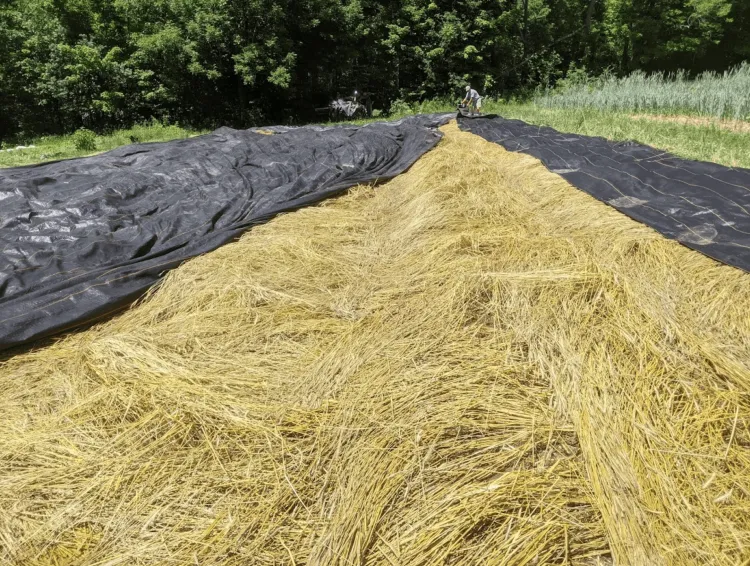
Getting the broccoli into the ground wasn’t easy. The soil, firm beneath the knots of rye, resisted their usual methods, and the tangled stems slowed down the pace of planting. In response, they collaborated with UVM Extension to develop a toolbar—one that would slice through the rye and open narrow slits for the transplants. The innovation was simple, but effective. The results were clear: strong yields and minimal weed pressure, which is an ideal outcome for a small-scale farm.
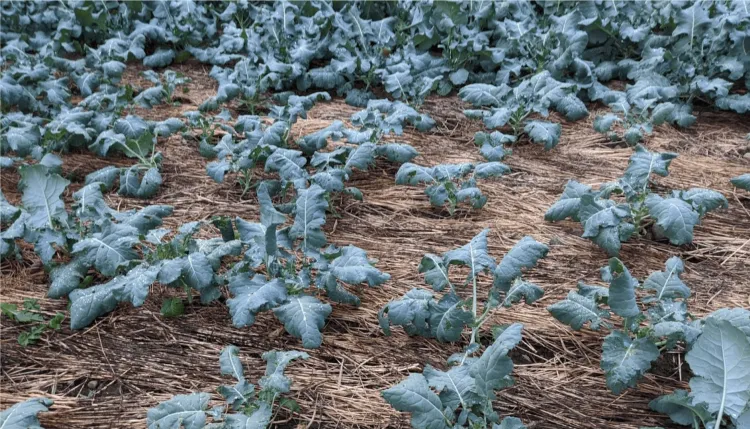
This process also helped protect what lies beneath the surface. By reducing tillage, the farm keeps carbon and nutrients in the soil, supporting long-term fertility and resilience. These changes didn’t emerge from mere curiosity. Years of intensive tillage had begun to degrade the soil structure, and Ryan and Kara recognized the need to shift course if they wanted to keep farming this land for decades to come.
As the climate changes and farming conditions become unpredictable, small farmers are innovating to sustain their livelihoods and feed their communities. Across the world, farmers always are adapting. In the Northeast of the United States, farmer and head of FarmHack, Dorn Cox is leading efforts for open-source technology and knowledge commons; a way to collectively advance knowledge and technology for mutual benefit. In West Africa, Farmer Managed Natural Regeneration is restoring tree cover and soil health. In Haiti, growers are increasing crop diversity to strengthen resilience.
“There are about 2.5 billion people in the world on 500 million farms involved with small holder family food production. Their creative capacity to farm productively and sustainably with nature, instead of against it, is perhaps the most powerful force that can be unleashed to overcome the interlinking challenges of hunger, poverty, climate change, and environmental degradation. And this is the essence of agroecology to us.” Fertile Ground.
This is not new.
From iron plows and flint bladed sickles to rock hoes, innovation has always been central to agriculture. “For over 10,000 years, agriculture has been about people innovating with nature to grow food,” says Steve Brescia, former executive director and now director of action-learning at Groundswell International. For millennia, farmers have led this innovation with place-based, on-the-ground knowledge. Yet today, large technology companies increasingly position their products as the primary drivers of agricultural progress, overshadowing the long history of farmer-led ingenuity.
Robots harvesting lettuce, AI-controlled irrigation, and precision agriculture are heralded as the future of our food system–the solution. While these technologies may offer short-term gains in speed and efficiency, they also raise deeper concerns about consolidation of power, erosion of farmer knowledge, and a growing disconnection from land itself. As Big Tech moves into agriculture, enticed by the promise of significant profits, they increasingly shape how innovation is defined and delivered.
Corporate consolidation has considerable societal impacts with companies increasing their power over the market and dictating where and how products get sold. For example, in 2018, Bayer - a German multinational company specializing in pharmaceuticals, seeds, pesticides, and biotechnological products bought Monsanto, an agrochemical biotechnology company best known for developing genetically modified seeds and the herbicide Roundup, for $66 billion. This merger led to just four companies controlling the global seed and agrochemical sector. Despite the claims of companies that consolidation will reduce prices, it often raises the cost of products, as it decreases market competition.
To maintain farmer reliance, Big Ag companies like Bayer engineer seeds that are dependent on agrochemicals, forcing farmers to buy both. With intellectual property rights, they also restrict farmers from saving seeds: another form of dependency. Consolidations like these don’t just have economic and market impacts; they are a direct threat to farmers’ autonomy and sovereignty. This power wielding manipulates consumer behavior, notably through “deskilling.” In his book, Concentration and Power in the Food System, Philip Howard describes this dynamic, “when capitalists reshape socio-cultural practices to increase purchases, (they) move us away from self-provisioning to become mere consumers” (50).” In the case of corporate consolidation, this means ripping decision making power away from those growing our food. “Innovation can’t be something that just strengthens a very small number of people,” says Andrea Ferrante of the Grassroots Innovation Assembly for Agroecology (GIAA).
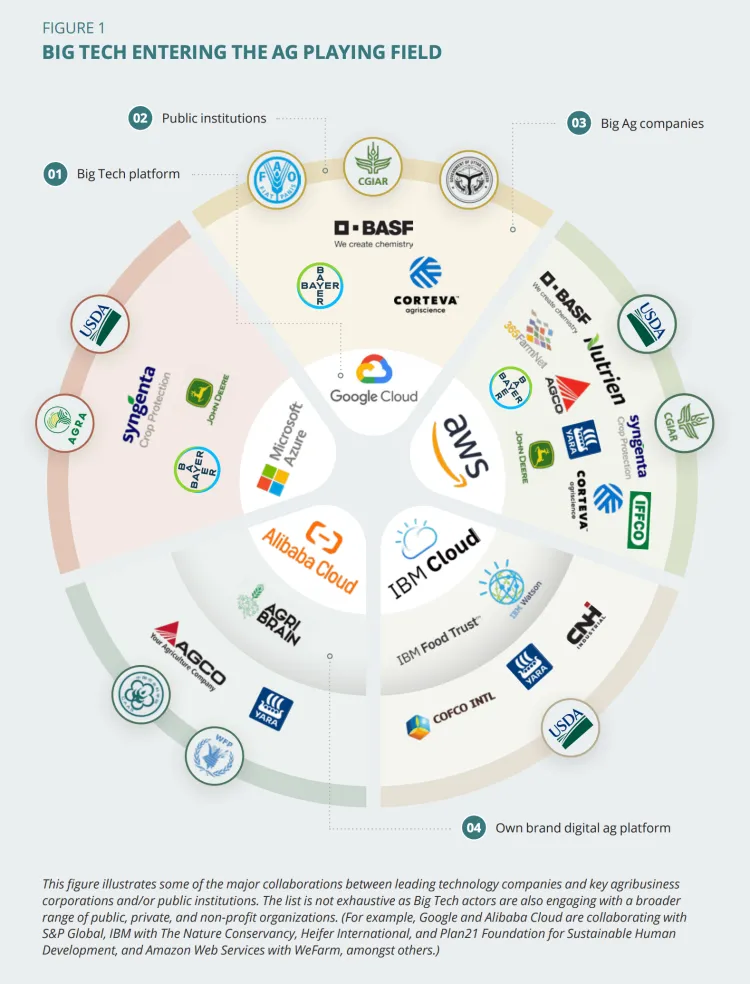
When power is concentrated in a few hands, so too is decision making, determining not only which tools are developed but how innovation is communicated, distributed, and understood. “Industrialized agriculture pathways, accelerated by AI and big data, are displacing the agency of human beings and ecosystem services that work well naturally,” adds Steve Brescia. In this light, innovation is not always synonymous with progress, despite how it is often framed.
This prompts a critical question: what value does corporate-defined innovation hold if it remains inaccessible to farmers and fails to reflect local, place-based realities? As Ferrante puts it, “innovation is something new – but we need to understand this: new for whom? For what? And who is behind it?”
Reframing and reclaiming “innovation” as grassroots, community-driven practices that serve the common good
“We can judge which innovations are positive by looking at if it is on the pathway towards improving wellbeing and benefit for our own lives instead of extractive processes that concentrate power and wealth in external corporate actors,” says Brescia. He points to a recent study of 400 farmers in Haiti that shows agroecological farmers are earning twice as much net income as conventional farmers. “People ask, does this farming work? Is there evidence? The answer is yes,” he says.
Across the globe, agroecological farmers are leading the way, preserving biodiversity, stewarding land and waterways with place-based knowledge, and nourishing their communities. Yet dominant funding systems, policy frameworks, and media narratives continue to undervalue their contributions and fail to uplift their innovations. As Ferrante emphasizes, “Innovation should be good for the community, built through co-creation and bringing benefit for the overall society.”
So, how can innovation be equitable and actually move society toward a more just food system?
Grassroots food system workers are at the forefront
Prioritizing farmer and other front-line food worker’s voices in decisions about which ideas are funded and scaled is a necessary and sorely needed step in pursuing true innovative solutions. By giving farmers agency to identify their own challenges, innovation becomes grounded in real, on-the-ground needs rather than external assumptions. Centering these challenges allows us to better understand which solutions will be most effective and beneficial.
As Martha Caswell, research affiliate and co-founder of the UVM Institute for Agroecology, explains, “We can think about innovation as being something that we do to respond to a challenge instead of something that we do because we're motivated by the potential for profit.” She adds that when industries create products first then convince consumers they need them, it signals a disconnect from the realities faced by people on the ground.
To truly support farmer-led innovation, funding structures and policies must enable experimentation with place-based solutions, without exposing farmers to the risk of reduced yields.
It is affordable
Affordability is essential for accessibility, especially for smallholder farmers. If new innovations are too costly, adoptions will remain limited regardless of their potential benefits. Equally important is ensuring that farmers can experiment and innovate without risking decreased revenue or crop yields. As Caswell notes, “we should be making space for the tinkering that has to happen when you are imagining a better way that would be helpful.”
Creating that space requires financial support systems that reduce risks associated with trying something new. Programs like the Vermont Participatory Action Research Team play a critical role for farmers to test new integrated pest management (IPM) strategies for decreasing pest pressure or implementing new infrastructure. This safety net, offered by external actors, enables farmers to lead innovation in ways that are both practical and sustainable.
It is place-based and contextual
Farms across the globe are under vastly different conditions: climates, soils, infrastructure, resource availability, and cultural contexts. As Edwin Escoto, Latin American and Caribbean coordinator at Groundswell International explains, “What works in the rural communities doesn't work in urban areas. Innovations need to be adapted to the local context to be accessible.”
Access to local resources is a major factor in determining what works. Ryan Fitzbeauchamp recalls using shredded hardwood bark from a nearby mill as mulch, which enabled a no-till rotation with more crop diversity, reduced weed pressure, improved water infiltration, and increased soil organic matter.
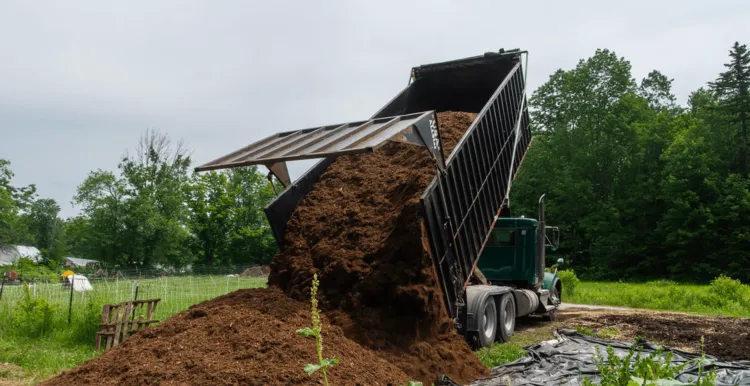
When the mill closed, they adapted by switching to locally sourced straw round bales. This kind of flexibility – responding to what is available – is central to resilient, place-based farming. As Fitzbeauchamp puts it, “It is less about having access to a very specific thing and using it in the exact same way that another farm does and more about seeing what is available that allows you to do a similar thing.”
This is in direct contrast to the one-size-fits-all model that Big Tech promotes, with one product that will suit all farmers’ needs. This approach ignores the vastly different contexts in which farmers and food system practitioners work. By failing to adapt to the specific circumstance, standardized models force blanket approaches that risk being potentially harmful or ineffective.
It is based on relationships
Relationships are crucial to innovation processes. Trusted connections are essential for sharing knowledge and advancing agroecological solutions. As Fitzbeauchamp explains, “I think the key is different people developing lots of different practices in lots of different contexts. Then having networks that allow that information to be shared.”
Farmers bring diverse strengths and perspectives; strong communities make it possible to exchange those insights and learn from one another. Martha Caswell expands on this idea, “I get most excited about the potential for innovation because agroecology relies on knowledge, and people being connected to each other and deeply aware of and connected to the place that they are. When knowledge and creativity get matched to challenges that feel intractable, there's a lot of space for some pretty cool things to emerge.”
Her point underscores that innovation is not just technical: it is social. Farmers have deep, experience-based knowledge of their land and food systems. Creating spaces that foster connection and trust allows that knowledge to circulate, adapt, and grow. Those relationships are what enable new grassroots innovation to take shape, help farmers navigate challenges, and ultimately strengthen agricultural systems. Steve Brescia of Groundswell International says, “innovation processes get continued when farmers share with their neighbors to mutually improve their farming systems. We create multiplier effects through farmer-to-farmer sharing networks, which connects the social innovation to the technical innovation.”
It understands downstream impacts
Innovations are often marketed for their immediate benefits: faster and better. But it’s critical to also look at the long-term impacts. “We think that a new shiny thing would be cool without thinking of the downstream or longer-term effects that we might be introducing into the world,” says Caswell. Questions like “who asked for this innovation?” and “who benefits from them?” are crucial for understanding the deeper power dynamics.
Moving forward farmer-led, grassroots innovation
As Big Tech continues to consolidate with Big Ag, it’s critical to move research, funding, narrative, and policy towards grassroots innovation that is built from the ground up. This work is budding. Great examples of this type of innovation are: the Vermont Farm Security Fund, pioneered by the Northeast Organic Farming Association of Vermont, that is supporting livelihoods of farmers; the University of Vermont’s investment in agroecological research and education through the UVM Institute for Agroecology; and the growth of farmer-to-farmer networks through Groundswell International (globally) and Rural Vermont (locally).
Food systems are complex, which calls for diverse and deeply rooted solutions. Innovation can drive meaningful transformation when it is shaped and led by farmers and communities most affected by the food system crisis. When decision making is instead concentrated in the hands of wealthy agribusiness executives, whose primary incentives are profit maximization rather than equitable nourishment or environmental stewardship, the outcomes reinforce the very problems they claim to solve.
“Innovations can be a distraction to keep us from looking at the unjust structures,” Martha Caswell reiterates. “No matter what we're doing, we have to be looking back down into the roots to make sure that whatever we're doing is working in the direction towards undoing the structural injustices and inequities, so that the innovations are moving us in the right direction.”