
2025 Forest Health Monitoring Report Now Available
2026-05-18
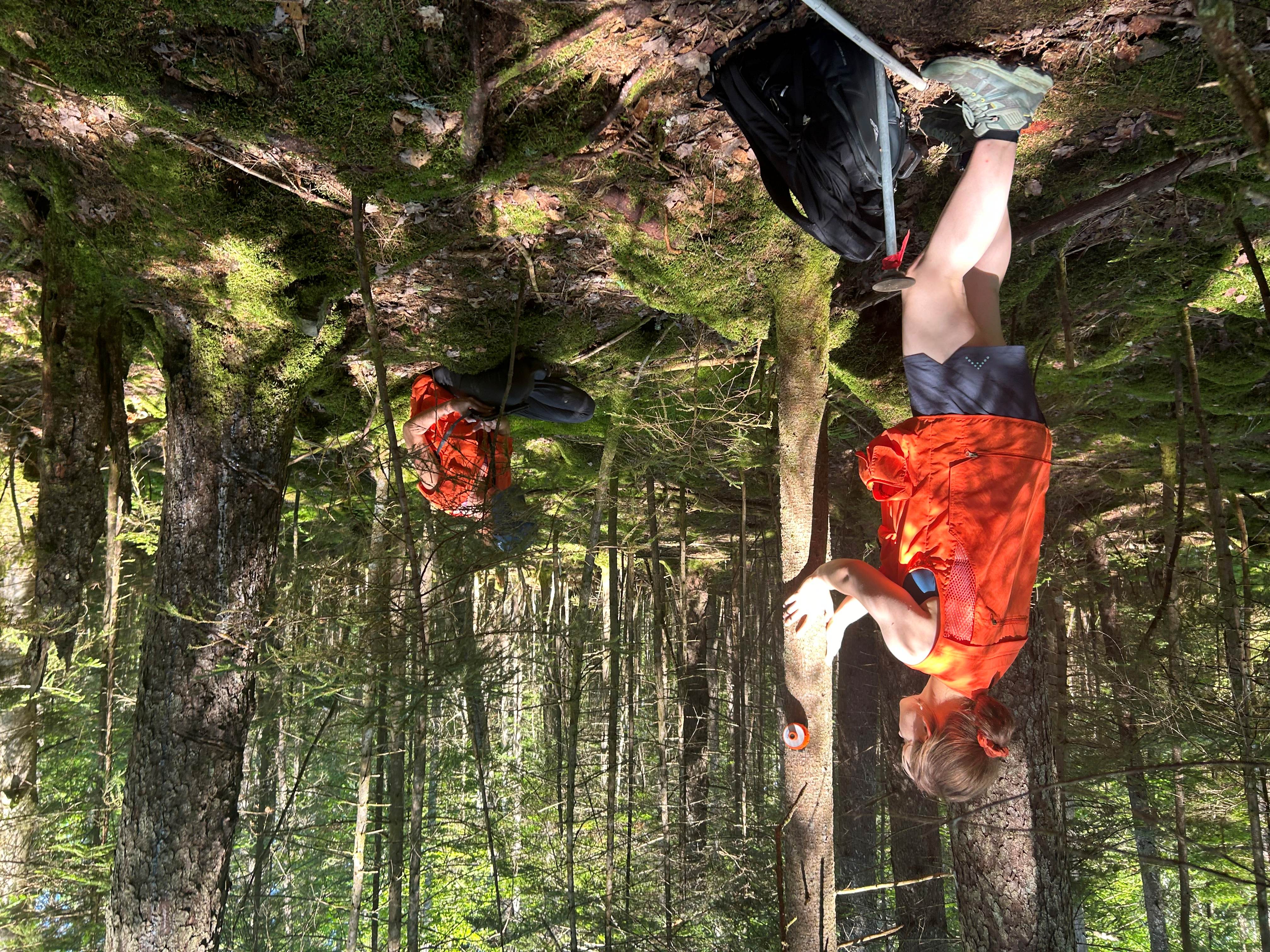
The FEMC forest health monitoring program completed its fourth year of regional data collection in 2025. Data analysis has been completed, and the report is now available.
FEMC Director Alison Adams and Monitoring Coordinator Ben Porter shared highlights from the 2025 Forest Health Monitoring report and answered questions during a webinar. A recording of the webinar is available for viewing.
Webinar: 2024 Forest Health Monitoring report
2025-06-06

FEMC Annual Conference Scheduled for November 20, 2025
2025-06-06
The FEMC Annual Conference will be held as a hybrid event online and at the UVM Davis Center on November 20, 2025. In response to feedback we’ve received that the timing of the conference poses a challenge around holiday travel, university schedules, weather, and other conferences, we are trialing holding the conference the week before Thanksgiving this year.
Due to the shift in timing, please plan to submit abstracts for presentations and posters earlier this year. The deadline will be in September. Stay tuned for more details.
Recreation Trail Use and Forests
2025-01-24
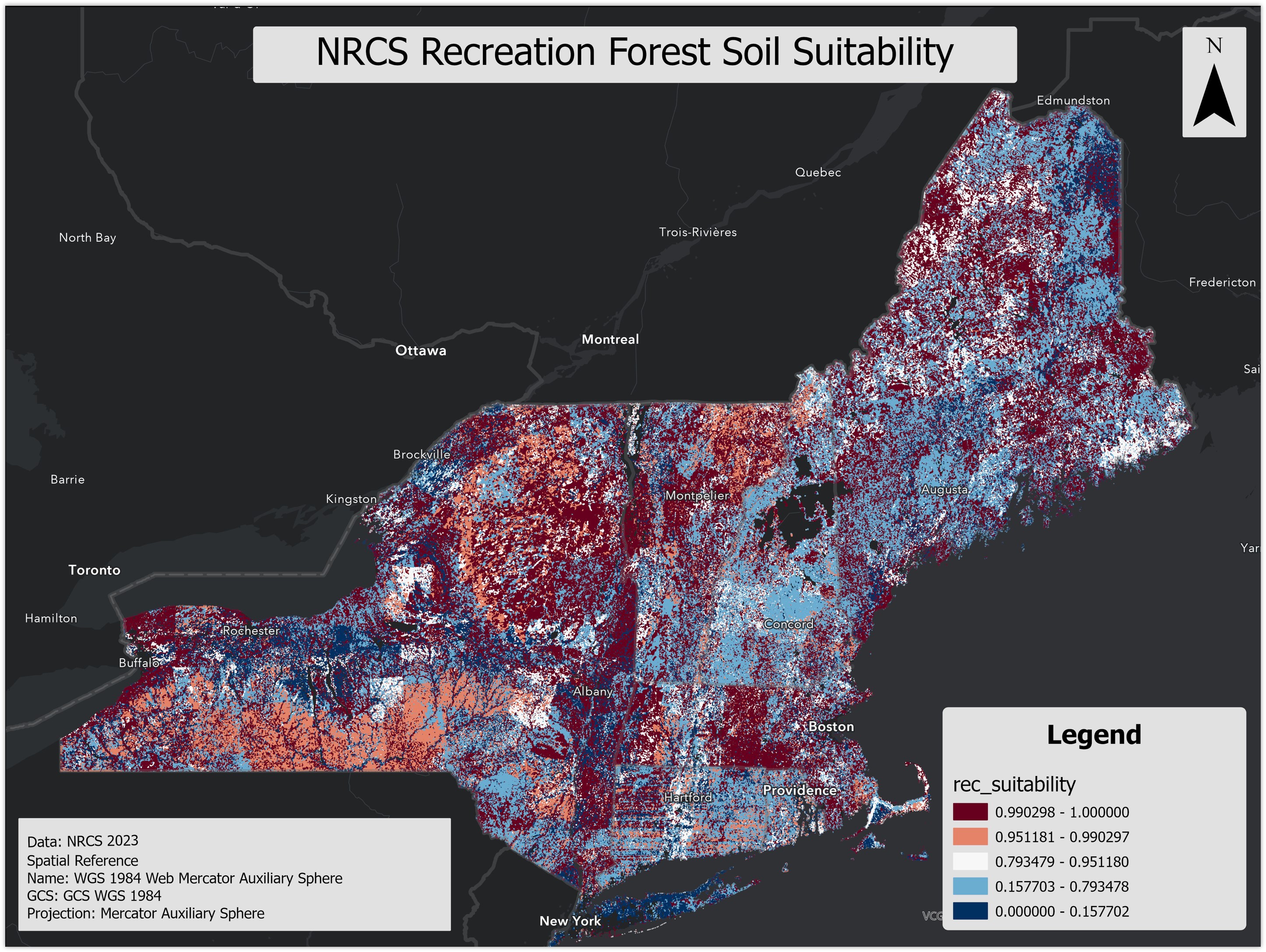
Recreation trail use data was used to provide geospatial products for land managers to better understand how forests are being used and impacted by recreation activities. Strava data was used in developing these products. Read more about the project and using Strava data on the Strava blog: https://metro.strava.com/nl/case-studies/How-Strava-Data-Helps-Forest-Managers-in-the-Northeast-US
You can also explore the project layers directly from the FEMC project page: https://www.uvm.edu/femc/CI4/cooperative/projects/recreation#products
Learn about FEMC's 2024 work from Director Alison Adams
2025-01-08
Watch a video overview of FEMC's 2024 Work

Regional Assessment of Browse report now available
2023-12-18
FEMC reviewed methods used to monitor the impacts of deer browse on forest ecosystems. A final report is now available, which includes a summary of methods as well as a decision tree to select among various methods. The report is available at: https://www.uvm.edu/femc/file/info/12048
Training Opportunity - NEFIN Webinar
2023-09-15
UPDATE:
The webinar has been rescheduled to Thursday, October 26 at noon.
FEMC recently completed the Northeastern Forest Inventory Network online tool. We are excited to announce a webinar to help you learn how to use the tool and ways that you might be able to put it to use in your work. Please join us online on Thursday, October 26 at noon for a lunch and learn.
We have applied for SAF credits for this webinar.

Tracking Shifts in Disturbance Regimes online tool now available.
2021-10-26
We are so excited to announce the release of another new tool: "Tracking Shifts in Disturbance Regimes." The tool focuses on four drivers of forest disturbance: Extreme Weather, Pest or Pathogen, Fire, and Drought. There is also information about some responses to disturbance: Stream Macroinvertebrates, Coldwater Fisheries, and Invasive Plants. You can explore the tool now at www.uvm.edu/femc/disturbance and register for a webinar that will be held on November 3 at 12pm. The webinar has been approved for 1.0 Category 1 SAF credit.
New Online Tool Available to Explore the Impacts of Climate Change
2021-09-29
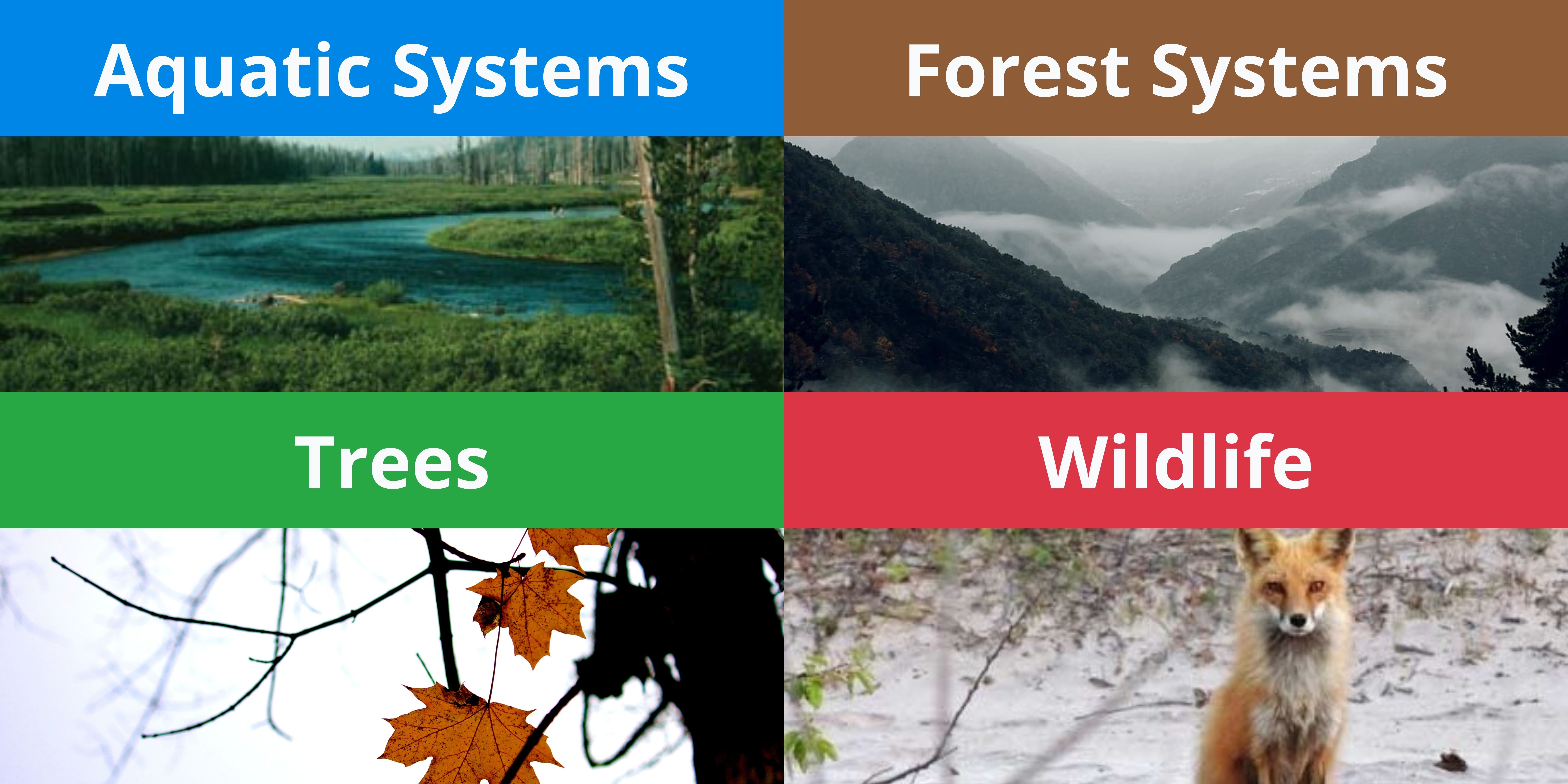
The Forest Ecosystem Monitoring Cooperative is excited to announce the release of the Forest Impacts of Climate Change: Monitoring Indicators Version 1.0 web-tool. This tool allows users to explore where forest monitoring is occurring of 24 expert-identified climate change indicators in the Northeastern U.S. Users can access protocols and visualize where monitoring studies are already being conducted with a focus on aquatic systems, forest systems, trees, and wildlife. Landowners, managers, and researchers can then use these protocols to implement their own, comparable monitoring programs that will be added to the database that already consists of 350 studies with 168 replicable protocols. Developing this network of monitoring sites provides critical information to help close spatial gaps in monitoring efforts and provides baseline data for further inquiry into how forest systems are shifting in response to climate change.
Detecting and Monitoring Beech Leaf Disease in the Northeast
2021-03-25
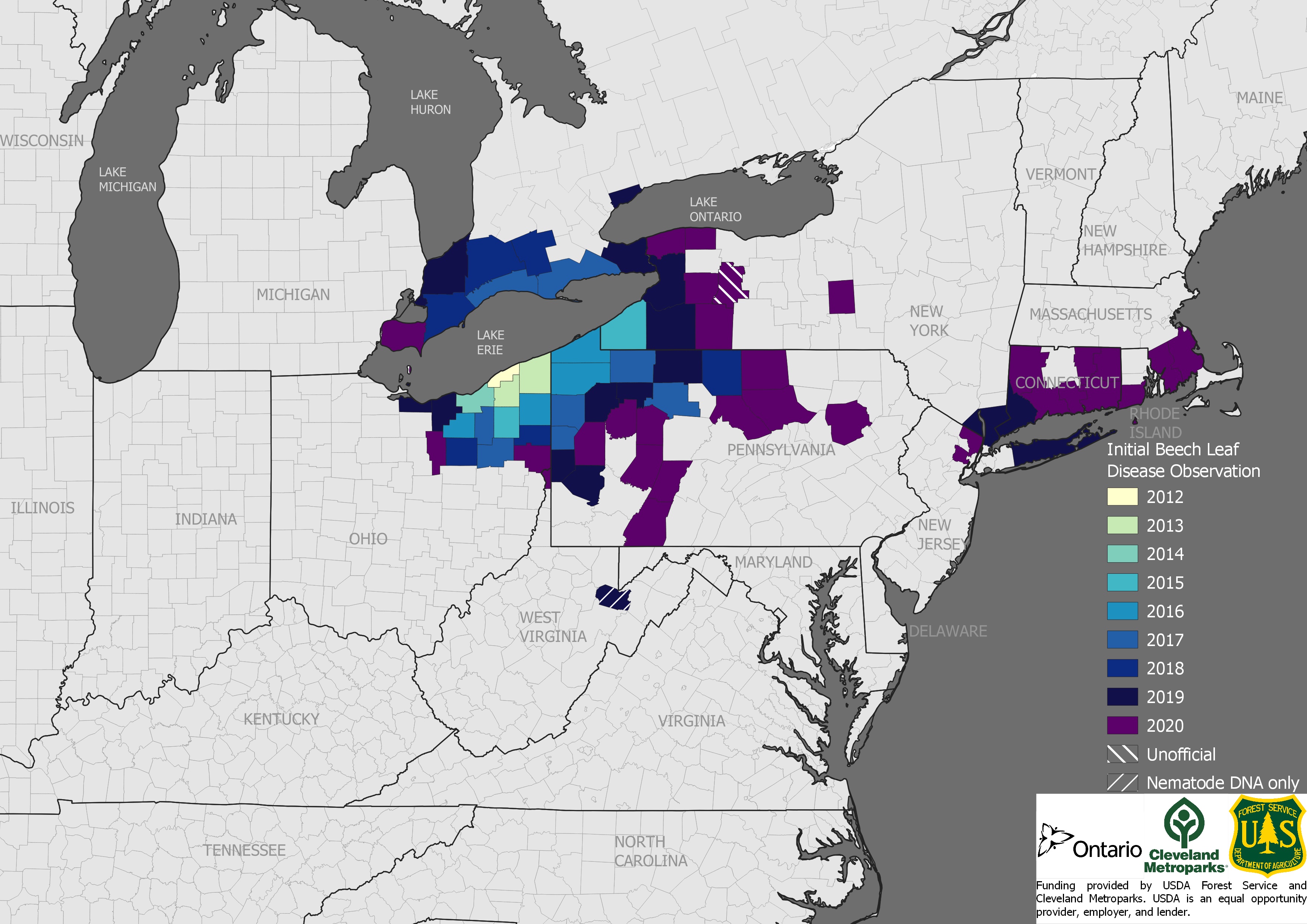
In collaboration with the US Forest Service and state forest health programs, the FEMC will be expanding a regional network of monitoring plots to track the spread and severity of Beech Leaf Disease (BLD). BLD is a foliar disease associated with a subspecies of Japanese nematode, Litylenchus crenatae. This disease has been documented in both mature and young American beech, with mortality often occurring following multiple years of infection. Oriental and European beech are also prone to infection. First detected in Ohio in 2012, BLD has rapidly expanded throughout the northeastern US and Canada. In 2020, BLD spread considerably throughout New York and Connecticut, with initial detections occurring in both Rhode Island and Massachusetts. The goal of this partnership is to share resources that can aid in detecting this new disease while expanding our regional detection efforts. A portion of FEMC plots with a strong component of American beech will be used to collect measurements of BLD and Beech Bark Disease severity, in addition to site characteristics that may be meaningful factors for disease. The US Forest Service is encouraging partners to use the Tree Health Survey app (available for iPhone and iPad) for reporting potential infections of BLD. For additional information on BLD, consider attending the USDA Forest Service Beech Leaf Disease Virtual Workshop, scheduled for April 15th, 2021.
– by Cameron Mcintire, USDA Forest Service
- 1
- 2
- 3
- 4
- 5
- 6
- 7
- 8
- 9
- 10