
Agenda
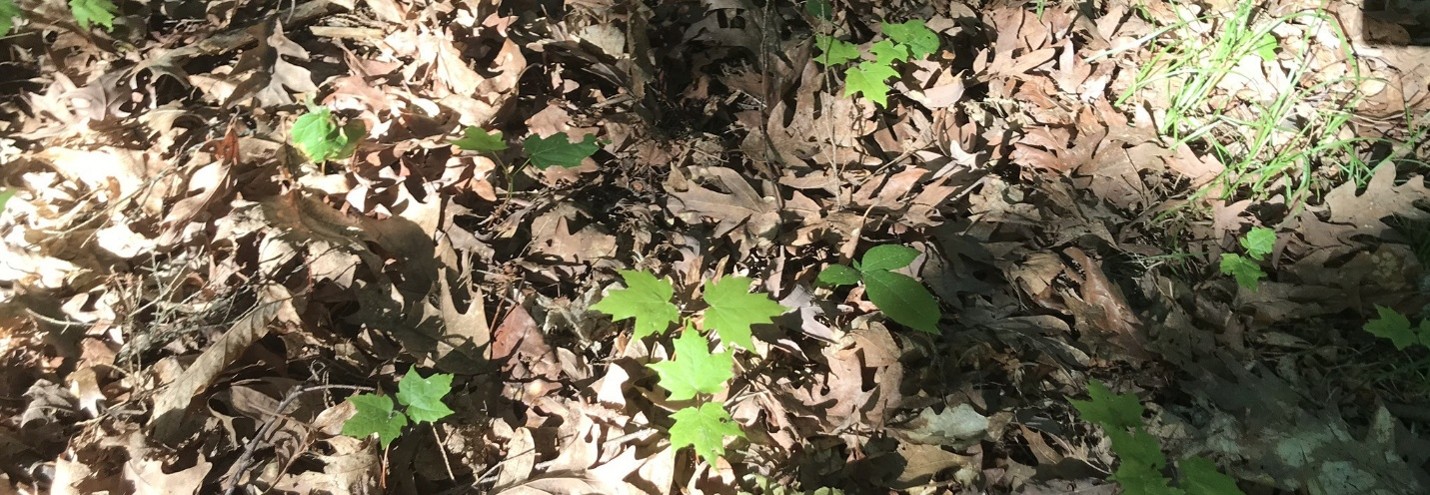
We are excited to welcome you to join us either in-person or remotely for our Annual Conference. We have an engaging agenda with three panelists sharing their perspectives on forest regeneration at a variety of scales. We will have concurrent contributed talks, working sessions, and a poster session. The schedule is set for Friday, November 13, 8:00am-5:30pm. We look forward to connecting with our community and hope you will join us to share your experiences and research findings as we learn from each other and plan for the future of our northeastern forested ecosystems.
A Focus on Regeneration
November 13
Fireplace Lounge
Arrival and check-in.
Grand Maple Ballroom
FEMC Director Alison Adams and FEMC Steering Committee Vice Chair Will Hochholzer will provide introductory remarks.
Special session introductions: Dr. Anne Jefferson will introduce the Northeastern States Research Cooperative (NSRC). Drs. Peter Clark and Tony D’Amato will share details about a special reforestation session.
FEMC State Coordinators will provide updates from each state.
Grand Maple Ballroom
The plenary session will consist of three panelists who will each share brief presentations followed by a moderated Q & A session.

Steve Keller’s will build the connection between genetics as it relates to forestry and management when considering assisted migration, diversity, and a provenance of seed for reforestation.
Bio

Kathleen Stutzman will provide perspective on the overlaps between climate resilience and regeneration, especially in context of southern pine beetle and regeneration deficits, discussing what fast moving mortality means for forests.
Bio

4th Floor Davis Center Rooms
Parallel tracks of 20-minute presentations contributed by cooperators on various forest ecosystem research, monitoring, and outreach activities.
| Time | Fungal Ecology Room: Jost Foundation | Alpine Ecology Room: Williams | Monitoring and Conservation Room: Chittenden Bank |
||
|---|---|---|---|---|---|
| 11:20 to 11:40 | Biodiversity of Fungi in Vermont: Barcoding and Baselines Andrew Swafford + ABSTRACT | Photomonitoring of Alpine Vegetation on Mount Mansfield Claudia Mabley and Elizabeth Litton + ABSTRACT | Tracking spring wildflower phenological sensitivity to microclimate in the rich northern hardwood forests of southern Vermont Morgan Southgate + ABSTRACT | ||
Biodiversity of Fungi in Vermont: Barcoding and Baselines Daniel Lyons, Middlebury College Presenter: Andrew Swafford, Middlebury College In addition to their own importance to the ecosystem, fungi have a bivalent impact on overall forest health. They mediate the effects of increasingly severe weather on long-lived vegetation, while simultaneously contributing to the expanding list of pathogens shifting their ranges along with the climate. Despite their importance to both maintaining forest health and preventing accelerated declines, establishing measurements of fungal biodiversity face unique challenges. More than most taxa, easily collectable macrofungi erratically produce short lived fruiting bodies, without which identification becomes a matter of expensive laboratory work. Even with the fruiting bodies, the majority of fungal taxa are undescribed, and a large percentage of cryptic species even within well known groups. Finally, preserving fungi for long term storage or study removes the majority of landmarks commonly used for species-level identification. To overcome these hurdles and begin establishing a robust biodiversity baseline for fungi in Vermont, we have re-imagined the sampling pipeline by empowering community engaged science, building tools reduce barriers for submission, and decentralizing access to collection and preservation techniques. We solved the issue of erratic sample timing by engaging and training communities across the state while also making sampling kits freely available by mail. This effort has produced over 4,500 samples from across the state in a single season. As we preserve these samples, we solve the issue of losing morphological data through the use of modern and accessible community image collection platforms like iNaturalist and new support software to preserve archival quality data. With this volume of samples, we can then address the issue of inexpert and inaccurate identifications with high-throughput sequencing techniques. While we are still looking , this project represents the largest single-season snapshot of fungal biodiversity backed by DNA data in the history of Vermont and is the first step in a deeper understanding of how fungi contribute to our forests. | |||||
Photomonitoring of Alpine Vegetation on Mount Mansfield Claudia Mabley, GMC Presenter: Claudia Mabley and Elizabeth Litton, Green Mountain Club and UVM Alpine plant species are adapted to the harsh conditions of high-elevation mountain environments (alpine zones) yet are highly vulnerable to disturbance, including trampling from footsteps. Vermont's alpine zone is limited to just three mountains covering roughly 125 acres, so protection and effective management of these ecosystems is a conservation priority. In 2004, the Green Mountain Club began a photomonitoring study to examine the status of trailside alpine vegetation, and the effectiveness of the GMC's Backcountry Caretaker program. Locations with evidence of trampling-induced vegetation loss were chosen along the ridgeline of Mount Mansfield, Vermont's highest peak and the site of the largest amount of alpine vegetation in the state. Replications of the study were conducted in 2015, 2021, and most recently in 2026 to assess vegetation recovery or loss at designated sites with different stewardship strategies. Two types of photographs were taken: 24 transects and 64 quadrats. Transect photographs are landscape-style images that were examined qualitatively, while quadrat photographs comprise a one-square-meter frame placed on the ground to monitor selected survey plots over multiple years. Quadrat photographs were analyzed using Markovian Random Field image classification software, which groups the material within the images by type: vegetation, rock, or soil. Vegetation coverage increased in 48 quadrats, decreased in 8 quadrats, and remained at 100% vegetated in 8 quadrats. Overall, there was an 8.27% growth in vegetation coverage from 2015 to 2026. Evidence showed that vegetation recovers best when the trail is well defined, most notably around puncheon. Additionally, the physical characteristics of the sampling location are a better indicator of management effectiveness than the management type. Management practices such as string fencing and scree walls were found to be effective alongside the edge of the trail, but less effective as a deterrent in areas with popular viewpoints or appealing rest spots. Both the transect and quadrat data show the impact of trail management decisions on revegetation, and highlight the role of Caretakers in overseeing these practices and educating the public on their importance. | |||||
Tracking spring wildflower phenological sensitivity to microclimate in the rich northern hardwood forests of southern Vermont Jordon Tourville, Appalachian Mountain Club Presenter: Morgan Southgate, Appalachian Mountain Club Spring-active wildflowers of temperate deciduous forests are particularly vulnerable to climate change based on their strategy for seasonal light acquisition. This diverse group of plants is characterized by their temporal niche, emerging after snowmelt but before canopy leaf-out to assimilate a significant portion of their yearly carbon budget. This shade-avoidance strategy is known as "phenological escape", and is particularly important for the spring ephemerals, which rely entirely on the spring light window for their yearly growth. As canopy trees leaf out earlier with warmer spring temperatures, is wildflower phenology keeping pace? Studies conducted on a coarse spatial scale have yielded conflicting results. Importantly, the scale of most work to date is broader than the microclimates experienced by individual plants, which can vary substantially from the conditions predicted by gridded climate data. The purpose of this research is to track spring wildflower phenological temperature sensitivity at the landscape scale and below. Our study site is the Equinox Highlands in southern Vermont; this natural area is the largest contiguous Rich Northern Hardwood Forest in New England and exemplifies the high plant diversity and productivity characteristic of this natural community type. In the spring of 2025, we established 20 long-term monitoring plots, stratified across topographic gradients and situated to maximize spring wildflower diversity and abundance. We have resampled our plot array nearly 20 times across two growing seasons, with sampling efforts concentrated before canopy closure. At each repeat census, we followed National Phenology Network protocols to generate vegetative and reproductive phenological observations of approximately 400 occurrences of herbaceous flowering plants representing nearly 50 taxa. For a subset of the spring-active wildflower species, we measured proxies for photosynthetic rate using a LI-COR LI-600. At each plot, a TOMST TMS-4 datalogger generates measurements of soil moisture and temperature at three points along the length of the instrument multiple times per day. We used a Bayesian framework to construct three sets of models: 1) generalized additive models of microclimate as a function of topography, 2) ordinal regression models of wildflower phenology as a function of topography, and 3) generalized additive models of wildflower physiology as a function of time, light availability, and species. Our results demonstrate that spring wildflower phenology varies across microclimatic gradients, indicating the potential for patterns of phenological escape (and wildflower fitness) to vary at a local scale. Our findings encourage further study to assess the potential for localized habitats to function as microrefugia for spring wildflower biodiversity-- microclimates where the extremes of macroclimatic warming are buffered, providing vulnerable taxa with more time for adaptation and migration. | |||||
| 11:45 to 12:05 | Investigating Myco-Phytoremediation in a Restored Multi-Functional Riparian Forested Buffer Jess Rubin + ABSTRACT | Alpine plants in a warming world: Updates from the PEEACC Project Jordon Tourville and Braedon Lineman + ABSTRACT | Vermont Town Forest Records Digitization Project and Town Forest Conservancy of New England Robert McCullough and Cecilia Danks + ABSTRACT | ||
Investigating Myco-Phytoremediation in a Restored Multi-Functional Riparian Forested Buffer Sarah Geiling, UVM Presenter: Jess Rubin, UVM and MycoEvolve A restoration project tested whether mycorrhizae can improve phosphorus (P) mitigation, and pollinator functions of degraded riparian forested buffers (RFBs) on a Vermont farm while facilitating Wabanaki ancestral land access and pollinator habitat from April through October. Six plots within a degraded RFB were restored with a multi-functional plant community. Three restored plots were inoculated with endemic mycorrhizae (RVM), three restored plots were not inoculated (RV), and three control plots (OIV) remained in their degraded state, dominated by aggressive introduced shrub Rhamnus cathartica. The restoration palette consisted of 42 (10 tree, 6 shrub, 16 herbaceous,10 groundcover) species which were all pollinator hosts and beneficial to Abenaki, offering P removal opportunities through honorable harvest. While total soil P, Mehlich III extractable P, and water extractable soluble reactive P (WEP-SRP) in RV & RVM treatments were not significantly different, concentrations in OIV were significantly higher (p < 0.001) than in the restored plots. This consistent pattern across all P metrics measured suggests restoring a degraded riparian buffer with a diverse, multi-synusial palette can mitigate P while providing pollinator habitat, food, tools, and medicine. Even though there was no statistically significant difference in restored treatments for plant P uptake, phytoextraction via cyclical harvest has promising implications for reducing P concentrations in runoff and percolate. There were statistically significant differences in plant diversity between the control and restored plots (p < 0.001), as expected, but not between restored plots. Within 3 years of restoration, a mean of 33 volunteer plant species appeared in the restored plots. 43 genera of pollinators were recorded across both restoration treatments, including globally vulnerable (G3) Bombus terricola and imperiled in VT (S2) Bombus citrens. Restoration with native, polyculture palettes, non-chemical removal of R. cathartica, and strategically timed plant harvest maximizes RFB's ecological resilience and begins socio-ecological reconciliation of colonial agriculture's legacy. | |||||
Alpine plants in a warming world: Updates from the PEEACC Project Braedon Lineman, University of Maine Presenter: Jordon Tourville and Braedon Lineman, Appalachian Mountain Club The mountaintops of the northeastern United States support unique ecosystems of arctic and alpine plants, which exist as small, isolated patches above treeline. It's thought that these plant communities have existed since the retreat of the glaciers around 13,000 years ago, surviving through the natural climate changes of the past and human-caused warming over the last century. These vulnerable ecosystems are culturally important, drawing millions of hikers to these peaks every year. They also pose a challenge for the management agencies tasked with protecting them, including from climate change, trampling, and other threats. At the same time, they may hold clues about how small, isolated populations can survive periods of climate change. Does the answer lie in the plants themselves, in their genetic blueprints or their ability to adapt quickly to changing environments? Or is the secret to their success in the sheltered nooks and crannies of bedrock, which provides a buffered refuge from the extreme weather? And to what extent are plants disappearing - and maybe reappearing- on these mountaintop "islands" over time? To answer these questions, our project team has started sampling alpine vegetation and lakes in the Adirondacks of NY, the Green Mountains of Vermont, the White Mountains of New Hampshire, and the western mountains & Katahdin in Maine, analyzing the DNA of ancient plants to understand whether species have truly persisted in the thousands of years since the end of the last ice age. At the same time, we are investigating the genetics and phenotypic traits of modern-day plants of the northeast alpine, both in the field and in experimental gardens. We will provide project updates, achievements, and milestones. The overall goal of this work is to help scientists, volunteers, and managers understand how better to support not only alpine plants across the northeast, but in other parts of the world where rare or isolated species are faced with climate change and other threats. | |||||
Vermont Town Forest Records Digitization Project and Town Forest Conservancy of New England Robert McCullough, University of Vermont Presenter: Robert McCullough and Cecilia Danks, University of Vermont Abstract: Vermont Town Forest Records Digitization Project and Town Forest Conservancy of New England. Robert McCullough and Cecilia Danks This presentation will share information about and invite participation in the new Town Forest Conservancy of New England (TFCNE) and its current project to gather, steward, and make available to the public a century of municipal forest records. The mission of the TFCNE, created by Robert McCullough, Professor Emeritus of UVM's Historic Preservation Program, is to advance the understanding of town forests as cultural landscapes of both historic and contemporary importance. TFCNE is collaborating with FEMC to digitize Vermont town forest records which will be accessible through FEMC. We invite researchers, foresters, educators, conservationists and communities to use and contribute to this growing database. The Town Forest Conservancy of New England is a Vermont L3C corporation based in Montpelier. In conception and current structure, TFCNE is an archival repository for documents relating to the history of town forests in New England. As cultural resources, town forests contribute significantly to the region's conservation history, and the cultural imprints of that history--stewardship in its many forms--are often very visible in these woodlands. The town forest movement, first enabled by legislation in 1913 in NH and MA and in 1915 in VT, represented the first comprehensive campaign by towns to reclaim traces of the great common weald surrounding New England's 17th century nucleated villages, common lands relinquished long ago to the private sector. The acreage and roles of these forests have grown since then. A goal of the TFCNE is to invite participation from the natural resource sector and become an advocacy group for town forests as both cultural and natural resources, places uniquely suited to demonstrate a more wholistic approach to resource protection that melds the cultural, natural and built environments and challenges the entrenched practice in the US of separating the protection of those resources. (That goal is consistent with FEMC's mission to forge connections among the many organizations, agencies, practitioners, researchers and decision makers working in northeastern forests.) The Digitization Project is an ongoing archival effort that involves travel to county forestry offices to locate, copy, organize, and scan old records (1915-2000) concerning the management of Vermont's town forests. Documents include cooperator's woodland records, management plans, inventories, forest type maps, correspondence, and photographs. These records are essential for the documentation of town forests as historic cultural landscapes and provide opportunities for academic scholarship and community inquiry. The first stage of digitization took place this summer at FEMC's offices in the UVM Forest Science Laboratory. | |||||
4th Floor Davis Center Rooms
Parallel tracks of presentations and workshop-style sessions contributed by cooperators on various forest ecosystem research, monitoring, and outreach activities.
| Time | NSRC 1 Room: Jost Foundation | Riparian Ecology Room: Wiliams | Ash Aftermath Room: Chittenden Bank | Technology Room: Silver Maple | Reforestation Room: Sugar Maple |
|---|---|---|---|---|---|
| 1:10 to 1:30 | Mapping Forest Structure and Biomass Across the Northeast Bahram Salehi + ABSTRACT | Messy, Connected, and Complex: A Unifying Concept for Restoring Vermont's Riverscapes Elijah Schumacher + ABSTRACT | Past findings and future prospects for emerald ash borer biological control in the Northeast Mitchell Green + ABSTRACT | Quantifying Slash Wall Wood Volume and Regeneration Outcomes in Northeastern Forests Nicholas Cranmer + ABSTRACT | Current motivations, applications, and challenges for reforestation in the Northeastern US Anthony D'Amato + ABSTRACT |
Mapping Forest Structure and Biomass Across the Northeast Ghaith Kouki, SUNY ESF Presenter: Bahram Salehi, SUNY ESF Accurate, spatially continuous information on forest canopy structure and aboveground biomass (AGB) is essential for monitoring forest change, carbon dynamics, and ecosystem response across the Northeastern United States. However, field inventories and LiDAR observations provide spatially incomplete measurements, creating a need for scalable approaches that integrate ground and remotely sensed observations. This NSRC-supported research develops a multi-sensor machine learning framework for mapping canopy height and AGB across New York, New Hampshire, Vermont, Connecticut, Rhode Island, Massachusetts, and Maine. For canopy height mapping, GEDI observations were integrated with Sentinel-2 optical imagery, Sentinel-1 C-band SAR, ALOS-2 PALSAR-2 L-band SAR, and USGS 3DEP terrain information using Random Forest regression. The resulting 25 m annual canopy height maps for 2019-2024 were independently evaluated against airborne LiDAR and FIA measurements. An adaptive canopy-density-based selection of GEDI relative height metrics achieved mean RMSE values of 5.23 m against airborne LiDAR and 4.78 m against FIA measurements, with low overall bias. Feature importance analysis demonstrated the complementary value of topographic, optical, and SAR information, while the resulting annual maps captured spatially coherent patterns of canopy loss and recovery. Building on this canopy height framework, the second component of the research investigates how alternative sources of canopy height information affect regional AGB estimation. FIA-, airborne LiDAR-, and GEDI-based canopy height models are extrapolated to wall-to-wall coverage using multi-sensor satellite covariates and evaluated as inputs to a common Random Forest AGB modeling framework. This approach allows the contribution of canopy height source and extrapolation uncertainty to overall biomass estimation error to be quantified. Together, these studies provide a scalable framework for integrating FIA, LiDAR, optical, SAR, and topographic observations to characterize forest structure and biomass across the Northeast. The resulting methods and products support long-term forest monitoring, carbon assessment, disturbance detection, and improved understanding of forest ecosystem change across the region. | |||||
Messy, Connected, and Complex: A Unifying Concept for Restoring Vermont's Riverscapes Elijah Schumacher, Vermont Land Trust Presenter: Elijah Schumacher, Vermont Land Trust, The Nature Conservancy, White River Partnership Messy, Connected, and Complex: A Unifying Concept for Restoring Vermont's Riverscapes Process Based Restoration (PBR) is a holistic approach to restoring degraded riverscapes that harnesses the power of natural processes such as erosion and deposition to reestablish stream health. Most of Vermont's streams are wood-deficient and incised due to historic beaver extirpation, river and floodplain alterations, deforestation, and watershed-scale hydrologic alterations. Process-based restoration of riverscapes, via instream wood addition and other approaches, is an emerging strategy to reverse and mitigate these impacts and promote flood and drought resilience, water quality, wetland function, biodiversity, and connectivity. A growing PBR community of practice is working to hand Vermont's degraded waterways the tools to become the beautifully messy, anastomosing, and structurally wild systems that they once were. Riverscape restoration requires a long-term relationship with a river, its flow, and the biotic and abiotic factors that shape it. This requires considering the limitations and potentialities of a situation, observing what works, and moving on from or adapting practices as needed. Gathering a network of restoration practitioners and stakeholders can be a similarly complex undertaking and, like a healthy river, features braiding threads of focus, leadership, and organizational input. The Vermont Process Based Restoration Network seeks to increase implementation of successful PBR projects across the state by being a consistent and cohesive forum to A) learn and share skills, best practices, and resources through a community of practice; B) advocate for solution-oriented policy and funding around PBR; C) coordinate projects on the ground; and D) connect with the broader national PBR community. We will share the genesis of the network and its current and upcoming initiatives and provide some case studies of PBR practices including Strategic Wood Addition (SWA), Beaver Dam Analogs (BDAs), Post Assisted Log Structures (PALS), and Brush-packing (or Gully-stuffing) and the way some successful projects emerge from a messy continuum of multiple practices that resist labels but provide high function. No matter your role, we invite you to join us, learn, and help grow the network and its exciting initiatives. | |||||
Past findings and future prospects for emerald ash borer biological control in the Northeast Jian Duan, USDA-ARS Presenter: Mitchell Green, University of New Hampshire The emerald ash borer (Agrilus planipennis; EAB) is a costly and destructive invasive forest pest that currently threatens North America's ash (Fraxinus spp.) resource. One management tactic that is currently applied throughout the United States is biological control, which involves the testing, rearing, and release of four wasp parasitoids from EAB's native range. Biological control of EAB has been attempted in the northeastern states, with potentially promising early results. Biological control parasitoids have successfully established and reduced EAB's net reproductive rate (R0), though not below replacement levels. Research in Massachusetts has also demonstrated longer survival times of infested overstory ash relative to estimates based on rapid decline and mortality at epicenter of invasion. Whether these patterns represent meaningful, long-term recovery driven by biological control remains unresolved. Demonstrating program efficacy requires linking parasitoid establishment and parasitism not only to reduced EAB population growth, but also to improved survival and regeneration of ash. The fate of seedlings and saplings is particularly important because persistence of ash as a forest component will ultimately depend on recruitment of a new cohort under sustained EAB pressure. Our ongoing research aims to evaluate the long-term efficacy of the biological control program and demonstrate if biological control has led to specific improvement in ash health and ash regeneration. Our research addresses this question at sites where EAB parasitoids were first released more than a decade ago. We will evaluate long term trends in percentage parasitism, ash health and ash regeneration, with current year comparisons to non-release sites. Early results indicate variable levels of seedling density across release and non-release sites, although these patterns may be related to cover of non-ash seedlings and invasive shrubs. Percentage ash mortality in 2026 was highest at four non-release sites, although this may be due to the size of trees at those sites, which are dominated by larger white ash that likely succumbed to EAB multiple years ago without younger sapling sized ash to grow into the canopy. This long-term study will provide one of the strongest tests to date of whether EAB biological control is producing durable improvements in ash persistence and recovery in northeastern forests. | |||||
Quantifying Slash Wall Wood Volume and Regeneration Outcomes in Northeastern Forests Nicholas Cranmer, Cornell University Presenter: Nicholas Cranmer, Cornell University Across northeastern forests, white-tailed deer (Odocoileus virginianus) are a major threat to forest regeneration. In particular, deer browsing weakens and inhibits the regeneration of preferred tree species such as oak, maple, and cherry, with long-term consequences on ecosystem structure and function. Fencing has been the conventional method for excluding deer to promote natural regeneration after a timber harvest; but fence installation, maintenance, and eventual removal remain costly. These limitations have prompted interest in lower-cost, lower-maintenance alternatives. Slash walls are an emerging forest management practice intended to achieve the same purpose using the residual slash and low-quality timber following a harvest. Adopting slash walls as a regular forest management tool hinges on addressing several key questions: (1) the amount of wood material (merchantable and non-merchantable) needed for a quality slash wall, (2) the effects of slash walls on forest regeneration and seedling establishment patterns, and (3) their long-term ecological effects on temperate mixed forests. However, existing knowledge rests largely on anecdotal field observations rather than quantitative data, leaving forest practitioners without a rigorous basis for estimating costs, predicting regeneration outcomes, or anticipating long-term ecological effects. We address these questions through several slash wall studies at Cornell University's Arnot Teaching and Research Forest (ATRF) in south-central New York. First, we used Terrestrial Laser Scanning (TLS) and Airborne Laser Scanning (ALS) to quantify how wood volume varies with wall width and height across two wall types (short and tall). We found TLS-based wood volume estimates were similar for short and tall slash walls, averaging a volume of 21.34 m3/30 m and 21.50 m3/30 m (16.9 and 17.0 t dry biomass/30 m) respectively. Second, we quantified the effects of slash walls on regeneration density, above-browse height, and commercial species composition across walls spanning 3-5 growing seasons, comparing each wall to an adjacent, year-matched, unprotected paired control. Across 7 independent site-control pairs, slash walls had significantly higher total regeneration density and density of regeneration exceeding above-browse height (1.52 m). Across these pairs, total regeneration density increased by a median of 2.7x (171.3%) and regeneration above-browse height by 4.8x (378.3%) relative to controls. Slash walls also tended to contain more commercial, diversity, and interfering species. Together, these results provide practitioners with quantitative data for estimating slash wall construction costs and regeneration outcomes, supporting slash walls as a cost-effective, low-maintenance natural barrier alternative to fencing. Future studies will quantify their long-term ecological effects, including mature stand composition, carbon sequestration, and their broader influence on forest structure and dynamics. | |||||
Current motivations, applications, and challenges for reforestation in the Northeastern US Peter Clark, University of Vermont Presenter: Anthony D'Amato, University of Vermont Interest in the use of tree planting has increased considerably over the past several years in the Northeastern US, including several state and regional initiatives requiring millions of new seedlings. This presentation will highlight the factors motivating the growing interest in tree planting, including meeting restoration and adaptation goals, and will discuss current on-the-ground applications of different planting strategies and the challenges facing their rapid upscaling across the region. Subsequent presentations in this session will explore key considerations and approaches for ensuring the regional reforestation pipeline is able to meet current and future tree seedling needs. | |||||
| 1:35 to 1:55 | Forest regeneration along elevational gradients: Insights from a multistate forest monitoring network in the northeastern United States. Martin Dovciak + ABSTRACT | Long term (>30yr) freshwater mussel population trends in the Missisquoi and Poultney Rivers Paul Marangelo + ABSTRACT | Emerald ash borer: What we've learned from 20 years of monitoring in Ohio Kathleen Knight + ABSTRACT | Measuring What Has Been Hidden: Ground Penetrating Radar for Non-Destructive Assessment of Tree Root Architecture Marie V Ambusk + ABSTRACT | |
Forest regeneration along elevational gradients: Insights from a multistate forest monitoring network in the northeastern United States. Martin Dovciak, SUNY ESF, Syracuse, NY Presenter: Martin Dovciak, Department of Environmental Biology, State University of New York College of Environmental Science and Forestry (SUNY ESF), Syracuse, New York As climate warms, tree species are expected to migrate to higher latitudes and elevations. Evidence supports these trends for some species but not others, suggesting that our understanding of the mechanisms driving tree migration remains rudimentary. We investigated how forest regeneration varies along elevational gradients from low-elevation temperate deciduous to high-elevation conifer forests (500-1,200 m above sea level at 100-m intervals) on 12 mountains in four states of the northeastern U.S. We surveyed understory tree seedling banks (abundance and composition) on 1,710 plots (1 x 1 m), characterized soil environment, understory vegetation, and forest structure, and monitored microclimate (temperature) under forest canopies and in canopy gaps. Tree seedling spatial patterns relative to conspecific adults were consistent with the early stages of upslope migration for boreal conifers, particularly in canopy gaps, but not for temperate deciduous species, regardless of canopy environment. Greater canopy tree mortality and openness in high-elevation forests were associated with greater conifer seedling establishment upslope of conspecific adults. While canopy openness affected thermal microclimates, seedling abundance often responded more strongly to other factors, such as overstory basal area and understory vegetation cover, which either inhibited or facilitated tree seedling recruitment depending on tree species. Better understanding the effects of climate change on forest regeneration requires understanding how changing forest microclimates interact with other factors affecting regeneration. | |||||
Long term (>30yr) freshwater mussel population trends in the Missisquoi and Poultney Rivers Michael Lew-Smith, Arrowood Environmental Presenter: Paul Marangelo, unaffiliated We conducted quantitative and qualitative freshwater mussel surveys in the lower Poultney and Missisquoi Rivers in 2025/26 to assess long term population changes, re-surveying quantitative sites that I first sampled in 1997 (Poultney River) and 1998 (Missisquoi River). The lower portion of these rivers harbor the most diverse mussel fauna in New England, with records of 13 species. The Poultney River data yielded evidence that predominantly suggests long-term population decline, although we observed an increase at one site. Results from the Missisquoi River mostly suggested long-term persistence of productive mussel habitats for both rare (state T&E) and common species. Some individual species exhibited marked changes over the past few decades: Lampsilis cardium (Pocketbook) showed evidence of decline in both rivers, as well as Lasmigona costata (Fluted Shell) and Leptodea fragilis (Fragile Papershell) in the Poultney. However, Anodontoides ferrusicianus (Fragile Papershell - Mississquoi), and Potamilus alatus (Pink Heelsplitter, Poulntey) increased or remained at comparable densities. Among non-T&E species, Lampsilis radiata (Eastern Lampmussel) increased in abundance in both rivers over the past 30 years. Localized declines of once productive sites were observed in both rivers, presumably from habitat changes stemming from chronic fluvial geomorphic instability. In the Poultney, this may be aggregating into a system-wide mussel decline, where old productive habitats become destabilized. While in turn new potentially favorable habitats may be forming, mussels seem to be unable to adequately recruit into these areas. Notable species observations were the first detection of live Ligumia recta (Black Sandshell) from the Poultney since the mid 90's and the first detection of live L. costata from the Missisquoi River. | |||||
Emerald ash borer: What we've learned from 20 years of monitoring in Ohio Kathleen Knight, US Forest Service Northern Research Station Presenter: Kathleen Knight, US Forest Service Northern Research Station Simultaneous monitoring of emerald ash borer and ash forest ecosystems in Ohio since 2006 has provided insights into the long-term impacts of this invasive pest. Mortality differs among ash species and size classes of trees. Larger ash size classes exhibit nearly complete mortality during the first wave of EAB, while small seedlings and saplings are recruited and some persist in the understory for many years. Rare large healthy ash trees, termed "lingering ash," have been identified and monitored, with many remaining healthy long after the first wave of EAB. Newly germinated ash seedlings are very rare. Yearly trapping of EAB using purple panel traps has allowed us to track the dynamics of EAB populations and detect a smaller second wave of EAB about a decade after the first wave. Trees that were too small to be preferred during the first wave, then subsequently grew, are attacked in the second wave. Some lingering ash trees died during the second wave while others survived both waves. EAB parasitoid monitoring has shown released biocontrol parasitoids persisting in lingering ash sites. The first wave of ash mortality may result in substantial changes to forest ecosystems in some sites, especially where ash is dominant and few other tree species exist, while other sites where ash was a small component of the forest experience minor changes. After ash trees die, they rapidly become brittle and fall, resulting in pulses of coarse woody debris. In many sites, maple species have rapidly filled in canopy gaps, with rapid growth beginning as the ash trees began to decline. Forest understory plant communities have remained relatively stable in many sites. However, in some sites, invasive plant species have increased. Continued monitoring of EAB populations, and species, and forest plant community is necessary to understand the long-term dynamics of these species and the associated forest ecosystems. Repeated waves of EAB and little new reproduction of ash suggests a bleak future for most ash species. Interventions including tree resistance breeding, genetic conservation, and biocontrol provide hope for saving ash. | |||||
Measuring What Has Been Hidden: Ground Penetrating Radar for Non-Destructive Assessment of Tree Root Architecture Marie Ambusk, TreesROI(R) LLC Presenter: Marie V Ambusk, TreesROI(R) LLC Tree root architecture is fundamental to tree establishment, stability, resource acquisition, and long-term performance, yet belowground root systems remain difficult to characterize without excavation or other destructive methods. This limits the objective information available to researchers and practitioners seeking to understand root structure and quality. This presentation outlines ongoing interdisciplinary research investigating whether Ground-Penetrating Radar (GPR) can provide objective, non-destructive measurements of tree root architecture. Through a National Science Foundation (NSF) Small Business Innovation Research (SBIR) project, TreesROI and its research partners have integrated tree biology, geophysics, mechanical engineering, and data science to develop a controlled scanning and analysis method for containerized nursery trees. GPR data are collected through spiral CT scans around the rootball and computationally analyzed to identify and characterize root structure. The research has produced three-dimensional reconstructions of containerized root systems and is investigating quantitative measures of root architecture and root quality. Preliminary work has demonstrated the feasibility of acquiring repeatable below-ground data without excavating or destroying the tree, while also identifying key challenges in data acquisition, interpretation, and classification. The work raises a broader measurement question: What becomes possible when previously hidden biological structures can be characterized objectively and repeatedly? New sources of quantitative belowground data could support further research on root development, improve methods for evaluating root architecture, and contribute to more consistent approaches for studying tree quality and performance. The presentation will share the research approach, preliminary findings, current limitations, and remaining questions as this emerging measurement method continues to develop. | |||||
| 2:00 to 2:20 | From monitoring to management: a spatial decision-support framework for spruce budworm in Maine Jianheng Zhao + ABSTRACT | Stream ecosystem responses to Emerald Ash Borer invasion in riparian forests Courtney Larson + ABSTRACT | Ash-Dominated Forest Dynamics Following Emerald Ash Borer Infestation Morgan Crouch + ABSTRACT | Recent developments in monitoring forest health using remote sensing technology Parinaz Rahimzadeh + ABSTRACT | |
From monitoring to management: a spatial decision-support framework for spruce budworm in Maine Jianheng Zhao, University of Maine Presenter: Jianheng Zhao, University of Maine Spruce budworm (Choristoneura fumiferana) populations are increasing in northern Maine, raising concerns about defoliation, tree mortality, timber losses, and the timing of management responses. In 2025, landowners treated approximately 241,000 acres under Maine's Early Intervention Strategy, highlighting the need to connect forest-health monitoring with management decisions. We present SBW-DST, an adaptable spatial decision-support framework for evaluating spruce budworm management as new monitoring data become available. The framework links three components across northern Maine: (1) larval population dynamics and dispersal; (2) defoliation, growth, and mortality effects on forests; and (3) an economic decision module comparing early intervention, foliage protection, salvage, and harvest rescheduling under treatment, harvest-capacity, carbon, and ownership constraints. Model inputs are documented by source, including field observations, literature, expert input, calibration, and assumptions, allowing provisional values to be updated as new information becomes available. Recent Maine monitoring data have already changed estimates of outbreak extent and management benefits, demonstrating the importance of an adaptive approach. Rather than providing a single forecast, SBW-DST is designed to identify management tradeoffs, key uncertainties, and monitoring needs as the outbreak develops. | |||||
Stream ecosystem responses to Emerald Ash Borer invasion in riparian forests Courtney Larson, Vermont Department of Environmental Conservation Presenter: Courtney Larson, Vermont Department of Environmental Conservation Emerald ash borer (EAB), Agrilus planipennis, is an invasive insect responsible for large-scale native ash (Fraxinus spp.) mortality across North America. Its consequences for streams remain poorly resolved, even though streams depend on riparian forests for shade and leaf litter. Synthesizing a series of studies from Michigan, we show that EAB affects headwater streams through two pathways. The first is a canopy pathway. Ash mortality opens gaps that raise light availability in the stream. At the gap itself, macroinvertebrate diversity rises temporarily. The second is a litter-identity pathway, and it acts more slowly. As ash trees die and are replaced, leaf-litter subsidies shift. Ash supports a distinct colonizing bacterial community and shredding invertebrates. Common buckthorn (Rhamnus cathartica), an invasive that often replaces ash, decomposes rapidly and hosts almost no shredders. Our results suggest a transient, light driven pulse in diversity, followed by a longer decline in litter-associated diversity as forest composition changes. This work was conducted in Michigan, but ash in riparian forests along headwater streams are widespread across the Northeast, where EAB continues to spread. We suggest monitoring targets for EAB related riparian forest disturbance: dissolved oxygen, macroinvertebrate diversity, and riparian litter composition. Our results also suggest a management concern with the invasive replacement of ash, relevant to regional managers and monitoring programs anticipating EAB effects on northeastern streams. | |||||
Ash-Dominated Forest Dynamics Following Emerald Ash Borer Infestation Morgan Crouch, SUNY ESF Presenter: Morgan Crouch, SUNY ESF Emerald ash borer (EAB, Agrilus planipennis Fairmaire), the most costly invasive forest insect in North America to date, has caused widespread mortality of ash across North America since its discovery in 2002. This past summer we re-evaluated riparian/lowland and upland ash-dominated forest plots in New York State in which baseline data were gathered prior to ash mortality. We are looking to understand 1) patterns of EAB invasion across the state 2) forest composition changes after invasion, i.e. ash importance in NY forests post invasion 3) drivers of forest vigor and regeneration, including effects of introduced biocontrol agents and invasive vegetation, 4) predict forest trajectories, and 5) inform management. This study seeks to identify drivers of ash regeneration by analyzing how site conditions, biocontrol presence, residual overstory, and invasive vegetation, affect ash recruitment and survival. Results pending. | |||||
Recent developments in monitoring forest health using remote sensing technology Parinaz Rahimzadeh, School of Forest Resources, The University of Maine Presenter: Parinaz Rahimzadeh, School of Forest Resources, The University of Maine, Orono, Maine, USA Forest resources are crucial to human life and the environment, offering a wide range of ecosystem services, storing significant amounts of carbon, and contributing to the terrestrial carbon sink. A wide variety of forest pests and pathogens interfere with the health of tree species worldwide in numerous ways. In the USA, forest pests and diseases cause the most extensive disturbances affecting around 20 million ha of forest lands every year and can lead to defoliation and mortality at different scales. Monitoring forest pest population, and associated damage can be carried out using either traditional field-based methods or through remote sensing technology. Pathogens are more difficult to monitor using field-based methods and remote sensing monitoring of those is also more indirect. Over the past 10 years, at the University of Maine's Rahimzadeh Remote Sensing lab, several research projects were conducted to address the current SBW outbreak as well as eastern white pine (EWP) decline in the Northeast. We developed models to detect and map SBW defoliation and SBW host species. We also produced products on susceptibility of forests to SBW defoliation for the state of Maine and EWP health index map for Maine, Vermont and New Hampshire using satellite remote sensing imagery such as Landsat, Sentinel-2 and PlanetScope. These products have medium to very fine spatial resolutions and can be used for timely SBW outbreak and EWP health management. In this presentation, an overview of these projects will be presented. The proposed models and products can be applied across the Northeast for SBW defoliation detection and EWP health monitoring, and they can be adapted for other regions. | |||||
| 2:25 to 2:45 | A belowground perspective on using forest management to mitigate the effects of Hemlock Wooly Adelgid invasion Andrew Cortese + ABSTRACT | Assessing understory plant communities and tree regeneration in passively versus actively managed ash stands impacted by the emerald ash borer Jack E. Hatajik + ABSTRACT | Using UAS (Drones) for Vermont Forest Mapping and Monitoring Lauren Cresanti + ABSTRACT | ||
A belowground perspective on using forest management to mitigate the effects of Hemlock Wooly Adelgid invasion Britta Arvold, Skidmore College Presenter: Andrew Cortese, New York Natural Heritage Program Hemlock Woolly Adelgid (HWA) has moved north into the Adirondacks. The current invasion front is approximately 16 km from the Pack Demonstration Forest, located near Warrensburg, NY, where silvicultural treatments via commercial timber harvest were completed in winter 2025/26 to create conditions that promote hemlock vigor and resilience (potentially increasing resistance or tolerance to HWA) through increased light availability, soil microbial community function, and decreased competition for resources. We used environmental sensors, vegetation surveys, and soil/plant biogeochemical analyses to evaluate changes in forest microclimate and biogeochemistry as a result of harvesting. Treatments reduced stand-level basal area by ~33% and canopy cover by ~20%, depending on the treatment. Compared to control units, reductions in canopy cover significantly increased air temperature, soil temperature, and soil water content, while light availability at 1 m increased from 4 to 6-fold depending on the specific treatment. Biogeochemistry, measured via plant available nutrient concentrations and hemlock tissue chemistry, was highly variable between plots and units with no apparent treatment effects at this early post-treatment stage. We did find tight coupling of soil calcium and aluminum across our sites (an expected negative correlation) that could create and underlying stress on hemlock that interacts with treatment responses and HWA resistance. Overall, we have built strong baseline understanding of this system as we await the imminent arrival of HWA. | |||||
Assessing understory plant communities and tree regeneration in passively versus actively managed ash stands impacted by the emerald ash borer Jack E. Hatajik, Department of Environmental Science and Forestry, The Connecticut Agricultural Experiment Station Presenter: Jack E. Hatajik, Department of Environmental Science and Forestry, The Connecticut Agricultural Experiment Station The introduction of the emerald ash borer (EAB, Agrilus planipennis Fairmaire) is rapidly causing the functional extirpation of native ash (Fraxinus spp.) species across North America. Because these species are foundational to forests in the Northeast, predicting how these immeasurable losses will impact successional dynamics is challenging. Loss of these trees could facilitate non-native plant invasions, leading to a significant decline in native diversity and tree regeneration. Over a spatiotemporal gradient of EAB detection across Connecticut, our objectives were to: 1) Assess the environmental factors influencing plant invasions in the aftermath of EAB-induced ash mortality, and 2) Evaluate the understory and tree regeneration compositional differences between passively managed stands and those that have recently undergone active management, including ash salvage harvesting and invasive plant treatment. Results indicate that EAB-induced ash mortality strongly alters understory plant cover and tree regeneration via changes in light, particularly in nutrient-rich stands. For the passively managed stands, the proportion of dead ash in the overstory was positively associated with non-native plant cover and negatively associated with the abundance of native tree seedlings. Plant-available nitrogen was also positively associated with non-native plant cover and seedling counts, whereas soil carbon availability was negatively associated with non-native plant cover and the proportion of non-native seedlings. Species richness for total plant cover and tree regeneration was significantly higher in the actively managed stands than in the passively managed stands. Native tree seedlings greater than 30-cm in height and less than 1.0-cm in DBH were also significantly higher in the actively managed stands than in the passively managed stands. Multivariate analyses suggest that understory plant and tree regeneration communities are significantly different between passively and actively managed stands. Species such as sugar maple (Acer saccharum Marshall), black birch (Betula lenta L.), and red oak (Quercus rubra L.) appear to be stronger indicators of the actively managed stands, whereas spicebush (Lindera benzoin (L.) Blume) was the only tree species that was a strong indicator of the passively managed stands. These results suggest that proactive management may be needed in the most susceptible stands to secure a diverse range of native tree regeneration and reduce the impacts of invasive species following EAB infestation. | |||||
Using UAS (Drones) for Vermont Forest Mapping and Monitoring Lauren Cresanti, UVM Presenter: Lauren Cresanti, University of Vermont Unoccupied Aircraft Systems (UAS), also known as drones, are an emerging remote-sensing technology that can support a range of forestry applications. UAS may provide live feed, high-resolution imagery and video, precise mapping, and 3D model generation, offering a robust way to observe forest conditions from above. In many settings, they can be deployed quickly, reach difficult terrain more safely, and generate spatial data at resolutions not typically available from traditional aerial platforms or satellites. This presentation showcases forestry-focused UAS products using recent projects from the UVM Spatial Analysis Lab. We share an example dataset from a maple sugarbush stand in Vermont to illustrate how these products can support mapping, monitoring, and stand-level assessment. We then explore additional analyses that may be useful for maple producers and foresters, along with a brief look at ongoing research into emerging UAS-based techniques. The session concludes with a preview of an upcoming project to develop online and hands-on training resources for UAS applications in forestry and maple sugaring. The goal is to build awareness of UAS as an evolving forestry monitoring tool, share practical examples from UVM's work, and highlight ways foresters can begin integrating UAS into their own operations. | |||||
4th Floor Davis Center Rooms
Parallel tracks of presentations and workshop-style sessions contributed by cooperators on various forest ecosystem research, monitoring, and outreach activities.
| Time | NSRC 2 Room: Jost Foundation | Restoration Room: Wiliams | Regeneration Room: Chittenden Bank | Wildlife Room: Silver Maple | Reforestation Working Session Room: Sugar Maple |
|---|---|---|---|---|---|
| 3:00 to 3:20 | Mountain Biking and Environmental Justice: What Can "The Bike Boom" Teach us about Recreation Equity? Kimberly Coleman + ABSTRACT | Restoration of the American Elm to the Northeast Gus Goodwin + ABSTRACT | Mapping Eastern Hemlock Distributions with Satellite Remote Sensing Nicholas Cranmer + ABSTRACT | A Matter of Scale: Exploring the Applications of LiDAR in Wildlife Studies Tyler J. Hodges + ABSTRACT | Selecting and Outplanting the Right Seedlings for Global Change Adaptation Pete Clark + ABSTRACT |
Mountain Biking and Environmental Justice: What Can "The Bike Boom" Teach us about Recreation Equity? Kim (she/her), University of Vermont Presenter: Kimberly Coleman, Rubenstein School of Environment and Natural Resources, University of Vermont Participation in mountain biking has grown dramatically since the Covid-19 pandemic, leading to an increase in ridership, bike sales, and the creation of new trail networks and trail infrastructure. Many rural communities across the United States and Canada have embraced this growth in mountain biking as an opportunity for rural economic development and have strategically invested in building and maintaining trails specifically for mountain biking. Although outdoor recreation, such as mountain biking, may be a strategy to help rural communities diversify their economies under climate change, the social impacts of those decisions are underexplored. In particular, more work is needed to examine environmental justice implications of the growth of mountain biking. This presentation will share research that qualitatively analyzed interview transcripts from 12 rural communities across the United States and Canada, using an environmental justice framework. Our results show evidence of both environmental justice and environmental injustice. The presentation will include examples and recommendations for scholars and planners. | |||||
Restoration of the American Elm to the Northeast Kathleen Knight, USDA Forest Service Presenter: Gus Goodwin, The Nature Conservancy in Vermont Before the arrival of Dutch Elm Disease, American Elm (Ulmus americana) was a widespread and ecologically important component of floodplain forests in the Northeast. Although it remains common, the prevalence of Dutch Elm Disease prevents American Elm from reaching its full ecological potential as a large, long-lived tree that characterizes mature floodplain forests. For more than a decade, the United States Forest Service and The Nature Conservancy have been working in partnership to identify surviving American Elms across New England to test for tolerance to Dutch Elm Disease and establish a population of disease tolerant trees that can be used to restore the species across the region. This year brings an exciting milestone, where thousands of experimental trees in Vermont and Ohio have begun testing for tolerance to Dutch Elm Disease. Initial observations, indicate several individuals with heightened disease tolerance that can be included in restoration seed orchards. These orchards, composed of the best surviving trees from the experiment, will provide seed to support the reestablishment of American Elm in floodplain forests, city streets, and backyards across New England. | |||||
Mapping Eastern Hemlock Distributions with Satellite Remote Sensing Cameron Reimer, Cornell University, Department of Ecology & Evolutionary Biology Presenter: Nicholas Cranmer, Cornell University, Department of Ecology & Evolutionary Biology Forest pests and pathogens are a major threat to forest health, altering forest community composition, reducing forest productivity, and limiting functional diversity and resilience. The Hemlock Wooly Adelgid (HWA, Adelges tsugae) is an invasive species of insect that can cause severe damage and mortality in eastern hemlocks (Tsuga canadensis), and has led to widespread decline of hemlocks in eastern North America. Treatment, management, and monitoring efforts are often effort-intensive and limited by knowledge of detailed host species locations. Available large-scale species distribution maps are often too spatially coarse to be useful for planning management activities at a local scale. Due to the high host specificity of HWA, mapping distributions of hemlocks can be directly useful as a way of tracking the spatial and temporal dynamics of HWA. We used a time series of Sentinel-2 imagery and a Random Forest machine learning model to generate fine-scale (10m x 10m) maps of hemlock distributions based on their unique spectral and phenological signals. Initial maps of Tompkins County in New York State exhibited 91% accuracy overall, with 83% hemlock class-specific accuracy. Off-season indices of vegetation water content were crucial for separating hemlock from non-hemlock forest, including other conifers. These maps have been useful for planning additional monitoring and field survey efforts, and have identified several previously unrecorded hemlock stands. Future work will focus on expanding predictions to all of New York State. Satellite-based species distribution maps may be useful in improving efficiency of forest health monitoring, thereby extending the reach of resource-limited management efforts. We are extending this workflow to map other tree species, such as American Beech, and to aid in the management of other host-specific pests and pathogens (e.g., beech leaf disease). | |||||
A Matter of Scale: Exploring the Applications of LiDAR in Wildlife Studies Tyler Hodges, University of Vermont Presenter: Tyler J. Hodges, University of Vermont The spatiotemporal scales at which traditional vegetation assessments can be conducted are constrained by the large investments of time, effort, and money they require. Recent advancements in remote sensing technology have alleviated some of these constraints, enabling the quantification of vegetation structure and composition at unprecedented scales. Light detection and ranging, or LiDAR, is one such advancement that has seen widespread uptake in forest and wildlife applications over the last two decades. By equipping aircraft with advanced laser sensors, ecologists can now produce high-resolution, three-dimensional renderings (i.e., point clouds) of forests. When these three-dimensional renderings are rasterized, they can provide ecologically-meaningful measurements of structural characteristics including canopy height, understory density, and vertical complexity that can be integrated into forest inventories and wildlife studies. In this talk, I will provide a broad overview of how LiDAR data are collected and analyzed and then explore how the technology is being utilized in contemporary wildlife studies. In addition to other examples, we will see how LiDAR has been used to map areas with management potential for Ruffed Grouse in Pennsylvania; define habitat requirements for Scarlet Tanagers, a declining eastern forest bird; assess avian community response to canopy heterogeneity at local and landscape scales; and disentangle the direct and indirect influences of snow cover and forest structure on mammalian communities in Vermont and New Hampshire. LiDAR has already revolutionized how we quantify wildlife habitat, and as advancements in LiDAR, hyperspectral, and drone technology continue, we'll be able to address questions and problems that were once unobtainable with traditional, plot-based techniques. | |||||
Selecting and Outplanting the Right Seedlings for Global Change Adaptation Pete Clark, UVM & NIACS Presenter: Pete Clark, University of Vermont & Northern Institute for Applied Climate Science Successful reforestation in an era of global change may require moving beyond traditional approaches to species, seed source selection, and planting designs to consider how planting decisions can support forest adaptation, resilience, and long-term ecological function. This presentation will provide a brief overview of emerging tools, practical considerations, and best practices for selecting and establishing seedlings under changing environmental conditions. Topics will include the use of seed selection models to identify climate-adapted seed sources, considerations for selecting species based on anticipated future conditions and desired ecological functions, and planting designs that promote diversity and resilience. Drawing on principles from the Reforestation Guide: Tree Planting to Enrich, Restore, and Adapt Northern Forests, the presentation will highlight practical strategies for matching seedlings to site conditions, incorporating climate adaptation into planting decisions, and improving establishment success. Finally, it will identify key bottlenecks and highlight opportunities to bridge the gap between emerging science and on-the-ground practices. | |||||
| 3:25 to 3:45 | Maine's Secret Clam Flats: Microtopography Influences Leaf Litter Decay Rates in Managed Forest Wetlands Christina A. Murphy + ABSTRACT | Searching for lingering black ash: don't wait until it's too late! Radka Wildova + ABSTRACT | Management promoting old-growth characteristics benefits forest carbon storage over two decades William Keeton + ABSTRACT | Impacts of site and matrix-level forest conditions on habitat use of early successional bird species Kayley Dillon + ABSTRACT | |
Maine's Secret Clam Flats: Microtopography Influences Leaf Litter Decay Rates in Managed Forest Wetlands Noah Charney, Department of Wildlife, Fisheries, and Conservation Biology, University of Maine, Orono, Maine, USA Presenter: Christina A. Murphy, U.S. Geological Survey, Maine Cooperative Fish and Wildlife Research Unit, Orono, Maine, USA. University of Maine. Leaf litter decomposition is a critical part of nutrient cycling in forests, and may be strongly influenced by species, microclimates, and seasonal and regional water dynamics on the forest floor. In wetland forests, microtopography reflects a mosaic of intermittently flooded depressions (pits) adjacent to drier level (flats) and elevated areas (mounds). These features can be altered by harvesting, with potential to impact broader ecosystem processes, particularly in forested wetlands such as northern white-cedar (Thuja occidentalis) swamps of northeastern and north-central United States and adjacent Canada. To investigate this, we evaluated leaf litter decomposition for representative deciduous and conifer species in managed northern white-cedar forests in Maine, U.S.A. Leaf pack bags containing either coniferous northern white-cedar or deciduous red maple were placed in pits and on mounds in recently harvested and reference forested wetlands. Foliage of both species decayed significantly faster in pits than on mounds, and red maple (Acer rubrum) decayed faster than northern white-cedar. Interestingly, we found the numerically dominant colonizing invertebrates were filtering detritivores, such as fingernail clams, not shredders that could break down leaf litter directly into particulate organic matter. As expected, decay rates were highly seasonal, slowing considerably during winter. Decay rates did not differ between recently harvested and reference stands, but there was an overall lower prevalence of pits in recently harvested stands, indicating that harvest may reduce microtopographic variability. Our findings are consistent with other studies that found higher decay rates in areas that experience intermittent flooding, adding to the growing body of work demonstrating the outsized role of small ephemeral water bodies in ecosystem dynamics and biodiversity maintenance, even in forested systems. Further, our research highlights the potential for harvesting to affect these regenerative processes through effects on microtopography and species composition. | |||||
Searching for lingering black ash: don't wait until it's too late! Jonathan Rosenthal, Ecological Research Institute Presenter: Radka Wildova, Ecological Research Institute Black ash (Fraxinus nigra) is of crucial ecological and cultural importance. Unfortunately, it is particularly vulnerable to emerald ash borer (EAB), and its populations at many sites across New York and New England have already been devastated, while many others are progressing rapidly towards high mortality. The Monitoring and Managing Ash (MaMA) program of the Ecological Research Institute has been tracking and documenting black ash mortality through a combination of MaMA monitoring plots and Rapid Ash Mortality Assessments (MaMA RAMAs). This information, along with modeling applied to detection history data enables us to appropriately target searches for lingering ash, i.e., mature trees that retain healthy crowns while the overwhelming majority of the mature black ash at a site are killed by EAB. These searches have revealed lingering ash from which material has been collected for resistance breeding. Based on the MaMA program's findings, we recognize an urgent need for expanded lingering black ash searching and data collection that enables timely detection of lingering trees before they too succumb to EAB. We describe particular ways in which institutions and individuals can join in this effort through both data collection and management approaches that enable timely lingering ash detection. | |||||
Management promoting old-growth characteristics benefits forest carbon storage over two decades William Keeton, University of Vermont Presenter: William Keeton, University of Vermont, Rubenstein School of Environment and Natural Resources; and Gund Institute for Environment Old-growth forests are widely considered a natural climate solution because they store large quantities of carbon. However, there has long been debate as to whether similar climate regulation functions can be restored or promoted in redeveloping secondary stands, especially managed or working forests. This research evaluated aboveground carbon storage 20 years after applying an old-growth restoration approach called "Structural Complexity Enhancement" (SCE). Carbon storage was compared to a simulated, untreated baseline, as well as to conventional selection harvesting (group and single-tree) and unmanaged controls. In relation to the simulated baseline, the SCE treatments stored 10% more carbon than conventional management techniques, and 15% less than estimated without treatment, suggesting that SCE provides an intermediate carbon forestry option. The primary carbon benefit of the SCE treatment was growth and storage in the live tree pool. Much of the live tree carbon was stored in semi-large trees (> 40cm DBH), indicating that SCE has increased the proportion of carbon stored in medium-large size classes. Although standing and downed dead tree carbon was significantly elevated for the first decade following SCE, this effect dissipated after 20 years due to decay. Periodic additions would be needed to maintain higher dead wood loading until natural recruitment takes over. Our research shows that active management for old-growth structure can have benefits as a natural climate solution, primarily through retention and carbon accumulation in mid to large-sized live trees. But repeated silvicultural entries would be required to sustain this benefit in actively managed working forests, with entry cycles similar to those in conventional selection systems. Management for old-growth characteristics is a viable carbon forestry option, complementing wildland areas and many other approaches within the broad category of "improved forest management." | |||||
Impacts of site and matrix-level forest conditions on habitat use of early successional bird species Kayley Dillon, Vermont Cooperative Fish and Wildlife Research Unit, University of Vermont, Burlington, VT, USA Presenter: Kayley Dillon, Vermont Cooperative Fish and Wildlife Research Unit, University of Vermont, Burlington, VT, USA Early successional forests represent a significant component of biodiversity in northeastern forests and provide unique food and cover resources to wildlife species, including breeding birds. These young forest habitats have become increasingly scarce in the Northeast, however, and many early successional-dependent bird species have experienced significant declines as a result. For managers interested in conserving these species, a community-based metapopulation framework may be useful to understand how bird communities respond to changing forest conditions. We utilized passive acoustic monitoring (PAM) to monitor a suite of early successional-associated bird species in Green Mountain National Forest, Vermont and estimated habitat use as a function of species traits and forest conditions at two spatial scales using multi-season, multi-species occupancy models. Our results indicated that forest structure and arrangement influenced habitat use by early successional-associated birds, but these effects depended on bird body mass. Small-bodied species were likely to use and persist in forest edges, but larger species relied on sparse early successional forest patches with sufficient shrub cover. These findings contribute to the ongoing discussion on the value of edge habitat for early successional-associated bird species and provide useful rules-of-thumb for forest managers seeking to conserve biodiversity across the landscape. | |||||
| 3:50 to 4:10 | 20+ years of change in the carbon cycle at the Bartlett Experimental Forest, New Hampshire Scott Ollinger + ABSTRACT | Butternut trees: managing for the next generation Kylie Roth + ABSTRACT | Disentangling soil-mediated legacies of acid deposition from co-occurring drivers of tree regeneration in northern US forests Lucas Harris + ABSTRACT | Residential Botanical Pesticide Applications Reduce Both Tick Density and Non-target Invertebrate Populations Jason Hill + ABSTRACT | |
20+ years of change in the carbon cycle at the Bartlett Experimental Forest, New Hampshire Jack Hastings, University of New Hampshire Presenter: Scott Ollinger, University of New Hampshire Northeastern forests have provided reliable sinks for atmospheric carbon dioxide as well as woody biomass for energy and wood products. Their ability to sustain these functions depends on several aspects of the carbon cycle, including uptake via photosynthesis, carbon allocation to above- vs below-ground tissues, stand age, and carbon losses via respiration from live trees as well as dead organic matter. The UNH/NAU/USFS carbon flux research site has been studying forest production and carbon cycling for over 25 years and several key variables have changed in potentially important ways. Most notable is a long-term shift from a being a strong carbon sink to having a net carbon balance that's now close to zero. That this hasn't coincided with a decline in woody biomass accumulation suggests something other than expected patterns related to forest aging. In this presentation, we'll discuss the long-term trends in carbon fluxes and highlight results from several recent studies that aim to shed light on the underpinnings of the observed decline in carbon sequestration. | |||||
Butternut trees: managing for the next generation Hank Helmers, The Morton Arboretum Presenter: Kylie Roth, The Morton Arboretum The butternut tree (Juglans cinerea), a hardwood species native to to the eastern United States and Canada, has experienced a steep decline in population due to a non-native fungal pathogen in the past 60 years. This culturally important species is also threatened by the loss of suitable, early-successional habitat. The Tree Conservation Biology Program at the Morton Arboretum is both studying and supporting the stewardship of several populations of butternuts in both Vermont and the Chicago region to better understand environmental and management impacts on seedling recruitment and regeneration. Across three sites we are assessing the health of 683 trees over several years, including 377 seedlings. A protocol was developed to assess the health of individual trees including metrics such as canker area on the base and trunk of the tree, percent live canopy, presence of healing, damage caused to seedlings, and canopy cover. Records of site management practices gleaned from interviews with land managers at each site were mapped and compared with distributions of butternut location, adult tree health, and seedling recruitment over time. Results from these studies showed that recruitment was affected by factors other than disease, such as deer browse and mowing damage, and that trees of all ages fared better in open canopy settings, indicating the large role management and stewardship can play in the conservation of this species. This presentation will cover the findings from the first year of butternut health assessments, links between land management activities and butternut regeneration, and implications for future management of butternut populations. | |||||
Disentangling soil-mediated legacies of acid deposition from co-occurring drivers of tree regeneration in northern US forests Melissa Pastore, USDA Forest Service, Northern Research Station Presenter: Lucas Harris, University of Vermont Soils are known to influence tree regeneration patterns, yet these influences have been difficult to quantify at scale. Persistent legacies of 20th-century acid deposition may be influencing the composition of the regeneration layer by reducing the competitiveness of nutrient-demanding species and favoring opportunists that can tolerate acidic and nutrient-poor soils. Two decades of soil chemistry data are newly available from Nationwide Forest Inventory (NFI) plots across the northeastern and midwestern USA, providing insights into abiotic influences on forest dynamics including legacy effects of acid deposition. We assessed influences of soils on tree regeneration for four species across the northern USA by pairing field-measured soil properties with co-located tree regeneration measurements, examining the effects of ontogeny by utilizing the Regeneration Indicator dataset in which seedlings are tallied in six height classes. First, we examined associations between individual soil properties and juvenile tree presence by size class. Second, we used boosted regression tree modeling to predict gains in seedling abundance and sapling recruitment between plot remeasurements as a proxy for regeneration success, considering a suite of potential stand and site-level predictors including soil characteristics. Two nutrient-demanding species, sugar maple (Acer saccharum) and white ash (Fraxinus americana) showed associations consistent with harm from acid deposition although these impacts were no longer apparent for white ash by the sapling stage. Red spruce (Picea rubens) did not show signs of being strongly affected by soil-mediated acid deposition legacies, and American beech (Fagus grandifolia) appeared to be opportunistically regenerating in acidic and nutrient-poor soils. Our results confirm the importance of soil properties on success of seedlings <0.9 m tall in particular, and suggest that legacies of acid deposition are still influencing regeneration composition. | |||||
Residential Botanical Pesticide Applications Reduce Both Tick Density and Non-target Invertebrate Populations Jason Hill, Vermont Center for Ecostudies Presenter: Jason Hill, Vermont Center for Ecostudies Despite global declines in invertebrate populations, residential use of botanical pesticides for tick control is expanding rapidly in the northeastern United States. Few research studies have examined how these pesticides simultaneously affect both tick and non-target invertebrate populations in field settings. We assessed the short-term effects of seven botanical pesticides on tick and non-tick invertebrates following application across 177 properties in the Upper Valley of Vermont and New Hampshire over two field seasons (2023-2024). Using paired pre- and post-treatment surveys and hierarchical Bayesian generalized linear mixed models, we compared tick drag-and-flag transects and beat-sheet invertebrate samples on 84 treatment properties (receiving botanical pesticide applications) and 93 control properties (no pesticide use). Across 7,255 drag transects, we captured 334 ticks (0.005 ticks/m2) representing two species (Ixodes scapularis and Dermacentor variabilis) with densities roughly three times higher at lawn edges than interiors, and unrelated to a property's spraying history or annual spray frequency, suggesting no cumulative benefit of long-term spraying on tick densities. Pesticide application was nevertheless associated with a 70.1% reduction in tick density within days of treatment. Among 21,474 non-tick invertebrates recorded across 5,030 beat-sheet samples, non-target responses were more variable: pooled abundance declined non-credibly by approximately 15.24% (95% CI: 35% decline to 11% increase), but four taxonomic groups--Araneae, Lepidoptera, Hemiptera, and Hymenoptera--showed credible declines of 23-29%, while Collembola exhibited an uncertain increase. Estimated reductions in non-target invertebrates substantially outnumbered estimated tick reductions: spiders and true bugs each declined by roughly 475 individuals across standardized sampling, compared to approximately 127 fewer ticks. The absence of legacy effects on ticks in lawn settings suggests that botanical applications provide only transient suppression, with populations likely rebounding between treatment events. Our results document measurable, taxonomically variable costs to non-target invertebrate communities from a rapidly growing residential pest-control practice, and highlight the need for intentional, integrated approaches that balance tick-borne disease risk with invertebrate conservation. | |||||
| 4:15 to 4:35 | Beavers, bridges, and connectivity: monitoring ecosystem responses to road-crossing reconstruction in a beaver-influenced forested wetland Benjamin Simpson + ABSTRACT | Synthesizing 40+ Years of Regeneration Data at Holt Research Forest, Maine Paulina Murray + ABSTRACT | |||
Beavers, bridges, and connectivity: monitoring ecosystem responses to road-crossing reconstruction in a beaver-influenced forested wetland Benjamin Simpson, Penobscot Nation Department of Natural Resources Presenter: Benjamin Simpson, Penobscot Nation DNR Road crossings in the Northern Forest are routinely rebuilt to improve and restore aquatic connectivity and reduce flooding. Yet, many sit within wetlands maintained by the North American beaver (Castor canadensis), whose impoundments provide thermal refuge, fish habitat, and wildlife travel corridors. The Penobscot Nation Department of Natural Resources is replacing two crossings on Birch Stream, a Penobscot River tributary, and removing associated beaver dams to reopen cold-water habitat for culturally significant fish, including endangered Atlantic salmon, brook trout, and American eel. With the USGS Maine Cooperative Fish and Wildlife Research Unit, we designed a before-and-after study of how this beaver-driven wetland responds. Monitoring spans both construction-site wetlands, a reference pond, and the stream outflow. We track water temperature and depth with 11 loggers and thermal drone flights. We sample fish by electrofishing, netting, and using environmental DNA. Camera traps at 10 sites document wildlife use of beaver structures, and GPS loggers record beaver movements. Baseline data show beaver structures are central to wildlife movement. From June 2025 to January 2026, cameras detected at least 13 mammal species, and the most common behavior across all taxa was transiting across beaver dams, suggesting dams serve as corridors through habitat fragmented by ponds and roads. Beavers were the most frequently detected species at both construction-site ponds. Early GPS data from a tagged beaver show activity concentrated around lodges and the crossings slated for reconstruction. After construction ends in fall 2027, we will test whether fish expand into newly connected habitat and whether wildlife activity near the crossings declines and then returns to baseline. | |||||
Synthesizing 40+ Years of Regeneration Data at Holt Research Forest, Maine Paulina Murray, Maine TREE Foundation Presenter: Paulina Murray, Maine Timber Research and Environmental Education (TREE) Foundation Tree regeneration provides critical insights about the future composition and structure of a forest. However, few long-term regeneration datasets are publicly accessible, limiting our understanding of post-harvest regeneration responses in the Northeast. This is especially critical as regional forests face emerging threats from shifting environmental conditions, increased deer browse pressure, invasive pests and pathogens, and more. Holt Research Forest (HRF) was established as a long-term ecological monitoring site in 1983 and is a 120-hectare red oak-white pine forest ecosystem on the coast of Maine. Almost 60 curated datasets are publicly available for download at the FEMC's data archive, comprising over 40 years of long-term multi-taxon data, including 30,000+ individual trees measured on a 25x25 m grid. Group-selection harvests conducted at HRF in 1987 and 2020 provide a novel opportunity to summarize long-term post-harvest regeneration trends. Regeneration data are periodically collected from 4 m2 and 200 m2 plots across all 40 hectares of the study grid at HRF. Past inventories were completed in 1984, 1992, 1997, 2004, 2009, 2019, 2022, 2024, 2025, and 2026. Here, we present summaries of tree regeneration composition and abundance before and 20+ years after harvest at HRF. | |||||
Adaptation in the Appalachians: NECASC efforts over the last decade
Presenter: Stephen Peters-Collaer, Northeast Climate Adaptation Science Center, ORISE, Amherst, MA
Dragonfly biosentinels link hydrologic extremes and mercury bioaccumulation in the Merrimack River Watershed
Presenter: Sarah Nelson, Appalachian Mountain Club
Experimentally quantifying how long recreation noise displaces mammals: Recovery over weeks to months varies by disturbance type and species tolerance
Presenter: Julia N. D. Daniell, Rubenstein School of Environment and Natural Resources, University of Vermont; Department of Society & Conservation, University of Montana; PTRM Program, University of Montana
Finding lingering ash for resistance breeding: MaMA 2026 program update
Presenter: Jonathan Rosenthal, Ecological Research Institute
Foliar phenology and freeze injury of white oak (Quercus alba) seedlings planted in Vermont
Presenter: John R Butnor, USDA Forest Service, Research and Development
Forest Structure and Invasive Buckthorn Abundance in Mature and Young Secondary-Growth Forest Patches at Saint Michael's College Natural Area
Presenter: Lydia Altman, Saint Michael's College
Hybridization and Early Life Fitnes: Implications for Red Spruce Resistance
Presenter: Henry Stonis , Student at University of Vermont
Managing forest microclimates: Insights from adaptive silviculture in spruce-fir ecosystems
Presenter: Grace Smith, University of Vermont
Mapping Vegetation Change Dynamics at Wharton State Forest Using High Spatial Resolution Remote Sensing Data
Presenter: Min Kim, Stockton University
Modeling Beech Leaf Disease Impacts on Human-Bear Conflict in Vermont: An Interactive Decision Support Tool
Presenter: John Benner, Trinity College Dublin
Physiological Responses to Drought Conditions in Picea rubens, Picea mariana, and Hybrid Seedlings
Presenter: Emma Newsome, University of Vermont
Picking up on Pollinators: eDNA and Other Observations
Presenter: Elanor Hart, Liam Zeilinger, University of Vermont, Appalachian Mountain Club
The Appalachian Trail Phenology Project: Wrangling Community Science Data
Presenter: Neena Goldthwaite, Appalachian Mountain Club
Twenty-four years into a 150-year soil monitoring study, help wanted!
Presenter: Don Ross, UVM
Water in the Woods: An Improved Model for Mapping Secretive Streams in Maine Forests
Presenter: Hannah Clipp, Appalachian Mountain Club