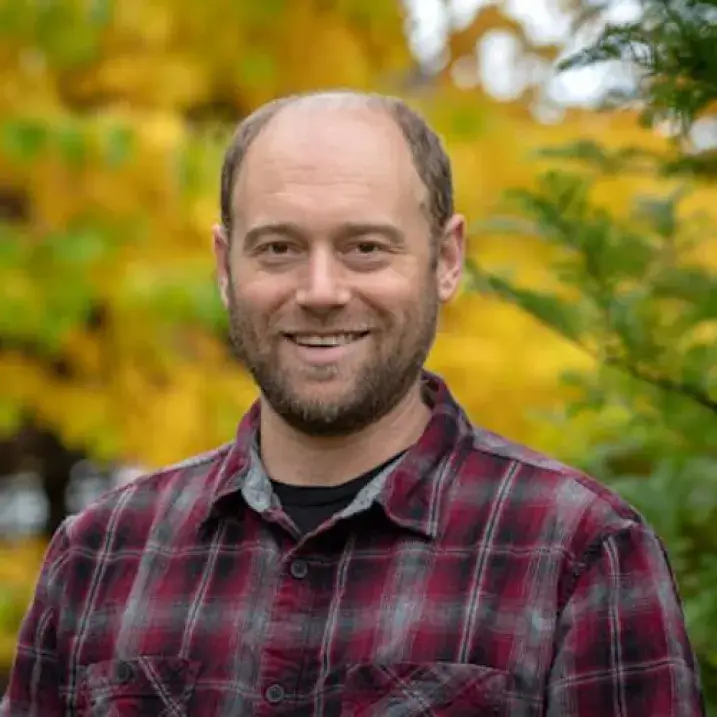
Eric von Wettberg
Professor
Director Vermont Agriculture Experiment Station
PRONOUNS he/him
Jeffords 205
63 Carrigan Drive
Burlington, VT 05405
United States
- B.A., Swarthmore College, 1999
- Ph.D., Ecology and Evolutionary Biology, Brown University, 2007
- Plant and Soil Science
- Gund Institute for The Environment
JOURNALISTS: Need help scheduling an interview? Contact UVM media relations or search for a UVM expert.
Areas of expertise
Crop genetics, breeding, domestication, evolution, ecology, conservation, legumes.
BIO
A great many crops are deficient in genetic diversity as a result of extreme population bottlenecks resulting from domestication and breeding. This limits their capacity for adaptation to new or altered habitats and their resilience in the face of climate change. Eric's laboratory studies the consequences of population bottlenecks for adaptation to harsh environments, merging approaches from genomics and evolutionary ecology. They also study ways in which genetic changes to crops or alterations to cropping systems can increase the amount of carbon sequestered in agricultural soils. They aim to develop a thorough understanding of the evolutionary ecology and population genetics of wild relatives of crops to breed better crops, conserve crop genetic resources, and build resilience to climate change into agricultural systems. They primarily work on legumes, with a focus on chickpea, lentils, fenugreek, fava bean and forages and also work on grass-based production systems in Vermont.
Courses
- Weed Ecology and Management
- Origin and Diversity of Crop Plants and Cropping Systems
- BCORE
Awards and Achievements
- Fulbright Scholar (1999 Denmark; 2017 Ethiopia)
- FIU Faculty Research Award (2015)
- UVM CALS Vogelmann award for research (2022)
Bio
A great many crops are deficient in genetic diversity as a result of extreme population bottlenecks resulting from domestication and breeding. This limits their capacity for adaptation to new or altered habitats and their resilience in the face of climate change. Eric's laboratory studies the consequences of population bottlenecks for adaptation to harsh environments, merging approaches from genomics and evolutionary ecology. They also study ways in which genetic changes to crops or alterations to cropping systems can increase the amount of carbon sequestered in agricultural soils. They aim to develop a thorough understanding of the evolutionary ecology and population genetics of wild relatives of crops to breed better crops, conserve crop genetic resources, and build resilience to climate change into agricultural systems. They primarily work on legumes, with a focus on chickpea, lentils, fenugreek, fava bean and forages and also work on grass-based production systems in Vermont.
Courses
- Weed Ecology and Management
- Origin and Diversity of Crop Plants and Cropping Systems
- BCORE
Awards and Achievements
- Fulbright Scholar (1999 Denmark; 2017 Ethiopia)
- FIU Faculty Research Award (2015)
- UVM CALS Vogelmann award for research (2022)