The EAB is a beetle introduced from Asia that attacks all native ash trees (trees in the Fraxinus group). If trees are not treated, this insect is expected to kill nearly 99% of Vermont’s ash trees.
To raise awareness about this pest and the damage it causes, May 17–23 has been named National Emerald Ash Borer Awareness Week. The Vermont Urban and Community Forestry program is helping by sharing information and encouraging people to get involved. Vermonters can learn about the pest, host a neighborhood tree-tagging event, or share information on social media.
An online Emerald Ash Borer Awareness Week toolkit is available on the Vermont Invasives website at: https://go.uvm.edu/invasivesorg-toolkit. It includes posters, videos, sample social media posts, and resources for educators. It also has guides for identifying ash trees and tips for leading tree walks or ash tagging events.
What to watch for:
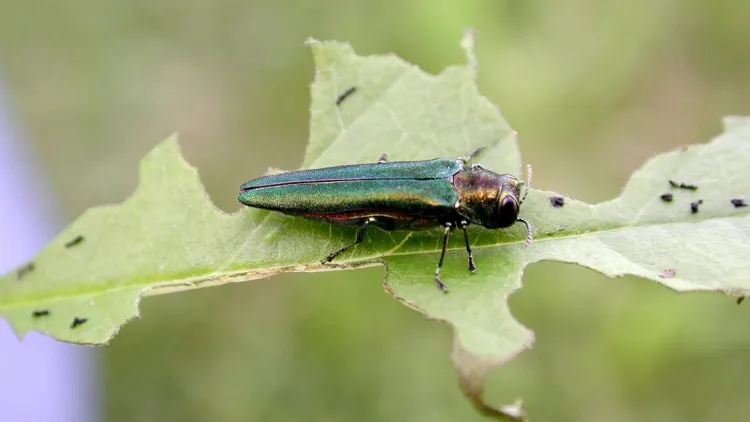
Adult beetles emerge from ash trees in early June. They are small—about 1/4 to 1/2 inch long—and shiny dark green. Signs of damage to ash trees include thinning leaves at the top of the tree, new shoots growing from the trunk, increased woodpecker activity, and S-shaped tunnels under the bark. Damage is not always easy to see at first. It can take three to five years after the insect arrives before a tree shows clear symptoms.
People who see signs of EAB in an area where it has not yet been confirmed can take photos and report it using the “Report It!” tool at www.vtinvasives.org.
What can be done:
In addition to reporting EAB signs and educating their themselves and their neighbors about the pest, Vermonters can help slow the spread of EAB by following the rule: “Buy it where you burn it.” Do not move firewood long distances. Instead, use local firewood or certified treated wood. Most state and private campgrounds in Vermont sell firewood on-site or can suggest nearby sources.
Individual ash trees can be preserved with injections of pesticides. This requires funding and a certified pesticide applicator familiar with EAB. It also must be done before the insect is well-established.
In many cases, it may take up to 10 years after EAB arrives before large numbers of ash trees begin to die. Untreated trees will eventually die and can become dangerous, especially near roads and public areas. Having a plan helps municipalities prepare for these risks and manage tree loss.
Resources:
The Vermont Invasives website has a page dedicated to the emerald ash borer, which includes maps showing where it's been found and a list of confirmed infested towns. The website page also offers resources to help homeowners, municipal staff, and land managers identify the pest, understand its impact, and slow its spread. Municipalities can access planning templates, cost calculators, case studies, sample letters and contracts, and instructions on how to conduct an ash tree inventory.