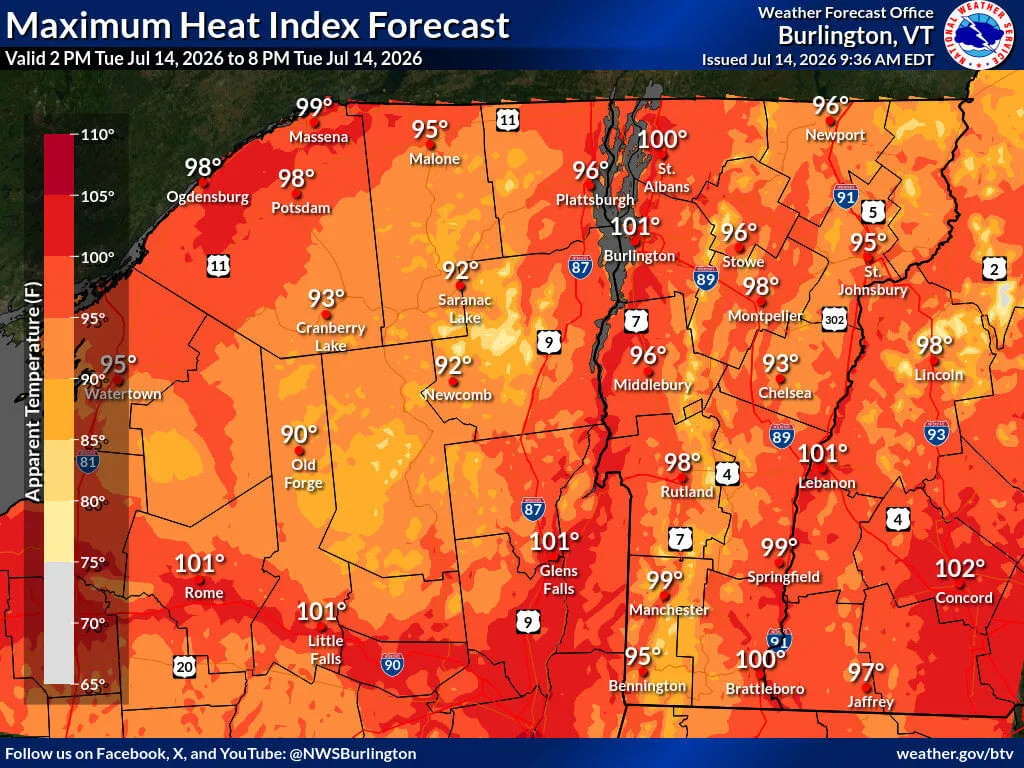
Below are reminders to keep you, your family and friends and your employees safe in extreme heat. This guidance, compiled by Extension Professor Vern Grubinger, is from more detailed articles by University of Madison-Wisconsin Extension and Michigan State University Extension.
The Vermont Language Justice Project also has information about how to take care of yourself and others in the heat, in 16 languages, on YouTube and on their app.
Steps to take to reduce heat stress:
- Plan strenuous tasks for cooler times of the day – morning or early evening.
- Help employees gradually acclimate to hot conditions by initially exposing them to short work periods and more frequent breaks.
- Arrange for work in shaded, well-ventilated areas whenever possible.
- Watch for high temperature/high humidity outdoor conditions and adjust assignments to reduce risk.
- Use fans to help evaporate sweat, providing an important cooling effect.
- Wear lightweight, breathable clothing.
- Wear a hat to provide sun protection when working outdoors. Hats should be loose-fitting and well-ventilated.
- Apply sunscreen to protect against sunburn and skin cancer.
- Drink often! Dehydration accelerates heat illness potential. Water is the best (and least expensive) drink for outdoor work. Sports drinks are OK for most people, but avoid sugary soda and caffeine. Salt tablets are not recommended unless a doctor advises them.
- Anyone who must restrict fluid intake because of a medical condition should check with a doctor about how to work safely in hot weather.
If someone is experiencing heat-related symptoms:
- Take the affected employee to a cooler area, such as in the shade or air conditioning.
- Cool the employee immediately.
- Immerse the employee in cold water or an ice bath. Create an ice bath by placing all of the available ice into a large container with water. Ice baths are the best method to cool workers rapidly in an emergency.
- Remove outer layers of clothing, especially heavy protective clothing.
- Place ice or cold wet towels on the head, neck, abdomen, armpits and groin.
- Use fans to circulate air around the worker.
- Never leave an employee with heat-related illness alone. The illness can rapidly become worse. Stay with the employee.
- When in doubt, call 911!