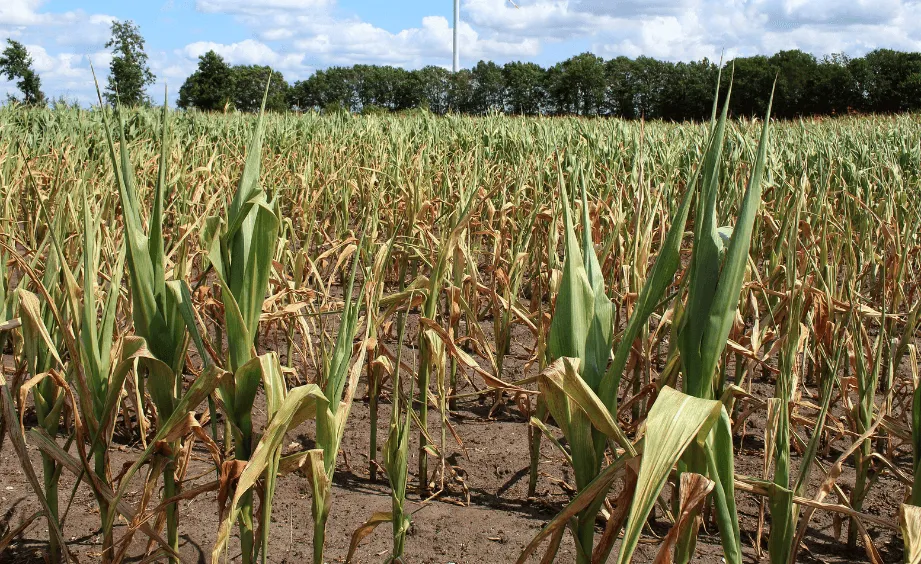
Flooding. Frost. Drought.
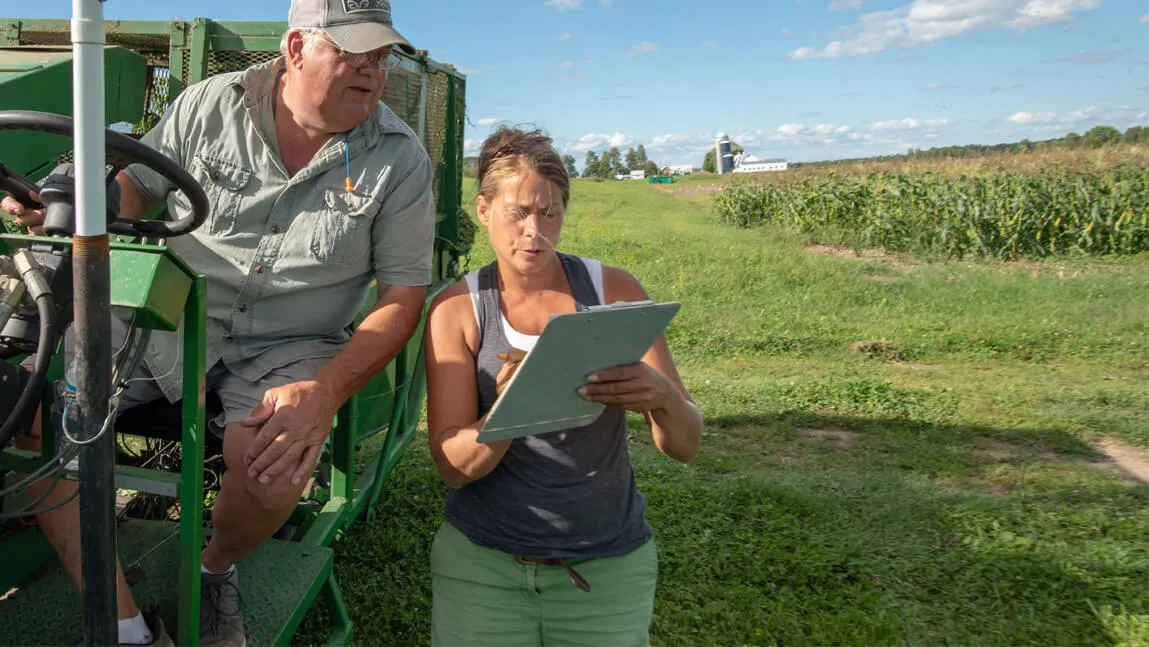
Many Vermont farmers are troubleshooting through year after year of extreme weather events. Following the 2025 drought, a survey by the Vermont Agency of Agriculture, Food and Markets received responses from 200 farmers who collectively reported around 80,000 impacted acres and almost $16 million in coping costs and production losses.
"Farming is tough, it's always tough, but it seems that it is getting harder and harder," said Heather Darby, Agronomic and Soils Specialist for the University of Vermont Extension and a Faculty Fellow at the Gund Institute for Environment. "The last three years really, '23, '24, '25, we're learning about how to farm in these weather extremes that we really haven't experienced before."
Darby said these unprecedented extremes and their impacts underscore the importance of the 2026 No-Till & Cover Crop Conference, scheduled for Feb. 19 and organized by UVM Extension and the Northeast Cover Crops Council.
She added the conference shows farmers' initiative in adopting and staying on the cutting edge of no-till agriculture and cover cropping, which are conservation practices for healthier soils.
"Part of building farmers' resiliency on their farms to the weather extremes is building soil health," Darby said.
The research she leads for UVM Extension along with independent studies show no-till agriculture and cover cropping can:
- boost productivity and water-holding capacity in soils;
- save farmers money on fertilizer, pesticides, fuel and equipment use;
- and reduce erosion, runoff and soil compaction.
With the extreme weather events in recent years, compaction is “on every farmer’s mind," Darby said, and it will be a major focus at the 2026 No-Till & Cover Crops conference.
And given the higher-than-average and in certain cases, record-breaking, precipitation in Vermont, she said the conference will go over efficient methods for terminating abundant cover crop growth in the spring.
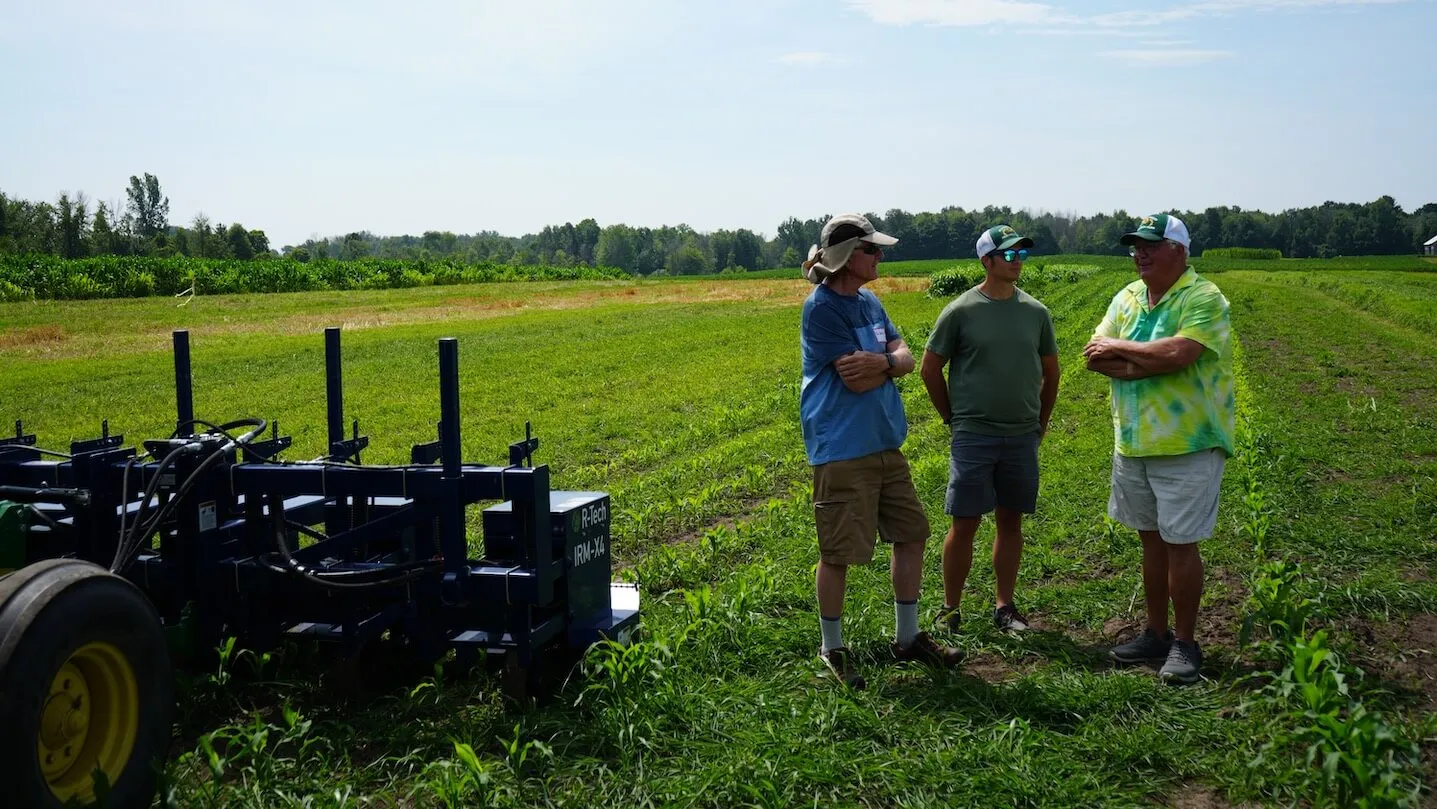
Other topics of note include: robotic weeders, which are arriving in Vermont this year, and soil conservation on vegetable farms.
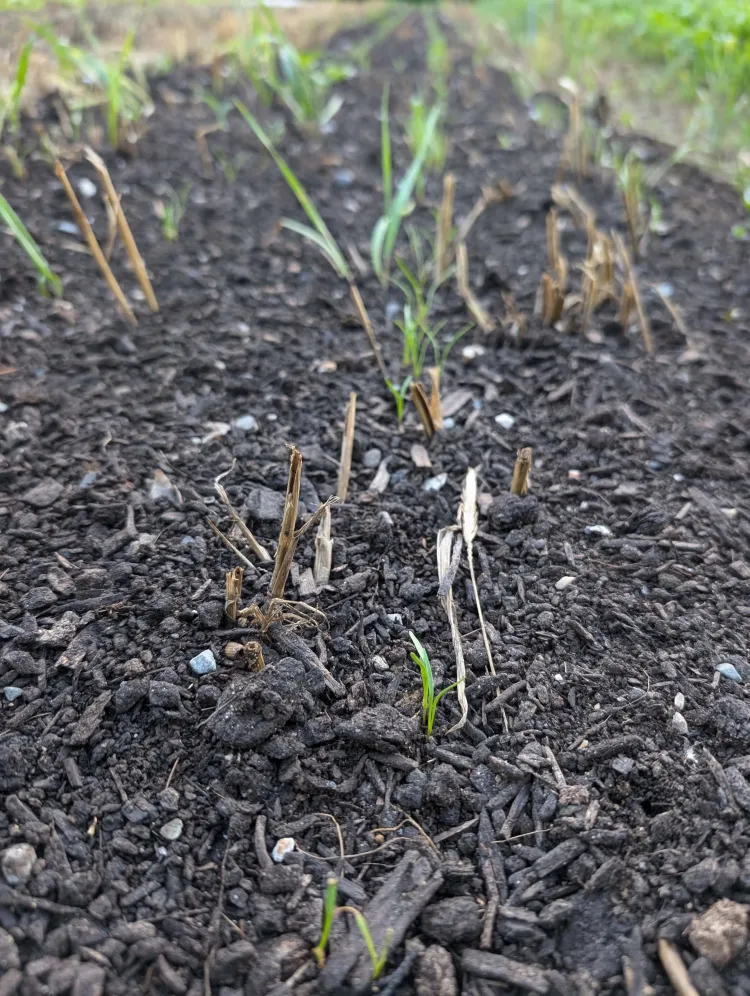
New, dedicated sessions to vegetable production will be offered in the afternoon. At the same time, there will be separate sessions for row crop producers. That's because no-till and cover-cropping practices may look quite different for tomatoes in a raised bed at a smaller farm versus rows of corn in a field at a large-scale operation.
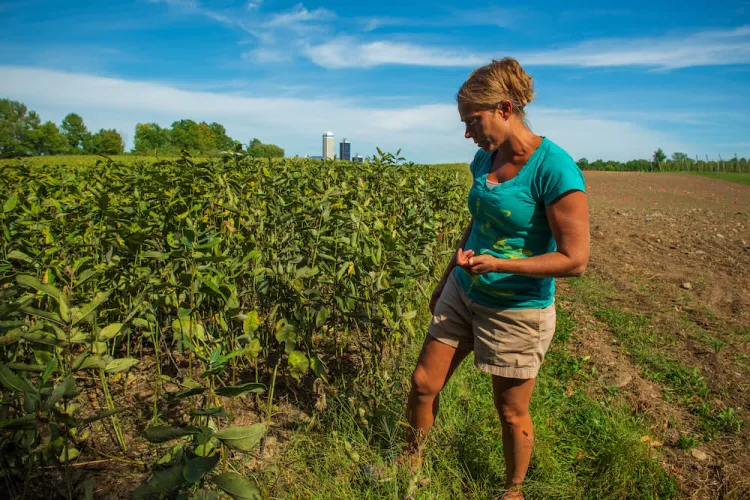
"They can invest in these $10,000 or $15,000 pieces of equipment," said Jake Mendell, who along with his wife Taylor, grows diversified vegetable crops in Starksboro at Footprint Farm. "We're three acres, we're not going to buy a no-till drill to plant a tenth of an acre of carrots."
Mendell will present at the conference about Footprint Farm's ongoing experimentation. They've reduced tillage through tractor attachments that mimic hand tools: chisel plow, disk and spring tooth harrows. They're also testing out mowing cover-crops, leaving them in field aisles, then covering beds with thin layers of compost.
And in their hillside carrot field, Mendell said these practices made the difference between the farm's worst carrot season in 2024 -- when rapid rainfall made "micro-rivers" in the field aisles not once, but twice -- and the farm's best carrot season in 2025.
“Leaving roots in the ground has been an 'aha' moment,” Mendell said. "It was very encouraging, and I think if we had a big rain, there just isn't somewhere for all of that stuff to easily flow.”
He added that it was important for him to understand that Footprint Farm could become more resilient, even if it didn’t go fully no-till. (The Starksboro operation is not alone in trying reduced tillage -- Andrew Woodruff from Whippoorwhill Farm on Martha's Vineyard will discuss using this approach, too, at the 2026 No-Till & Cover Crops Conference.)
"It doesn't have to be all or nothing," Mendell said. "You can adopt two practices that you implement and it could have a really big benefit to your farm."
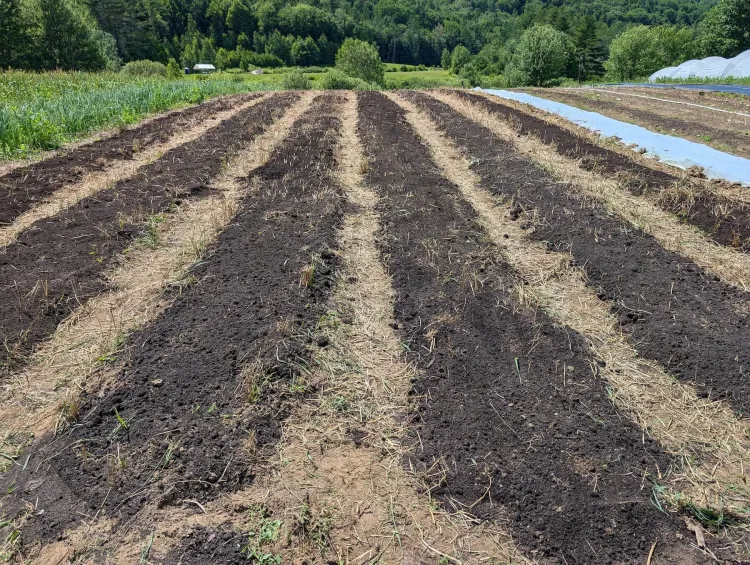
Mendell heard about the cover-cropping and light composting practices during Footprint Farm's participation in Jack Lazor Memorial Soil Stewards, which gathers cohorts of farmers to learn from one another. These cohorts are co-facilitated by UVM Extension Vegetable Nutrient Management Specialist Becky Maden, along with the Northeast Organic Farming Association of Vermont.
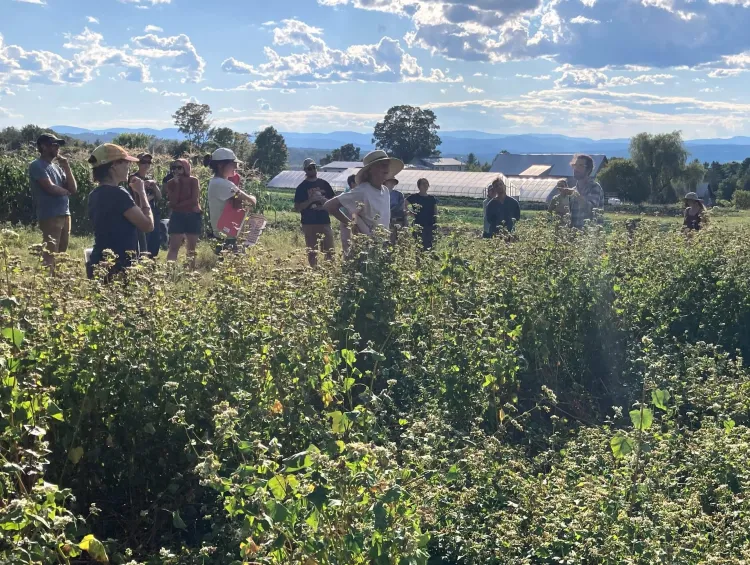
Maden said peer-to-peer problem-solving is what happens when farmers meet up, whether in a smaller group or in a bigger setting like the 2026 No-Till & Cover Crops Conference -- where she'll also be a presenter.
"There's so much community learning that takes place when we all get together, that's less about who's doing the talks and more about who's in the room," Maden said.
She noted how no-till agriculture and cover crops used to feel more like intellectual and philosophical curiosities among vegetable growers, herself included. But since 2023, Maden said she's witnessed in real time vegetable farmers collaboratively coming up with creative ideas for how to improve soil health -- in order to withstand these weather extremes.
"The timing really built it into something different than curiosity," Maden said. "It's like, 'Oh, this is what's really going to get us through this.'"
2026 No-Till & Cover Crop Conference details:
WHEN: Thursday, Feb. 19, 2026
TIME: 9 a.m. to 4:30 p.m.
WHERE: DoubleTree by Hilton, 870 Williston Road, South Burlington, VT 05403
COST: $75 per participant and $50 per student
REGISTRATION: Online pre-registration is strongly encouraged. Register online today or register by phone by calling UVM Non-Credit Registration Office at 802-656-8407. In-person registration opens at 8 a.m. on the day of the event.
ACCOMMODATIONS: If you require an accommodation related to a disability, please contact UVM Student Accessibility Services at access@uvm.edu or 802-656-7753 as soon as possible.
SPONSORSHIP: View the 2026 Sponsor and Exhibitor form. Sponsor registration and online payment is available on the registration website.
Farmers, technical advisers, researchers, students, consultants, agricultural businesses and local agencies are all welcome to get together at this annual event and discuss updates and insights on reduced tillage and cover cropping practices.
Conference speakers include:
- Aaron Daigh, Associate Professor of Agronomy & Horticulture at the University of Nebraska-Lincoln
- Ken Ferrie, co-founder of Crop-Tech Consulting in Illinois
- Matt Ruark, Professor and Extension Soil Scientist at the University of Wisconsin-Madison
- Etienne Sutton, National Cover Crop Variety Project Program Manager at the University of Missouri Center for Regenerative Agriculture
There will also be an opportunity for poster presentations to get the word out about cover crop and no-till work and research. Please submit a poster online through this form by Jan. 22, 2026. Read about the poster specifications beforehand. Email Victoria Ackroyd at vackroyd@umd.edu with any questions.
Download the conference brochure, including a full schedule (PDF).