
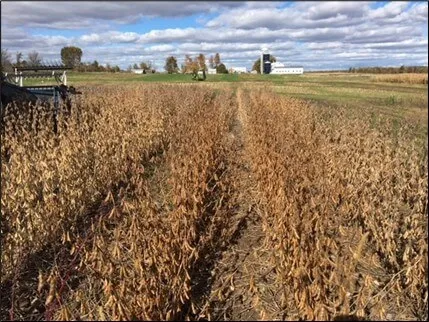
In 2025, UVM Extension conducted a Soybean Variety Trial at Borderview Research Farm in Alburgh, Vermont. This trial evaluated the yield of 36 soybean varieties ranging in maturity group 0.8 to 2.7. Entries were submitted from six seed companies. Check out the 2025 Conventional Soybean Variety Trial Report and Performance Summary results!
Weather Conditions
The 2025 growing season was challenging for soybean growers. Heavy rainfall in May resulted in sub-optimal field conditions at planting. While temperatures remained normal, decreased precipitation from June through September led to moderate drought conditions. These conditions resulted in lower soybean yields overall at Borderview Research Farm than soybean yields from past years at this location.
Environmental stressors like drought can lead to reduced soybean yields if they occur during the reproductive stages of development. Plants are particularly susceptible during pod formation and seed fill. Depending on the maturity of the soybeans, pod fill is happening around early-August to mid-September, which happened to be just as drought conditions were ramping up during the 2025 season.
Variety Selection
As with any crop, variety selection is crucial. In the Northeast, the shorter growing season and unpredictable spring and fall weather conditions can make timely planting and harvest difficult. These factors have soybean growers in Vermont leaning into the earlier maturity groups. Nineteen of the twenty top-yielding varieties were in maturity groups 1.3 to 2.7. In general, the lower-performing varieties fell in maturity groups of less than 1.3. This trend has been observed in recent years at Borderview Research Farm in Alburgh, VT.
For full details of the evaluation, check out the full report here.
Summary tables
