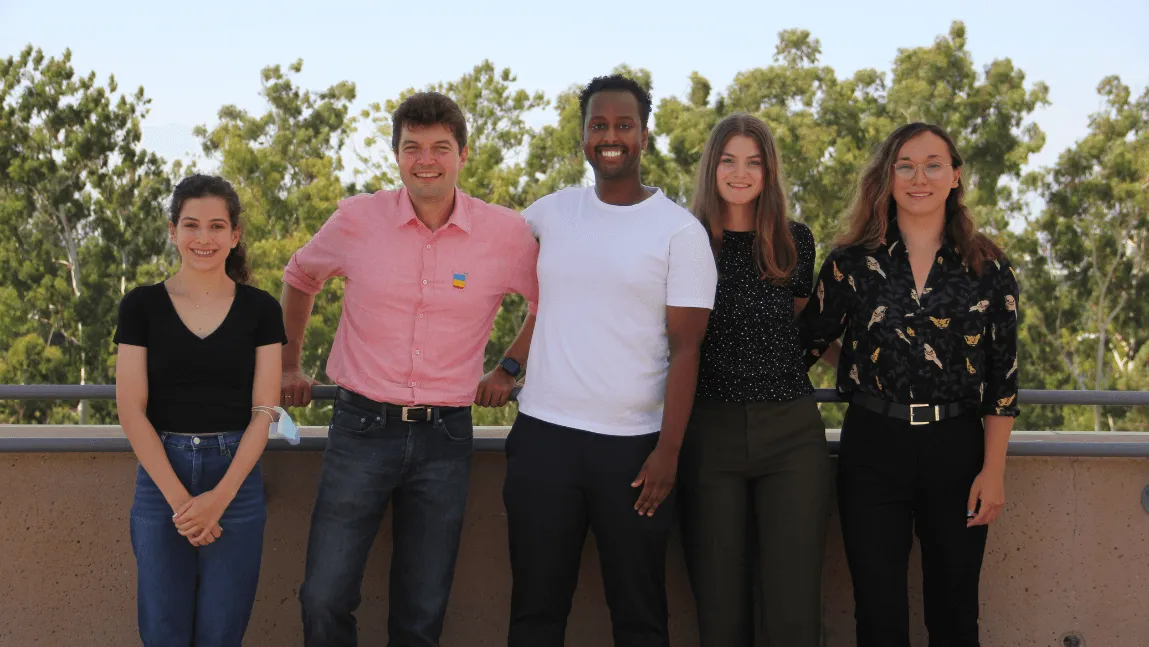
As senior Malina Krotzer prepares to graduate, she reflects on her time in CEMS and how her experience in last year’s Summer Institute in Biostatistics (SIBS) and Data Science supercharged her education and helped her synthesize her learning during her last semester in profound ways.
“The SIBS experience gave me a rare opportunity to work on the big picture, by both planning and then working on really meaningful research, the implications of which could guide medical interventions,” Krotzer – who is a Statistics major with a minor in Chemistry – says.
SIBS is sponsored jointly by the National Heart, Lung, and Blood Institute (NHLBI) and the National Institute of Allergy and Infectious Diseases (NIAID). The comprehensive six-to-seven-week summer training course on biostatistics and principles of data science combines classroom learning with career mentoring and hands-on data analysis using data collected from clinical studies in prevention and treatment of infectious, immune-mediated, and chronic diseases. Krotzer actively participated in the program and received substantial funding because of her strong application.
“I am passionate about global health,” the native of Falls Church, VA, says, “and this was an incredible opportunity to work with people who are so knowledgeable on the subject and learn about the whole process of research in epidemiology and disease prevention.”
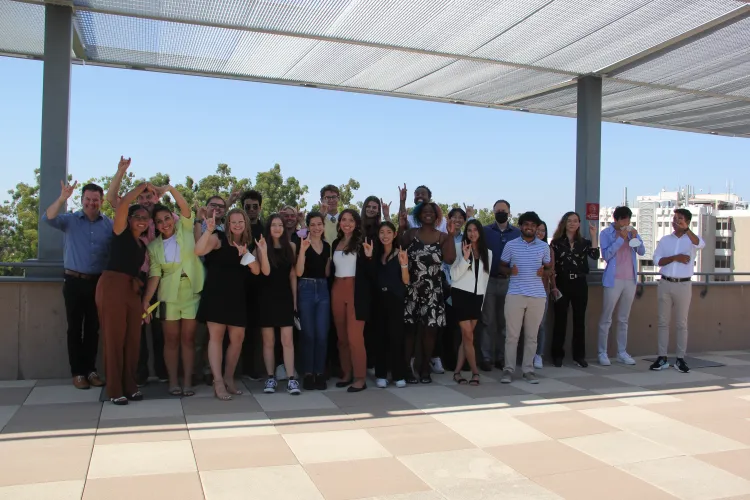
from across the globe through her work
with the SIBS program.
Designed to address a growing imbalance between the demand and supply for biostatisticians and data scientists, the course targets undergraduates and beginning graduate students who are interested in learning about biostatistics and encourages them to consider graduate programs related to biostatistics and data science.
Krotzer’s advisor, Katherine Merrill, recognizes how she has grown throughout her CEMS career. “Malina had a great experience in the SIBS program, and she also has stepped up to be a CEMS student leader in the 050 course and support the STAT & DS Club.” Krotzer is a CEMS peer mentor, has worked as a teaching assistant for summer sessions of several statistics courses, and has interned in data science for a company called CoreMap.
In addition to gaining experience working on and presenting research, and learning about advanced topics in statistics through lectures and labs, Krotzer appreciates the tremendous career opportunities she has learned about through her CEMS education.
This comprehensive approach has enabled her to fully explore a wide-variety of interests. “What I love about my CEMS education is how interdisciplinary my degree is,” she says. “While I love math and statistics, I have always loved science and the degree allows me to study both. The B.S. in Mathematical Sciences degree includes 24 credits of allied field courses, which I have used to take classes in physics, evolutionary biology, and my entire chemistry minor. I was even able to fit in two years of Japanese into my degree!”
Krotzer, who plans to start a doctoral program in the next few years, is set to launch from CEMS with a deep skill set and passion for her work. “Statistics is used in so many diverse fields to solve a variety of real-world problems,” Krotzer says. “It’s a field in which people work to solve problems with design, though in statistics it's often designing an experiment.” The end result of those designs can lead to improved outcomes for human and environmental health.