What if a plant commonly considered an invasive weed could be harvested and become part of a nutritious meal?
That question helped guide Team Wild (pesto) during the 2026 Climate Kitchen Summer Research Institute (SRI). Team members included Katherine Elmer, a UVM lecturer who is also a licensed health coach with UVM Health’s Comprehensive Pain Program and the Osher Center for Integrative Health; master’s student Liliana (Lily) Bettolo (Plant and Soil Science); and Plant Biology major Willa Hoerauf. Together, they set out to develop a tasty, nutrient-dense pesto made from locally harvested wild greens, including garlic mustard, stinging nettle, and wood sorrel.
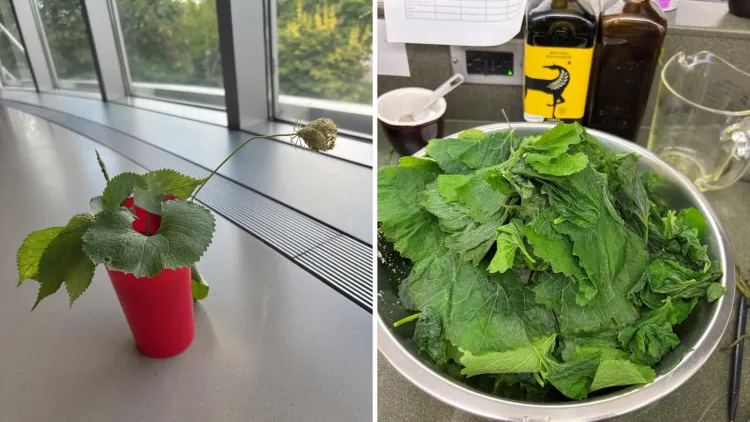
Garlic mustard, which has become widespread in Vermont, was particularly well suited to the project. This opportunistic, or invasive, plant can affect biodiversity and is commonly removed and discarded. Team Wild saw an opportunity to approach it differently: harvest it as an edible plant and turn it into nutrient-dense food for the community.
The idea built on Katherine Elmer’s work with Spoonful Herbals, a local educational nonprofit she founded to provide hands-on education in herbalism and plant-based wellness. Elmer and other experienced herbalists have brought this practice of wildcrafting to the community, emphasizing safe plant identification and responsible harvesting in the preparation of wild foods.
Tastes Good: Developing a Pesto People Would Want to Eat
The team employed a design-thinking approach learned during the SRI orientation, which included identifying a problem, developing and testing possible solutions, gathering feedback, and refining their approach based on what they learned.
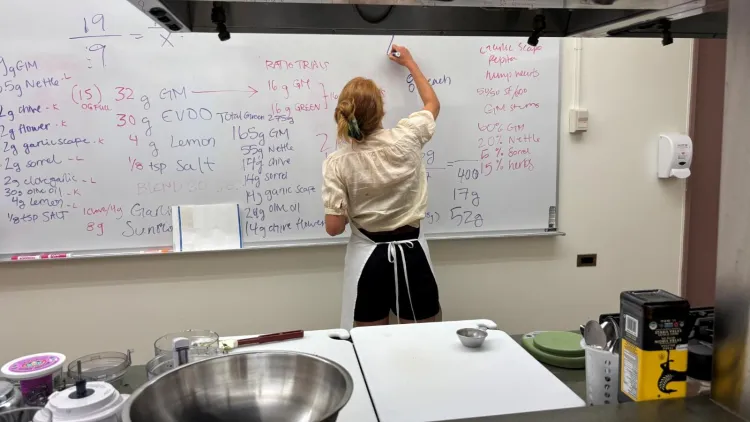
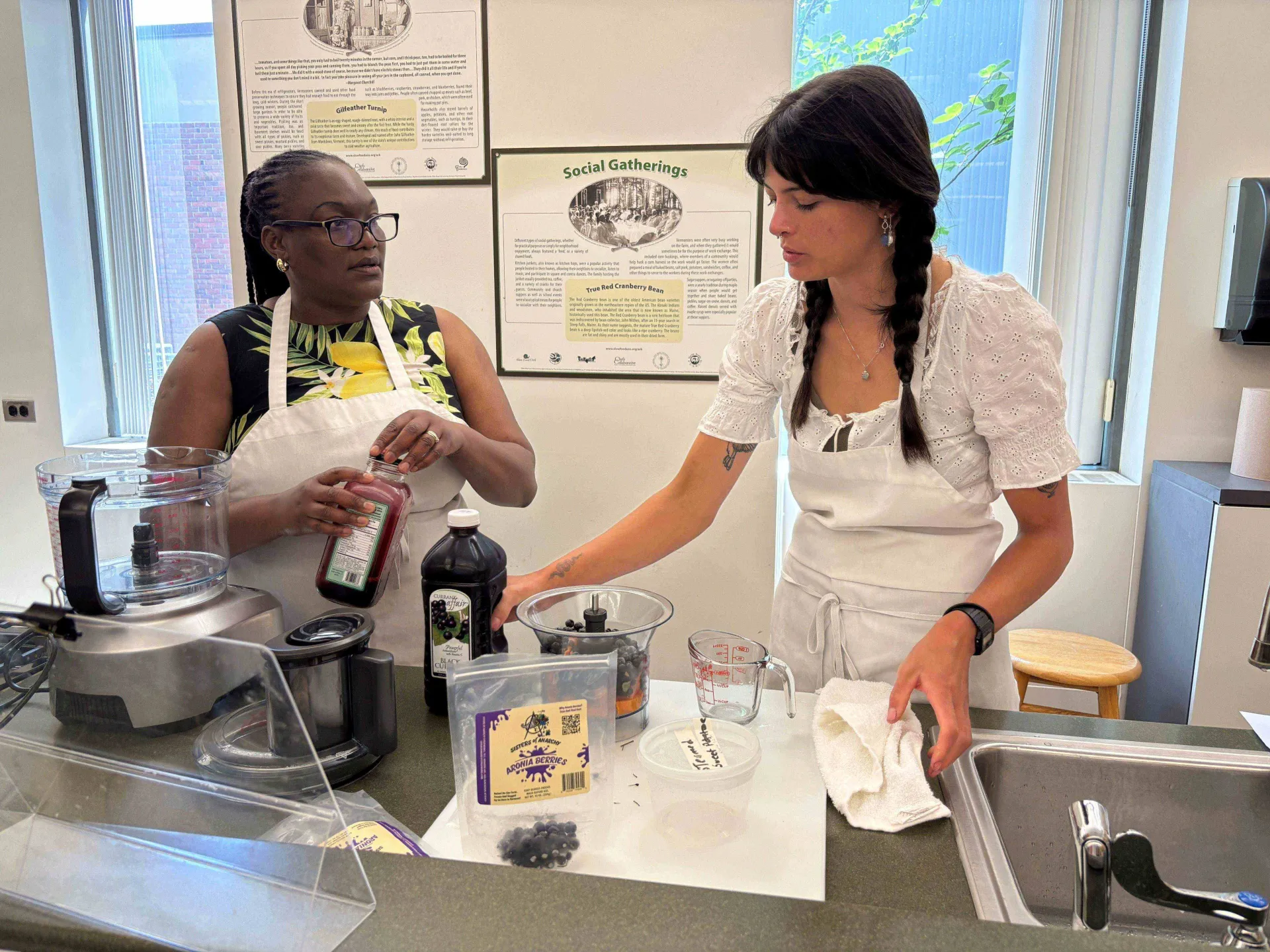
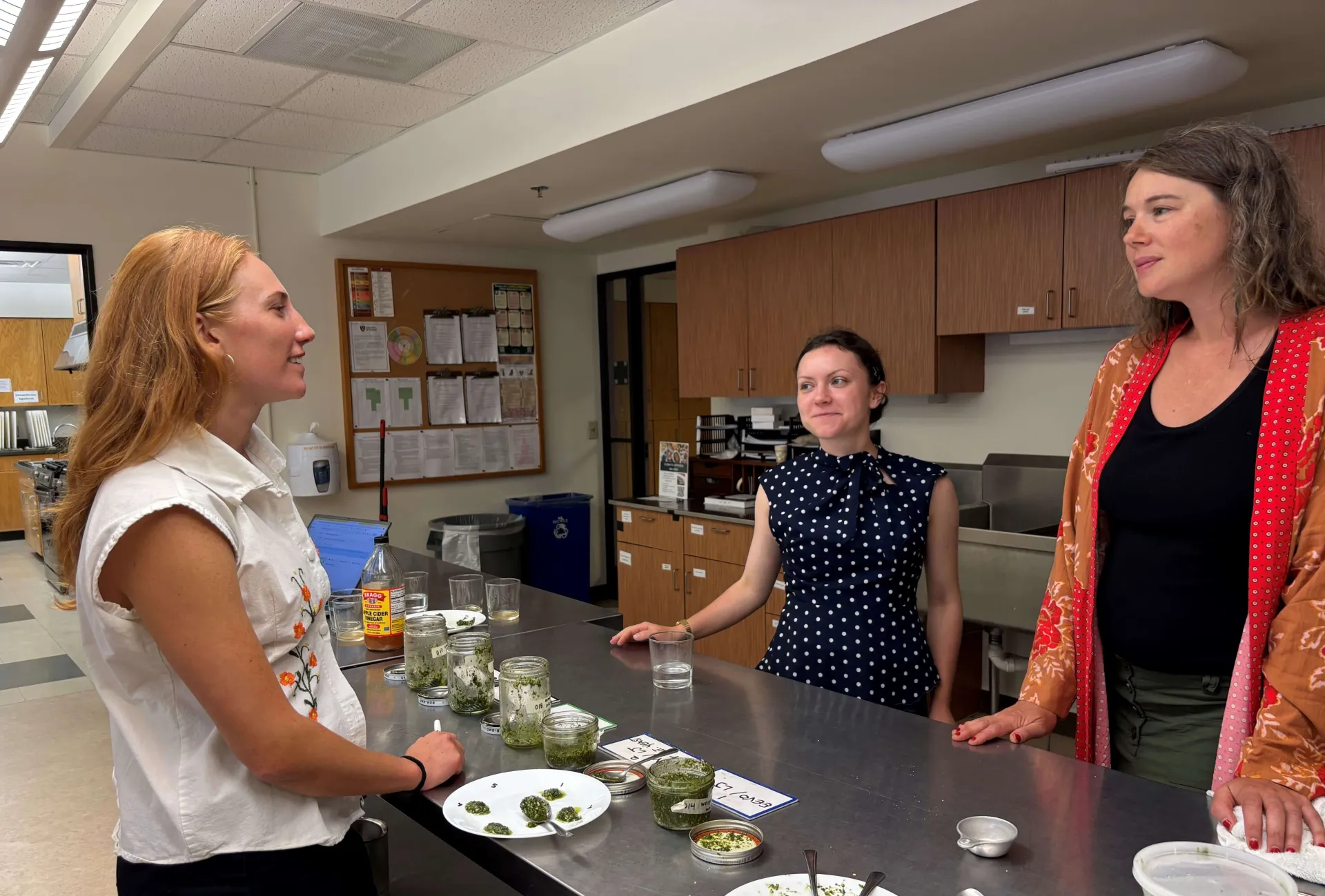
Settling on a final pesto recipe involved a lot of experimentation. The team developed a base recipe and then conducted a series of taste tests, trying different oils, acids, seeds, greens ratios, processing methods, and ingredients to find a palate-pleasing combination. Their goal was to create a plant-based, locally focused pesto that was nutritious, easy to prepare, and, importantly, tasted good.
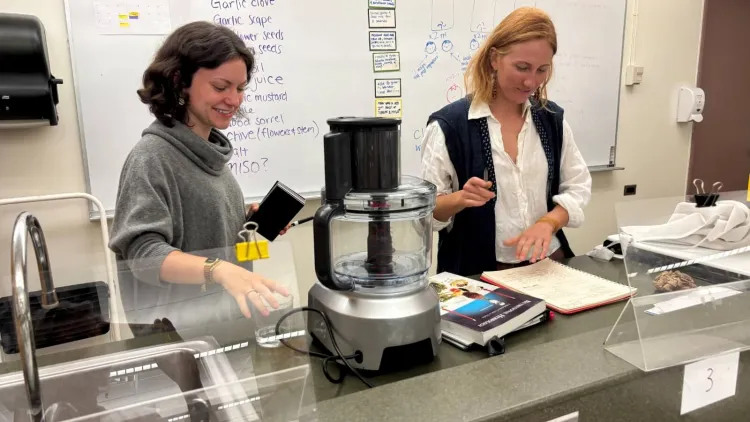
Along the way, the team learned that even the timing of the harvest mattered. Early spring garlic mustard was preferable because plants harvested later could be more bitter. Freezing and acid baths helped reduce bitterness, while blanching did not improve the taste and caused discoloration. Another important discovery came from testing the addition of miso, which added a savory, umami quality and helped round out the pesto’s flavor profile.
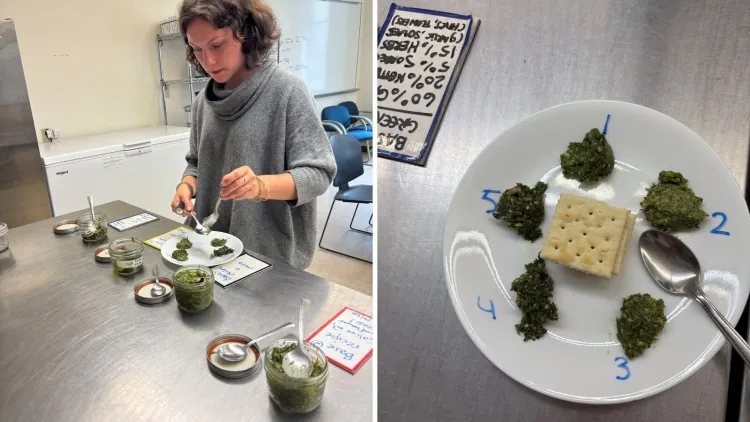
Community feedback became part of the recipe development process as well. Tastings with the Climate Kitchen team, herbalism apprentices, and attendees at the Almost Summervale event gave the team feedback on taste, texture, bitterness, depth of flavor, and even what to call the finished product.
From Testing and Refining Recipes to Production
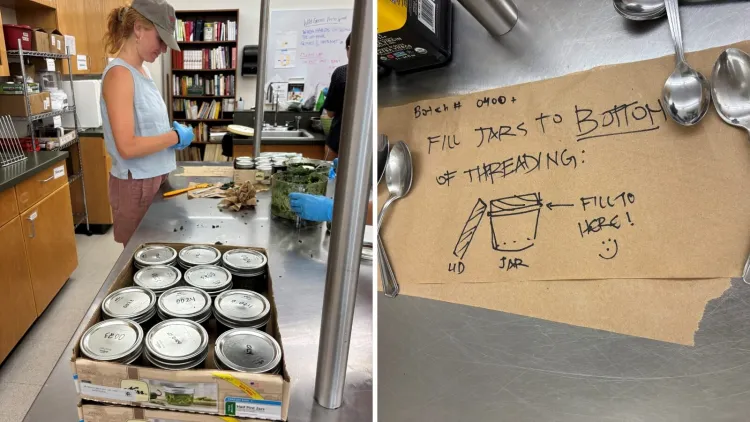
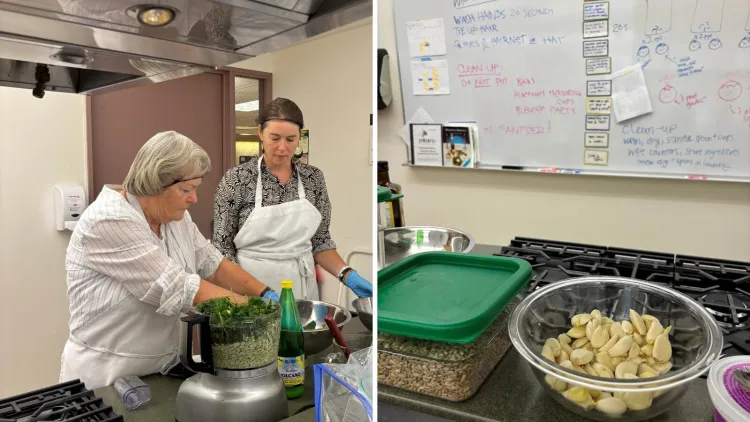
Once the recipe and production process were refined, the project moved from experimentation to making pesto at a much larger scale. The target was 250 jars of pesto. Twelve volunteers participated in production, including four UVM service-learning students from Katherine Elmer’s summer course.
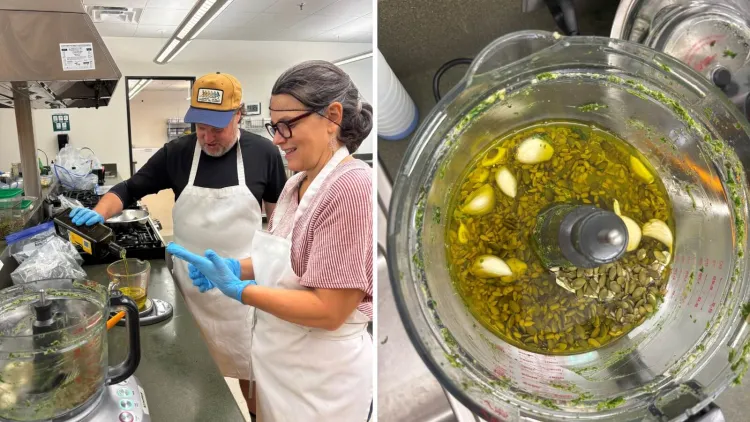
The final Wild Greens Pesto featured garlic mustard, stinging nettle, and wood sorrel along with garlic, seeds, olive oil, lemon juice, chives, miso, and sea salt. The recipe was designed so that it could easily be scaled up for community organizations or scaled down for preparation in a home kitchen.
Food safety was an important part of the process. Wild-harvested herbs were identified and collected under the supervision of certified herbalists, ServSafe standards were followed during production and storage, and harvesting guides developed for community members included plant-identification information and information about hazardous plants to avoid.
The project also put Climate Kitchen’s five tenets of sustainability into practice: plant-forward, low waste, whole-food utilization, tastes good, and local/regional sourcing. Made with locally harvested wild greens, the plant-based pesto reflected the principles of low waste and whole-food utilization, while the “tastes good” tenet helped drive the recipe development process from the start.
Sharing the Final Product
In August, Team Wild distributed 200 jars of Wild Greens Pesto to members of the Intervale Center’s Fair Share Program. The team also planned to donate an additional 50 jars to the Burlington chapter of Food Not Cops.
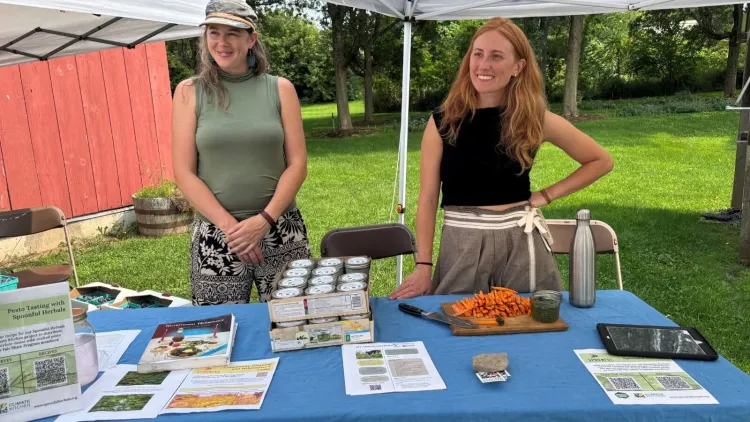
Team Wild also took a step toward empowering people to prepare their own foods from wild-harvested plants. The team developed resources, guidelines, and recipes for home and community cooks with the hope that others will continue exploring how wild plants can become a nutritious part of our diets. Nutrient testing of the Wild Greens Pesto was still underway at the time of the team’s final report.
The project also sought to reconnect people with the plants growing naturally around them while finding practical, enjoyable ways to nourish communities. Team Wild hopes the project inspires others to harvest and enjoy wild foods.
This text was adapted from Team Wild’s final presentation and report.
The Climate Kitchen is supported by The Food Systems Research Center (FSRC) at the University of Vermont (UVM), which funds collaborative research that puts people and the planet first, unites disciplines and communities, and answers complex questions about food systems.