Buckwheat: From Seed to Mill to Plate
The University of Vermont (UVM) Climate Kitchen’s 2026 Summer Research Institute (SRI) Team Buckwheat investigated how this versatile, underutilized, climate-resilient crop could support a more sustainable regional food system. Using a design-thinking approach, the team’s work followed five stages: empathize, define, ideate, prototype, and test.
Well suited to Vermont’s short and unpredictable growing season, buckwheat matures relatively quickly, making it a potentially valuable crop as Vermont farmers adapt to changing climate conditions. The team explored buckwheat from multiple angles, including how it is grown and milled in the Northeast, how it performs in the kitchen, and how people respond to foods made with different types of buckwheat flour.
Buckwheat has a long culinary history, appearing in foods such as crêpes, porridge, and noodles. Today, it is gaining renewed attention for its nutritional qualities, including protein, fiber, and antioxidants, as well as its potential for gluten-free foods. This summer, Team Buckwheat set out to explore this pseudograin’s potential from multiple perspectives, examining the crop from production and processing through culinary use.
The 2026 SRI Team Buckwheat consisted of Amy Trubek, Professor of Nutrition and Food Sciences; Fatemeh Zare, Assistant Professor of Nutrition and Food Sciences; Ashley McCarthy, USDA Research Scientist (former Food Systems and Nutrition Postdoctoral Research Associate); and Food Systems graduate student Iz Amos-Landgraf.
Learning from growers, millers, and researchers
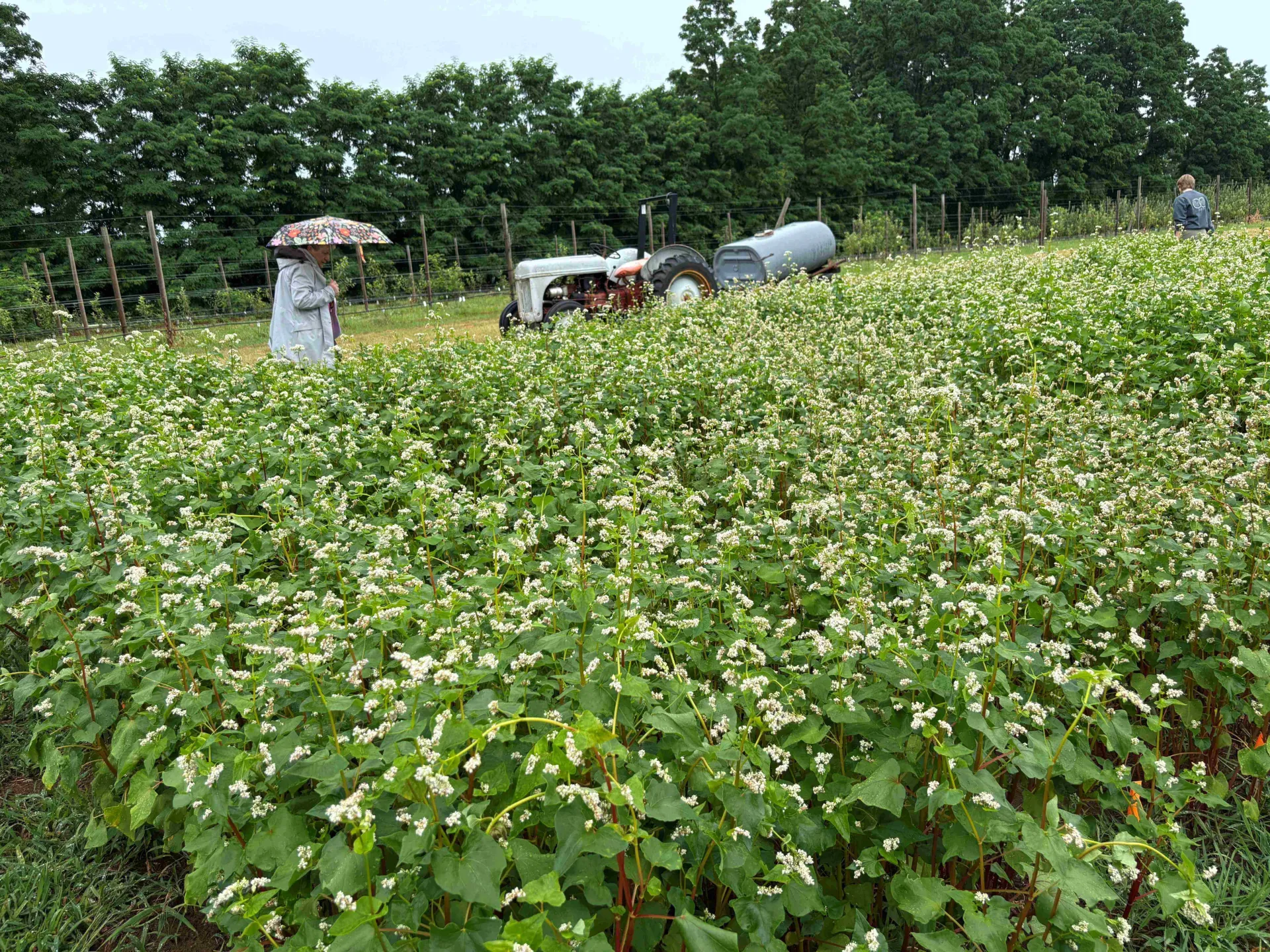
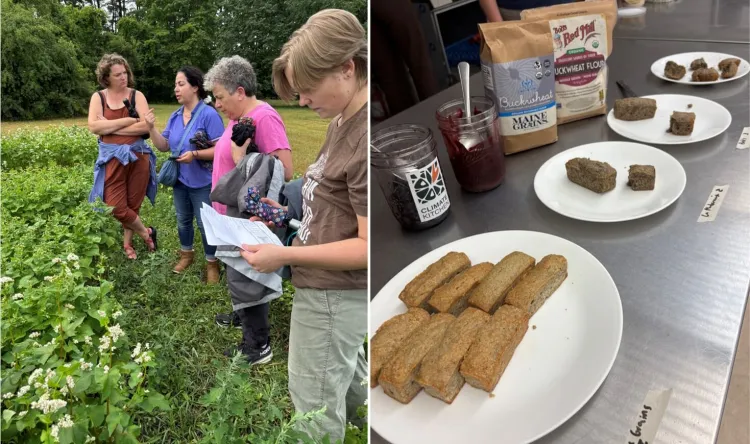
The team began by learning more about how buckwheat is sourced and milled in the Northeast. Team members interviewed millers at Maine Grains and Champlain Valley Milling, spoke with researchers and other stakeholders, and visited buckwheat trial plots at the UVM Horticultural Research Farm. These conversations and field experiences helped the team explore how decisions about variety, cultivation, processing, and milling can affect the final flour’s qualities and uses, as well as consumer preferences.
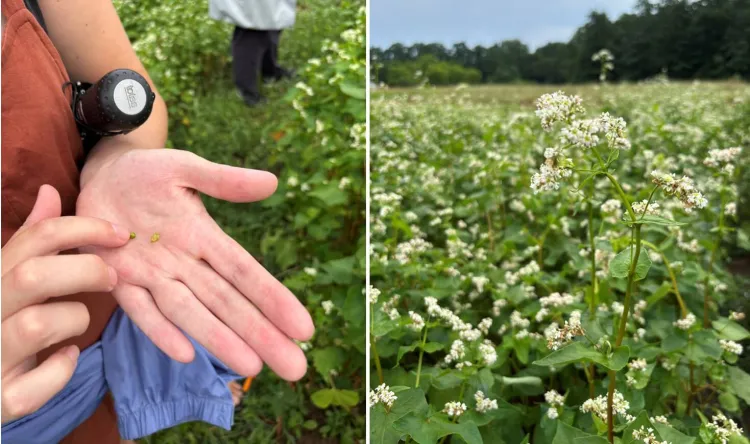
The research also introduced the team to distinctions between common and tartary buckwheat. Common buckwheat is more widely grown in the U.S. and is easier to dehull and process into flour. Tartary buckwheat is traditionally used for ployes (French-Acadian and Brayon flatbreads) in northern Maine, where it is considered milder in flavor and is the dominant variety grown. However, the distinctive shape of the seed makes it more difficult to dehull and presents challenges when processing it into flour.
Testing buckwheat flour in the kitchen
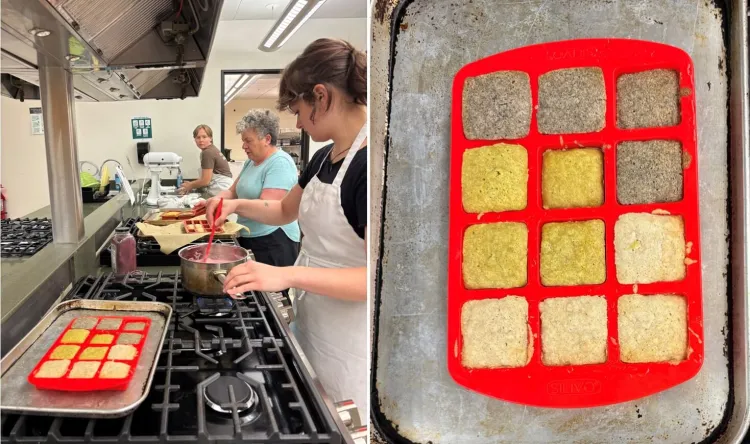
To translate that broader research into a focused culinary experiment, the team selected one recipe: buckwheat financiers. Using the same recipe, team members prepared financiers with six different buckwheat flours and conducted sensory taste testing to compare the results. Test participants evaluated the samples using ranked-preference testing and a hedonic scale, helping the team better understand preferences related to factors such as the presence or absence of the hull.
The work demonstrated that buckwheat flour is not a single, uniform ingredient. The variety of buckwheat and the ways it is milled and sieved can influence its nutritional profile, flavor, texture, and suitability in different foods. Flours with a higher percentage of whole grain generally have more flavor, fiber, and antioxidants, while completely dehulled flour has greater starch digestibility and may produce textures and other qualities that are more familiar to consumers in baked goods.
Putting the Climate Kitchen’s five tenets into practice
The financier experiments also gave the team an opportunity to put the Climate Kitchen’s sustainability tenets into practice. Buckwheat offered a whole-food, plant-forward, nutrient-rich ingredient, and all but one of the flours used in the project came from the Northeast.
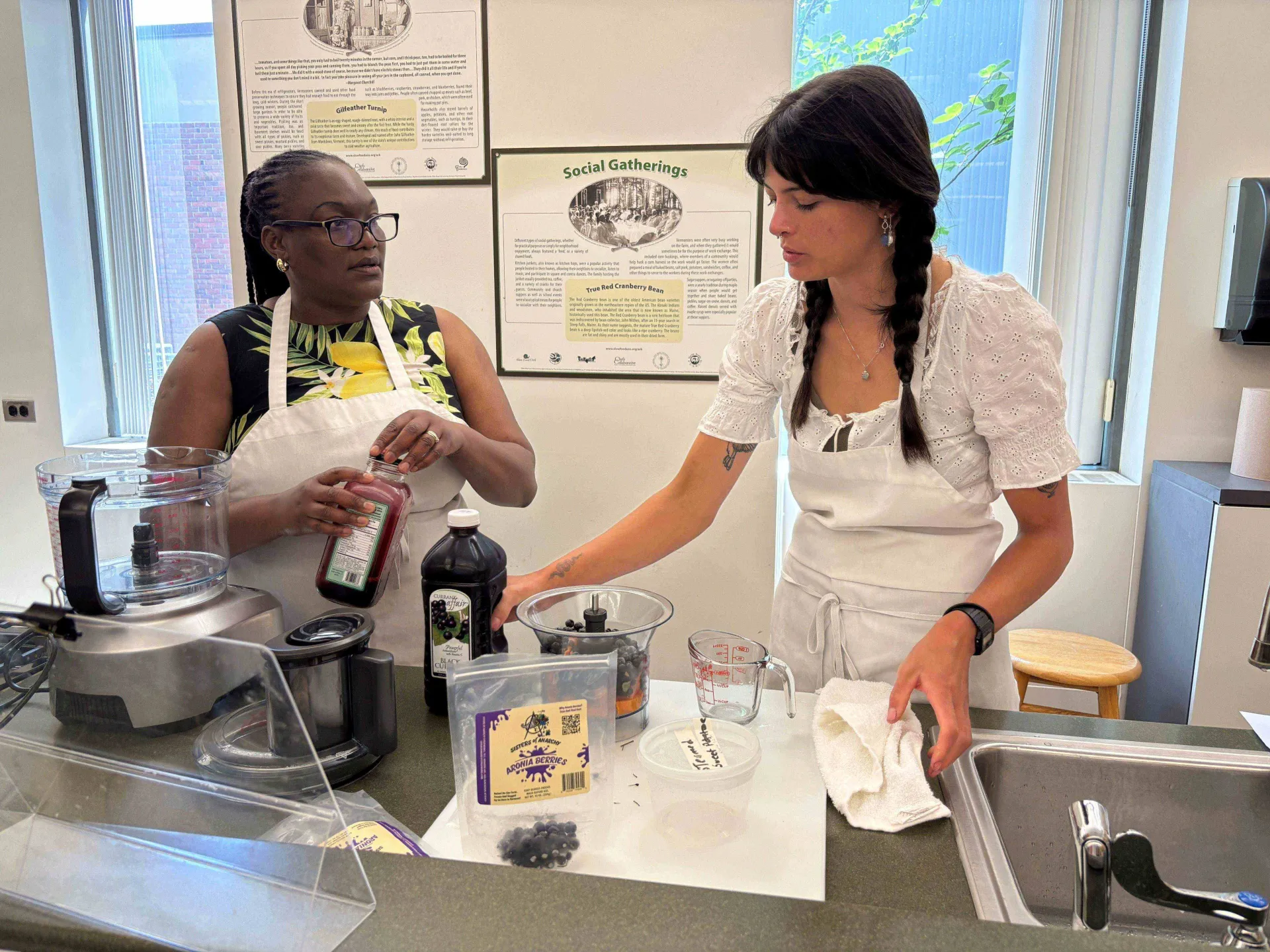
The team also put the “low waste” and “tastes good” tenets into practice. Because the financier recipe called for four egg whites, the team developed an aronia berry curd using the remaining yolks rather than leaving them as a by-product. Aronia, a native plant being studied by the Summer Research Institute’s Team Edible Forest, created a connection between the work of the two research teams. The curd and financiers could also be served together as complementary products.
To explore the “tastes good” tenet, the team gathered feedback on tasters’ preferences for the type and percentage of buckwheat flour used in the financiers and made adjustments based on that feedback.
Building a foundation for future research
The summer’s work raised new questions about how regional buckwheat might be grown, processed, and used. One proposed next step, following the acquisition of a tabletop New American Stone Mill, is to develop a shared-services model with UVM’s Northwest Crops and Soils Program to support further research on harvesting, processing, and distributing buckwheat flour.
The collaborations developed through the project will help support this next phase of the work. Reflecting on the summer and the possibilities ahead, Professor Amy Trubek said, “Following buckwheat from seed to flour has allowed our team to create new collaborations, both within and beyond the University. We look forward to what’s next.”
Team Buckwheat also plans to develop a protocol for milling buckwheat and analyzing the flour for nutritional, sensory, and baking properties. Future research could examine differences between stone milling and roller or hammer milling. The team’s working hypothesis is that low-speed stone milling may better preserve whole-grain structure, flavor, and bioactive compounds, while roller or hammer milling may produce finer, more uniform flour at higher throughput but cause greater starch damage and result in fewer bran-rich fractions, affecting the nutrient profile.
The team also identified opportunities to strengthen relationships with commercial bakeries and existing regional mills, particularly Champlain Valley Milling. Additional work could identify local areas suitable for growing buckwheat and estimate how much the region could potentially produce.
Through its seed-to-mill-to-plate approach, the project brought together agricultural research, regional food processing, sensory evaluation, and recipe development. The team’s work over the summer created a foundation for continued exploration of how locally produced buckwheat could move from the field into an expanded range of food products that are both tasty and nutritious.