The Nutrition and Food Sciences department has always offered courses that emphasize hands-on experiences in making meals, a legacy of the long-standing Home Economics curriculum. Over the past decade, faculty and graduate students have combined research and teaching in order to update this curriculum to address modern practices. This led to centering the lab courses around the concept of food agency or empowering people to make meaningful choices about what and how they eat.
At the same time, a growing awareness of the connections between climate change and food systems began to shape conversations. These discussions were influenced by global frameworks such as the United Nations Sustainable Development Goals and the growing commitment to a concept of sustainable diets. Both faculty and students became increasingly interested in how food practices could respond to environmental challenges and began seeking a more integrated, hands-on approach.
This is when the Climate Kitchen began to take shape, emerging through the efforts of a broad community of faculty, graduate students, and partners. Amy Trubek, along with her (then graduate students) Sarra Talib and Amy Finley, as well as Cynthia Belliveau, former Dean of Continuing and Distance Education, played key roles in advancing the idea of a working kitchen lab. It was during this period that the term “Climate Kitchen,” coined by Sarra Talib, came to define this evolving work and the concept took on a clearer, more cohesive, and concrete form.
From this, the Climate Kitchen emerged as a distinct initiative and today it serves as a hub for experimentation and collaboration. Through teaching, research, and community engagement, the Climate Kitchen explores how culinary practice can support climate resilience, reduce environmental impacts, and reimagine the future of food.
The Climate Kitchen is a place to figure out what to do next, with emphasis on anticipating the future. And to do so while keeping in mind there must be more opportunities for mitigating climate change and promoting individual and planetary health.
A kitchen is more than a room for storing and making food. It is also a place of transformation and collaboration. The Climate Kitchen reimagines the function and purpose of a kitchen to help serve future generations of cooks of all types.
Meet the Core Team
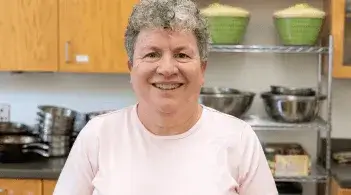

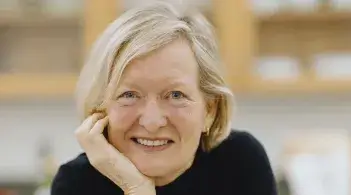
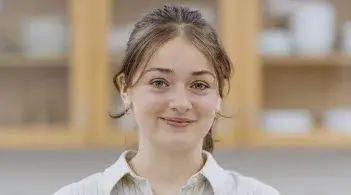
Lydia Wright - Intern
Climate Kitchen Affiliates
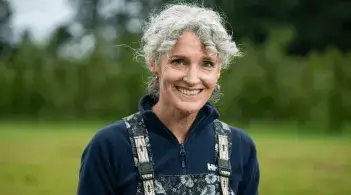
Amy Finley
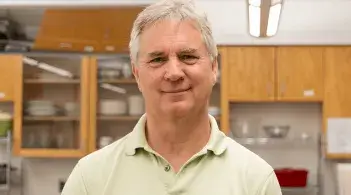
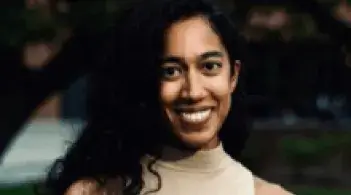
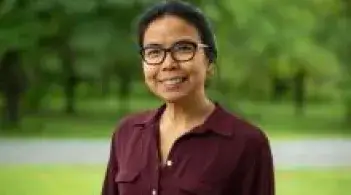
Melanie Narciso
Advisory Board
We are grateful for the leadership of our project advisory board, a group of campus leaders at UVM who provide oversight and guidance to the ever-evolving work of the Climate Kitchen.
Polly Ericksen, Director of the Food Systems Research Institute
Cara Feldman-Hunt, Director of the Osher Center for Integrative Health
Jason Konefal, Chair of Community Development and Applied Economics
Teresa Mares, Associate Professor of Anthropology and Director of the Food Systems Graduate Program
Nicole Reilly, Sustainability and Campus Partnership Manager for University Dining Services
Partnerships and Donors
The Climate Kitchen is generously funded by the Food Systems Research Institute at the University of Vermont.
The success of the Climate Kitchen is based on collaborative relationships and partnerships.
On campus, we work with
The Department of Nutrition and Food Sciences
The Osher Center for Integrative Health
The Horticulture Farm
UVM Dining
Interested in collaborating with the Climate Kitchen? Reach out to Amy Trubek, atrubek@uvm.edu
Interns
The Climate Kitchen's work benefits greatly from our undergraduate and graduate student interns.
- Cora Pohlman, Engineering undergrad (Spring ’24) — Foodcycler use and results
- Andrea Rebimbas, NFS undergrad (Summer ’24 Hopp Award, Fall ’24) — Summer Institute support, testing food safety of FoodCycler for up cycling scraps
- Brian Griffith, FS graduate student through FS Synergy Grant (Fall ’24) — Recipe development and collaboration with UVM dining on first collaborative Waterman meal
- Jonas Camera, FS undergrad (Spring ’25) — Recipe testing/design
- Maggie Nebzydoski, NFS undergrad (Fall ’25) — Recipe testing
- Lily George, NFS undergrad (Fall ’25) — Recipe testing
- Ava Andlauer, NFS undergrad (Spring ’26) — Recipe testing/design and nutrition analysis
- Eva Rook, FS undergrad (Spring ’26) — Recipe testing/design
- Hailey Sanphy, RSENR graduate student (Spring '26) — Food scrap valorization
- Lydia Wright, NFS undergrad (Summer ’26) — Summer Institute report
- Liliana Bettolo, RSENR graduate student (Summer ’26) — wild pesto development
- Lizah Makombore, SDPEG/L4E graduate student (Summer ’26) — Edible Food Forest and aronia berry
- Hannah Lewis, FS graduate student (Summer ’26) — Edible Food Forest and Foods for Planetary Health research project
- Quinn Herbine, FS graduate student (Summer ’26) — local saffron products
- Iz Amos-Landgraf, FS graduate student (Summer ’26) — local buckwheat processing