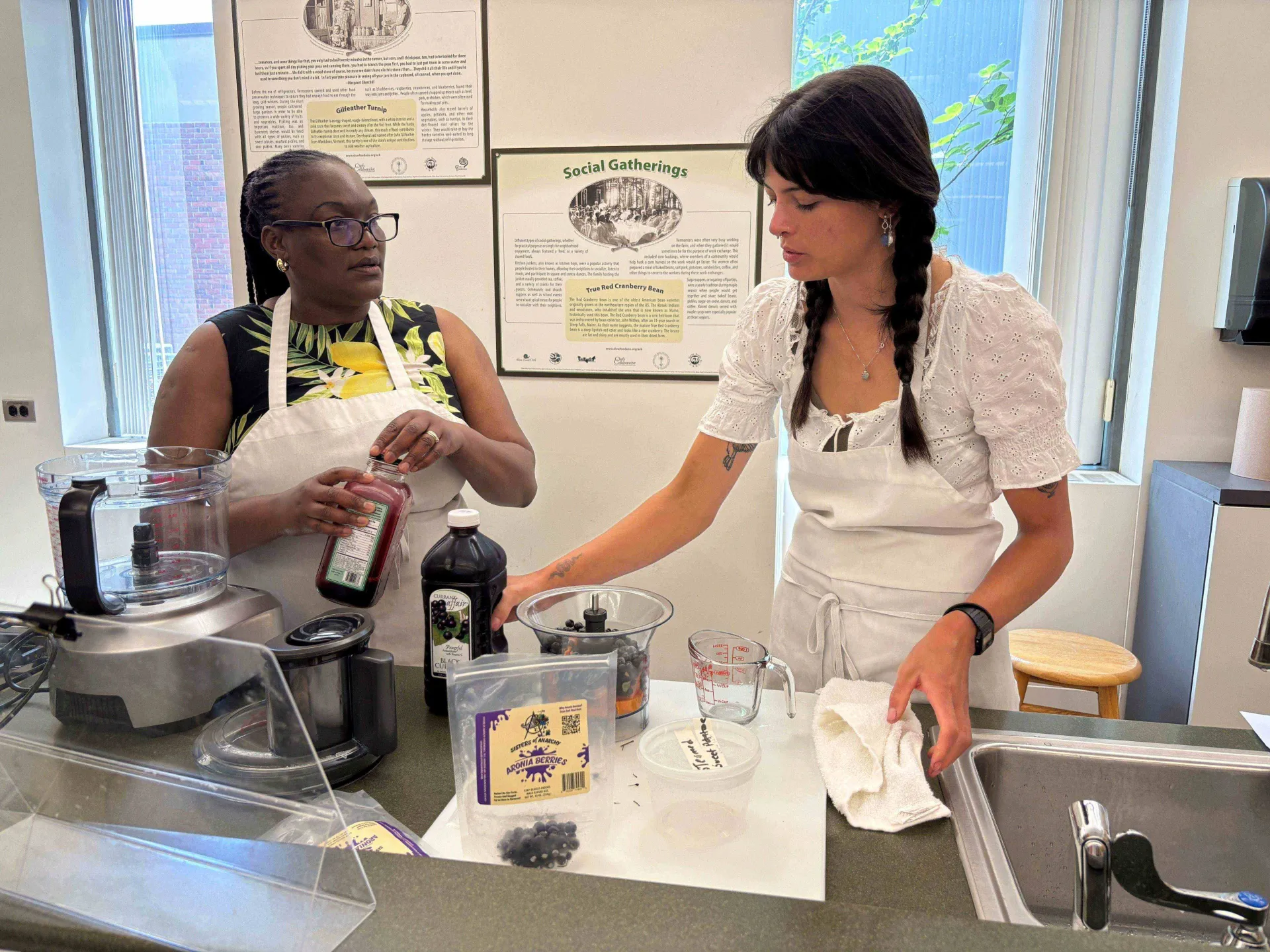
Climate Kitchen’s Team Edible Forest Explores the Possibilities of Aronia Berries
Aronia berries are well suited to Vermont’s climate, growing on hardy, low-maintenance shrubs that both beautify the landscape and offer nutritious, edible fruit. That combination makes aronia berries a natural fit for edible forests, landscapes designed to provide both ecological sanctuaries and low-maintenance food. The nutrient-dense berries, however, are high in tannins and are astringent, presenting a culinary challenge: how to transform the fruit into easy-to-make foods that people will want to eat.
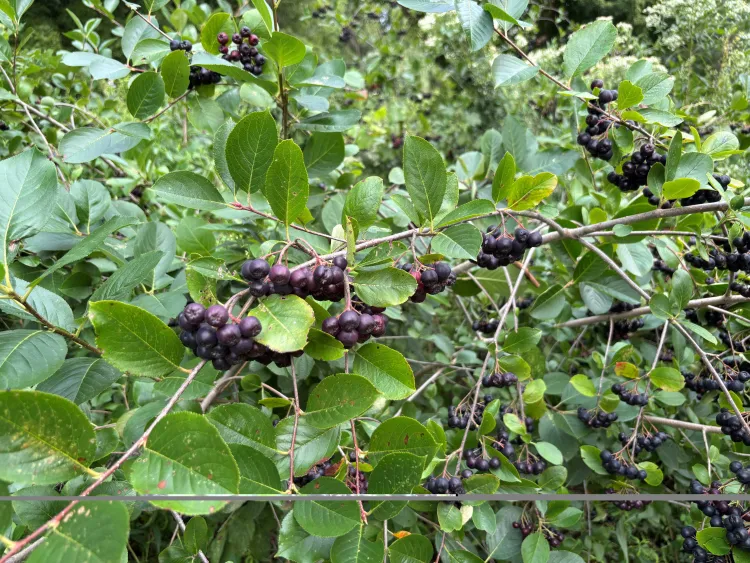
For the Climate Kitchen’s 2026 Summer Research Institute Team Edible Forest, that challenge provided an ideal starting point for a summer of experimentation. Keeping in mind the Climate Kitchen’s commitments to sustainability, taste, whole-food utilization and reduced waste, UVM Lecturer Fortino Acosta and Food Systems graduate students Hannah Lewis and Lizah Makombore explored how aronia berries, one of the foods grown in their edible forests, could be transformed into dishes and products that are easy to prepare, taste good, and extend the fruit’s usability.
Launched in 2024, the Climate Kitchen’s six-week Summer Research Institute serves as an incubator for interdisciplinary research addressing challenges in the food system. Team Edible Forest was one of four teams participating in the 2026 institute.
Through recipe development, sensory testing, and community engagement, the Edible Forest Team explored several possible uses for aronia berries. They developed and tested a number of aronia berry products, including variations of jams, smoothies, syrups, concentrates, and fruit leather.
The research had three interconnected objectives: assessing how new Climate Kitchen products might benefit suppliers and consumers, evaluating the economic sustainability and long-term viability of the edible forest project, and identifying potential commercialization channels that could help move products from farms to tables.
Rather than treating product development as a linear process, the team approached it as a cycle of experimentation with tasting, reflection, and revision. The team drew on design-thinking methods and tips gleaned from a presentation by King Arthur Baking’s recipe testing team, particularly the importance of knowing the intended audience. Recipes needed to reflect not only the project goals but also take into consideration the skills and preferences of home cooks as well as the availability of equipment and ingredients.
This approach encouraged the team to view unexpected results as useful information. A smoothie with an unbalanced flavor or a jam with an imperfect texture was not simply a failure. It offered evidence that could inform the next iteration.
Testing Aronia Smoothies
The team developed and evaluated three aronia smoothie formulations. The researchers began by retesting a recipe created during the 2025 Summer Research Institute and then examined the role of each ingredient before making changes.
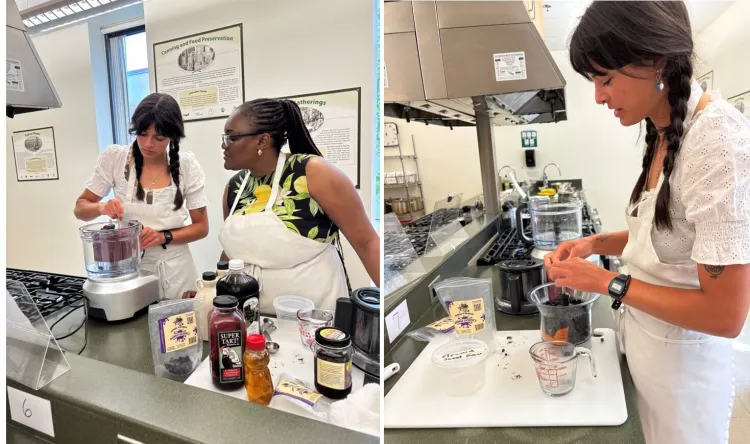
Early sensory testing suggested that smoothies containing banana were generally preferred, but opinions varied regarding the best aronia berry form. Some participants preferred smoothies made with whole berries, while others favored those flavored with aronia berry syrup. Testers also expressed some preference for an earlier recipe incorporating sweet potato, and the team found that frozen, steamed sweet potato produced a better-tasting smoothie.
Because the results were recorded as qualitative observations rather than numerical preference scores, the findings were not intended to identify a definitive winning recipe. Instead, they gave the team direction for further testing and refinement.
Balancing Flavor, Texture, and Whole-Fruit Use in Jams
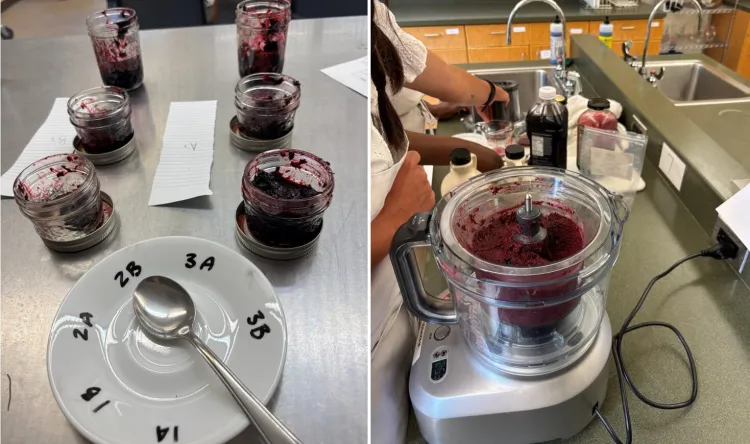
Jam development presented another set of challenges. The team experimented with low-sugar pectin, reduced amounts of sugar and maple syrup as an alternative sweetener. The students also tested removing aronia skins to improve texture, then reusing those skins in another product.
Four jam formulations were reviewed by five tasters, who commented on sweetness, tartness, consistency, mouth feel and the intensity of the berry flavor. Some formulations had a pronounced aronia berry flavor but were considered too tart or stiff. Others were more palatable but generated comments about graininess, chunkiness or liquid separation.
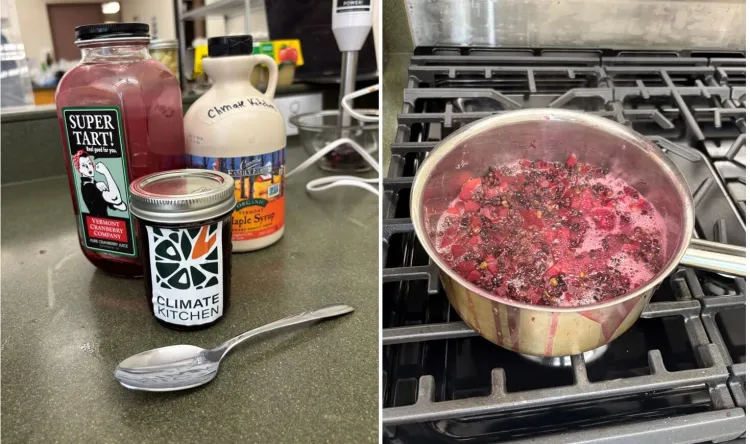
No single jam emerged as the clear favorite. One reviewer preferred the palatability of the first formulation, another favored the texture of the second, and yet another identified the third as having the best flavor. That same third formulation, however, was another reviewer’s least favorite.
For the team, this variability reinforced an important lesson: consumers bring different expectations and preferences when tasting a product. Some may prioritize a strong berry flavor, while others may prefer sweetness, smoothness, or mouth feel. Developing a successful aronia berry product will require finding an appropriate balance among these characteristics.
Turning By-Products Into New Products
The team’s emphasis on whole-food utilization extended beyond jam. Aronia berry skins left over from processing were blended and dehydrated to make fruit leather.
Achieving the right thickness, texture, and consistency proved difficult, but the experiment put the Climate Kitchen’s low-waste tenet into practice. Instead of treating berry skins as a discarded by-product, the team considered them a potential ingredient and starting point for another product.
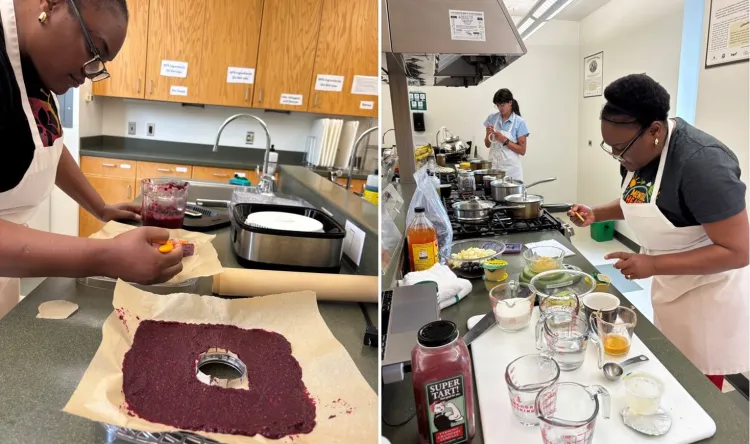
The work demonstrated how waste reduction and culinary innovation can reinforce one another. It also showed that using the whole fruit requires careful attention to taste and texture. A product must advance sustainability goals while still being something that people want to eat.
Expanding the Research Community
The project also began establishing a community-based sensory research process at UVM. With IRB Exempt 6 approval, the team recruited a small group of UVM participants to evaluate jam and smoothie samples using a standardized scale.
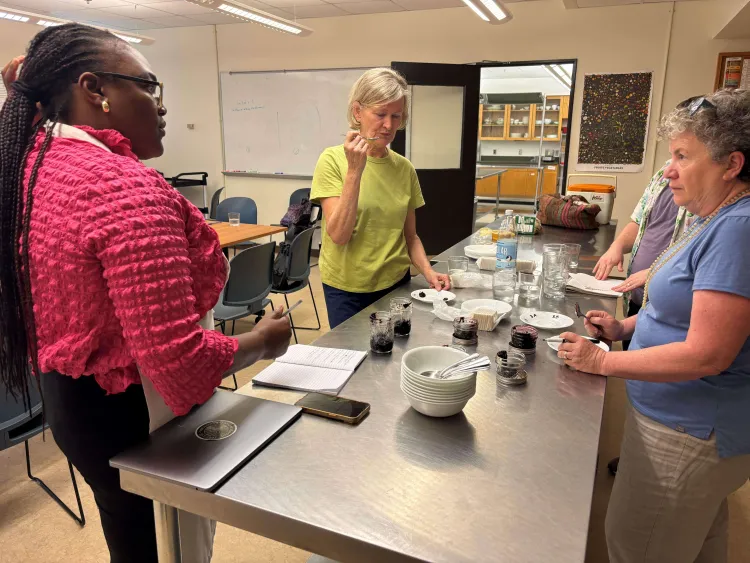
This process extended product development beyond the research team and brought potential consumers and food-system practitioners into the evaluation process. Additional campus tastings and focus groups are planned as part of continued data collection during fall 2026.
The students also connected with Sisters of Anarchy, a company that grows aronia and other berries on a former dairy farm. The company sells frozen berries and develops value-added products such as aronia berry brownies, syrup, and ice cream. The relationship placed the team’s kitchen experiments within an existing production and commercial context while highlighting the opportunities and challenges involved in bringing unfamiliar foods to market.
Learning Through Experimentation
Across its smoothie, jam, and fruit-leather trials, the Edible Forest Team found that product development requires repeated testing and refinement. Taste, texture, nutrition, functionality, sourcing, ingredient availability, and waste reduction cannot be considered in isolation.
The research also affirmed one of the Climate Kitchen’s sustainability tenents: food must taste good. A product’s ecological or nutritional benefits alone do not guarantee that consumers will embrace it. Sensory testing helps researchers understand how people experience a product and reveals where additional adjustments are needed.
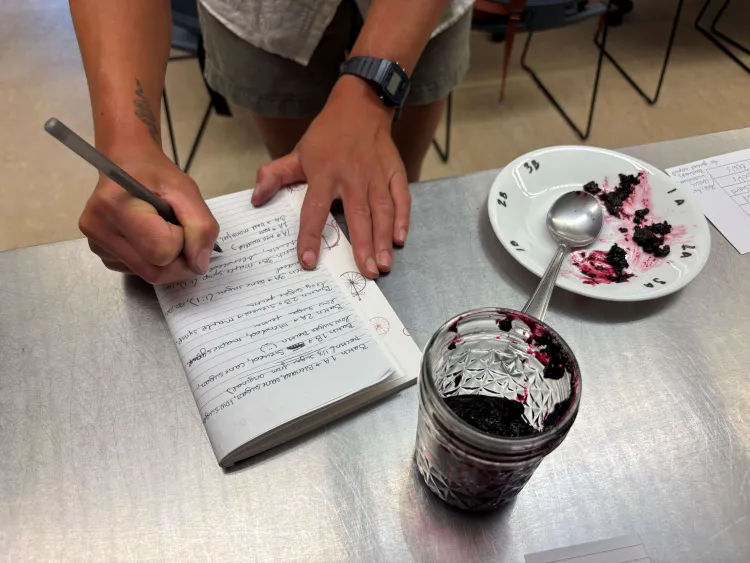
The project brought together students, researchers, community participants, and food producers. The team summarized this approach in four words: co-create, collaborate, courage, and community.
Co-creation invites communities to help shape new knowledge and products. Collaboration connects growers, researchers, consumers, students, and businesses. Courage makes room for experiments that may not work as anticipated. Community recognizes that food is embedded in relationships, places, and shared systems.
Moving from Experimentation to Viability
The next phase of the project will include continued campus sensory research and an application to conduct off-campus focus groups. The team also plans to refine fruit leathers, elixirs, kombucha, and additional smoothie formulations, including combinations made with hazelnut butter.
Alongside recipe development, the project will turn more fully toward questions of economic viability. The team plans to complete a business plan and market-development strategy as it explores whether edible forest products can benefit producers and consumers while remaining consistent with the ecological and social values that inspired the project.
The Edible Forest project began with berries, recipes, and kitchen experiments. Its broader purpose, however, is to investigate what becomes possible when agroecology, culinary innovation, education, and community participation come together.
This article was adapted from research and reflections provided by Fortino Acosta, Hannah Lewis, and Lizah Makombore, members of the 2026 Climate Kitchen Edible Forest Team, and edited for a general audience.
The Climate Kitchen is supported by The Food Systems Research Center (FSRC) at the University of Vermont (UVM), which funds collaborative research that puts people and the planet first, unites disciplines and communities, and answers complex questions about food systems.