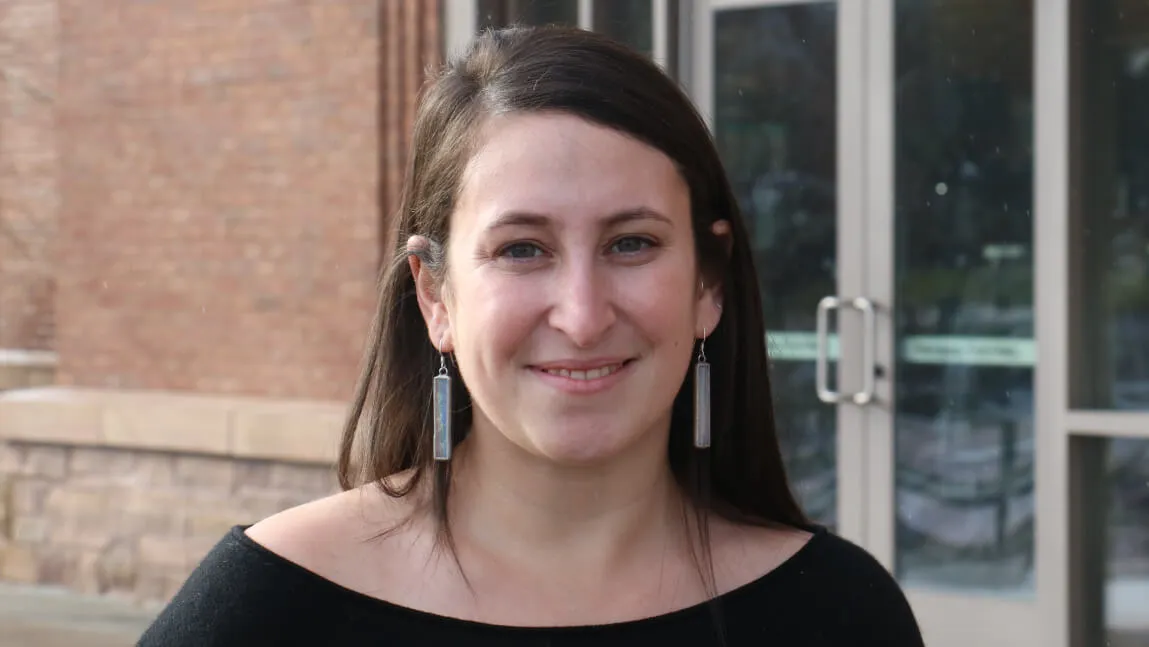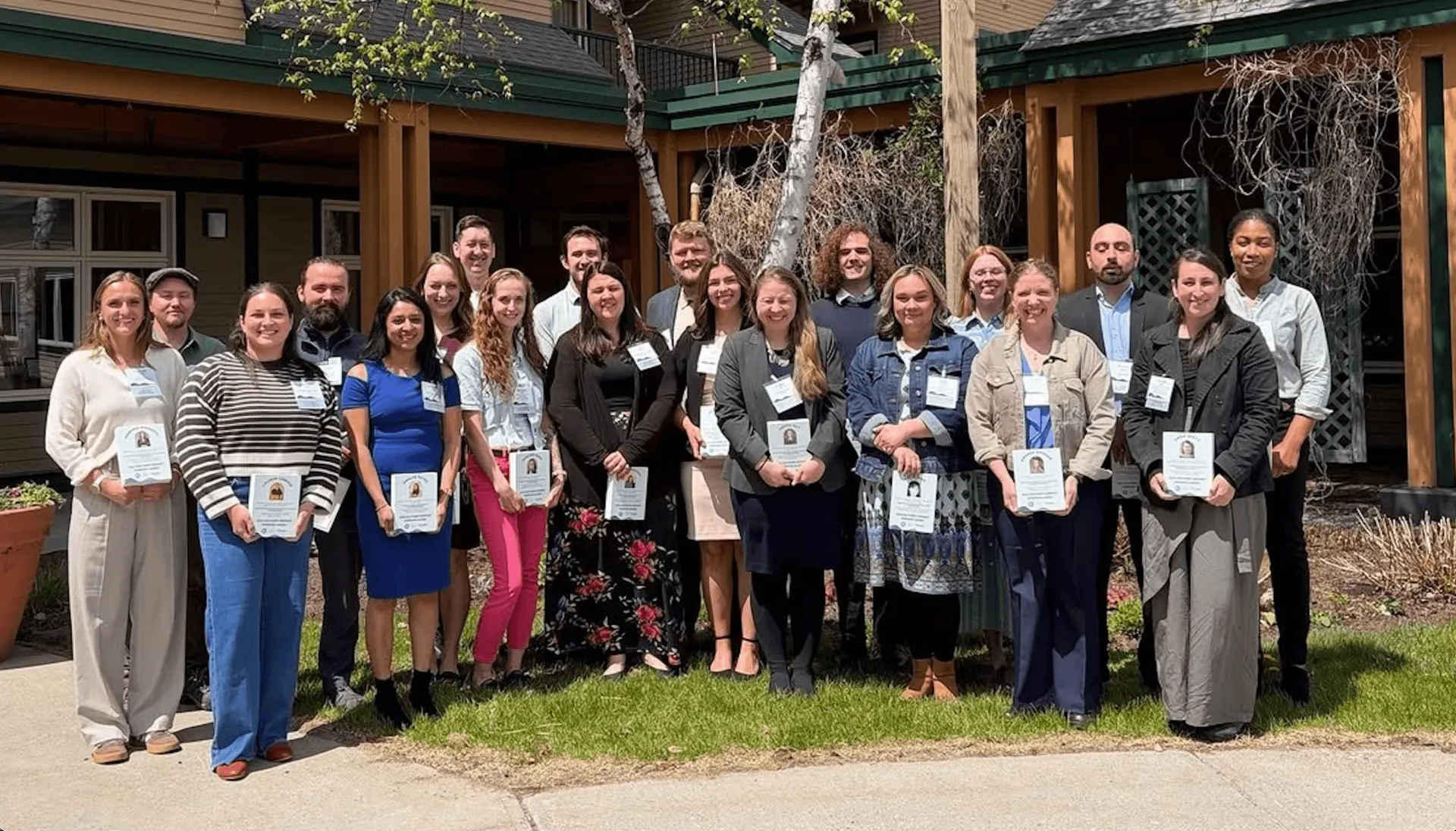
Emma Spett, a Ph.D. candidate in CDAE’s Sustainable Development Policy, Economics and Governance (SDPEG) program, works for UVM’s Leahy Institute for Rural Partnerships, and before that, helped stand up the UVM Office of Engagement. Either of these seems a likely reason for her Emerging Leader recognition, but she suggests the primary reason she was chosen is her side business, the restaurant and small inn, River and Rye, which she and her fiancé opened this year in Jamaica, Vermont. The Southern Vermont Economy Summit is a collaboration between the Brattleboro Development Credit Corporation and the Bennington Regional Commission, two organizations with which Spett has worked closely, both in her academic research and her applied community projects.
“I was really honored to receive the award,” Spett said. “It felt like the culmination of so many different ways we’ve interacted over the years.”
Spett’s UVM master’s research focused on the challenges of flood management, but her doctoral work centers on another critical challenge facing Vermont’s rural communities: access to usable, actionable data. Through her research and in her role with UVM’s Leahy Institute for Rural Partnerships, Spett is helping develop tools designed to make data more accessible for local leaders, planners, and residents. Her efforts include building the Vermont Data Collaborative, a user-friendly platform that translates complex datasets into intuitive visualizations for the general public. The goal is to enable communities to answer pressing questions about housing, economic development, and equity without needing specialized technical or research expertise.
“We heard again and again that data is a barrier,” Spett explained, recalling statewide focus groups conducted early in her doctoral work. “Communities need data in order to secure grants, make decisions, and plan effectively, but accessing data has been too difficult in the past.”
Her broader vision is to help address what she calls “rural capacity challenges,” such as the limited staffing and resources that often constrain decision-making at the local level. “If we can make data easier to access and use,” she said, “we can help communities make decisions faster and in ways that better reflect their goals.”
By designing tools grounded in community input, Spett aims to shift how research is conducted and shared. “It starts and ends with community,” she said. “My goal is to make sure that anything produced at the university has real applied value for Vermonters.”
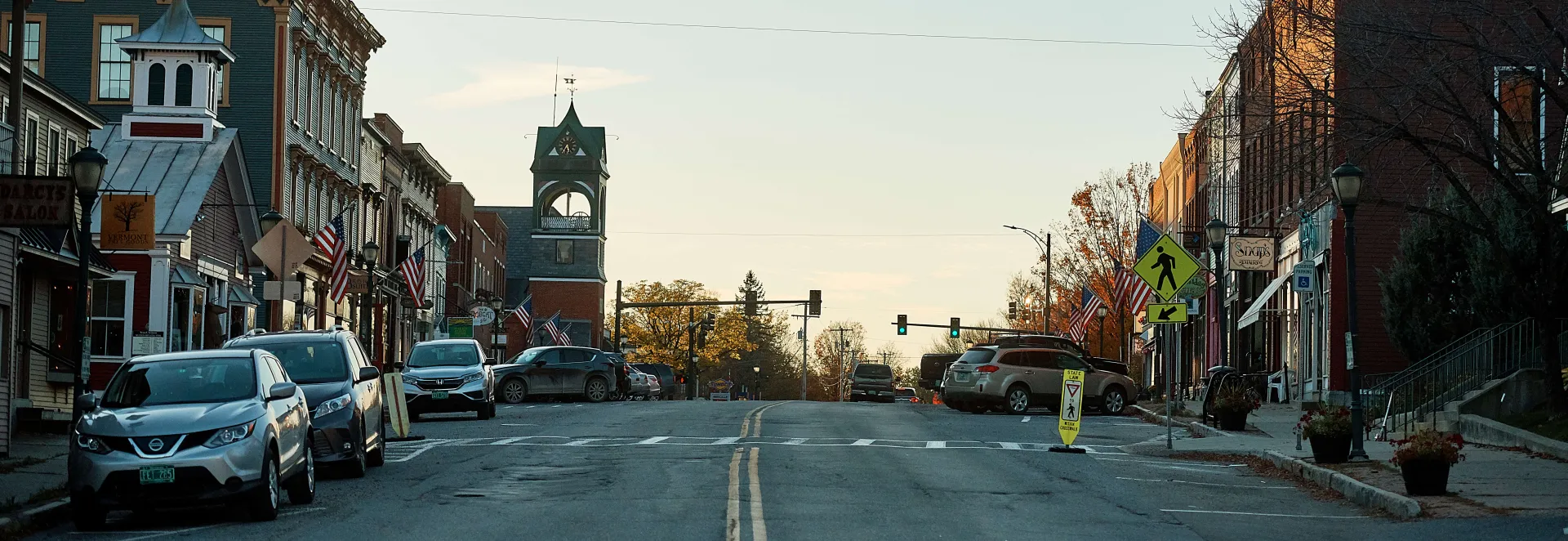
Although originally from New Jersey, Spett has deep roots in Southern Vermont, where she spent summers as a child, and where her parents now live full-time. Today, she calls Jamaica home and says the award has only strengthened her connection to the region.
“I love Southern Vermont,” she said. “Getting this recognition really cemented that sense of belonging and my desire to keep investing my time and energy here.”
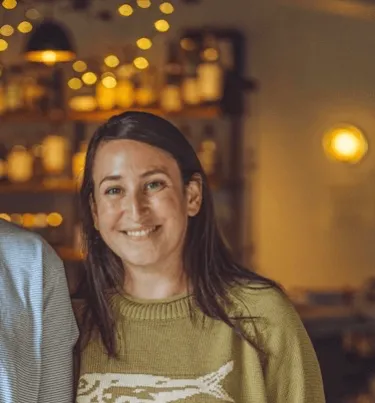
Since Spett’s commitment to community extends well beyond the academic, it isn’t surprising that she wanted to apply her research in a real-world setting. In 2025, she and her fiancé opened River and Rye, a restaurant and small inn located in Southern Vermont. It has been an experience she describes as “economic development in action.” The venture emerged from the same principles guiding her approach to research. First, listening, understanding, and responding to local needs. After moving to Jamaica, the couple spent months talking with residents to shape the restaurant’s concept, menu, and hours.
“The community is really vibrant, but there wasn’t a central gathering place,” she said. “We saw an opportunity to create something that reflected what people wanted.”
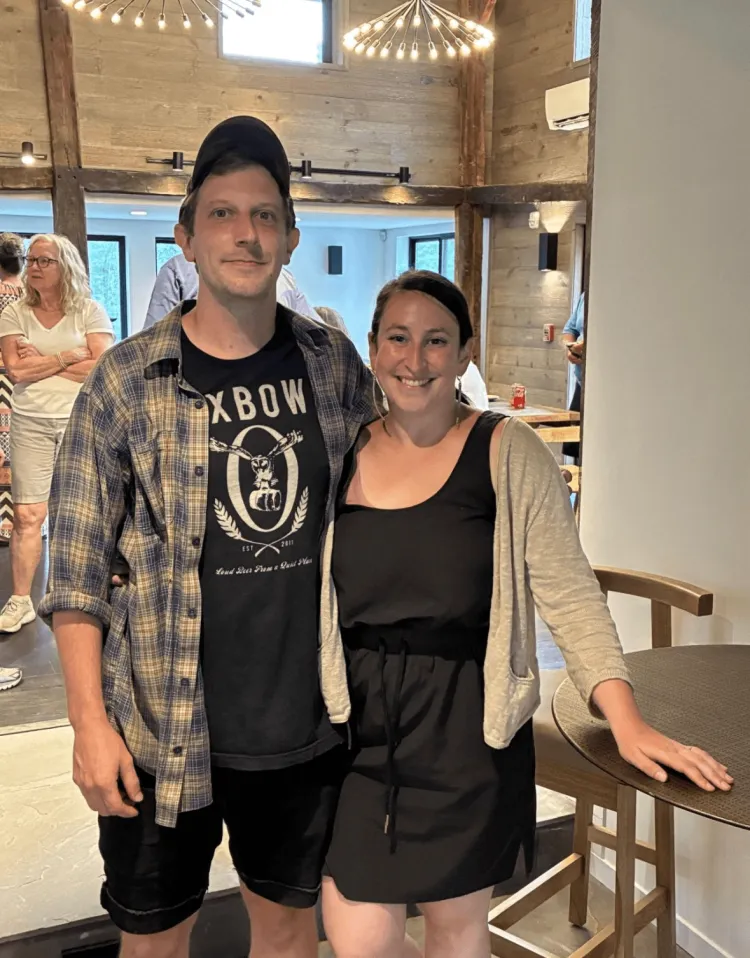
Today, River and Rye aims to serve both local residents and tourists, offering a menu that reflects community feedback, including a range of vegan options, while providing a much-needed social hub. Her restaurant launch combined entrepreneurship, community listening, and local economic investment, and she admits that there is some humor in the fact that her PhD research has led her to a new career in food service. But it all makes sense through the lens of rural community development.
Spett views Vermont as an ideal setting for innovation in rural policy and practice. Its small size, engaged communities, and collaborative networks allow ideas to move quickly from concept to implementation and then to have an oversized impact.
“Vermont is a laboratory,” she said. “We can experiment, test solutions, and make meaningful changes relatively quickly, and then those lessons can inform other rural places across the country.”
Spett credits much of her success to her ability to build relationships and bring diverse expertise together, a skill she sees as essential in transdisciplinary and community engagement work.
“My biggest tool is team building,” she said. “It’s about turning a community-identified problem into a research question and then bringing the right people together to solve it.”
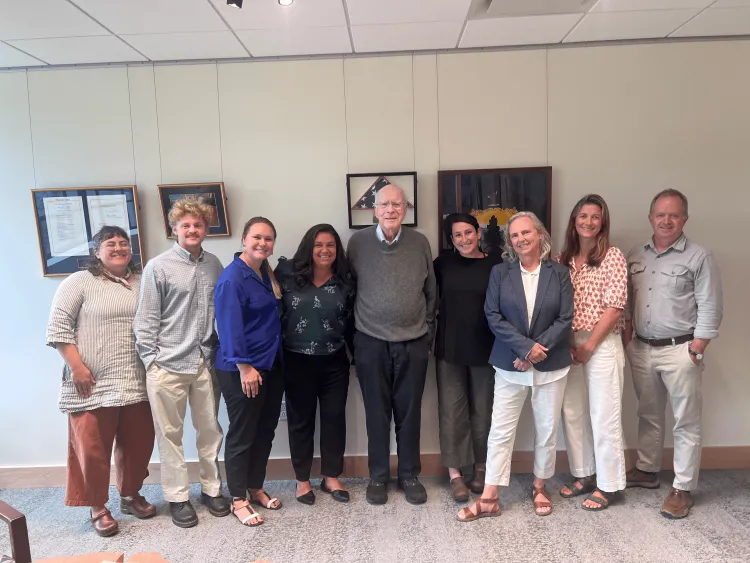
That collaborative approach has defined her experience at UVM, where she has served as a researcher, teacher, and program builder, as she explains, “I think the most rewarding part of my time at UVM, including my PhD, is the relationships I've gotten to build. I feel like Vermont is tiny, and so when you show up authentically in different spaces, whether it's at the university, in the classroom, at a conference, at a meeting, people remember you, It becomes really easy to do impactful work because you build a network and you can rely on that network. And I like wearing a lot of hats. Academia has allowed me to do that. In a day, I'm doing a lot of different things. I'm doing research, I'm teaching, I'm building programs. I'd like to continue doing that. I enjoy a job that feels dynamic and responsive to problems that we identify.”
From building data tools to opening a community gathering space, Spett’s work reflects a growing model of engaged scholarship, one that blends research with real-world problem-solving. As Vermont communities continue to navigate economic and social challenges, leaders like Spett are helping ensure that solutions are grounded in both data and the voices of the people they serve. When asked what she plans to do once she completes her doctorate, she acknowledges that community involvement is shaping her longer-term career aspirations, “I think working in government would be really fun. I definitely play with the idea of running for office one day.”