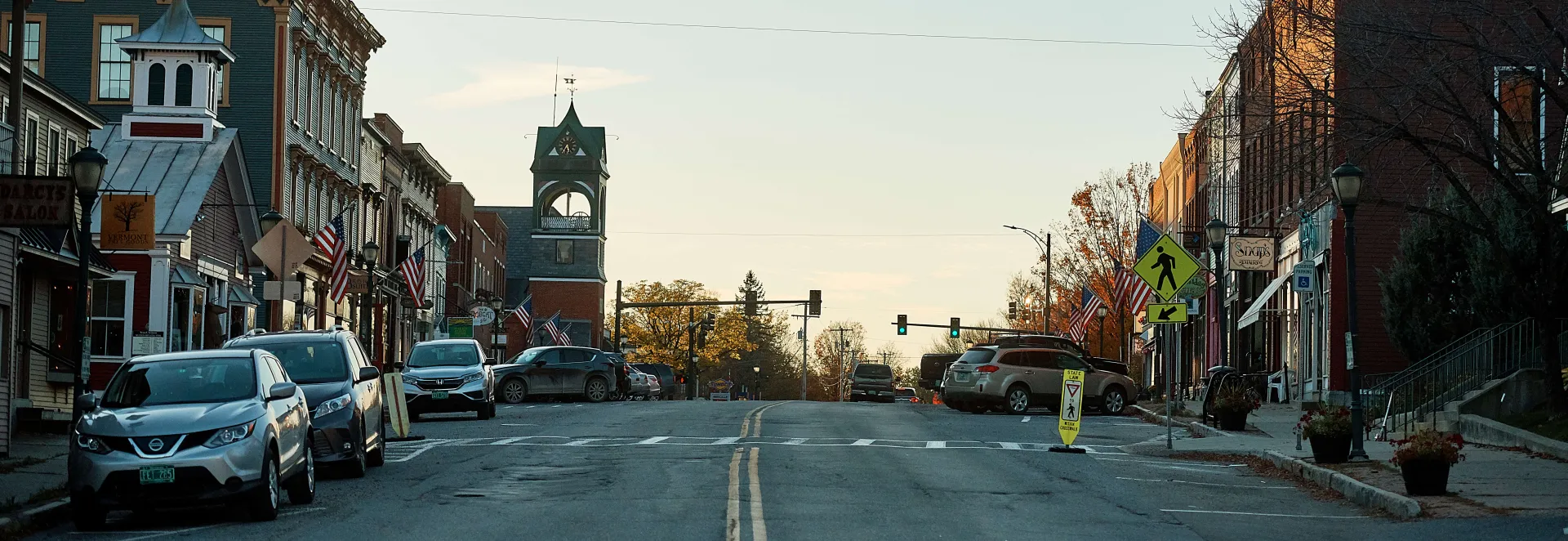
Over the past year, the Leahy Institute for Rural Partnerships has supported a partnership between the Vermont Department of Housing and Community Development (DHCD), the University of Vermont’s Center for Rural Studies (CRS), and a diverse Steering Committee of practitioners, funders, and leaders to take a close look at how Vermont supports its smallest and most rural municipalities.
That work—known as the Vermont Evaluation of Rural Technical Assistance (VERTA)—was undertaken in response to a request from Vermont’s General Assembly for DHCD to assess existing technical assistance programs and identify ways to strengthen municipal capacity across the state. In December 2025, DHCD submitted its report and recommendations to the Legislature and is now making the transition from research and reflection to implementation.
What the Research Found
What the Research Found
The VERTA research report, led by CRS, confirmed what many local officials and practitioners experience daily. Vermont has a rich ecosystem of state agencies, regional organizations, nonprofits, and funders offering technical assistance—but for many, that ecosystem is difficult to navigate.
Municipal leaders described juggling multiple programs, application processes, reporting requirements, and timelines, often with part-time staff or volunteer boards. The challenge is not the result of a lack of interest or effort at the local level, but limited capacity and fragmented systems.
“The towns in my region are doing an incredible amount with very little. The problem isn’t motivation—it’s that we are asking too much of too few people, the vast majority of whom are volunteers, and among whom there is often little experience or training and frequent turnover.” — Chris Campany, Steering Committee member
Across surveys, interviews, focus groups, and a national scan of peer-state models, several consistent themes emerged:
- Municipal capacity is a central constraint on housing, infrastructure, and community development.
- Administrative burden can prevent communities from accessing available funding and assistance.
- Coordination gaps across agencies and programs are systemic, not isolated.
- Program design and delivery matter as much as funding levels.
- Other states have demonstrated more coordinated, place-based approaches that Vermont can learn from.
Michael Moser, Co-Director of The Center for Rural Studies said, “The findings illustrate the need for greater coordination between policymakers, funders, technical providers and municipalities at state, regional and local levels to address the increasing human and fiscal resource constraints of our times.”
The research also highlighted the important role universities can play—not just as researchers, but as conveners, partners, and providers of applied support.
The Rural Capacity Summit
The Rural Capacity Summit
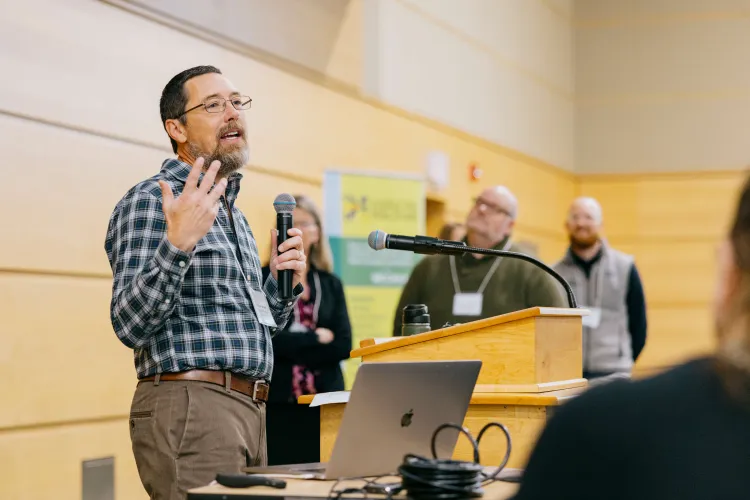
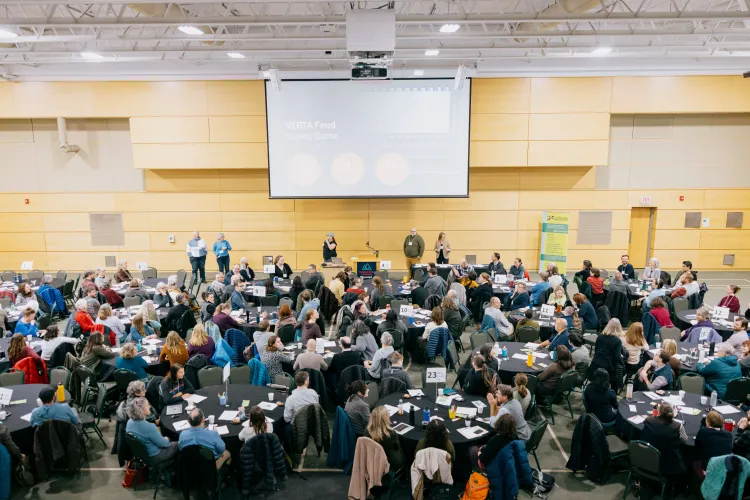
The findings from the CRS research were shared and tested in real time at the Rural Capacity Summit, held in November 2025 at the Vermont Technical College in Randolph, VT. The Summit brought together municipal officials, regional planners, state agencies, academics, funders, and technical assistance providers to reflect on the research, share on-the-ground experiences, and continue identifying practical next steps. For many participants, the Summit confirmed that the challenges identified in the research closely match what communities are experiencing day to day—and that better coordination could make a meaningful difference.
Calais Town Administrator Kari Bradley described the Summit as validating and action oriented. “It was refreshing to be in a room where everyone understood the realities we’re dealing with.” He went on to say, “We’re not short on ideas or commitment—we’re short on time, staff, and clear pathways. The Summit helped move the conversation from diagnosing the problem to talking about how we actually fix it.”
Operationalizing the Research
Operationalizing the Research
The DHCD report takes the findings from CRS’s research, and the ideas gathered at the Summit, and the critical insights and feedback of the steering committee, and organizes recommendations into near-term and longer-term actions, many of which emphasize coordination, shared learning, and partnership.
Near-term recommendations include:
- Improving coordination across state agencies and technical assistance providers.
- Developing shared services tools and templates to help municipalities collaborate and reduce costs.
- Expanding leadership development and peer-learning opportunities for local officials.
- Better aligning existing funding programs to reduce administrative burden.
- Reinvigorating collaboration among public, private, and philanthropic funders.
“These are practical steps. They don’t require creating entirely new programs—they focus on making the current system work better for communities with the least capacity.” — Gary Holloway, Downtown Program Manager, Vermont Department of Housing and Community Development (DHCD)
Looking Ahead: The Role of University Partnerships
Looking Ahead: The Role of University Partnerships
As Vermont moves into early implementation, the Leahy Institute for Rural Partnerships at the University of Vermont continues to play a key role. In the near term, the Institute is supporting the ongoing facilitation and coordination among Steering Committee members, helping maintain momentum and translate recommendations into action.
The Institute is also exploring how UVM’s faculty, students, and service-learning programs can support municipalities directly—through pilot projects, applied research, and community-based partnerships. These efforts build on UVM’s land-grant mission and the Leahy Institute’s focus on bringing university resources to address Vermont’s rural challenges. This approach has replicability in other states as a model for effective collaboration to address rural capacity challenges.
“The value of this work is in the relationships,” said Emma Spett from UVM’s Leahy Institute for Rural Partnerships. “Support from the Leahy Institute has helped bring people together across institutions and sectors—and made it easier to connect communities with UVM faculty and students who can help take on real, on-the-ground problems.”
From Study to System Change
From Study to System Change
The VERTA work underscores a growing recognition in Vermont: that collaborative capacity-building is foundational infrastructure. As federal funding becomes more competitive and community challenges grow more complex, the need for coordinated, predictable support will only increase.
The next phase of VERTA will focus on piloting new approaches, strengthening partnerships, and continuing to learn alongside communities. While longer-term reforms will take time, the foundation is now in place for more intentional, collaborative support for Vermont’s rural towns.