
The Leahy Institute for Rural Partnerships operates alongside the Office of Engagement with the mission to build collaborations between the University of Vermont and state partners for the benefit of our rural places. One way of carrying out this mission is through student engagement opportunities like internships and community-engaged learning courses, which offer reciprocal opportunities for communities seeking support, and students seeking hands-on learning and community engagement experiences. Many of the partnership and capacity grant proposals received by the Leahy Institute for Rural Partnerships feature community-engaged learning and internships as a central component of implementing a solution in a rural community.
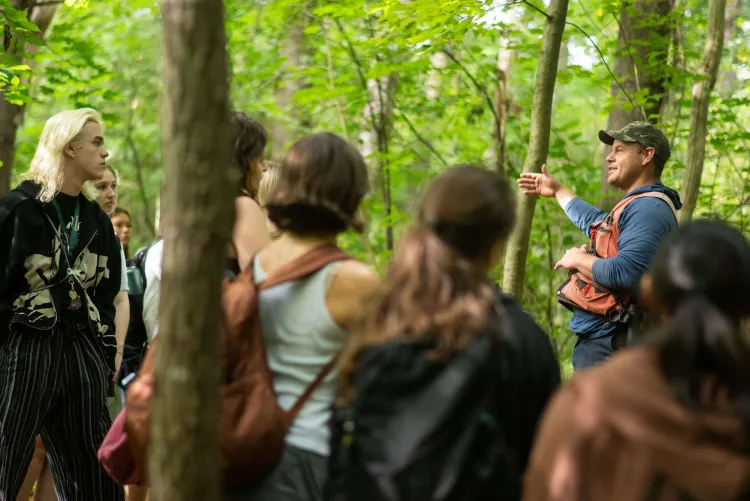
“As Vermont’s land grant institution, our mission is to serve Vermonters,” said Tricia Coates, Director of the Leahy Institute for Rural Partnerships. “At UVM and the Leahy Institute, we want to make sure that our greatest asset, our students, are central to achieving that mission. The SERV grant provides new opportunities to generate partnerships that support Vermont communities and student learning.”
The SERV grant supports the development of new or existing community-engaged learning courses at the University of Vermont that support rural communities across the state and are rooted in partnerships.
“This grant will allow faculty to explore how they can support students to engage in communities outside Chittenden County. We are eager to support faculty in expanding what is possible.” — Susan Munkres, Director of UVM’s Office of Community-Engaged Learning (CELO)
Proposals, which should be submitted by faculty, should include an explicit plan for a partnership with a community organization, and alignment with the objectives of an existing UVM course. They must address a rural challenge in Vermont. Proposals are due on May 1st, 2026.
To learn more and submit an application, click here.