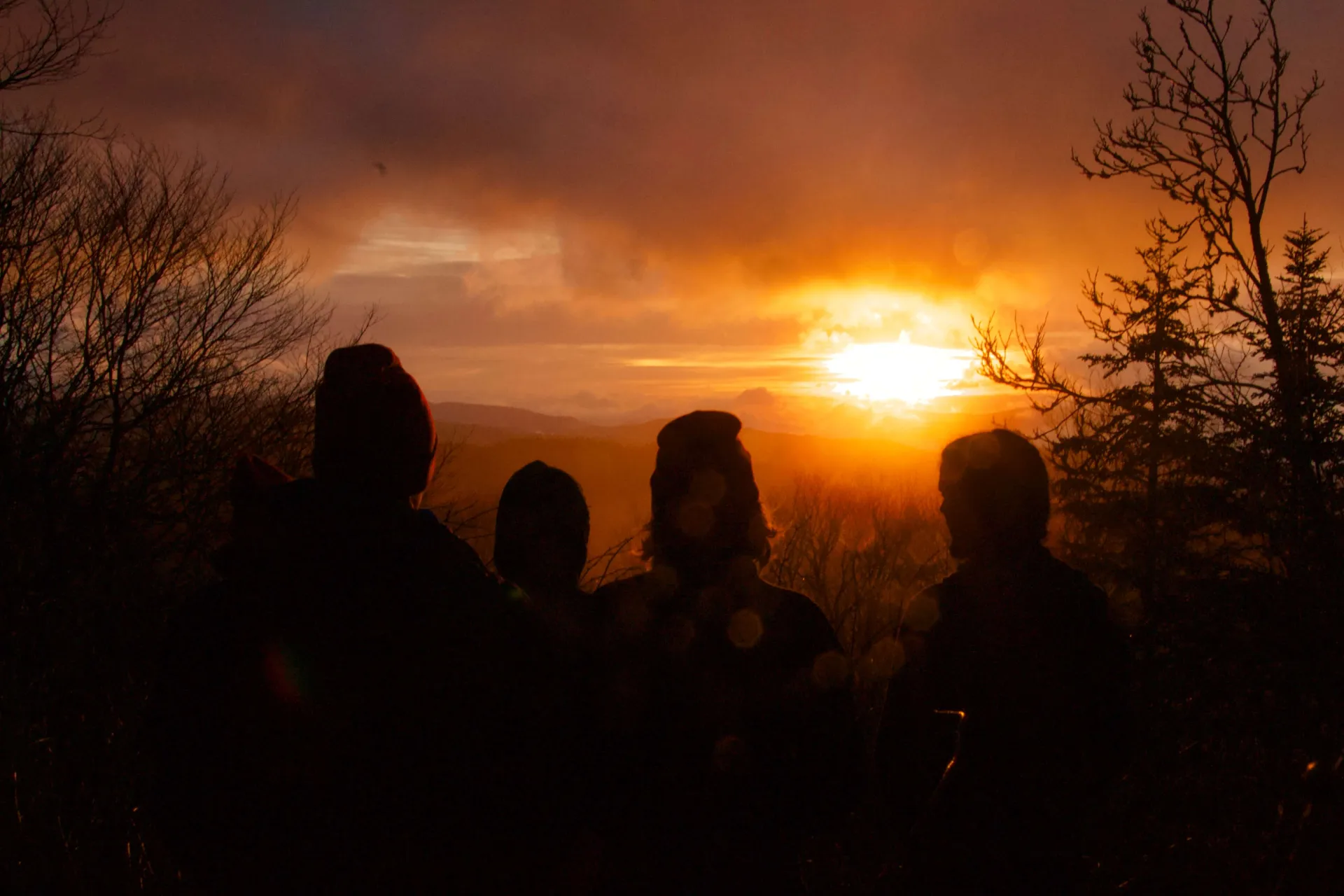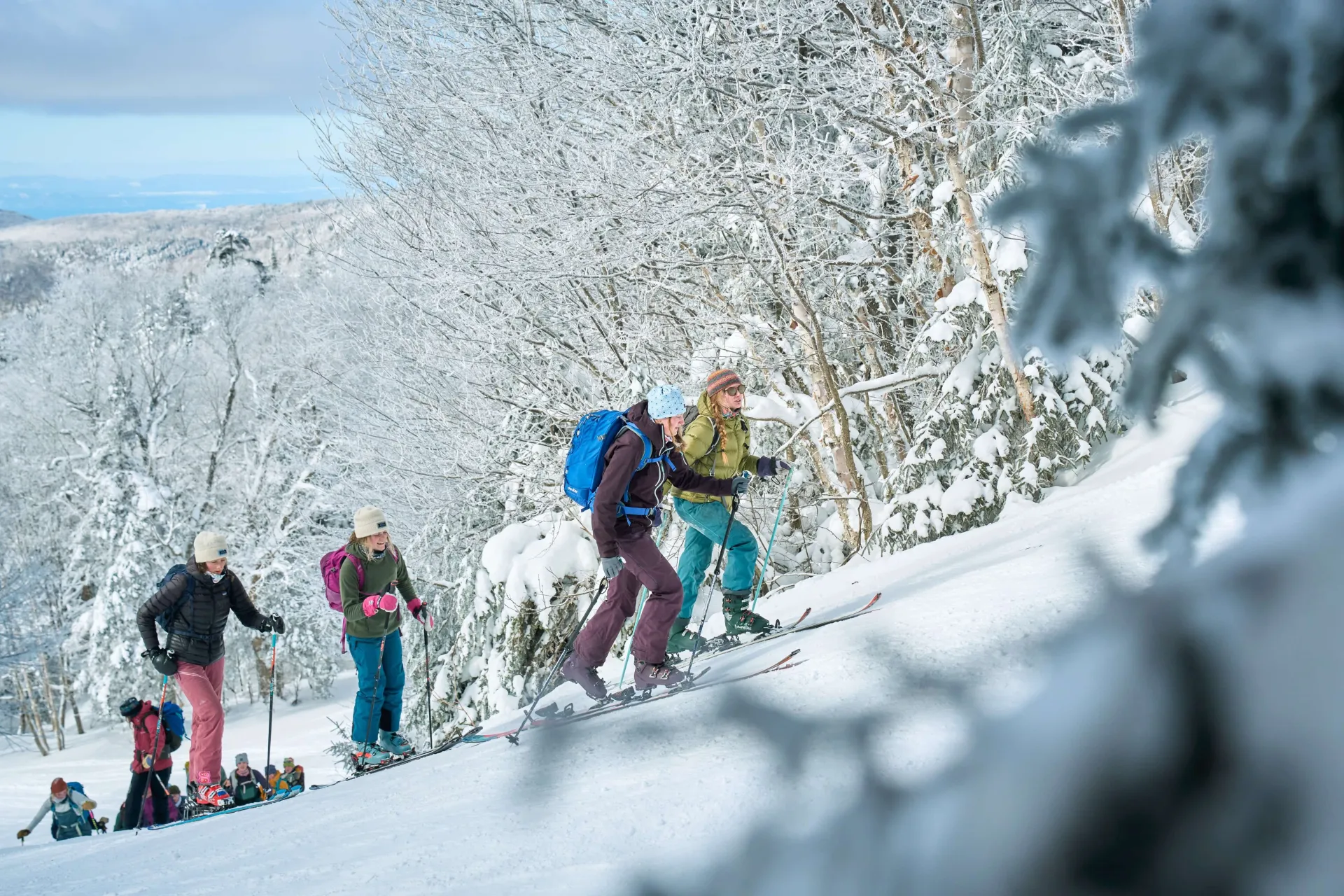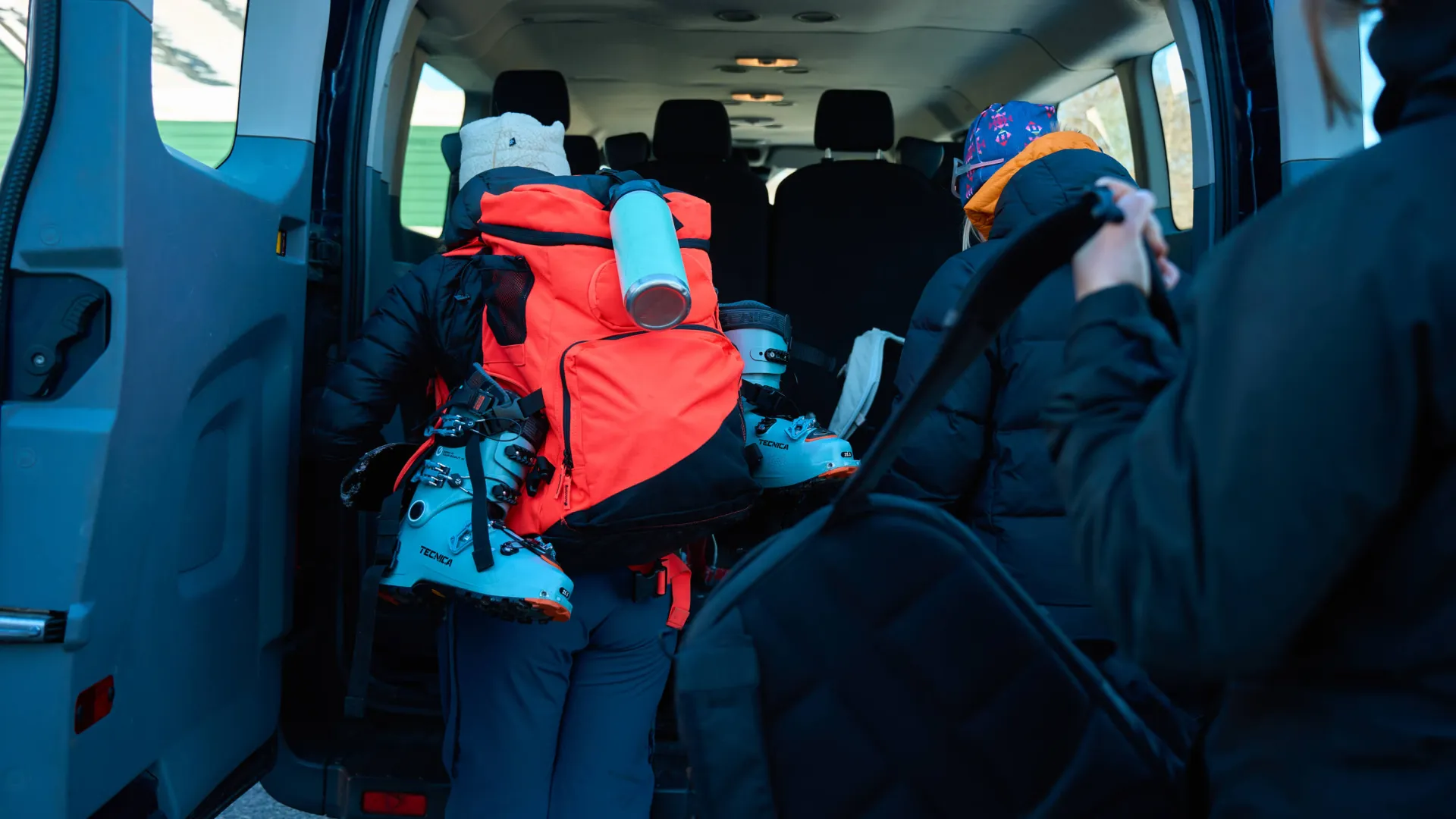
A group of University of Vermont students returned to campus this March with more than tired legs and snow-damp gear after completing a weeklong Nordic ski touring expedition in Gaspésie National Park, Québec. The expedition was part of the Department of Student Life's Global Experiences in Adventure Recreation (GEAR) program, an 80-hour, hands-on outdoor leadership course with a focus on adventure recreation in an international setting.
Over six days, participants traveled through the rugged Chic-Choc Mountains on Nordic skis, carrying all their food and gear through rain, wind, and snow conditions ranging from icy crust to 40 centimeters of deep powder. On their longest day, the group covered 21 kilometers while breaking trail through heavy snow, a grueling task that required rotating the lead position every few minutes so skiers could share the physical burden and recover at the back of the line.
Devin Farkas, Assistant Director of Outdoor Programs, led and facilitated the trip. “A guiding principle for all Outdoor Programs experiences is self-care is group care,” explained Farkas. Participants were encouraged to advocate openly for their needs, framing individual wellbeing as essential to the group's collective success. “It became a norm that when someone asked for a break to address a need, the response was and emphatic, ‘Thank you for taking care of the group!’”
By design, GEAR expeditions teach much more than technical skills. Facilitated discussions each night explored leadership, identity, and inclusion in outdoor spaces. Farkas shared how, during one particularly powerful dialogue, participants examined gendered experiences in the outdoors, leadership expectations, and how traditional norms can limit who feels safe and respected in outdoor settings.
“Effective leadership in these conditions requires humility,” said Farkas. “GEAR’s structured, supportive environment allows participants to listen across differences, build empathy, and reflect on how to foster more inclusive outdoor spaces in the future.”
Post-trip survey results highlighted the impact of these practices. Participants identified the supportive group environment, small group size, sustained physical activity, and time away from technology as key contributors to improvements in both physical and mental health. With no cell service in the park, many described feeling more present and connected than they typically do in daily life.
Students returned to Burlington with strengthened leadership skills, deeper self-awareness, and a framework for building more inclusive communities both on and off the trail.
For more information about GEAR and other Outdoor Programs offerings through the Department of Student Life, visit our website!