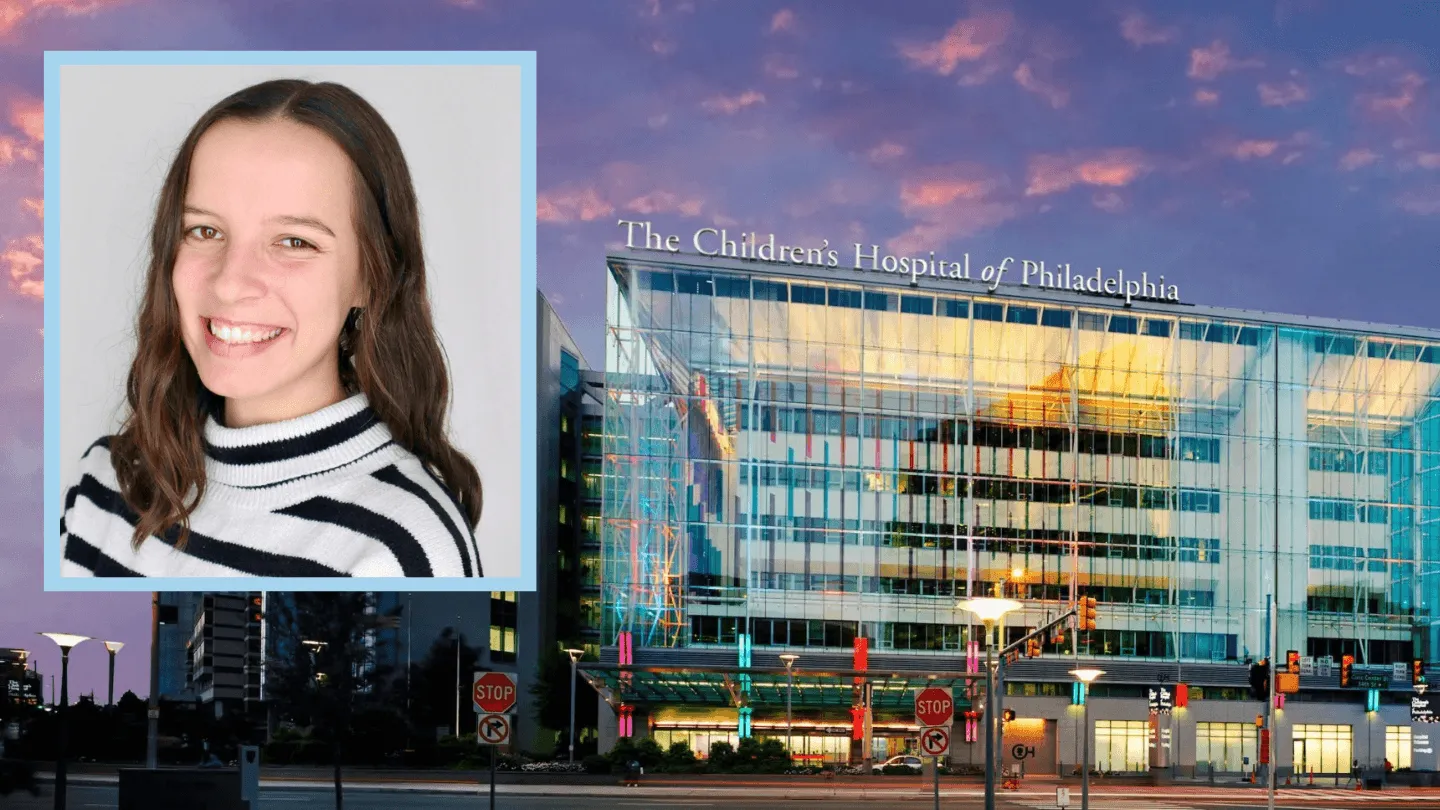
Sarah Kubinski, a UVM graduate with a Bachelor’s of Science in Neuroscience in 2023, and with a Master of Science in Communication Sciences and Disorders in 2025, is currently completing her clinical fellowship at the Children’s Hospital of Philadelphia for Speech-Language Pathology (SLP). She spent six years in Vermont, and although she was interested in science and neuroscience as an undergrad, becoming a physician and going to medical school didn’t feel like the right path. Sarah grew up volunteering in her mother’s classroom and worked frequently with students with autism. While taking several classes about communication at UVM, a CSD class taught by Dr. Particia Prelock about autism and Speech and Hearing Sciences sparked her interest in the speech-language pathology field.
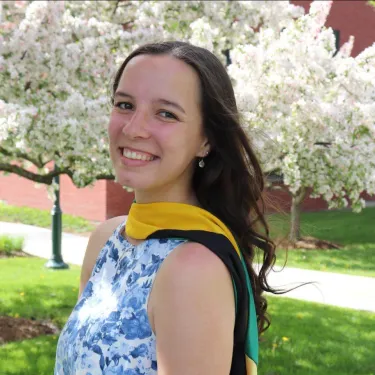
“My friends and I all have completely different jobs, which is so cool. There’s so much room to make it what you want.”
~ Sarah Kubinski '25
There wasn’t a lot of information about the field when Sarah was an undergrad, but once she learned more about it and its flexibility, it felt like the right path. “If more people knew how vast and widespread the field is, a lot more people would want to go into it,” she said in her interview. “My friends and I [as SLPs] all have completely different jobs, which is so cool. There’s so much room to make it what you want.” Sarah added that one of the greatest advantages of the field is that it is a rehab science. She is still a pathologist as someone who does testing and diagnosis but also works with clients in therapy treatment.
Sarah is currently an outpatient speech therapist at her hospital. More traditional days include conducting speech and language evaluations, providing connections to patients for where they can receive treatment, and working on speech sounds or social skills through games, reading, or conversation. She also has the opportunity to work on autism assessments, which is something she found a passion for through her research at UVM on the disorder. She noted that each day will vary, and that a speech-language pathologist who works in a school may be working with more students in more group sessions and have more meetings on educational planning.
According to the American Speech-Language-Hearing Association (ASHA)’s 2005-2025 report, 96% of ASHA-certified SLPs identified as female, and 17.5% identified as non-white. When asked about any challenges in the field, Sarah said that she hopes in the coming years there is more diversity among SLPs.
For those hoping to get into the field, she said that the students in her graduate classes came from a variety of disciplines—from linguistics, to psychology, to journalism, to special education, and that the most important thing is having the prerequisites for the graduate program completed. She also emphasized to never fear cold emailing someone, since it’s how she got her original undergraduate research experience—which she carried over to her Masters program and fueled her interest in autism and SLP.
Sarah will be working toward her full licensure after she completes her Clinical Fellowship. She is willing to connect to anyone interested in learning more about SLP on her LinkedIn.