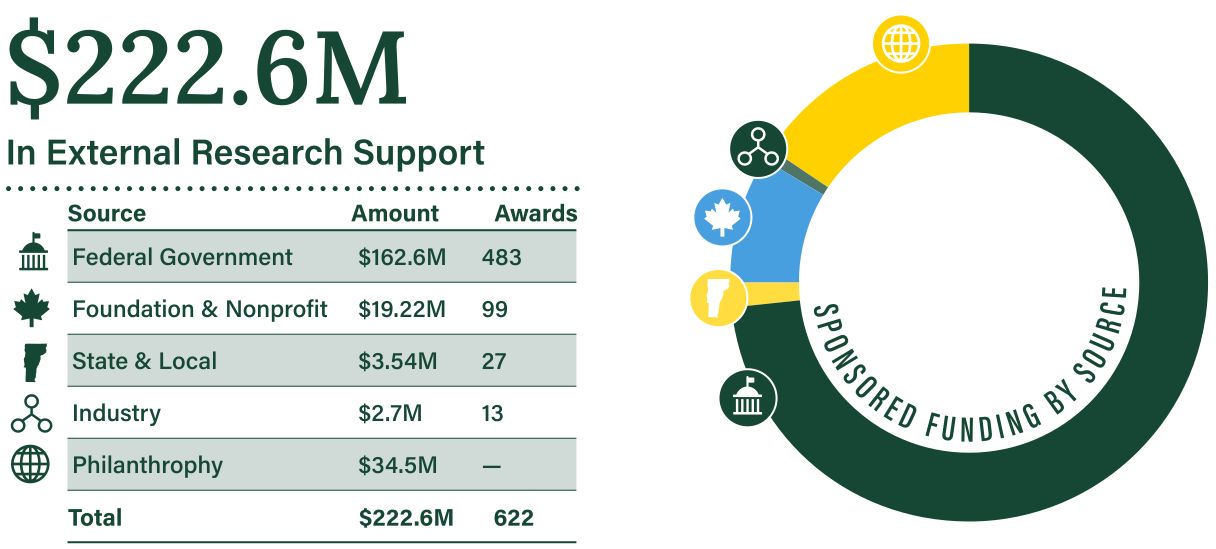
The University of Vermont attracted $222.6 million in extramural research funding in fiscal year 2026, reflecting the continued growth and impact of the university’s research enterprise.
The funding supports research, scholarship and creative activity across UVM, from laboratory science and clinical investigation to community partnerships, agricultural innovation, education, and the humanities. Backed by federal and state agencies, foundations, businesses, and other partners, UVM researchers are working to address consequential challenges in Vermont and around the world.
“The funding total is an important measure of UVM’s momentum, but the greater story is what these investments make possible,” said Kirk Dombrowski, UVM’s vice president for research and economic development. “Each award represents people working together to ask difficult questions, develop new approaches and translate knowledge into benefits for communities locally and globally. Our growth demonstrates the strength of UVM’s researchers and the trust that our partners place in them.”
“UVM’s research success belongs to the entire community,” Dombrowski said. “It is built through curiosity, persistence and collaboration, and it gives us a strong foundation for the discoveries and partnerships still ahead."
— Kirk Dombrowski, UVM's Vice President for Research and Economic Development
The latest funding total continues a period of expansion for research at UVM. In FY26, awards totaled over $15 million more than the previous year. 622 awards started or continued nearly 900 projects across campus, including 24 awards worth $1 million or more.
UVM’s research portfolio spans areas that are central to the university’s land-grant mission and its commitment to the health of people and the planet. Researchers are advancing work in fields including public health, cancer, infectious disease, neuroscience, environmental sustainability, water resources, food systems, rural development, data science, and complex systems.
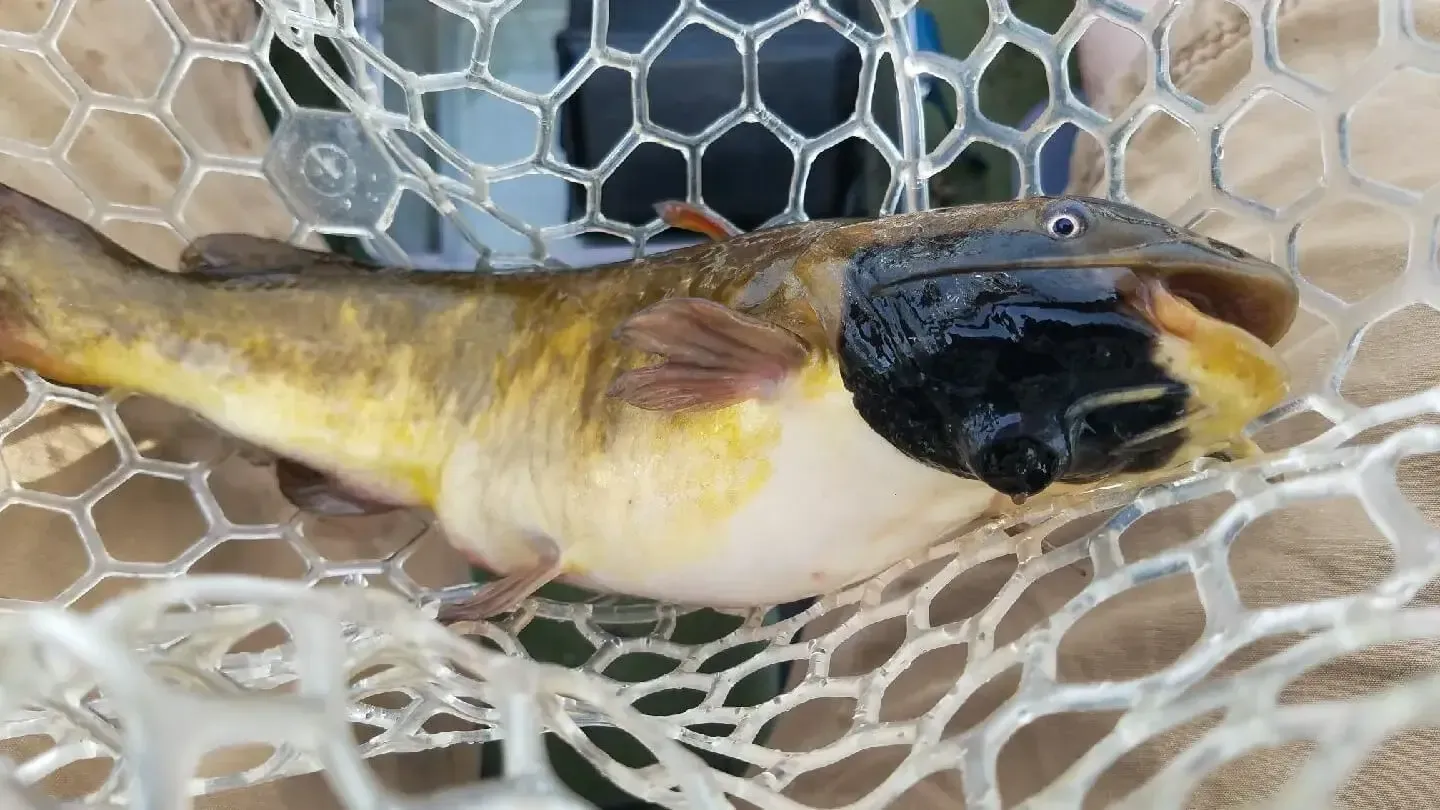
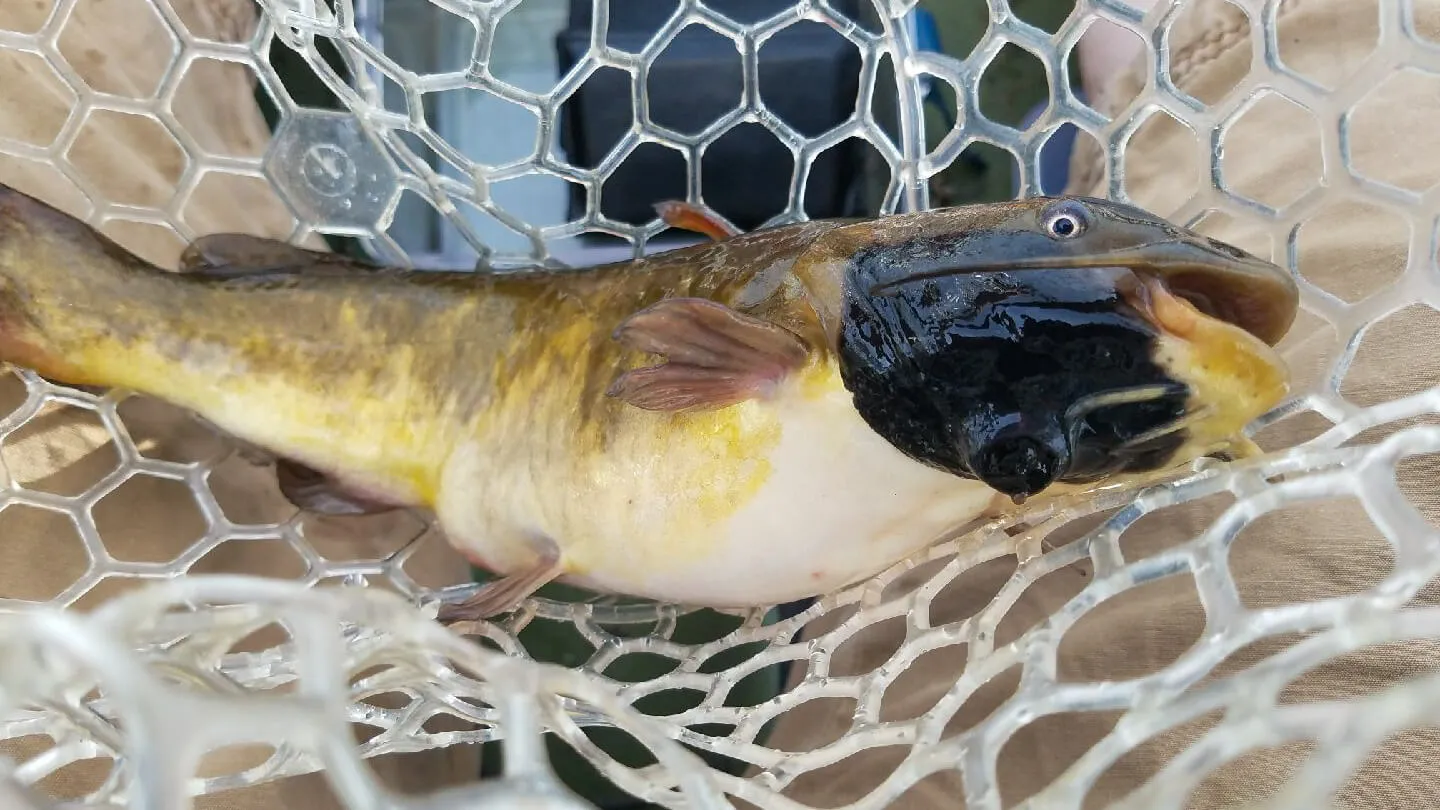
Vermont Scientists Discover Transmissible Cancer in Catfish
A team of Vermont researchers has discovered that mysterious black skin lesions afflicting catfish in Lake Memphremagog and other New England and Canadian lakes are caused by a transmissible cancer—the first ever identified in a freshwater fish species.
Explore The ResearchResearch funding also contributes to Vermont’s economy and workforce. Sponsored projects support faculty, professional staff, technicians, postdoctoral researchers, and students while helping UVM develop partnerships with hospitals, schools, farms, businesses, government agencies, and nonprofit organizations. These collaborations connect the university’s expertise and facilities with needs and opportunities across the state.

Research Spotlight: Tracking a New Forest Pathogen
Last spring, UVM researchers were doing trail maintenance in the Jericho Research Forest when they reached for a branch and saw dark striping on a leaf—the telltale first sign of beech leaf disease.
Students are central to that work. Undergraduate and graduate students participate in research throughout the university, gaining practical experience in laboratories, field sites, clinics and communities. These opportunities help students build skills in critical thinking, collaboration, communication and problem-solving while preparing them for careers in Vermont and beyond.
UVM has supported its research growth by investing in the people, facilities and administrative services that help researchers develop competitive proposals and manage increasingly complex projects. The university has also expanded efforts to bring investigators from different disciplines together around shared challenges and to build partnerships beyond campus.
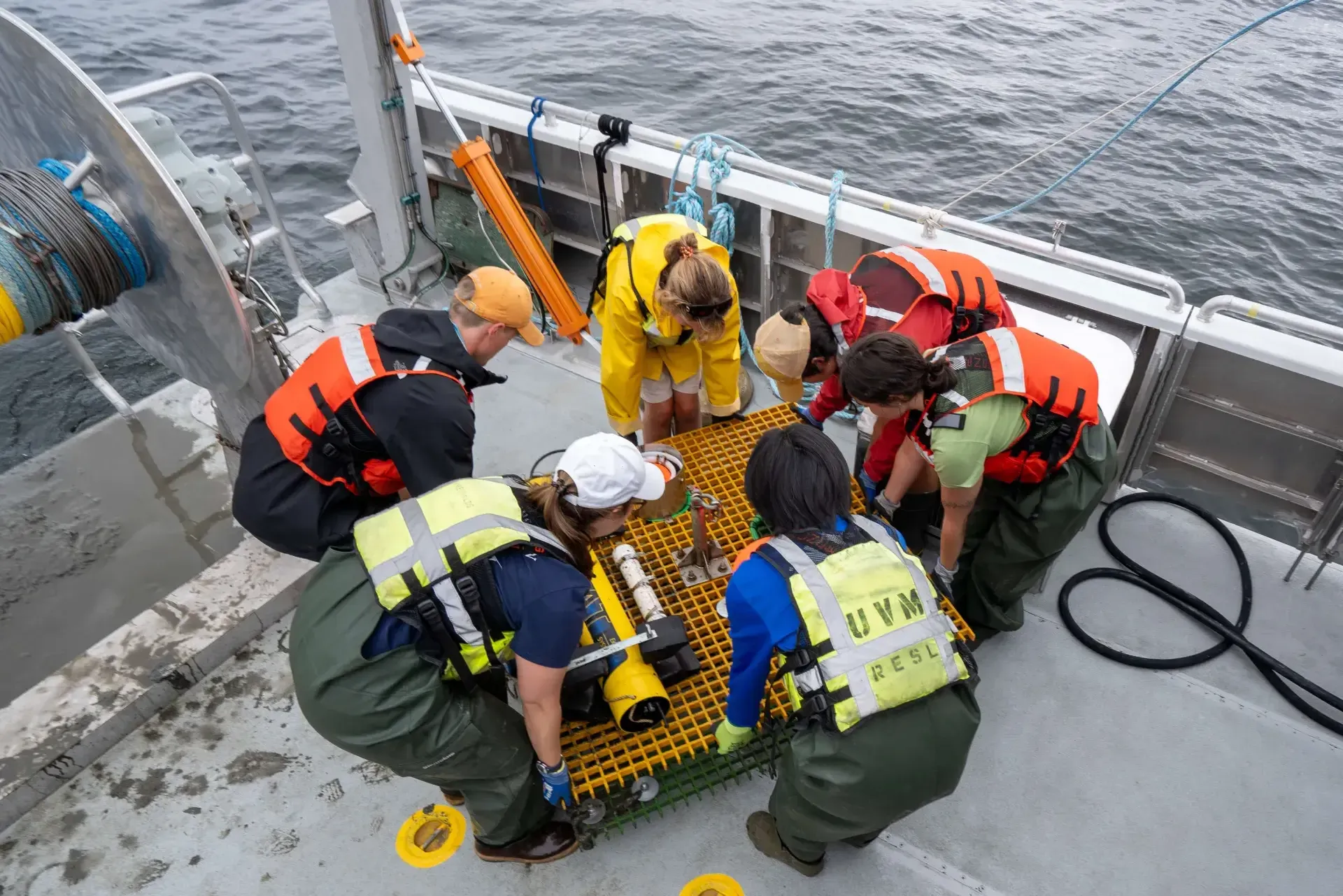
Research Spotlight: Community Commitment
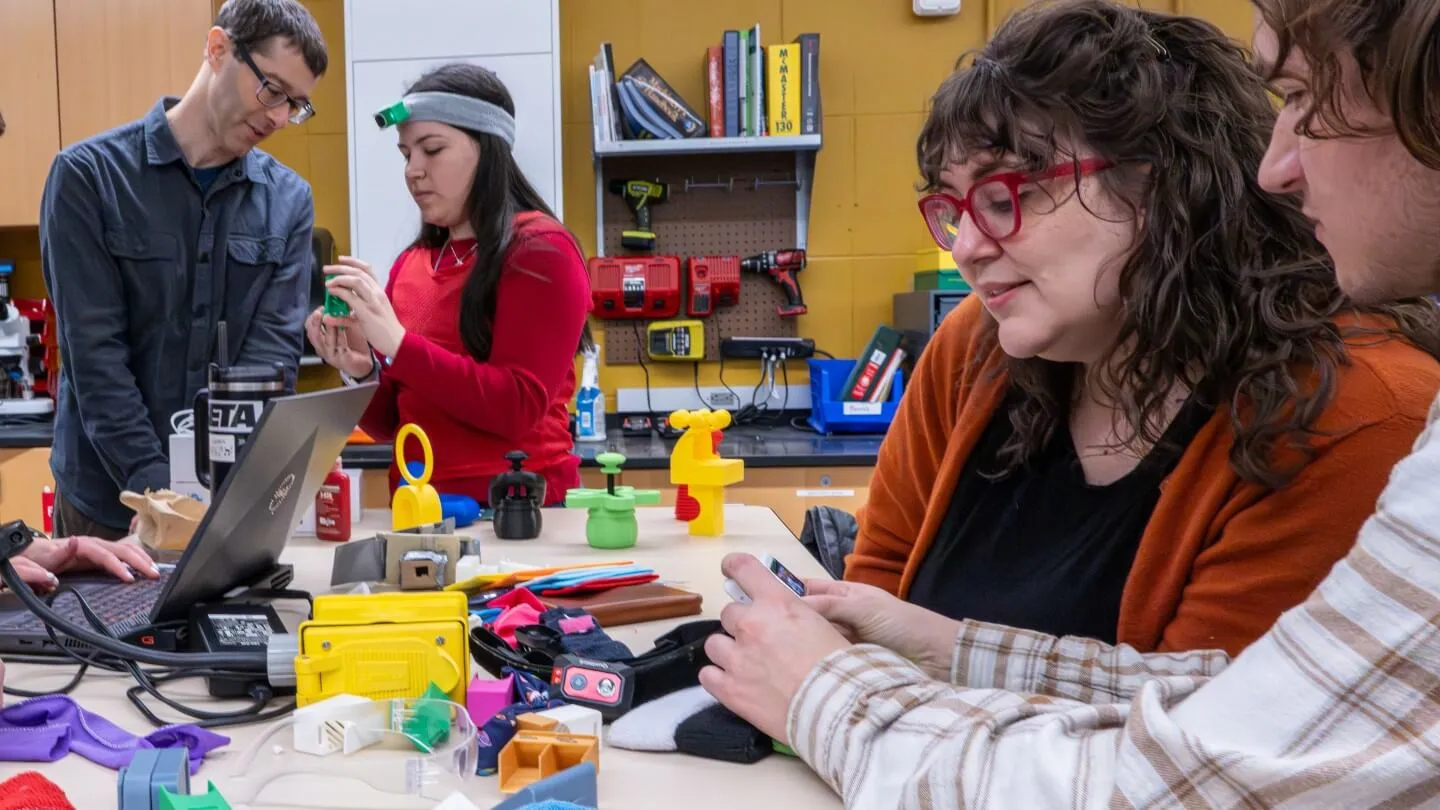
The Leahy Institute for Rural Partnerships at UVM awarded $2.5 million in funding to launch or expand 16 university-community partnerships targeting solutions to some of the most pressing challenges facing Vermont.
Explore University-community PartnershipsAs Vermont’s only research university and home to the state’s only medical college, UVM occupies a distinctive position at the intersection of research, education, health care, economic development and public service. Its growing research enterprise strengthens that role while extending the university’s impact throughout Vermont, the region and the world.
“UVM’s research success belongs to the entire community,” Dombrowski said. “It is built through curiosity, persistence and collaboration, and it gives us a strong foundation for the discoveries and partnerships still ahead.”