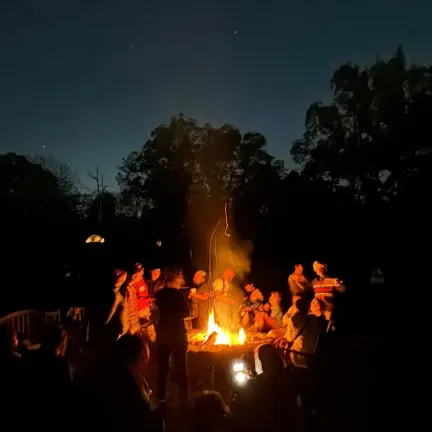
Consciousness for Transformative Agroecology
Engaging human inner dimensions to support agroecological transformations
We engage consciousness approaches to support the individual and collective inner dimensions and skills needed to advance agroecological and food systems transformations. We do this by integrating contemplative, somatic, creative, dialogic, and nature-based approaches into the Institute for Agroecology's research, learning, outreach, and other programs. We aspire to ground a culture of consciousness approaches (see definition in key terms below) in all that we do, within and outside the IFA.
Overview
Overview
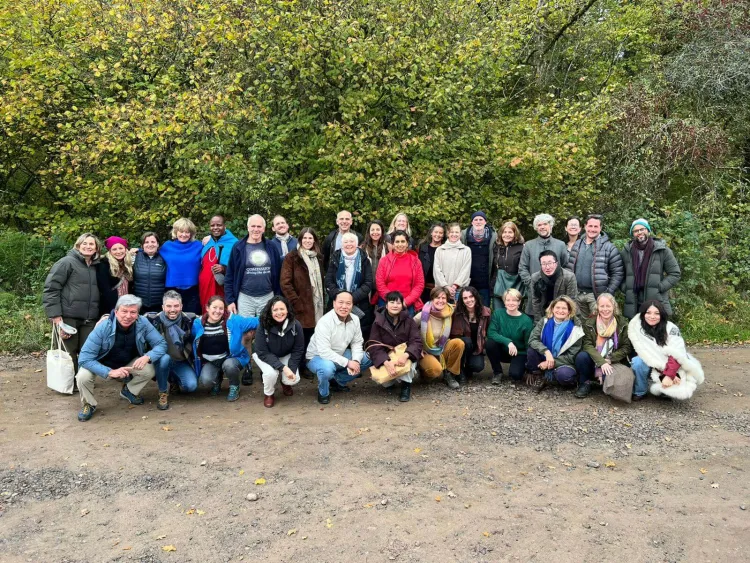
The field of agroecology has deeply evolved from its origins in applying ecological principles to agricultural systems to its current aspiration as a transformative force for just and sustainable food systems. This evolution demands not only changes to practices and policies, but fundamental shifts in how we think about and engage with food systems transformation.
Agroecology's evolution into a transformative approach has generated diverse critical perspectives that challenge conventional agricultural and food system paradigms. From political agroecology to feminist approaches and abolitionist frameworks, these perspectives demand engagement with complex power dynamics and systemic inequities. Yet the personal dimensions of engaging with these critical approaches remain largely underexplored. Agroecologists inevitably bring their own cultural conditioning, implicit biases, and lived experiences to this work. Rather than ignoring these dimensions, which purely intellectual or political approaches often do, we propose that it is very important to also engage these complex individual inner dimensions through consciousness approaches. This builds naturally on agroecology's foundation in indigenous knowledge systems, which often integrate spiritual and consciousness dimensions with agricultural practice, and its emphasis on diálogo de saberes - dialogue across different ways of knowing. These existing frameworks provide fertile ground for incorporating consciousness approaches that can strengthen both individual capacity and collective action. Several initiatives at the IFA are engaging with these agroecological foundations, including the Agroecology and Planetary Health and Co-creation of Knowledge for Agroecology programs. The CTA seeks to engage consciousness approaches across all of the programs of the Institute for Agroecology, through the following action areas:
- Co-learning within the IFA and with our partners and collaborators
- Co-creation of knowledge through participatory action research (PAR)
- Practicing of consciousness approaches
- Sharing and communicating
- Creating learning programs and opportunities that explicitly engage with consciousness for transformative agroecology
Our Approach to Outer-Inner Integration
Our Approach to Outer-Inner Integration
Food systems transformation is not just policy and technology-driven—it must be grounded in human awareness and relational capacity. Our planetary health work recognizes that healing ourselves, one another, and the planet is one interconnected journey, requiring attention to both inner and outer dimensions of transformation.
This work requires changing our posture—both metaphorically and in how we literally hold ourselves in our bodies. It means moving from a state of doing to a state of being with the systems we seek to transform. It asks us to act from places of intention rather than reaction, tuning into rational understanding, intuitive wisdom, and the embodied knowledge our bodies carry.
As we engage with the challenges of food systems transformation, we hold space for both grief and hope, finding joy and beauty even as we address destruction, and grounding our activism in practices that allow us to sustain ourselves and one another in this work.
Practicing consciousness approaches supports us in acting from the heart, listening deeply to communities and ecosystems, and developing the resilience needed for sustained transformative work. In practice, this means:
- Mindful awareness of our own needs and wellbeing extends outward to how we relate to farmers, land, and soil
- Resilience is a shared responsibility, requiring us to create a sense of belonging within our collaborative work
- How we relate, think, collaborate, and act together shapes what transformations become possible
- Listening—to communities, to ecosystems, to ancestral wisdom, and to our own bodies—inspires and guides our work
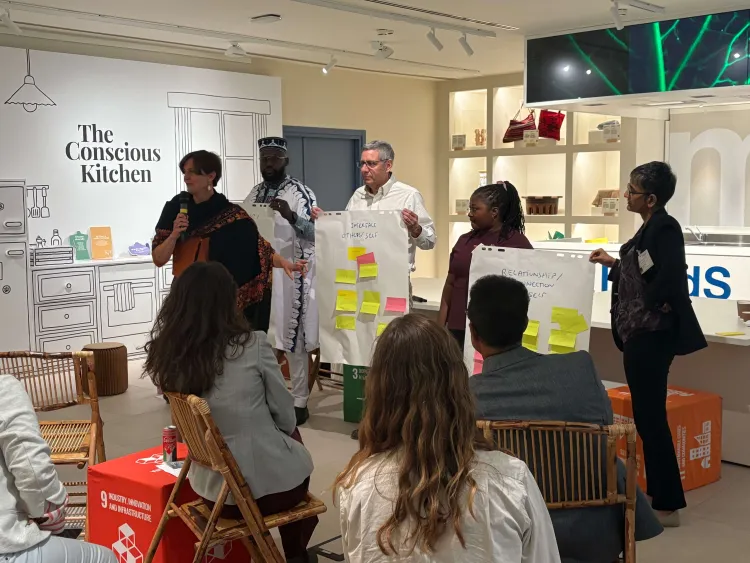
We are developing practices to integrate these principles, such as beginning meetings mindfully, ensuring everyone is heard, and approaching our work with both humility and agency.
Consciousness Practices in Our Work
Consciousness Practices in Our Work
The CTA integrates a range of consciousness practices that complement and extend traditional contemplative approaches:
Contemplative practices include meditation, mindfulness, and self-reflection exercises that cultivate individual and collective awareness.
Somatic and embodied practices recognize that knowledge and wisdom live in our bodies, not just our minds. These practices—including breathwork, movement, body awareness, and trauma-informed approaches—help us access the wisdom held in our bodies, release patterns of tension and trauma, and develop the embodied capacity to stay present with challenging emotions and situations. Somatics is particularly important for healing work and for practitioners from marginalized communities whose bodies carry histories of oppression and violence. These practices remind us that transformation happens not just intellectually but physically and neurologically.
Creative practices such as poetry, music, theater, and arts-based processes serve as acts of reclamation and ways of accessing knowledge beyond purely rational analysis.
Deep listening and dialogic practices engage us in listening to communities, ecosystems, ancestral wisdom, and our own inner voices. These practices support dialogue across different ways of knowing (diálogo de saberes) and include circle processes, shared silence, ensuring everyone has a turn to speak, and attunement through multiple senses and ways of knowing beyond verbal communication.
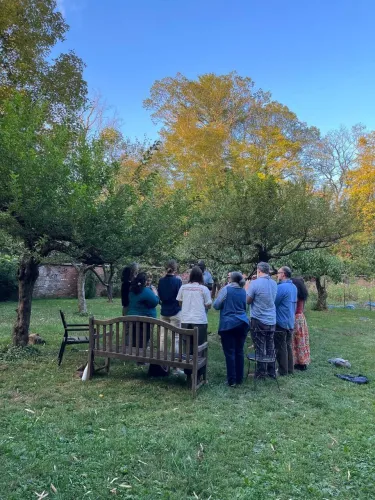
Nature-based practices foster direct, relational engagement with land and ecosystems, moving beyond observation to embodied connection.
Practices for holding complexity help us maintain space for both grief and hope, finding joy and beauty even as we address destruction, and grounding our activism in ways that sustain us for long-term transformative work. These include approaches such as Joanna Macy's "Work that Reconnects," which encourages us to honor our pain for the world.
Project Research Leads

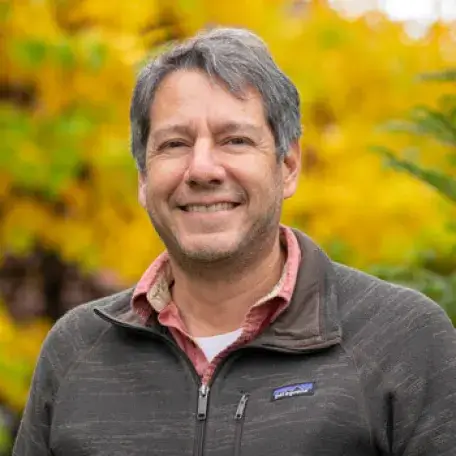
Professor of Agroecology and Environmental Studies • Co-Director, Institute for Agroecology
Ernesto.Mendez@uvm.edu

Postdoctoral Associate, Institute for Agroecology
Amaya.Carrasco@uvm.eduKey Terms
Key terms from Wamsler et al. (2022, p.9):
- Consciousness approaches "aim to integrate/mainstream the consideration of inner dimensions and consciousness practices into interventions across all sectors and levels: individual, group (collective), and institutional (system) levels."
- Contemplative practices, such as meditation, mindfulness, deep listening, and arts-based approaches that cultivate self-reflection, awareness, and consciousness.
- Human inner dimensions or “inner dimensions” are “individual and collective consciousness, awareness, mindsets, values, beliefs, worldviews and associated inner –cognitive, emotional and relational– qualities and capacities.”
Source: Wamsler, C., J. Bristow, K. Cooper, G. Steidle, S. Taggart, L. Søvold, J. Bockler, T.H. Oliver, and T. Legrand (2022) Theoretical foundations report: Research and evidence for the potential of consciousness approaches and practices to unlock sustainability and systems transformation. Conscious Food Systems Alliance (CoFSA), United Nations Development Programme (UNDP). https://consciousfoodsystems.org/wp-content/uploads/2023/03/Annex-II_-Theoretical-Foundations-Report_2022.pdf
Publications and Resources
- Agroecology and Conscious Food Systems for Flourishing of People, Places, and Planet. Special issue in the open access journal Challenges
- Méndez, V.E., and K.L. Nordstrom (2025) A deeper dialogue for transformative agroecology can start from within. Agroecology and Sustainable Food Systems: 1-18. https://doi.org/10.1080/21683565.2025.2597008
- First Global Conscious Food Systems Summit, in Bhutan- https://consciousfoodsystems.org/bhutan-summit-2026/
- Ernesto Méndez presentation on “Agroecology and Conscious Food Systems: Regenerating Environments and Communities”at the Nova Institute Annual Conference: New Horizons: Toward an Era of Global Flourishing. 5 December, 2024.