FieldLabs

Carse Wetlands

Natural Areas: Carse Wetlands

About Carse Wetlands

Body

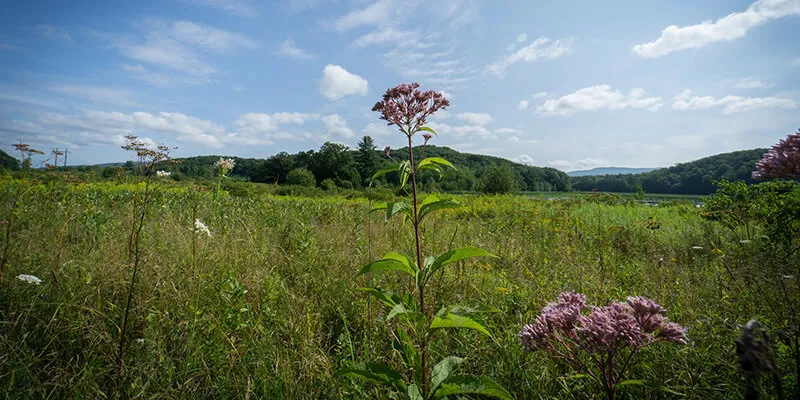
This unique property is a mosaic of habitats featuring open agricultural fields, thriving forests, and a central basin of wetlands and open water. It is a known birding hotspot, with over 150 species reported, and a vital sanctuary for wildlife, including bobcats, moose, and a high diversity of insects. 
UVM Forests and Natural Areas Gain 750 Acres

Research

Body

The Fellowship for Restoration Ecology and Cultures (FREC) student group conducts research on ecological restoration approaches at Carse Wetlands. They have been conducting studies on the most effective treatment of invasive plants. There is also an ongoing collaboration with the Vermont Audubon Society to study management approaches to the shrublands to support healthy bird populations.

Education

Body

UVM students in environmental science and geology courses utilize the area to conduct service learning and projects focused on local ecology. The site maintains an iNaturalist community for citizen science and educational engagement. The Fellowship for Restoration Ecology and Cultures (FREC) student group uses this site as their focal property for habitat restoration. 

Community

Body

Carse Wetlands is open to the public for recreation, though the trail system is limited. Birding is a popular activity for visitors. The FREC student group has developed some signage and educational materials across the Natural Area. 

Property Description

Body

A mix of open agricultural fields, forests, and wetlands including a basin of open water, which is occasionally expanded in size by beaver activity. Cobble and cliff habitat on the eastern side of the area harbors a suite of rare natural communities and plants. 

History

Body

The Carse Land Company conveyed an original gift of 225 acres to the University of Vermont in December 2013. The Natural Area later expanded to 330 acres with the addition of a 105-acre parcel in 2019. Prior to its conveyance to UVM, the Vermont Land Trust placed a conservation easement on the land, insuring its perpetual protection and public access. The Hinesburg Land Trust assisted by raising funds to cover the conservation project's closing costs and legal fees. 

Ongoing Monitoring & Research

Body

Education: Students from UVM study environmental science and geology using the site for service learning and projects on local ecology. 

Ongoing Monitoring & Research: Documented Invasive Plant Treatment Study by the FREC student group is ongoing. 

Site Access, Maps, and Facilities

Body

Site Access, Maps, and Facilities 

The trail system is open to the public.  

Directions to Carse Wetlands via Google Maps 

A trail system accesses the wetland from the parking lot. 

Parking and Directions 

Parking is at 1767-1021 Baldwin Rd, Hinesburg, VT 05461; a trail system accesses the wetland from the parking lot. The Parking area is south of Burritt Road and immediately south of the VELCO power line crossing. The parking lot on the east side of the road accommodates four vehicles. 

Trail Map (In Development) 

Facilities: 

No facilities other than parking; best suited for day use. 

Site Characteristics

Body
  • Size: 330 acres 

  • Temperatures 

  • Average summer high: 80.1 

  • Average summer low: 57.2 

  • Average winter high: 26.9 

  • Average winter low: 12.7 

  • Elevation: 115-170m/375-555ft 

  • Precipitation: 35.99 inches annually 

  • Soils: Muck and peat; rocky loam 

Stakeholders, Partnerships, and Resources

Body

Stakeholders and Partnerships 

  • The Vermont Land Trust 

  • Hinesburg Land Trust 

  • Hinesburg Trails Committee 

  • Vermont Natural Heritage Inventory 

  • Vermont Gas Systems

Resources and Videos: 

Carse Wetlands on Across the Fence 

UVM Fellowship for Restoration Ecologies and Cultures 

Past Research

Body

A full PDF of past research at Carse Wetlands is in development.