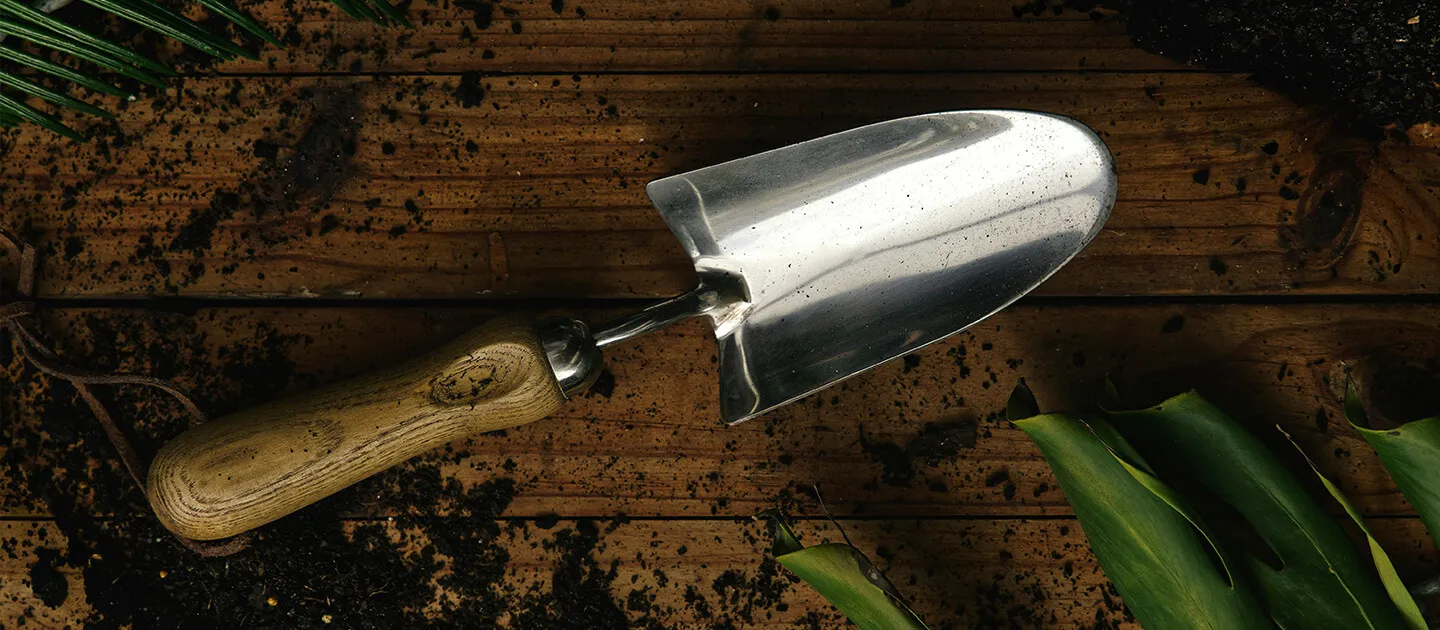
Home gardeners use a variety of hand tools to achieve their desired results for gardening and landscape maintenance. A quick search at any garden center or online retailer uncovers a vast diversity of equipment, implements, and gear. These include, but are certainly not limited to, shovels and hoes, loppers and pruners, and trowels and soil knives.
When new, these tools help with garden tasks flawlessly. However, like most things in our world, they need a bit of maintenance to perform well over the long-term. High quality tools can last over 30 years with regular care. To ensure the investment you make in these tools lasts for a long while, let’s discuss how to maintain the most common garden tools.
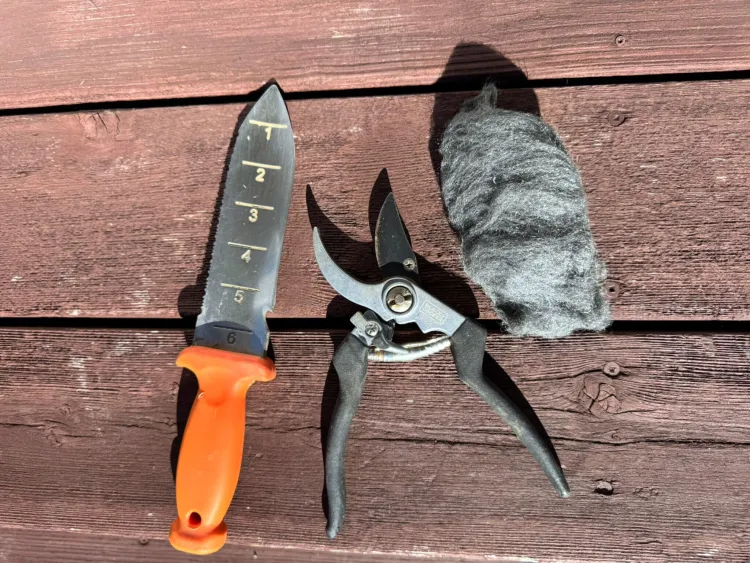
The first step is to keep tools clean. Dirty tools can be washed with soapy water, but do not leave to soak. Always dry your tools thoroughly to prevent rust. Tools used to prune diseased plants should be sanitized. A quick wipe with rubbing alcohol after (and even during) pruning should do the trick. Rust and residues from metal components can be removed with a wire brush or steel wool. A nylon brush is best for more sensitive pieces like wooden handles.
The second step is to keep tool edges sharp. Sharp tools equal less work. Shovels, trowels, hoes, and soil knives all do similar tasks of penetrating soil. It’s reasonable to assume that these tools are blunt instruments, yet they benefit from a sharp edge. A dull edge can be sharpened with a mill file.
Similarly, pruners, loppers, and shears can benefit from frequent sharpening to improve how well they cut. A sharp blade not only makes efficient cuts but also decreases surface areas of branch cuts helping reduce the incidence of disease.
A hand file or whetstone, even medium grade sandpaper, can be used to sharpen single- and double-bevel blades. When sharpening tools yourself, be sure to wear eye protection and gloves in case of any errant metal slivers. Sharpen by moving the file or whetstone in the same direction across the blade, following the tool’s original bevel. Avoid using a scrubbing or back and forth action as that can dull the blade. Typically, you want to start at the inside (closest to you) of the blade and use long, one-directional strokes outward. If your tool allows, dissembling it and removing the blade can help make this task easier. It also gives you a chance to remove rust and debris hidden in the joints and screws.
Now that the “action-end” of the tools have been taken care of, the third step is to consider the other parts of the tool. Many tools are made of wood and should be regularly sealed and finished. Linseed oil works well here. If wooden handles have splintered, sand them and then seal.
Any tool with a movement would benefit from the application of penetrating oil. Some oils also have a dissolving component which helps remove built-up residues like sap or other sticky substances.
Ultimately, the more frequently tools are maintained, the longer they will last. There are plenty of tutorials online should you need help with technique or visit a local knife sharpener to do the job for you. Remember that high-quality tools can last a lifetime, but their longevity can be severely reduced if neglected.