Mushroom growing kits require minimal space and time, making it possible to grow your own food year-round, even during the cold Vermont winter months.
Mushroom kits are widely available and designed specifically for home use. They include a prepared growing block and instructions, which is all you need to easily grow mushrooms at home. Because mushrooms are fungi, they do not need soil and sunlight to produce a harvest. Common varieties such as oyster, shiitake, and lion’s mane all grow well indoors and can be ready to harvest in as little as two to three weeks.
Check your local garden supply store for mushroom growing kits or look online. When shopping, you can look for a kit that has the features you desire, including: certified organic, suitable for beginners with step-by-step instructions, variety, price, etc. Oyster mushrooms are considered the most reliable variety for first-time growers. They grow very quickly and are tolerant of a range of common household conditions, including the drier air often found in homes heated by wood stoves. Shiitake and lion’s mane kits are also good choices for beginners, but can take longer to mature.
Most kits come with a block of growing material, usually a mix of sawdust and grain, wrapped in plastic. This block is called the substrate and serves as the food source for the mushrooms. The substrate is inoculated with mushroom spawn. The spawn grows into a web of white fibers called mycelium. The mycelium gradually takes over the substrate, turning it white and preparing it to produce mushrooms.
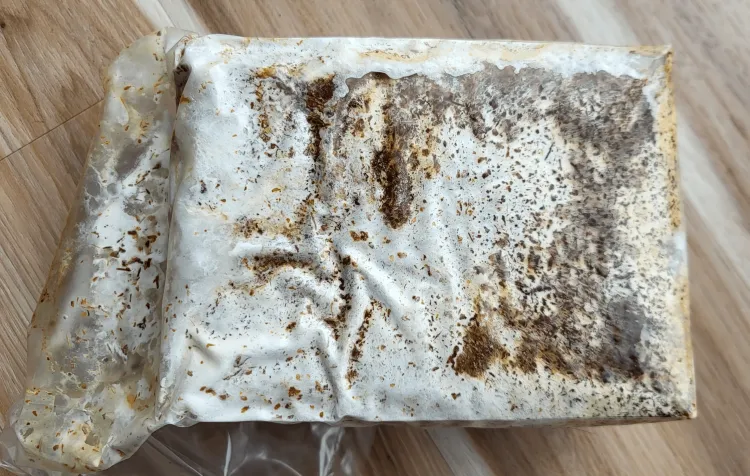
Getting started with your mushroom growing kit is straightforward. Kits include detailed instructions, but the process is generally the same across different brands. You will cut the plastic packaging according to the instructions and soak the growing block in water. Mushrooms need a lot of moisture, so you will water the growing block every day.
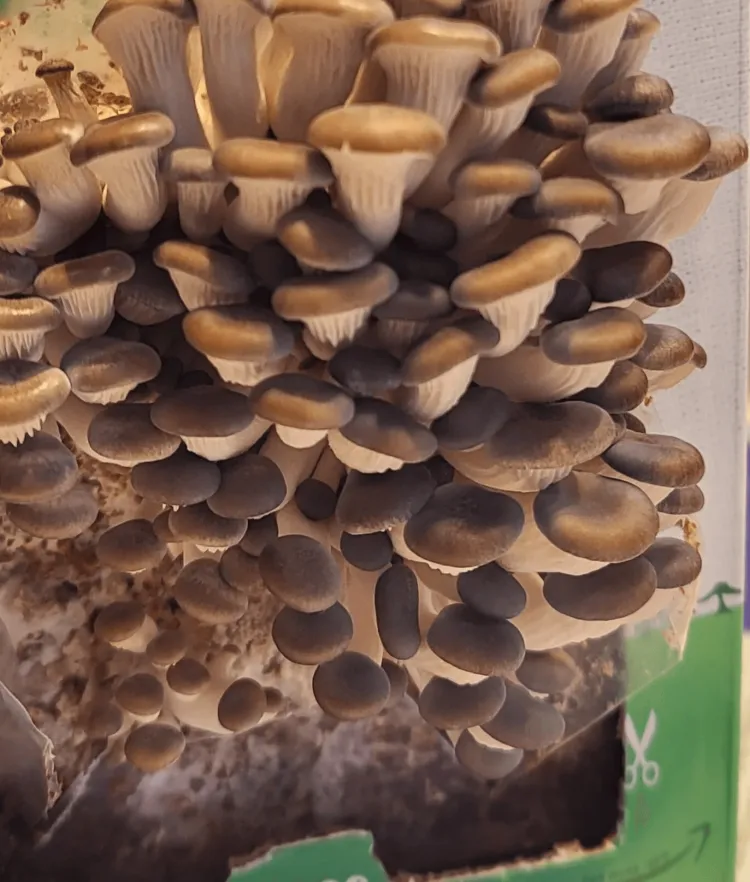
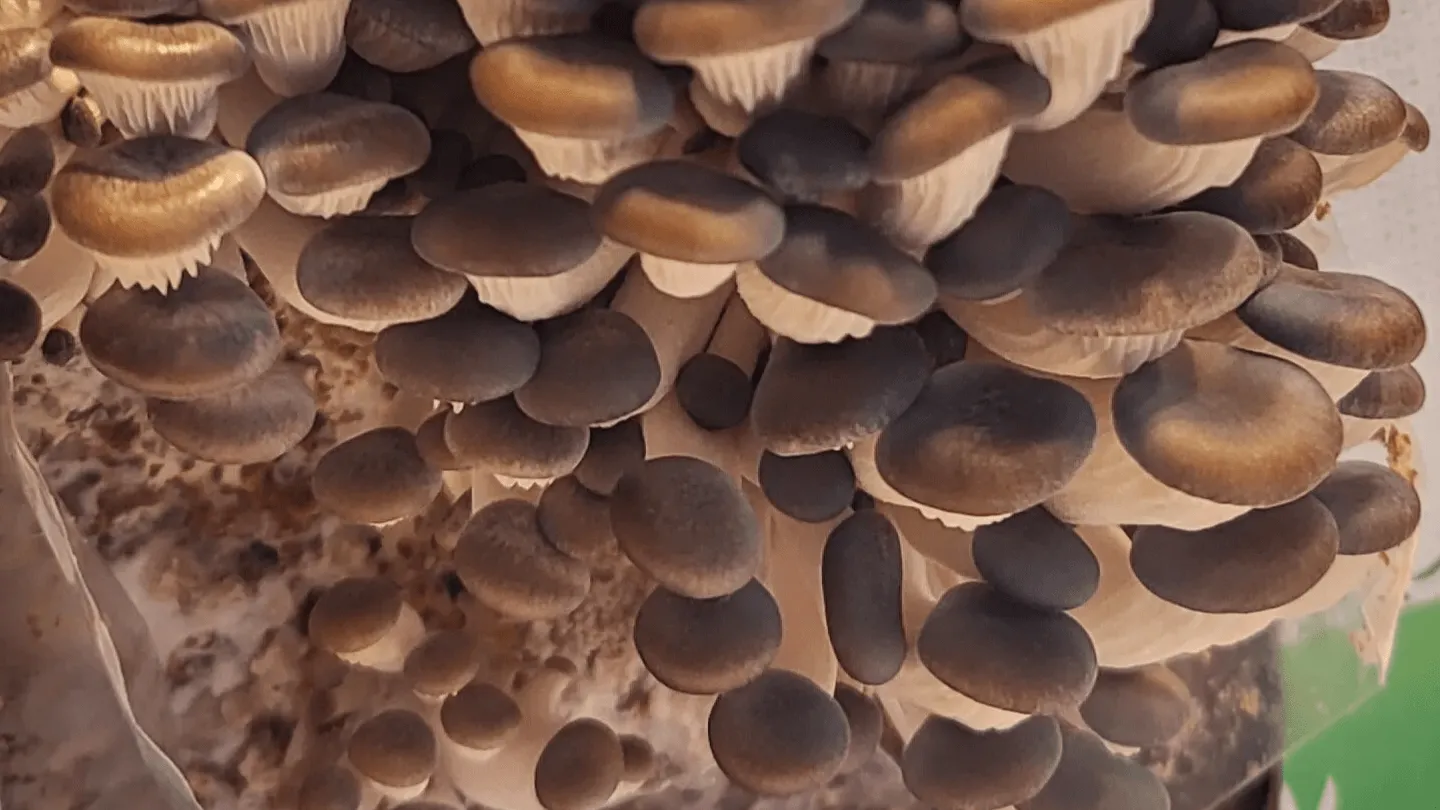
Within one to two weeks, you will notice small clusters of mushrooms beginning to emerge. This is called pinning. These baby mushrooms grow quickly, sometimes doubling in size every day. Continue watering your mushrooms until they have reached maturity. The instructions in your kit will tell you what to look for, such as the size and shape of the cap, to know when your mushrooms are ready to harvest.
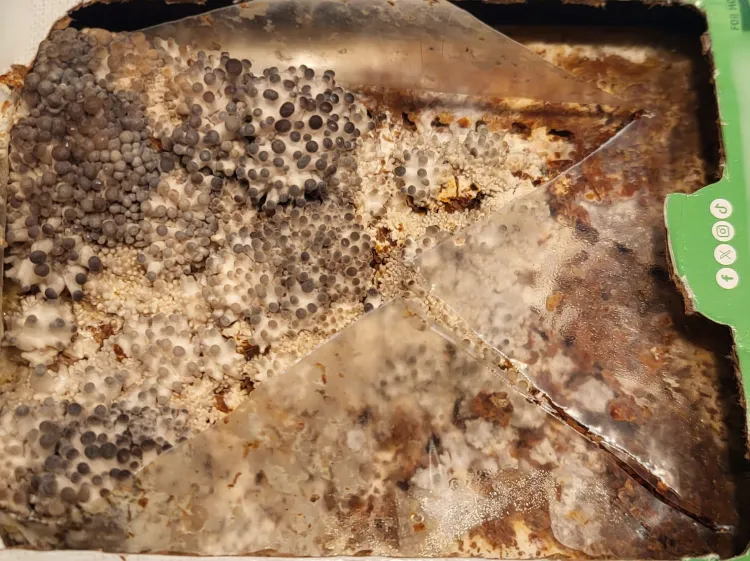
A mushroom growing kit can sometimes yield more than one harvest. After you harvest your first crop, you can attempt a second flush. To do this, let your growing block rest for about a week in a cool, dry place. Repeat the instructions included with your kit: soak the growing block again and water as directed. In most cases, subsequent batches of mushrooms will take longer to grow and have a smaller yield.
When your kit is done producing, add the substrate to your compost pile or directly to your garden beds. The mycelium has already broken down the growing material, so it is ready to enhance your compost or garden soil.
Growing mushrooms at home is a fun, easy, and rewarding way to continue harvesting fresh produce throughout the year. Whether you are looking to add flavor to your home-cooked meals or want to try a new gardening experience, a mushroom kit is an excellent investment.