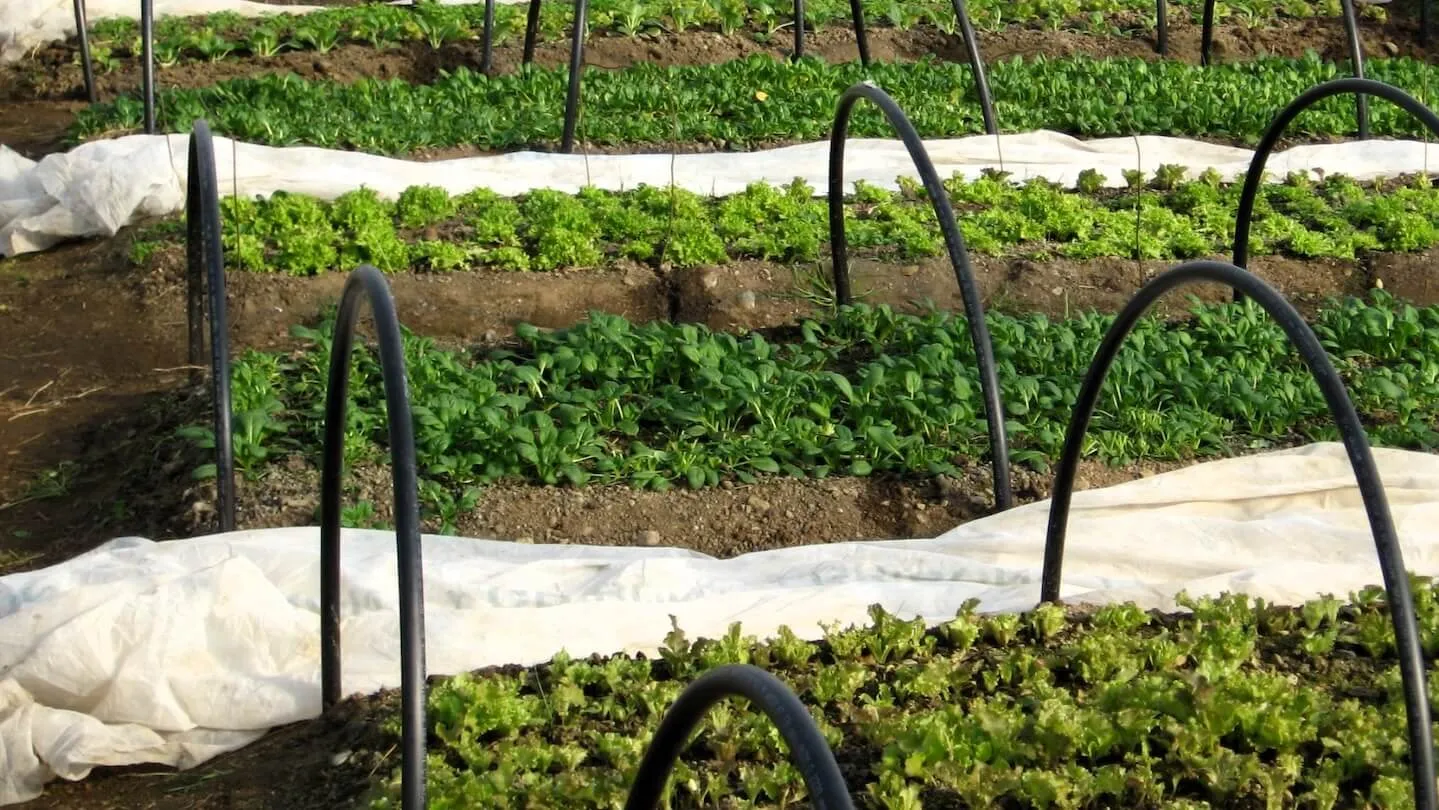
A last-minute frost warning may mean grabbing whatever’s handy to cover still-producing plants. If this is your go-to plan, use breathable fabrics like old sheets, tablecloths, or lightweight blankets. When you cover the plant, be sure the material reaches all the way to the ground.
The classic bell-shaped, glass or plastic cloche is easy to place over a single plant in the evening and remove in the morning. Just be sure the plant doesn’t touch the sides once it’s in place.
If you’ve planted cool season crops like kale (Brassica oleracea), consider using a floating row cover made of spun-bonded polypropylene fibers. Place a length of this breathable fabric over the entire row, using weights or garden staples along the edge to hold it in place.
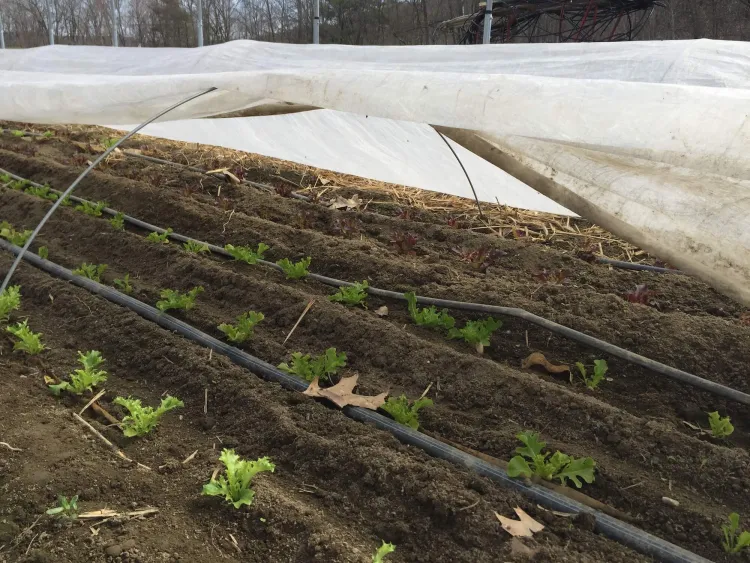
By installing a series of flexible rods bent into a u-shape over a row and placing the fabric cover over the hoops, you’ll create a low tunnel and add a protective layer of air around what’s growing inside. As with a floating row cover, be sure to anchor the fabric in place. You can provide additional protection by adding a plastic cover over the fabric one. The USDA has guidance (https://go.uvm.edu/nrcslowtunnel) on using low tunnels.
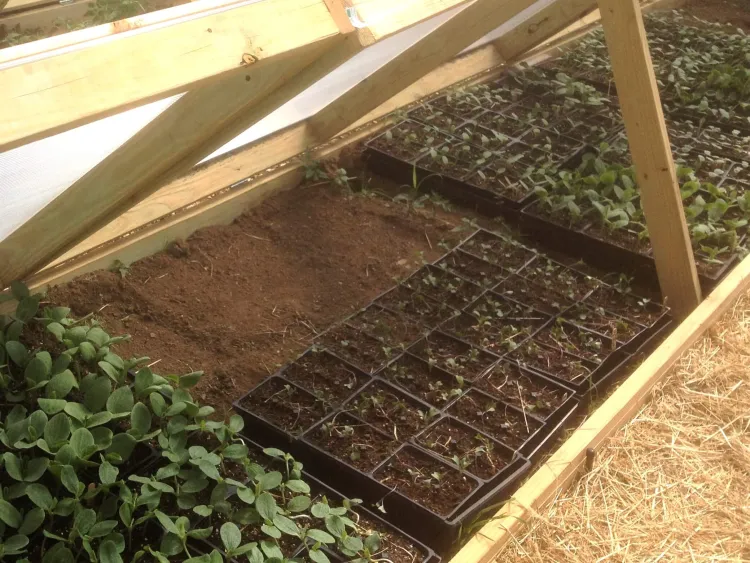
Did you use a cold frame in the spring? Consider using it again this fall to help protect cool season crops. With its wooden sides and hinged cover, it provides sturdy protection against cold and wind. Surround it with an insulating material like hay or add a heavy blanket over the top at night to help retain warmth within the cold frame. Regulate temperatures inside by opening the top as needed on warm, sunny days to allow excess heat to escape.
Even if you don’t have a traditional glasshouse, you can have some of the benefits. A mini greenhouse kit consists of a metal frame and a fitted plastic cover and often includes shelves. It combines the ease of walk-in plant care with a measure of protection within the closed structure.
Whatever method you choose to protect against damage due to freezing temperatures, the material used to cover plants can make a difference. A lightweight spun-bonded fabric covering can provide up to a few degrees of frost protection, a medium weight a bit more, and a heavier weight up to 8 degrees Fahrenheit. If the fabric rests on a frame, the layer of air created around plants can provide additional protection.
Avoid using plastic sheeting or tarps unless you’re using a support like hoops or a frame to keep the plastic from touching the plants you’re trying to protect. Direct contact between plastic and a plant can transmit the cold, causing cell damage from freezing even though the mini climate inside the protective cover may be above freezing. In addition, during daylight hours, plastic can trap heat and moisture, so be sure to remove coverings early in the day to avoid overheating or possible rot.
Inside that protective covering, you’re creating a microclimate. A remote thermometer can help monitor the temperature inside a cold frame or other enclosure to help you determine when to close it to conserve warmth and when to open it to allow airflow.
For answers to your home gardening questions, contact the University of Vermont Extension Master Gardeners Helpline online (go.uvm.edu/gardeninghelpline) or by phone (802-656-5421, Thursdays, 9 a.m. to 12 p.m.) from April to October.