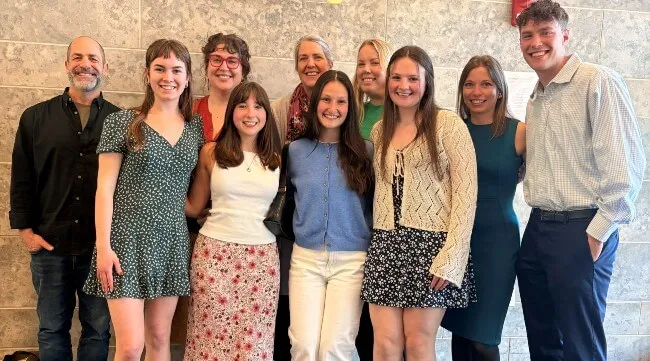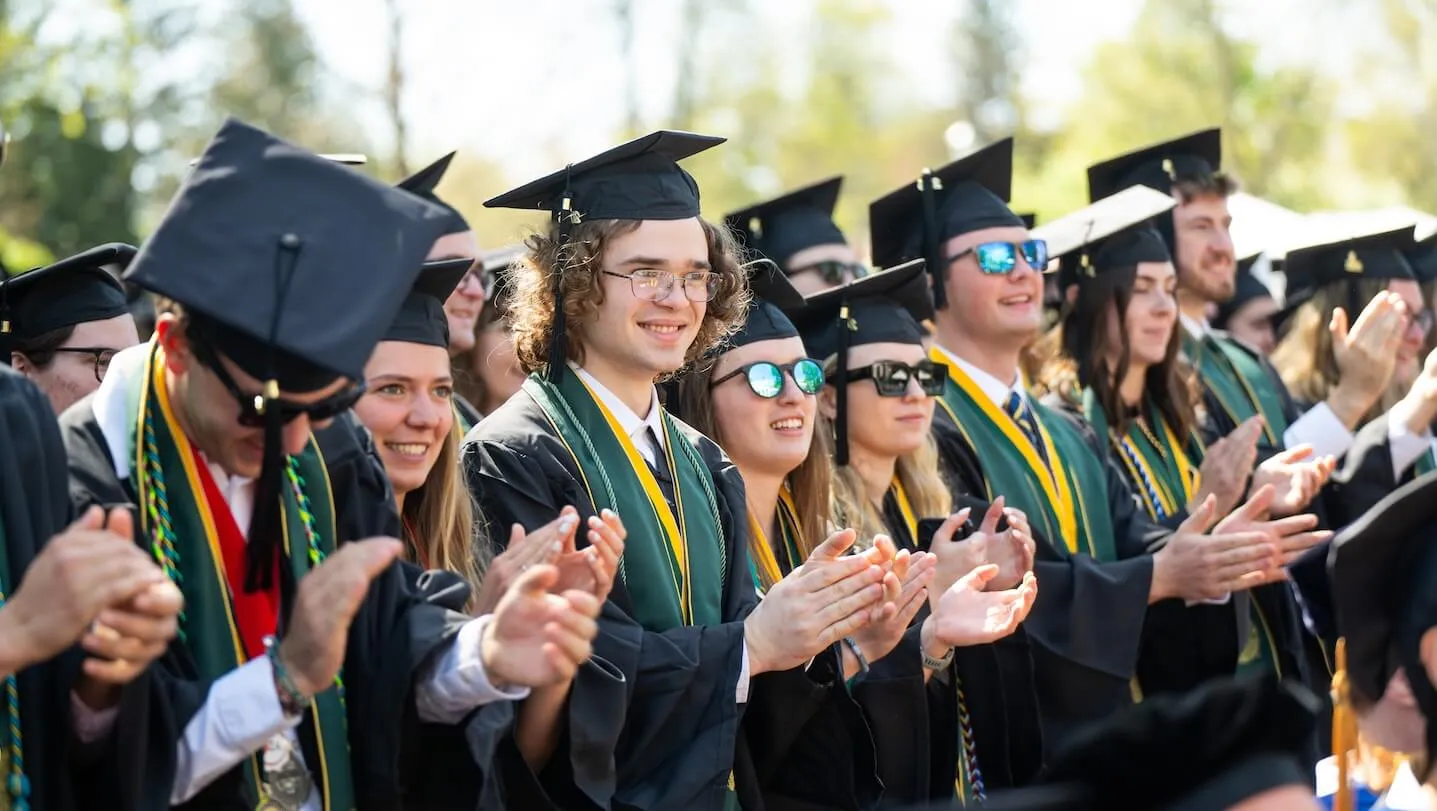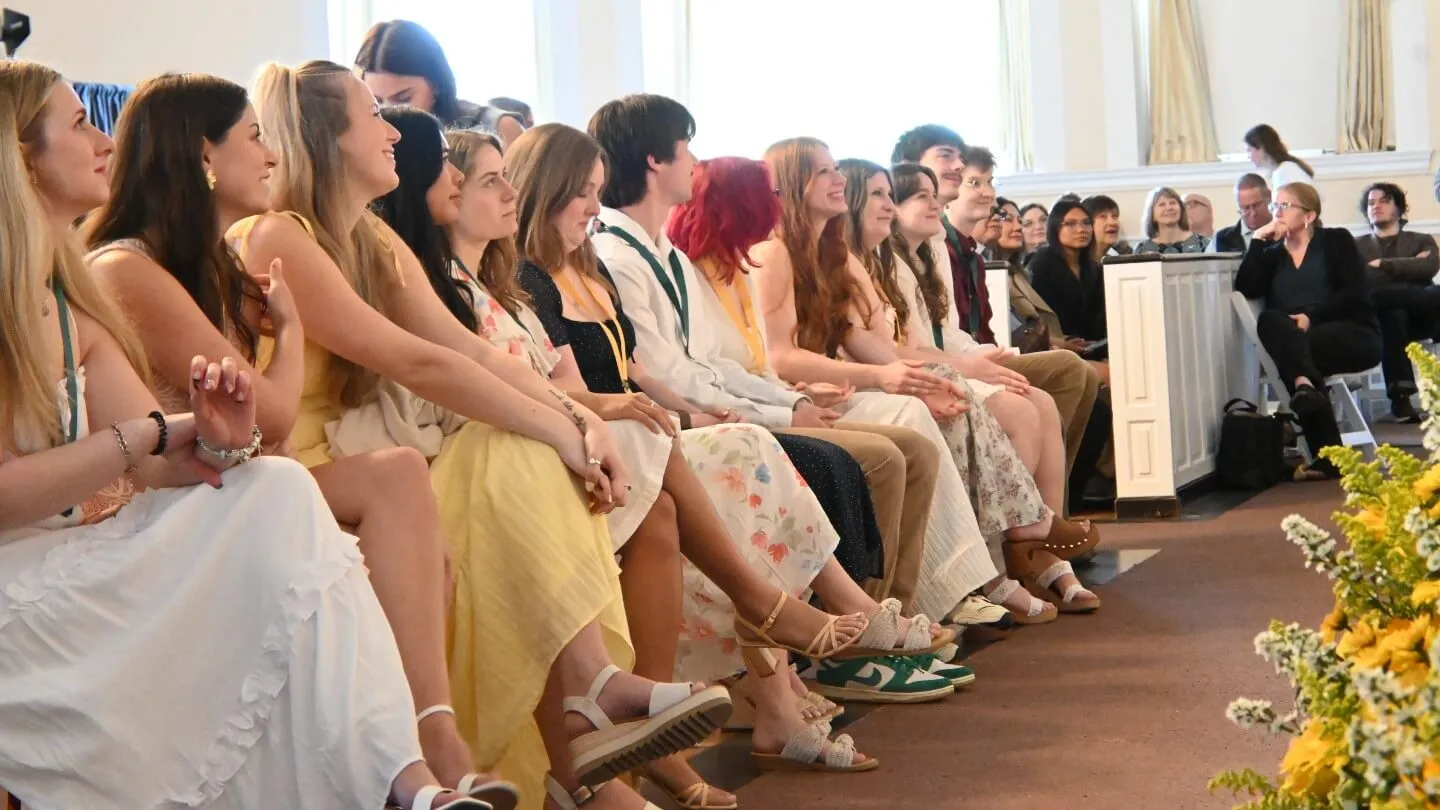
On May 15, 2026, surrounded by family, friends, and faculty in Ira Allen Chapel, the University of Vermont’s Nursing Class of 2026 marked a defining milestone at their pinning ceremony. A total of 111 future registered nurses and 19 future nurse practitioners crossed the stage to receive their pins, a tradition that symbolizes their transition into the profession.
Rosemary Dale, chair of the nursing department and associate dean for clinical practice in the College of Nursing and Health Sciences, welcomed attendees and recognized the graduates for completing their preparation as professional nurses. She then introduced faculty speaker Professor Teresa Graziano.
“Nursing school asks something very different of its students than other fields,” Graziano told the students in her remarks. “We don't simply ask you to memorize information. We ask you to become trustworthy in moments when people are afraid, at their most vulnerable, and often when they're experiencing the worst days of their lives.”
Graziano teaches public health nursing, a course that challenges students to think critically about the sociopolitical dimensions of health and to question assumptions about healthcare systems.
“While nursing begins with compassion, compassion alone is not enough,” they said. “Nursing requires discipline. It requires humility, it requires knowledge, and it requires accountability not only to ourselves, but to our patients and to society.”
“One nurse can impact thousands of lives over the course of their career, and the graduates in front of us are collectively going to impact hundreds of thousands of lives simply because they chose to enter a profession where they care about other human beings; and our civilization is better off for that choice.” — Teresa Graziano, Ph.D., RN
Class speaker Steven Shi shared that he had envisioned a career as an artist since childhood, but after his grandfather passed away, his path shifted.
“My grandfather passed away in late 2020, and because of the state of the world, I wasn’t able to visit him in the hospital,” Shi said. “Through it all, it was his nurse’s voice that I recognized over the phone.”
That moment of connection prompted him to reflect on other experiences he’d had in the hospital, including serving as a translator at age twelve for his grandmother after she’d had a fall. The recollections helped shape his decision to pursue nursing at UVM.
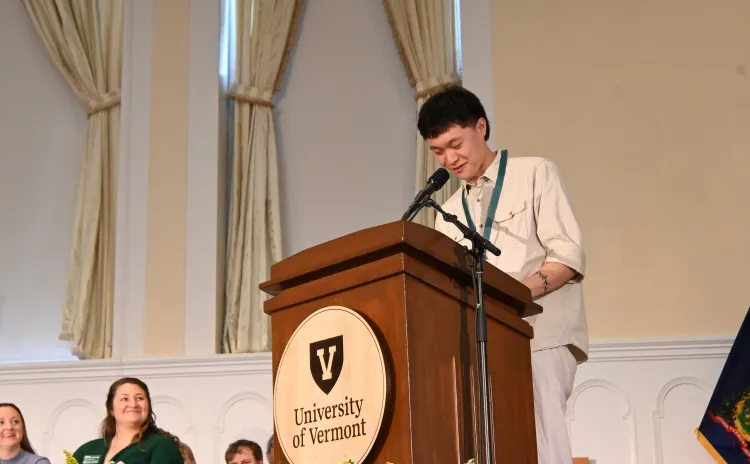
“Looking back, healthcare was more present in my life than I realized,” he said. Through his education, Shi added, he has come to understand the deeper meaning of the nursing profession.
“I learned that nursing is so much more than what people give credit for, and it is a form of art. Anyone can learn how to take vital signs, start an IV or administer medication, but the art of nursing is learning how to bring comfort into uncertainty, compassion into chaos and humanity into critical situations. It is balancing professionalism and empathy, kindness and simply being human.”
“As a class of future caregivers, advocates, and leaders, no matter where our paths may take us, whether you’re working in the ICUs, Peds, ORs, Med-Surg, outpatient, the Army, public health, or still figuring it out, I think we can continue to learn from and rely on each other no matter what.” — Steven Shi ’26
The Tradition of Pinning
Florence Nightingale began the pinning tradition more than 150 years ago by presenting graduates of her nursing school with a medal, often described as a symbolic “badge of courage.” The medal was intended to inspire her students to serve the injured, sick, and dying with dedication, even in difficult and dangerous circumstances. Over time, the medal evolved into what is now known as the nursing pin, which continues to represent commitment, compassion, and professional pride in the field of nursing.