Browse by Topic: Adaptation Practices

Filter by subtopic. Click here to search all resources with more filters (e.g. production type, state, issue).

  • Adaptation Practices

    Growing Day-Neutral Strawberries in New Hampshire: Variety Selection & Production Tips

    November 23, 2019 • Becky Sideman and Kaitlyn Orde • UNH Extension

    This guide is intended to summarize our experiences with day-neutral strawberry varieties at the University of New Hampshire and to share data from our trials as a benchmark for day-neutral performance in the region.

  • Adaptation Practices

    Guide to Preparing High Tunnels for Extreme Weather

    September 4, 2025 • Chris Callahan • UVM Extension

    High tunnels and greenhouses provide protection for crops, extend the growing season, and improve yield and quality. However, climate change brings both a higher frequency and increased intensity of extreme weather events. It is important to think about how high tunnel structures can best be built and modified to endure the extremes. The information below is a summary of experiences shared by the growers of the Vermont Vegetable and Berry Growers Association (VVBGA).

  • Adaptation Practices, Climate Impacts

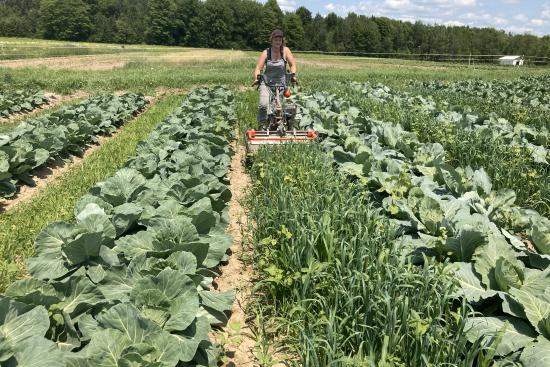
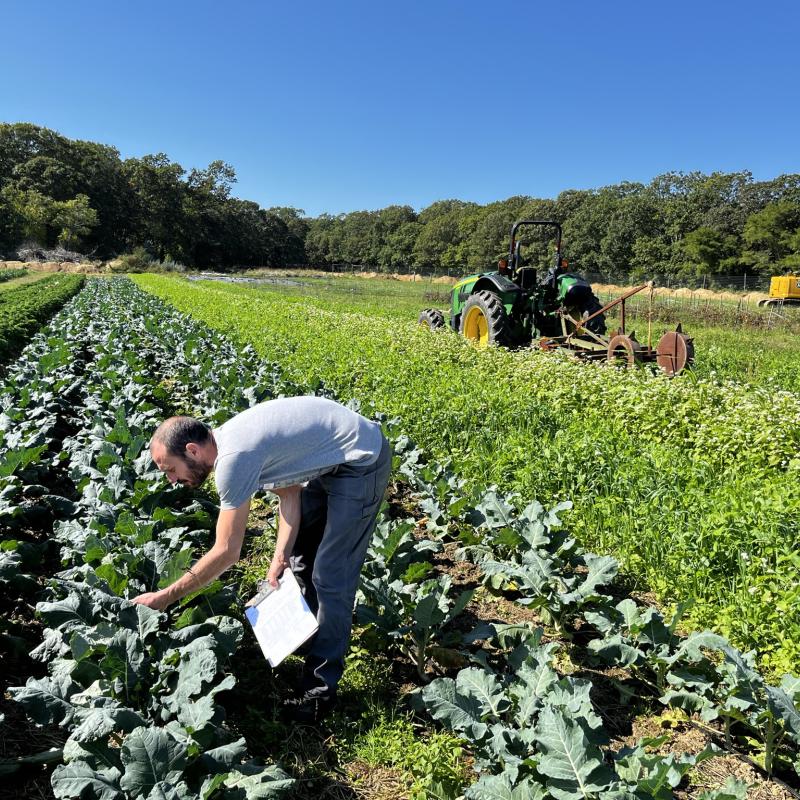
    Hang onto your soil! Reduced Tillage At Scale

    November 20, 2025 • Vermont Vegetable & Berry Growers Association

    This webinar explores the spectrum of reduced tillage practices at all scales, covering equipment and methods that can improve soil health and save labor. Speakers: Julie Fine, American Farmland Trust; Natalie Lounsbury, University of New Hampshire.

  • Adaptation Practices

    High Tunnels and Other Season Extension Techniques

    September 4, 2025 • Vern Grubinger • Northeast SARE

    A short guide to types of high tunnel structures, greenhouses, and special considerations for high tunnel production. These include variety selection, fertility management, pest management, water management, temperature management, marketing and economics, and crop storange and processing.

  • Adaptation Practices

    High Tunnels at Delaware State University

    November 23, 2019 • USDA Northeast Climate Hub

    The Delaware State University (DSU) Outreach & Research Center provides a demonstration of high tunnel designs and best practices for small farmers to protect and improve their operations in a changing climate.

  • Adaptation Practices

    High Tunnels Help RI Farmers Adapt to Climate Variability

    November 23, 2019 • University of Rhode Island

    A summary of how a handful of RI vegetable farms used high tunnels to adapt to a changing climate, including season extension, summer shade, and protection from heavy rains.

  • Adaptation Practices

    How Does Tillage Intensity Affect Soil Organic Carbon?

    November 25, 2019 • Neal R. Haddaway, Katarina Hedlund, Louise E. Jackson, Thomas Kätterer, Emanuele Lugato, Ingrid K. Thomsen, Helene B. Jørgensen, and Per-Erik Isberg • Mistra EviEM

    Researchers from MISTRA EviEM reviewed 351 published research studies looking at carbon(C) sequestration in the soil profile under different tillage management systems. They found C stock increases under no-tillage compared to full tillage in the upper soil (0-30 cm) in studies of 10 years or more, while no effect was detected in the full soil profile.

  • Climate Impacts, Adaptation Practices

    How to Reduce Heat Stress in Dairy Cattle

    September 4, 2025 • University of Missouri Extension

    Heat stress in dairy cattle is one of the leading causes of decreased production and fertility in dairy cattle during summer months. These losses are apparent in the decreased amount of milk shipped, increased days open and decreased breedings per conception. Some heat stress is unavoidable, but effects can be minimized if these best management practices are followed.

  • Adaptation Practices, Planning

    Irrigation Pays in Protecting Vegetable Crop Revenues in the Northeast U.S.

    November 23, 2019 • USDA Northeast Climate Hub

    A cost benefit analysis of irrigation at Intervale Community Farm in Burlington, VT, calculated using records from 2006 to 2016.

  • Adaptation Practices, Planning

    Irrigation Research at UD

    November 23, 2019 • USDA Northeast Climate Hub

    A case study on how researchers at the University of Delaware's Warrington Irrigation Research Farm are improving irrigation to boost crop yields and manage soil and water resources.

  • Adaptation Practices

    List of Alternative Crops and Enterprises for Small Farm Diversification

    September 4, 2025 • USDA National Agricultural Library

    A list of field crops, vegetables, fruits and nuts, horticultural/nursery crops, agroforestry/forestry products, livestock, and other accessible innovations for farmers exploring diversification.

  • Planning, Adaptation Practices

    Maine Climate and Ag Network

    November 21, 2019 • University of Maine

    This is a collection of tools, resources, publications, etc that help farmers in Maine adapt to the effects of climate change.

  • Adaptation Practices

    Managing Cover Crops Profitably

    September 4, 2025 • SARE

    Cover crops slow erosion, improve soil, smother weeds, enhance nutrient and moisture availability, help control many pests and bring a host of other benefits to your farm. At the same time, they can reduce costs, increase profits and even create new sources of income. You’ll reap dividends on your cover crop investments for years, because their benefits accumulate over the long term. There is a cover crop to fit just about every farming situation.The purpose of this book is to help you find which ones are right for you.

  • Adaptation Practices

    Managing Grazing to Improve Climate Resilience

    November 23, 2019 • USDA Northeast Climate Hub

    A fact sheet on the why and how of rotational stocking, including benefits to the herd, risks of rotation, management methods and tips, and additional resources.

  • Planning, Adaptation Practices

    MOFGA Pest Reports

    September 4, 2025 • MOFGA - Maine Organic Farmers and Gardeners Association

    The Pest Report is produced once every week or two during the growing season. It is a compilation of short discussions of pests and diseases either working the fields or soon to be seen. The discussions include biology of the pest organism, effects on the plant, and recommended solutions.

  • Adaptation Practices, Planning

    National Invasive Species Information Center (NISIC)

    November 21, 2019 • USDA National Invasive Species Information Center

    Serves as a gateway to invasive species information from federal, state, local, and international sources.

  • Planning, Adaptation Practices

    NEWA: Network for Environment and Weather Applications

    November 21, 2019 • NEWA

    Weather and science driven integrated pest management. A site that links data from weather stations across the Northeast. Includes forecasts by crop or by pest. Especially useful for orchards, but there are vegetable pest models as well.

  • Adaptation Practices, Planning

    Nutrient Tracking Tool (NTT)

    November 21, 2019 • Texas Institute for Applied Environmental Research

    NTT is a web-based, site-specific application that estimates nutrient and sediment losses for crop and pasture at the field and/or watershed scales. Agricultural producers and land managers can define a number of management scenarios for any given field or area of interest (AOI). NTT will estimate nutrient (nitrogen and phosphorus) losses, sediment losses, and crop yields differences between the scenarios and present results in customizable reports

  • Adaptation Practices

    Pepper Growing in High Tunnels in Response to Climate Change

    September 4, 2025 • Becky Sideman • UNH Extension

    A report by University of New Hampshire researches on the comparison between growing different pepper varieties in the field vs a greenhouse. The purpose of the study was to help vegetable farmers adapt to the weather variability brought on by climate change.

  • Adaptation Practices

    Practical Approaches to Establishing No-Till Systems: Reflections from Winter Street Farm

    September 4, 2025 • Caro Roszell • NOFA/Mass

    An article on a small-farm's approach to no-till practices, including tarping, mulching paths and beds, intercropping, use of plastic mulch and weed mats, flail mowing, and more.

  • Adaptation Practices

    Principles of On-Farm Water Management

    September 4, 2025 • Forrest T. Izuno • University of Florida IFAS Extension

    This short technical bulleting provides an overview of the concepts of sound on-farm water management: a systems approach towards controlling water on a farm in a manner that provides for the beneficial management of water for satisfying the irrigation and drainage needs of a crop under the constraints imposed by the prevailing physical social, governmental, and production systems.

  • Adaptation Practices

    Raising Soil Organic Matter Content to Improve Water Holding Capacity

    November 21, 2025 • Jehangir H. Bhadha, Jay M. Capasso, Raju Khatiwada, Stewart Swanson, and Christopher LaBorde • University of Florida IFAS Extension

    This publication explains how increased soil health and organic matter content help retain moisture to aid during droughty periods. It also discusses soil health management strategies to improve organic matter content.

  • Adaptation Practices, Climate Impacts

    Reduced Tillage Systems for Organic Vegetables

    November 20, 2025 • Ryan Maher • Cornell Small Farms Program

    Webinar on Reduced Tillage Systems for Organic Vegetables including cover crop management and equipement strategies.

  • Adaptation Practices, Climate Impacts

    Regenerative Farming at Freedom Food Farm with Chuck Currie

    November 20, 2025 • NOFA/Mass

    This workshop covers regenerative systems used at Freedom Food Farm: no-till crops, livestock integration, rotational grazing, biodiversity, soil preservation, input reduction, and more! From the 2020 NOFA Summer Conference