Pro Picks

Explore collections of resources from specialists in their fields, from extension professionals to climate adaptation experts.


  • Vermont specific resources

    N

    7 resources collected by Nancy LaRowe

    Organic Practices Program at NOFA Vermont

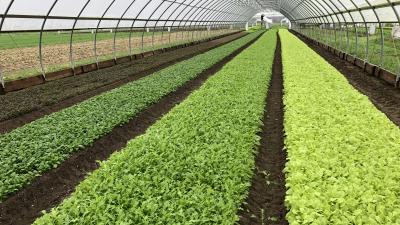
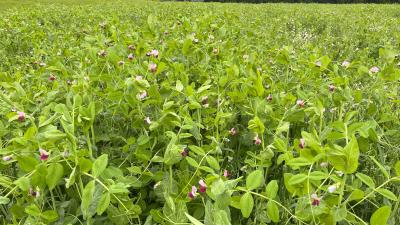
    • Spring cover crops

      Here's a collection of climate adaptation resources specifically for Vermont farmers.

    • Planning

      Vermont Farm Business Advising

      September 4, 2025 • Vermont Housing & Conservation Board

      The Viability Program provides a range of services, from in-depth long-term business planning to short-term specialized assistance, including Business Planning, Enterprise Analysis, Financial Record-keeping and Management, Marketing and Sales, Human Resources Management, Management Coaching, and Retirement & Ownership Succession Planning. Participants are matched with advisors who have the skillsets to meet their needs, and services are generally free of charge following a $75 enrollment fee.

    • Funding, Planning

      Guide to Assistance for Agricultural Producers of Vermont

      September 4, 2025 • Franklin County Natural Resources Conservation District

      An annually updated guide for Vermont farmers that includes local, state, and federal technical and financial assistance opportunities for individuals and entities working with crops, forestry products, livestock, nursery stock, and/or other land-based products.

    • Funding

      NOFA VT Farmer Resilience Grants

      September 4, 2025 • NOFA Vermont

      A pool of funds to distribute directly to farmers as grants to fund projects that will improve longer-term resilience on farms.

    • Funding

      Vermont Family Farmer of the Month

      December 2, 2025 • Nancy LaRowe • NOFA Vermont

      Monthly awards recognize farmers whose businesses are contributing to a resilient Vermont agricultural landscape and demonstrate environmental stewards. Grants fund Vermont farm resilience-building projects. Three application cycles annually.

    • Planning

      Adaptation Planning Assistance

      December 2, 2025 • Nancy LaRowe • NOFA Vermont

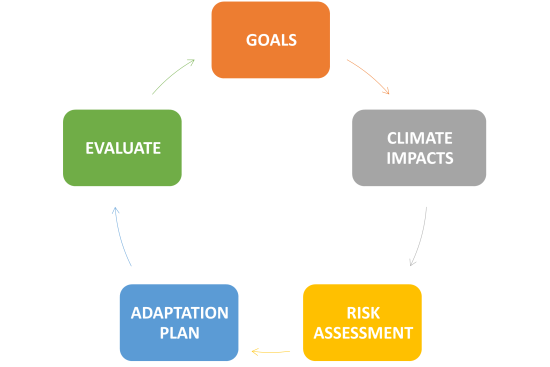
      NOFA-VT’s Farmer Services Team offers flexible, responsive services to support farmers in assessing their level of climate risk and identifying adaptation strategies to increase their resilience. Submit Services Questionnaire to connect with the team

    • Funding

      Farm Agronomic Practices Program

      December 2, 2025 • Nancy LaRowe • State of Vermont

      Utilizes state funding to help Vermont farms implement soil-based agronomic practices that improve soil quality, increase crop production, and reduce erosion and agricultural waste discharges.

    • Funding, Climate Impacts

      Pasture and Surface Water Fencing Program

      December 2, 2025 • Nancy LaRowe • State of Vermont

      Provides pasture management technical assistance and financial assistance to Vermont farmers to improve water quality and on-farm livestock exclusion from surface waters statewide.

  • Water Management

    Joshua Faulkner

    5 resources collected by Joshua Faulkner

    Research Associate Professor at UVM Center for Sustainable Agriculture

    • Flooded field

      These selected resources provide sound technical guidance on strategies to improve water management on farms, from too much water to too little water.

    • Planning, Adaptation Practices

      Drip-Irrigation Systems for Small Conventional Vegetable Farms and Organic Vegetable Farms

      November 21, 2025 • Eric Simonne, Robert Hochmuth, Jacque Breman, William Lamont, Danielle Treadwell, and Aparna Gazula • University of Florida IFAS Extension

      The goals of this publication are to present the principles behind drip irrigation and some practical guidelines for successful and profitable use of drip irrigation.

    • Planning, Adaptation Practices

      Water Deficit Calculator

      November 21, 2025 • Art DeGaetano & Brian Belcher • Cornell Climate Smart Farming Program

      The CSF Water Deficit Calculator estimates soil water content within a crop’s effective root zone to inform decision makers about current and forecasted water deficits. Information is used to determine the optimum frequency and duration of irrigation

    • Adaptation Practices, Planning

      Irrigation Pays in Protecting Vegetable Crop Revenues in the Northeast U.S.

      November 23, 2019 • USDA Northeast Climate Hub

      A cost benefit analysis of irrigation at Intervale Community Farm in Burlington, VT, calculated using records from 2006 to 2016.

    • Adaptation Practices

      Agricultural Drainage

      November 21, 2025 • Ehsan Ghane • Michigan State University

      This publication addresses basic concepts related to agricultural drainage.

    • Adaptation Practices

      Raising Soil Organic Matter Content to Improve Water Holding Capacity

      November 21, 2025 • Jehangir H. Bhadha, Jay M. Capasso, Raju Khatiwada, Stewart Swanson, and Christopher LaBorde • University of Florida IFAS Extension

      This publication explains how increased soil health and organic matter content help retain moisture to aid during droughty periods. It also discusses soil health management strategies to improve organic matter content.

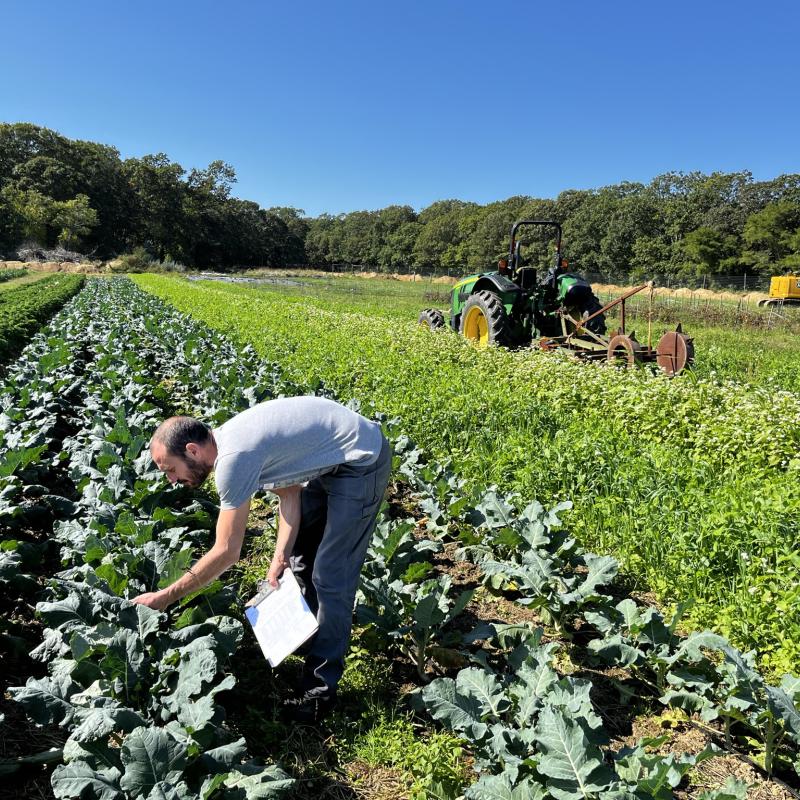
  • Reduced Tillage for Vegetable Growers

    Julie Fine, Climate & Agriculture Senior Specialist

    6 resources collected by Julie Fine

    Climate & Agriculture Senior Specialist at American Farmland Trust

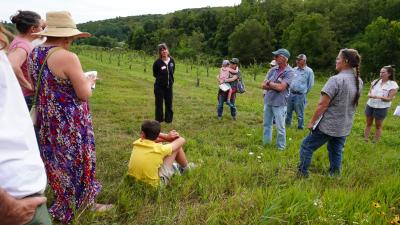
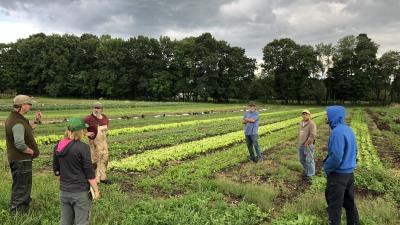
    • Farmers discussing new approaches to reduced tillage

      Vegetable growers often face big hurdles to reduce tillage, including weed pressure and limited equiment. Learn about new approaches and resources.

    • Adaptation Practices, Climate Impacts

      Reduced Tillage Systems for Organic Vegetables

      November 20, 2025 • Ryan Maher • Cornell Small Farms Program

      Webinar on Reduced Tillage Systems for Organic Vegetables including cover crop management and equipement strategies.

    • Adaptation Practices, Climate Impacts

      Hang onto your soil! Reduced Tillage At Scale

      November 20, 2025 • Vermont Vegetable & Berry Growers Association

      This webinar explores the spectrum of reduced tillage practices at all scales, covering equipment and methods that can improve soil health and save labor. Speakers: Julie Fine, American Farmland Trust; Natalie Lounsbury, University of New Hampshire.

    • Adaptation Practices, Climate Impacts

      Climate Resilience for Organic Vegetable Production: Ongoing and previous research

      November 20, 2025 • Rue Genger • Climate Resilience for Organic Vegetable Production

      This page collects research around reduced tillage topics for vegetables, including living mulch under organic acorn squash and Brussel sprouts, tarps to terminate cover crops, sorghum sudan grass residue as mulch for tomatoes, and more....

    • Planning

      Climate Smart Farming Tools

      September 4, 2025 • Cornell Climate Smart Farming Program

      An online toolkit is designed to help farmers from the Northeast US improve their productivity and resiliency in the face of a changing climate by using decision support tools for growing degree days, water deficits, and planting schedules.

    • Adaptation Practices, Climate Impacts

      Regenerative Farming at Freedom Food Farm with Chuck Currie

      November 20, 2025 • NOFA/Mass

      This workshop covers regenerative systems used at Freedom Food Farm: no-till crops, livestock integration, rotational grazing, biodiversity, soil preservation, input reduction, and more! From the 2020 NOFA Summer Conference

    • Adaptation Practices, Climate Impacts

      Farmer Led Innovations in Reduced Tillage Vegetables

      November 20, 2025 • American Farmland Trust

      Farmer-Led Innovations for Reduced Tillage (FLI) cultivates co-learning and innovation among organic vegetable farmers in New England. This site features the trials of a small cohort of innovative farmers trialing reduced tillage practices.