Adult Cow Housing
A comprehensive resource on infrastructure considerations when building new or remodeling an existing cow housing facility.

A comprehensive resource on infrastructure considerations when building new or remodeling an existing cow housing facility.
A checklist for Northeast tree fruit growers outlining climate-related risks, opportunities, and actions to reduce future impacts.
Using this workbook, producers can expect to have a better understanding of vulnerable areas to climate change and strategies to mitigate those risks on their farm; it includes worksheets to aid in assessment, selection, and implementation of strategies.
The Climate Explorer provides interactive maps and graphs of past and projected climate conditions to support resilience planning and reduce climate risks.
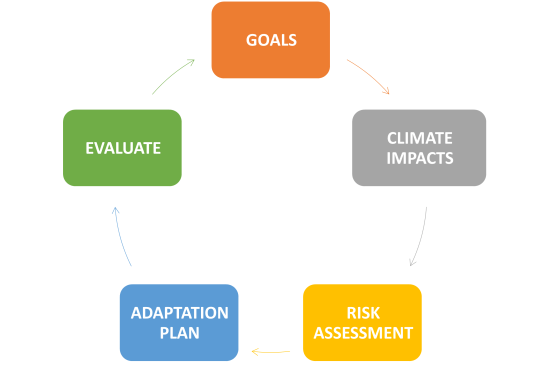
This tool is specifically designed to help Vermont farmers engage in the climate adaptation planning process, with state-specific resources and climate projections.
A comprehensive guide to business planning for farmers, pulling from all available resources, including farmers and other business experts.
This 2015 report provides an overview of regional agriculture and forest system sensitivities to climate change and adaptation strategies, a greenhouse gas emissions and mitigation profile for the region, and a summary of USDA resilience efforts.
A comprehensive resource on infrastructure considerations when building new or remodeling replacement/heifer housing.
State-specific summaries and key messages on the effects of climate change.
An in-depth view from 2021 at the effects climate change will have on Vermont, the state of Vermont's food system, and key actions Vermont farmers can take to adapt.
The Vermont Climate Assessment (VCA) of 2014 paints a vivid picture of a changing climate in Vermont and calls for immediate strategic planning to sustain the social, economic and environmental fabric of the state.
A DIY whole farm planning process designed especially for small- and mid-scale diversified operations that will help you reduce the risks and capture new opportunities created by more variable weather and extremes.
The New England Adaptation Survey draws upon the experience of 193 fruit and vegetable growers surveyed in 2017 and 2018. It explores emerging adaptive management strategies, perceived climate related risks, and adaptive capacity.
This fact sheet outlines the basic rotations and potential crop choices of the Alternative Continuous-Cover Forage system (ACCF), describes how to implement the system, and provides a summary of its environmental and economic benefits.
The USDA Plant Hardiness Zone Map helps growers select perennial plants based on average minimum winter temperatures.
USDA Service Centers provide access to Farm Service Agency, NRCS, and Rural Development services at one location.
NTT is a web-based tool to estimate nutrient and sediment losses under different management scenarios at field or watershed scales. Users define and compare scenarios for a given area of interest to estimate NPK losses, erosion, and crop yields.
A summary of agricultural IPM methods, with a list of additional resources for tracking and managing pests and learning more about IPM for farms.
Tools to explore cover crops in the Northeast, select species, calculate nitrogen credits, and more. Cover crop selector tool gives recommendations based on your specific site and soil conditions. Website also includes further cover crop resources.
Powerpoints and proceedings from all presentations at the 2024 New England Vegetable and Fruit Conference in Manchester, New Hampshire.
Weather and science driven integrated pest management. A site that links data from weather stations across the Northeast. Includes forecasts by crop or by pest. Especially useful for orchards, but there are vegetable pest models as well.
A visual guide covering manure management and livestock environmental issues, including nutrient application, public perception, best practices, and facility infrastructure.
These economic tools and resources focus on silvopasture, irrigation and tarping. Resources were designed for small, medium, and beginning farmers in in New England to address challenges in adapting to a changing climate.
This hour-long free webinar is about the impacts of climate change on maple syrup production and how maple producers can best adapt.