With a strong history of campus protests against racial discrimination, war, police brutality, apartheid, and other injustices, University of Vermont students in 2026 remain as engaged as ever. Some are also looking ahead, considering how their activism might manifest after graduation. Within the College of Education and Social Services, faculty are fielding hard questions from soon-to-be educators:
Can I be fired if I’m arrested at a protest?
Can I be fired if a parent complains that I’m teaching about race and racism?
What do I do if ICE shows up in my classroom?
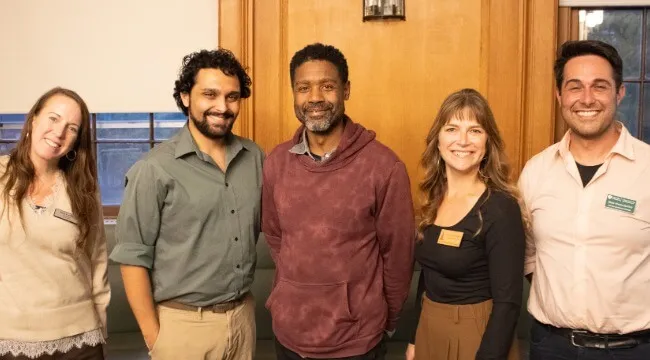
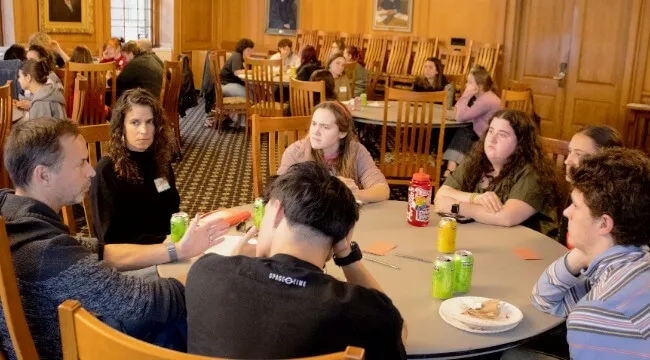
At a recent CESS forum, three panelists from the ACLU Vermont, Vermont NEA, and the Education Justice Coalition of Vermont discussed how an ever-shifting agglomeration of laws, contracts, and policies shape educators’ rights.
“The reality is that teaching is and always has been political,” said CESS associate professor Jessica DeMink-Carthew, who co-moderated the event with CESS' Shane Abrams. “A lot of this work is very nuanced, contextual, and personal. That can make it really hard to have a one-size-fits-all answer.”
Kelly Everhart, a lawyer with the Vermont NEA, began the conversation with a reflection on the first amendment within the public sector.
“There’s no freedom of speech in terms of curriculum,” she said. “There are core things that you must teach. Not everyone will become an educator in Vermont, and those core things can vary depending where you teach.”
About 25 states, she noted, prohibit teaching divisive concepts, a murky clause spanning race, gender identity, and sexual orientation. She explained how Vermont works to maintain academic freedom through collective bargaining. But according to the National Education Association, researchers are seeing a “spillover effect” into states without censorship laws, where educators remain fearful and unsupported. Additionally, the NEA says, many teachers subject to these regulations go beyond what the law requires, fearful of being fired.
Everhart advised that teachers engage in political activity such as protests independently of the school systems they serve.
“Identify as a citizen,” she said, “not as an employee.”
She added that comments made while protesting should never be offensive or inflammatory.
Jordan Souder, a policy advocate at ACLU Vermont, provided specifics on how the Vermont state legislature is responding to threats directed at educational institutions, citing Acts 150 and 125, which respectively prohibit civil arrest in sensitive locations, such as learning institutions, and create immigration protocols in Vermont schools.
“These measures are in place to try to protect our community spaces and ensure that we are protecting the most vulnerable among us,” he said.
He cautioned that the laws did not provide absolute protection, specifically noting that Act 150 does not prevent an arrest with a valid judicial warrant.
Infinite Culcleasure, a second-grade teacher at Burlington’s Flynn elementary as well as an Education Justice Coalition of Vermont affiliate, demonstrated how he considers a long-term commitment to his students a form of protest more viable than outspoken activism.
“I do think it matters that for many students, I am their first Black teacher,” he said. “And when the kids see me, we have a bond. So I’m going to try to stick around as long as I can.”
Everhart agreed that educators’ emphasis must remain on facilitating opportunities for students’ development, rather than risking interference or retribution with inappropriate expression of personal beliefs.
“Fundamentally, it’s your job to support folks,” she said, including “students who might want to be activists.”
While committing to this slower, big-picture impact, the panelists stressed the importance of voting for legislators who support education, engaging with school boards, and relying on resources such as the local and national organizations they represent.
Ultimately, they imparted that successful advocacy as educators depends on patience, strategic organization, and creativity, including the consideration of alternative, less visible systems of support.
“I’m not taking a lot of overt risks these days,” Culcleasure said. “My ancestors have been in this country for a really long time and have learned how to do a lot of organizing and activism under the radar. And so that work is still happening. It still exists.”