“A More Open Entry”
In the inaugural issue of The University of Vermont’s bygone student newspaper The Gadfly, an editorial calls for “fresh thinking” on educational systems. Published in November 1985, the article envisions “a more open entry into society” and insists “education be defined more broadly.” Amid the “complicated and confusing conditions of our times,” the editors write, “our aim is to multiply the paths of growing up.”
In hindsight, the imminent arrival of a special education project and field research coordinator named Katharine Shepherd registers as a direct response to those demands.
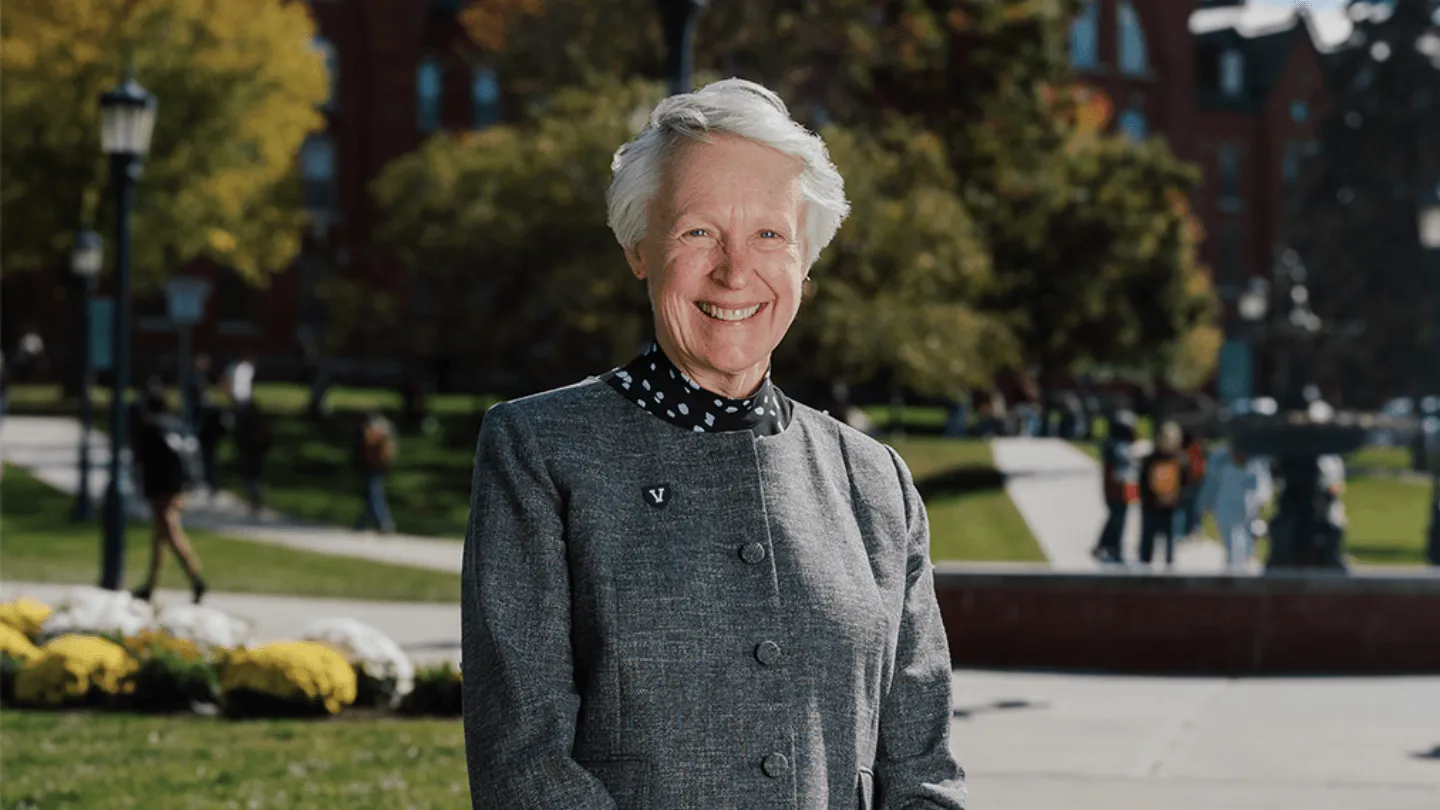
Forty years later, Dr. Shepherd, known to all as Katie, is retiring from UVM as the Dean and Levitt Family Green and Gold Professor of the College of Education and Social Services. After four decades of research, collaboration, and leadership dedicated to expanding opportunities and influencing educational and social practices toward more visionary, equitable, and impactful results, Dean Shepherd is leaving her long commutes from Lincoln, VT in the rearview mirror as she settles into a new life as dean emerita.
Shepherd’s retirement comes at no less of a “complicated and confusing” moment for education and the university. Federal and state funding, policy, and demographic challenges amount to serious questions for UVM and for CESS. But despite these adversities and the loss a deeply respected leader, Shepherd says her four decades on campus inform a cautious optimism.
“We have things at UVM and in our college that set us apart,” she says. “We have strong core values that we know and that link us together. When you have those kinds of unifying values, that’s how you figure out what you need to do next.”
“Access in Education”
The foundation of Shepherd’s conviction was established early on. Growing up in Stow, MA—in the house where her mother still lives—Shepherd recalls regular guests who needed a safe place to stay.
“I don’t think it was every day,” Shepherd says. “But there were people who came through, and we understood that this was part of our giving back to people who have other kinds of life circumstances.”
Her parents later founded what is now the Shepherd Higher Education Consortium on Poverty, a non-profit that creates opportunities for undergraduates to better understand and help solve the social complexities of poverty.
In high school, she taught swimming and horseback riding at summer camps that specialized in support for children with physical disabilities and introduced young students from Roxbury, MA to the rural experiences beyond Boston.
“My love of working with kids started really early,” Shepherd says.
As an undergraduate student at Middlebury College, a community engagement program led her to become a Big Sister for a young woman at the Weeks School, a now-closed juvenile rehabilitation center in Vergennes, VT. During a January term at Berea College, in Kentucky, Shepherd worked with Upward Bound, a federal program designed to help low-income and first-generation high school students prepare for and graduate from college.
“I was really taken,” Shepherd says. “We did a couple of tours out recruiting, trying to get kids interested in going to college. They were kids from different backgrounds, and I began to develop not only a love for teaching, but this idea of access in education.”
Shepherd acknowledges the irony of helping others plan their transition into adulthood at a time when her own path seemed “wavy and circuitous,” but she emphatically credits her mentors for guiding her toward the opportunities that would define her career.
“Now You Can Do This”
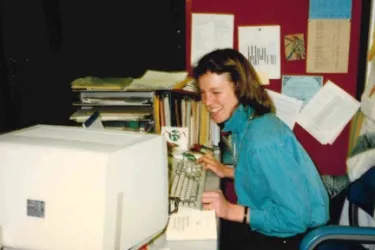
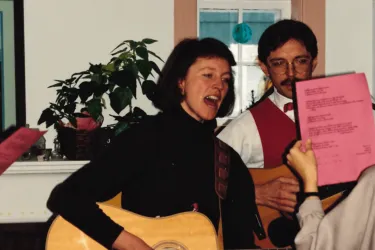
Shepherd’s principal mentor was Susan B. Hasazi, a 34-year CESS faculty member and internationally recognized special education scholar, who passed away in 2019. Former Vermont Education Commissioner Marc Hull connected Shepherd with Hasazi. She offered Shepherd full tuition for her master’s program paired with a salary that doubled what she was making as a paraprofessional.
“I was fortunate to have people at just the right moment say ‘Now you can do this,’” Shepherd reflects. “Susan would say ‘Now you can help me write a grant.’ And then ‘Now you need to get your doctorate. Now you can start teaching classes.’ Each time I thought, ‘Oh, I don’t know about that.’ And then I did it.”
At UVM, Shepherd earned her Master of Education degree in 1985 and became a Doctor of Education in 1997. She has continued Hasazi’s legacy of close mentorship with CESS faculty throughout.
“I am incredibly fortunate to have Katie as mentor,” says UVM Professor of Special Education Shana Jackson Haines. “From my early days in the Special Education program, when she was the program coordinator, to her days as co-chair of the Department of Education, associate dean, and dean, Katie has brought people into a community with an open heart and gratitude for each individual.”
Haines and Shepherd worked with other national thought leaders on Families and Professionals: Trusting Partnerships in General and Special Education, a Pearson-published textbook now in its eighth edition. With UVM Associate Professor of Special Education Colby Kervick and scholar Djenne-amal Morris, Shepherd published The Art of Collaboration: Lessons from Families of Children with Disabilities in 2016.
“In collaborative projects like co-authoring a textbook, writing a huge grant proposal, or conducting community-engaged research,” Haines says, “Katie’s can-do attitude keeps challenging experiences fun and positive.”
“Doing it for a Purpose”
Shepherd cites the skills sharpened by the rigors of special education—running meetings; problem solving; collaborative consultation; delivering services with limited resources—as key to strengthening her leadership acumen.
“If you map all those things onto being a dean, there’s a lot of overlap,” she says. “In special education, you’re doing it for a student. In leadership, you’re doing it for a purpose.”
Shepherd became CESS Dean in 2023 after serving as interim dean since 2021. In that time, she has strengthened the college’s programming by working closely with faculty to institute practices that are critically relevant to a rapidly changing world.
“Katie’s legacy lives in the people she’s touched, the systems she’s built, and the humanity she’s brought to leading the college,” says CESS Board of Advisors Chair Shawna Wells. “Her leadership has helped CESS look honestly at what’s changing while staying clear about what’s worth carrying forward.”
Embracing innovation has been a key tactic of Shepherd’s strategy. Though identifying herself as a “very basic” Artificial Intelligence user, she sees a complete understanding of the technology—its potential as well as its detriments—as essential to its successful incorporation into classrooms going forward.
“We need to be thinking about the skills our future teachers, social workers, counselors, and other human service providers are going to need when they go into those roles,” she says.
Specifically, she cites the potential for tools like simulations as a better means of preparing students for real-life experiences, providing a controllable setting with close monitoring and predictable outcomes. At the same time, she does not see AI as a threat to CESS’ signature commitment to experiential learning.
“When I read studies about professions that are less negatively impacted by AI,” she says, “it’s the ones we’re preparing students to engage in. But that doesn’t absolve us from doing a really good job of helping them think about what AI means for those professions.”
“Putting the Right People Together”
“Katie Shepherd embodies the very best of UVM,” says UVM President Marlene Tromp. “Even before I arrived, I came to know her as a member of the outstanding search committee that drew me to this university. And as we have worked together since, I have seen firsthand her remarkable ability to bring people together around a shared purpose. Her leadership of our strategic planning process reflected the same qualities that have defined her career: deep listening, genuine collaboration, and an unwavering commitment to helping UVM serve all its students and meaningfully contribute to the health and vitality of our state. I am so grateful for all she’s done for UVM.”
In the university’s new Green, Gold, and Bold strategic plan, innovation is at the core of the second pillar: Study What Matters. In concert with the other pillars—Forge Bold Futures; Create Opportunity; Enable Excellence—the strategic plan’s framing could be read as chapters in the Dean Shepherd playbook. The comparison would not be entirely coincidental.
In the fall of 2025, President Tromp and Provost Linda Schadler asked Shepherd to chair the strategic planning committee that would bring the new plan to fruition. Her role involved leading a committee of 30 people responsible for coordinating over 1,000 participants across over 53 listening sessions.
“It was such a joy to listen to all kinds of folks with all kinds of roles,” Shepherd says, reflecting on the process. “I do a lot of work at our leadership team level in the college and the council of deans, but to be involved at that level was very rewarding.”
Longtime CESS Board of Advisors member Sanford Friedman understands why Shepherd was chosen.
“Katie has a knack for putting the right people together,” he says. “She’s more democratic than prescriptive or dictatorial.”
Having literally written the textbook on collaboration, Shepherd’s list of the national, state, and community organizations that she has engaged with claims over five pages—out of 30—in her Curriculum Vitae. Among her many roles, she was president of the national Higher Education Consortium of Special Education, has been a task force and steering committee member for Vermont’s Agency of Education, chaired the university’s Our Common Grounds operations team, remains on the board of the College of Agriculture and Life Science’s Morgan Horse Farm, and served on a subcommittee of the Curricular Affairs Committee of the Faculty Senate. This last position helped establish what became UVM’s first diversity curriculum requirement, which has evolved into one of the three core tenets of the university’s Catamount Core Curriculum.
“I’m really proud of that,” she says. “It has impacted the curriculum of all students and is really critical to how UVM leans into and lives its values-based proposition.”
While acknowledging that much work remains toward a more inclusive campus, Shepherd considers how these values have helped nurture an institution that looks different from the one she arrived at in 1986.
“It’s a lot more diverse in terms of who’s here,” she says. “That’s true for faculty, staff, students, and administration.
“You See This Too with Marlene”
In the past 40 years, Shepherd believes UVM has grown remarkably toward a common mission.
“When I arrived, it felt like we were a bunch of islands,” she says. “The university has become more unified in its identity, more interdisciplinary, more aware of what today’s version of the land-grant mission means.”
Shepherd recalls UVM’s collegial atmosphere in the late ’80s, when she and the same group of special education faculty members would eat lunch together daily. She still sees an atmosphere of key interpersonal connections, but praises the generational shift toward a more holistic organization as a “really good thing.”
“We need to be thinking together at the enterprise level to work our way through the challenges we have,” she says.
President Tromp’s leadership, she believes, is particularly auspicious for UVM.
“I’m so grateful that we have a president with a significant amount of optimism in her DNA,” Shepherd says.
In addition to the two leaders’ shared optimism, CESS Board of Advisors member Jerry Hipps notes another similarity between Shepherd and Tromp. Recalling Shepherd’s interview process for the dean position, Hipps says that what struck him about Shepherd was her uniquely informed and prescient foresight.
“She understood where CESS was and what it needed,” he says. “In a leadership position, you have to have some kind of vision for where you want the institution to go. And you see this too with Marlene.”
As the university considers candidates for continuing CESS’ trajectory of impact through foresight, innovation, and experience, Shepherd is reassured by an ontological confidence preceding her more empirical hopefulness.
“When I think about the fields of education, social services, counseling, human services,” she says, “all those places are engaged with very complex social problems and systems. This sounds a little too grandiose, but to me, humanity depends on moving forward through those things. I think how we support one another and how we bring more humanity to the world is honestly a big reason why we're here.”
“Don’t Fill Up Your Dance Card”
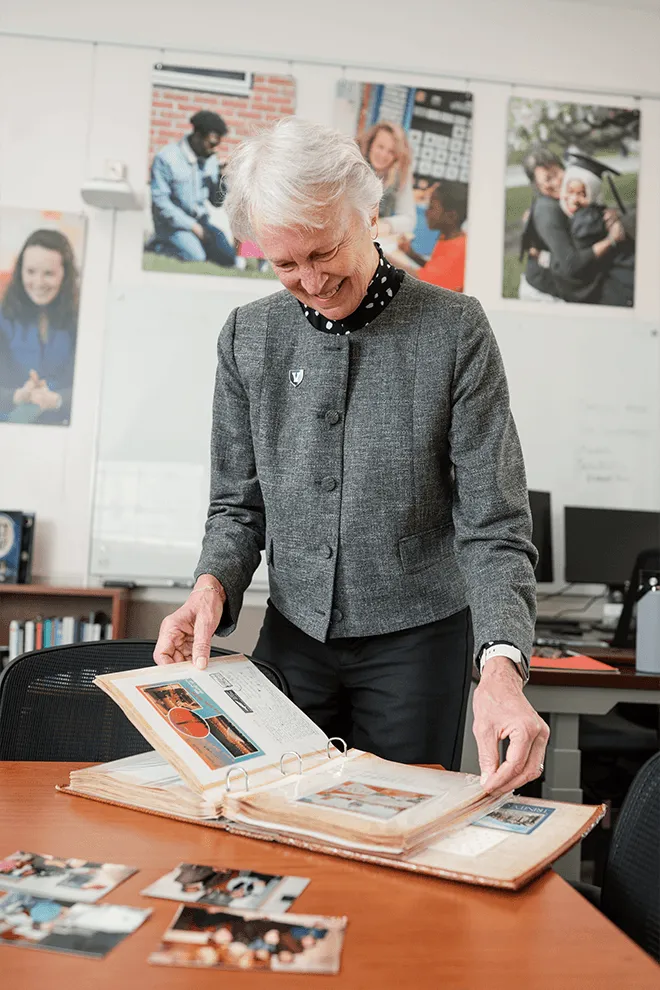
As Shepherd begins the migration from her Waterman office, collecting the many awards, photographs, and books tidily displayed against an autumnal view of the University Green, she has been careful not to commit to specific plans just yet.
“Friends who have retired say ‘Don’t fill up your dance card right away,’” she says. “So first I just need to figure this out.”
She plans to stay closely connected with UVM and to be available for guiding the ongoing strategic plan implementation. And despite her reluctance to tether her forthcoming availability to specific pursuits, she has clear directions in mind: more time with her family and enriching her community participation.
“I love the place where I live,” she says of her Addison County community. “I really want to think of a way to give back.”
Whether this exchange transpires through mentorship, working with human service outlets, or adaptive skiing, she is confident that the right opportunities will find her; though, considering her decades of unprecedented foresight, Shepherd will surely find them first.
To honor Katie’s service with a donation to the new fund established in her name, visit https://go.uvm.edu/giveshepherd.