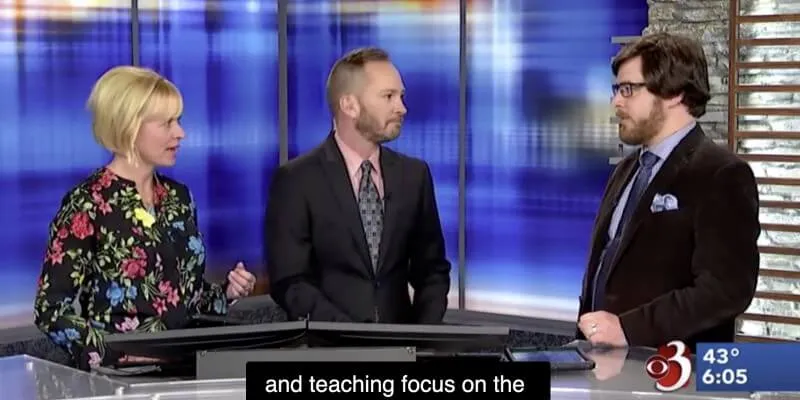
Political Science Professor Peter Henne's research and teaching focus on the Middle East and global religious politics. Specifically, he studies how ties between religion and state affect politics, and his new research explores how states use religion as a foreign policy tool. His book Islamic Politics, Muslim States and Counterterrorism Tensions, (Cambridge University Press, 2017), analyzes how Muslim states' relationship with Islam affects their counterterrorism policies.
Since the killing of Soleimani, Henne's opinion has been sought by several media outlets (see links below). We asked him some additional questions about a way forward in the wake of the Iranian crisis touched off by the killing of General Qasem Soleimani. Is there one? Are there common interests between Iran and the United States? What might a successful foreign policy towards Iran look like?
Who was General Qasem Soleimani?
Soleimani was the leader of the Quds force, which is a paramilitary organization in the Iranian Revolutionary Guard corps. It’s almost like a separate body within the government that reports directly to the supreme leader, this religious authority. So Soleimani was basically in charge of all of Iran’s meddling throughout Middle East. He would get involved in conflicts throughout the region, he would support friendly forces, and coordinate attacks on enemies like America. It’s a really big deal and his loss is a major blow for Iran.
Might there be some residual anger against the United States that leads to war in the region as a result of Soleimani’s killing?
The Iranian government does not want to go with war with America . . . they are going to have to look tough for their own domestic audiences. So there may be some form of retaliation, it could be something dramatic like a kidnapping of American citizen or terrorist attacks. But what we're likely to see are more constrained attacks against U.S. facilities. It's not going to be a good situation for American troops or people in the Middle East, but a full-scale war is unlikely.
Are there any shared interests between the United States and Iran?
A big one is peace. Beyond that there’s a lot of economic gain to be had if we lifted sanctions on Iran and worked with them. They have a lot of oil, and we have a lot of goods to buy—they are also not big fans if ISIS so we could cooperate there.
What about the downing of the airliner? It was judged an accident but could tensions in the region have led to a hair-trigger mentality there?
I don’t know the technical details, but the plane took off shortly after Iran launched a rocket attack, so they were probably waiting for some kind of American response. Do you think you could you tell the difference between a fighter jet and a 737 at night? So it seems like it was definitely human error. Of course the fact that it took so long for Iraq to admit it, and tried to claim it was mechanical failure, shows how unaccountable the regime is.
What would a successful American foreign policy towards Iran look like?
It depends on what your goals are. The Trump administration seems to want regime change, though there’s no diplomatic path to do that. The Obama approach, which I think worked better, was focusing on Iran’s nuclear weapons program. It basically worked—it kept the Iranian nuclear program check. The problem is it didn’t deal with Iran’s human rights violations or their broader military policy. Iran was still a destructive actor, but the hope was that the negotiations around the nuclear programs issue would be a starting point we could expand on.
What are the prospects of the Iranian government being overthrown by its own people?
We’ve had reformist movements before, like the Green Movement in 2009. Iran has such a powerful repressive capacity with these paramilitary militias. It is significant that we’ve seen such widespread protests which are specifically calling for the supreme leader to step down. That’s a huge deal—not just the president, but the person who represents the whole government. Some of the hope is that a reformist could be elected in Parliament and in the presidential election and change the country from within, but that’s hard to do that with U.S. being so confrontational. President Rouhani went into the last elections saying “look if we do this nuclear deal with the Americans it will improve our economy.” Then we pulled out of the deal which ended up hurting Iran, so it will be harder for the next reformist to make the same case.
The protests after the killing of Soleimani were very anti-American, whereas the protests after the downing of the airliner were directed against Iranian leadership. How do we interpret this?
A lot of Iranian people are proud of their country but aren’t really happy with their government. So when America attacked them they responded, but they were not about to give complete devotion to their own government. A vast majority of things in international relations tend toward inertia—they tend to stay the same. so I don’t think protests will lead to fall of regime. But the regime realizes it is losing control. They can’t just tell the people what to do anymore.
Other interviews with Peter Henne:
Jan. 3, WCAX-TV, Burlington, following the assassination of General Qasem Soleimani
Jan. 8, WCAX-TV, Burlington, following the downing of Ukrainian airliner
Jan. 8, WDEV radio interview on the Dave Gram Show