Could a part-time gig spent waiting tables or setting up computer networks have anything to do with a future career in political science or sociology? A new UVM College of Arts and Sciences (CAS) course called Professional Contexts aims to answer that question by serving as a bridge between work-based experiences and future career-related opportunities.
Led by Sophia Trigg, director of CAS’s Office of Experiential Learning and Discovery, the class allows students to earn credit as they reflect on previous experiences and map out a path for their futures. To do this, the students review the jobs they have held and determine how the work has impacted them—from the skills they’ve learned to what they’ve discovered they like and dislike. By doing this kind of analysis, they are better prepared to sell their story to future employers and can narrow down their options, making it easier to pick a career path to pursue.
Taught 85 percent online and 15 percent in person, the Professional Contexts course features such assignments as future mapping and BuzzFeed–style quizzes. To help students develop networking and interviewing skills, the in-person classes also host speakers from the UVM Career Center, which helps connect potential employers with students, and the UVM Office of Community-Engaged Learning (CELO), which offers courses to help students develop the skills and experience needed to participate in the world as engaged citizens.
Trigg adds that with so much uncertainty in the world, it can be hard for students to drill down to what is truly important to them as individuals as they prepare to enter the next stage of their lives. “Recognizing the work-based experiences that many students undertake for financial or personal reasons is a proven way to help young people knit together their academic and non-academic lives and give worth to their status as impactful community members,” she says.
The four students below all eagerly signed up for the Professional Contexts course when it was offered for the first time last fall. Each of them came away with valuable tips for making the most of their remaining undergraduate career and creating a clearer professional path for the future.
The Students
Rubi Espejo
Year: Junior
Major: Religion and political sciences
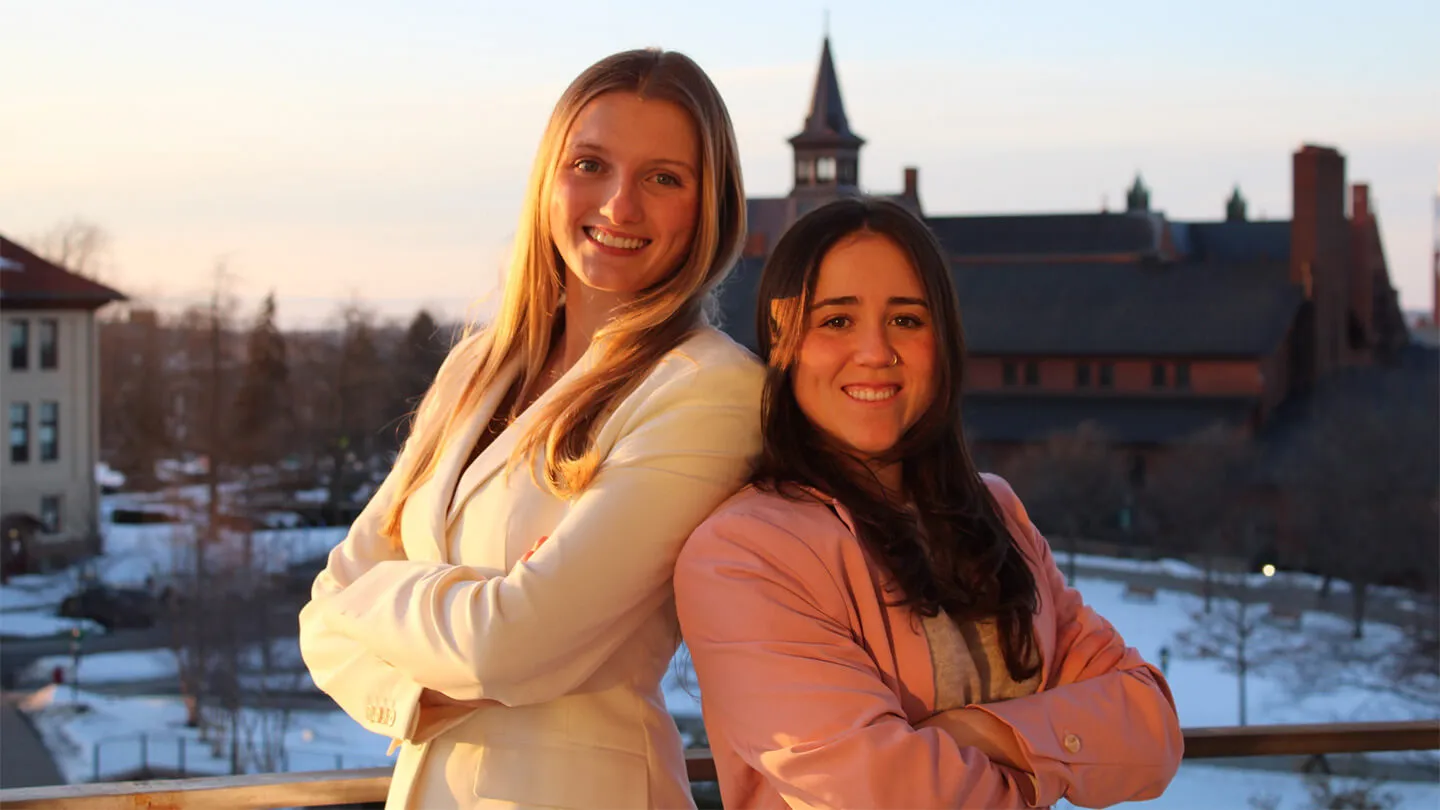
Rubi Espejo (shown above) currently serves on the Student Government Association and has been chair of the committee on Our Common Ground Values for almost a year. She also has worked three part-time jobs—as a waitress at a local outdoor seafood restaurant, as a line cook/manager at a breakfast and lunch spot, and in catering in Fairfield County, Connecticut.
The email about the Professional Contexts course arrived at the end of Espejo’s sophomore year. “It came during a time when I was feeling uneasy about what I wanted my path to look like in the second half of my collegiate career,” she says. “I was hoping it would help me envision what I want for the last two years of college and help me think about post-grad as well.”
Espejo learned a lot in the course about the many kinds of career support UVM provides for students. She especially enjoyed when the representatives from the Career Center and CELO came to talk to the class about the resources offered by those offices, and how they themselves got to where they are today.
Carter Buckley
Year: Sophomore
Major/minor: Political science major, global studies minor
Carter Buckley spent this past summer working at Camps Fatima and Bernadette in Gilmanton Iron Works, New Hampshire. He worked for a week with special-needs adults, then spent the rest of the summer as a counselor, working with kids ages 5 to 15 on aquatics safety and faith formation.
When Buckley saw an email advertising the Professional Contexts course, he was intrigued by the idea of using what he learned in his summer work experience to better prepare himself for the professional world. “I thought the course would be very fitting as I approach my junior year,” he says.
“Over the semester, our class covered a variety of topics ranging from personal reflections on prior work experience to the proper etiquette necessary to request a letter of reference,” Buckley says. He adds that the course made many concepts of the professional world more tangible for him and improved his outlook toward the future.
Shea Hollwedel
Year: First-year
Major: Psychology
Over the summer, Shea Hollwedel worked at Badger Day Camp in Larchmont, New York, as an assistant counselor.
Hollwedel’s CAS professional advisor recommended the course to her. “I wanted to talk to other people who had like-minded ideas about working and careers, and to potentially build connections,” she says.
In addition to learning to use her past work to make her story more interesting to future employers, Hollwedel took away many helpful tips for networking. “I am going to use Sophia’s tips to make the most out of all of the jobs and connections I create in my future,” she says.
Sean Pouncey
Year: Sophomore
Major/minor: Sociology major, law and society minor
His current part-time job at Starbucks and a full-time summer job at C2 Technology Group qualified Sean Pouncey for the Professional Contexts course. At Starbucks, Pouncey works as a barista/barista trainer, and at C2 he works as a network helper, where he assists in the set-up and execution of network cabling projects.
Pouncey was referred to the course by a colleague. “I was interested in how I could apply my previous work experience to a course designed to aid my future endeavors,” he says.
Of all the things Pouncey learned in the course—including networking skills and how to acknowledge his civic impact—discovering how to identify his philosophy of work was the most impactful. “Being able to focus my vision on how I want my career to be structured around my life was very helpful,” he says. “Sophia did a fantastic job of engaging the class with the material and providing us with the resources to apply the concepts to our own lives and experiences.”
Professional Contexts Course Requirements and Registration
Students don’t have to meet any academic prerequisites to take Professional Contexts, a one-credit course, but must have completed at least 80 hours of professional and/or co-curricular work. Any work experience qualifies, including club leadership, non-credit internships, and paid part-time or seasonal jobs. Interested students should enroll during fall registration in April and email a short description of previous qualifying work experience to Sophia Trigg.