For many people, college is prime time to learn more about what they want and don’t want from life. And at some point, most students within the University of Vermont (UVM)’s College of Arts and Sciences (CAS) uncover a love for something they never imagined they would enjoy. Case in point: All the students below have—sometimes to their surprise—developed a passion for research.
They’re in the right place. In 2025, UVM was named an R1 Research Institution, putting us among the most highly regarded universities for research in the country. So much of that exemplary work of discovery and innovation is happening right here in CAS every single day, and these eight CAS undergrads are right in the thick of it all.
From the shores of Lake Champlain to the surface of Mars, from 19th century literary circles to present-day local schools, CAS students are doing the kind of work that answers important questions, spurs new ones, and creates new ways of understanding the world around us.
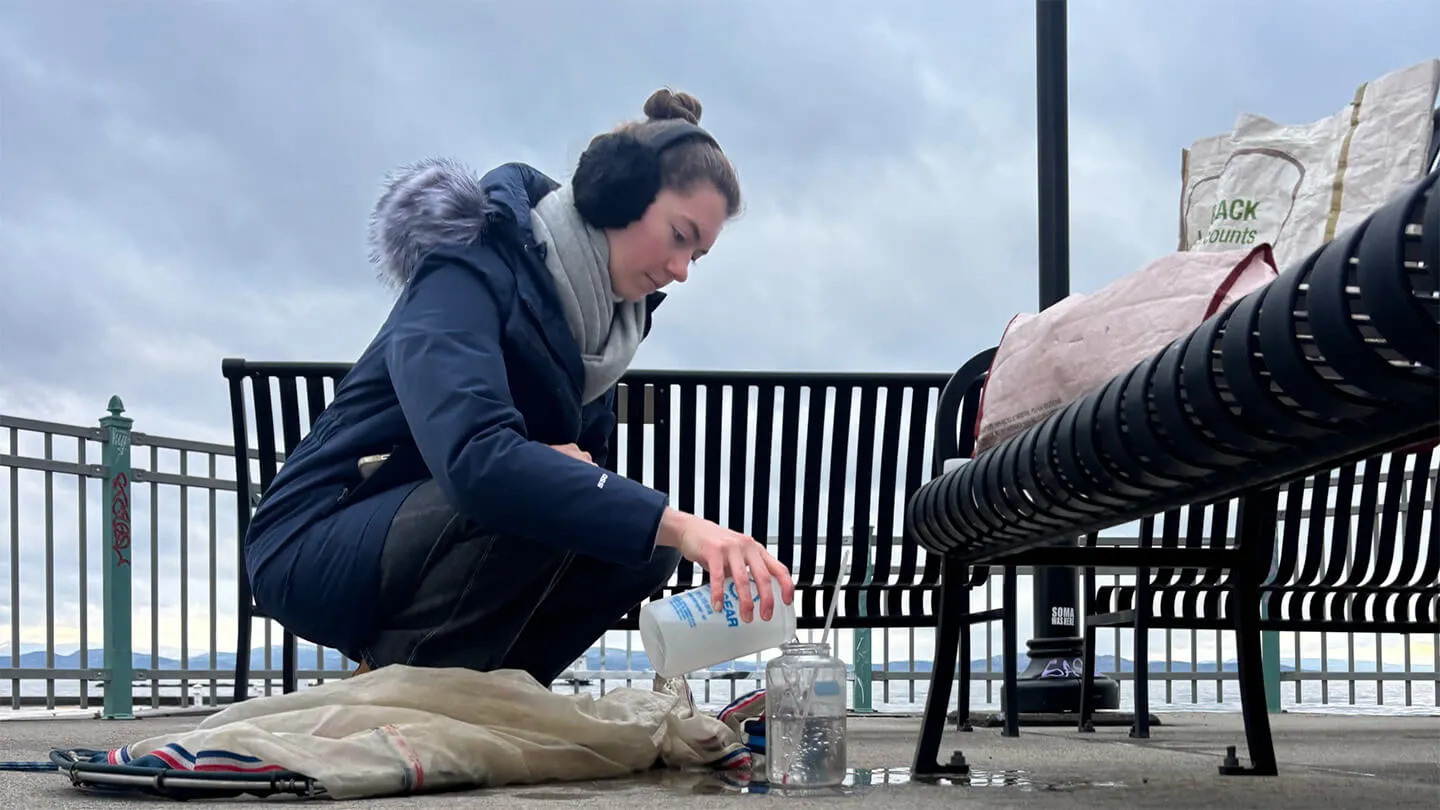
Studying the Effect of Road Salt and Warming on Life in Freshwater Lakes
Name: Sydney Sharp (shown above)
Year: Senior
Major/minor: Biological science major, plant biology minor
Research overview: “My project looks at how the concurrence of salt and heat stress impact copepods (freshwater zooplankton) and whether different salt ions have an effect on which ones survive. Increasingly frequent winter warming events cause the environment to alternate from freezing to melting, which can have a major impact on lake ecosystems. Specifically, road salt application followed by melting leads to runoff and increased salinity in freshwater ecosystems, with detrimental effects—like reduced heat tolerance—on zooplankton communities.
“Stressors of high salinity may occur in an isolated manner or in tandem with warming events. This project has tested the effects of major ions found in road salt on survival and thermal tolerance in two freshwater copepod species, Leptodiaptomus minutus and L. sicilis, both of which are present in the lake during different times of year. Limited work has been performed on freshwater copepod response to salinity, and my work aims to fill that gap to help inform policy and management to protect our lake ecosystem.
What has surprised her: “The most surprising aspect of my research has been the need to adapt and learn as I go. Over the course of my project, we ran into a multitude of challenges, but this has led to the development of a variety of creative solutions. Furthermore, our project found the winter species (L. sicilis) to be less resilient to salt stress than the fall species (L.minutus) even though L. sicilis has historically been found in a number of highly salinated lakes. Not only that, but we found no ion-specific effects in L.minutus, but a much stronger effect of magnesium on L. sicilis.”
What she’s gained: “This project has taught me about the challenges and rewarding aspects of experimental research. I have learned so much about experimental design, performing work both in the field and in the laboratory, and overcoming unforeseen obstacles. Personally, I have become more confident in my ability to perform experimental work, and I am deeply grateful to the members of Pespeni lab and fellow undergraduate students who have been helping me throughout my project. I hope to continue working in research after graduation and I believe my experiences with this project have prepared me for whatever comes next in my career.”
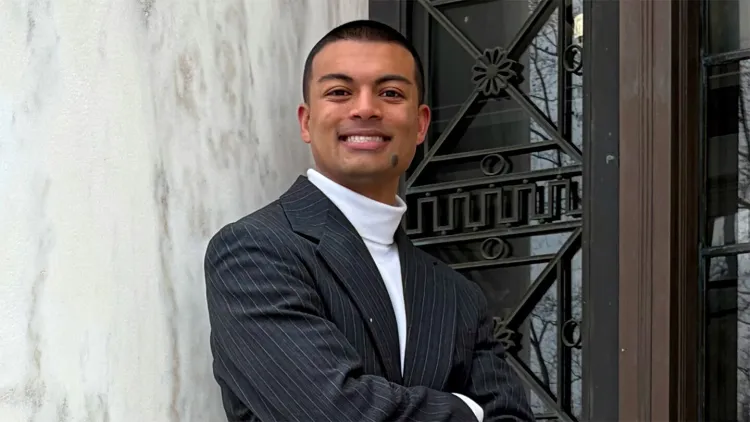
Exploring Links Between Adversity and Youth Mental Health
Name: Avinabo Poddar
Year: Senior
Major/minor: Psychological science major, biology minor
Research overview: “I work in Dr. Alexis Brieant’s Family, Environment, Resilience, and Neurodevelopment (FERN) Lab, where we study how adversity affects youth neurodevelopment and mental health. I have helped with projects studying Vermont teens' perceptions on mental health and neuroscience research participation as well as with a systematic review examining the role of community cohesion on adolescent mental health.
“Last summer, I received a SURF award from the FOUR office to complete an independent project investigating the protective role of school support in the relationship between changes in racial discrimination and youth cognitive outcomes. Surprisingly, I found that increasing levels of discrimination were associated with better cognition in highly supportive school environments. I am in the process of completing a manuscript of this study for publication and will be presenting my findings at the Society for Research on Adolescence Conference in Toronto this month.
“I am also completing an honors thesis examining how amygdala reactivity influences the relationship between parental warmth and adolescent depression. I found that the link between parental warmth and depression grows stronger as amygdala reactivity increases, highlighting a factor that may be used to inform future mental health-based interventions.”
What has surprised him: “What has struck me most is how much I’ve grown to enjoy research. I was originally drawn to the FERN lab to check boxes for my Honors College requirements, but I've ended up becoming much more invested than I expected. I have come to realize how diverse my research interests are, and I am very grateful to have a mentor who encourages me to pursue them. Although the research process can sometimes be frustrating, it is always satisfying to see things eventually come into place.”
What he’s gained: “My research has given me the opportunity to dive deeper into my major and make the most of my undergraduate learning experience. Classes usually give you a solid foundation of concepts, but research has allowed me to further develop my understanding through real world application of these ideas. My work in the lab has not only equipped me with the knowledge, confidence, and skills to succeed in grad school, but has inspired me to pursue a career focused on some degree of research when I grow up.”
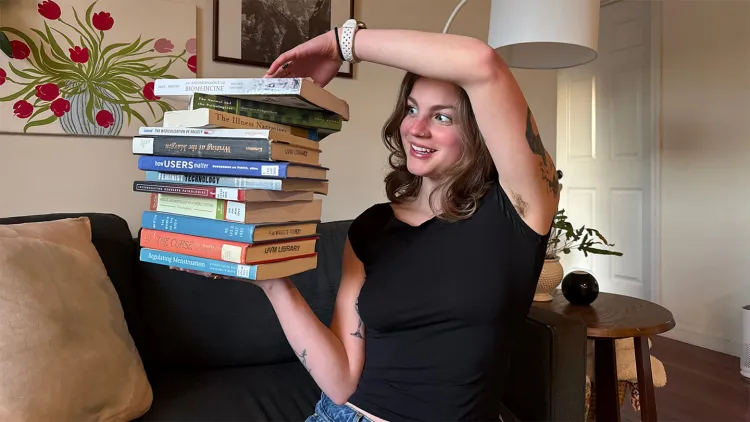
Rethinking How Culture and Stigma Shape Experiences of Menstruation
Name: Eva Therrien
Year: Senior
Major/minor: Anthropology major, Health and Society minor
Research overview: “My research seeks to understand UVM undergraduates' beliefs surrounding the use of oral contraceptives that are taken for the primary purpose of suppressing menstruation and whether they relate to cultural perceptions surrounding menstruation and gender. I argue that the creation, marketing, and use of oral contraceptives for this purpose illuminates that menstruation is pathologized within our society and health system and seen as unnatural and abnormal.
“Through this research, I found that societal attitudes that perceived menstruation as “gross”, “embarrassing”, “taboo”, and “secretive” caused participants to experience psychological anguish, mental weight, and stress when menstruating. This stress around getting a period was one of the main reasons someone would take oral contraceptives to suppress menstruation. Beliefs around menstruation's “unnaturalness” were internalized by menstruators, illuminating the role cultural beliefs play in constructing negative menstrual attitudes and influencing menstrual management practices.”
What has surprised her: “What surprised me most was how much participants had internalized these negative mindsets and attitudes around periods, and how they played such a large role in influencing their feelings about their own bodily processes. So many participants talked about feeling like they had to hide having a period or using products like tampons from others, as well as that it was "gross" and made them feel "undesirable”. I was also surprised at how many of the same people talked about the value of getting a period, and how they appreciated their period as a source of “feedback” about their entire body. It was so interesting to see these conflicting attitudes within participants' minds and how they influenced their actions, attitudes, and behaviors surrounding menstruation.”
What she’s gained: “I have gained a deep appreciation of shelving my own behaviors and beliefs when understanding others' actions and thinking. I have seen the glaring disparities and effects caused by the lack of research on the health, bodies, and experiences of those who are not men, and I feel passionate about advocating for women's health. Professionally, I have gained a new interest in understanding other health processes alongside the gender structures present within our biomedical health system, such as birth, postpartum mental health, and menopause.”
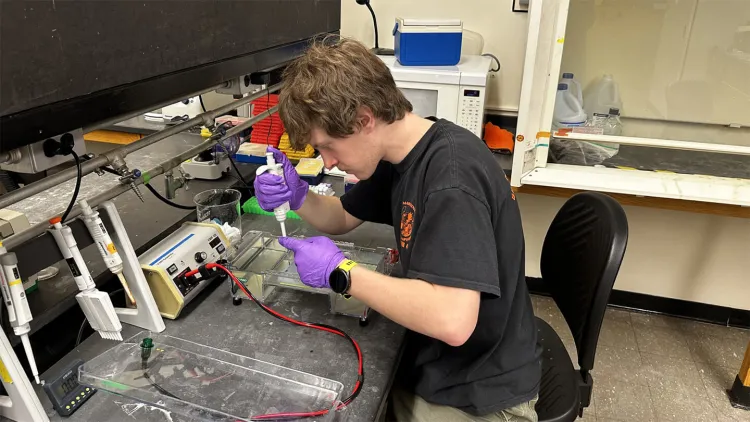
Using Gene Editing to Understand the Effects of Aging on the Nervous System
Name: Owen Piper
Year: Sophomore
Majors: Biology and plant biology
Research overview: “I am interested in the effect of insulin-binding proteins on the maintenance of the nervous system, using C. elegans (a soil-dwelling nematode) as a model organism. Zig-4 is a secreted molecule that binds with insulin-like peptides in a process conserved in most vertebrates. Lacking these binding proteins, C. Elegans develop defects in the nervous system during aging. I've been using the CRISPR/Cas9 gene editing system to introduce mutations and stop the proteins from binding to the insulin peptide. Recently, I've been collecting data on the nervous system with these novel mutations. I've found that animals lacking insulin peptide binding to zig-4 show the same nervous system defects as when zig-4 is gone altogether. I'm now currently working on strengthening this finding that insulin-binding proteins are required for nervous system regulation in C. Elegans.”
What has surprised him: “I love asking novel questions, brainstorming to formulate possible threads, and working alongside people just as eager to do so. The most interesting aspect of my time in lab has been the opportunities to build projects from the ground up. I’ve been very lucky to work with Dr. Tang, who’s more than willing to let his students drive their own projects, empowering them through his trust. I’m surprised by the amount of autonomy I’ve been given as a student researcher—it’s made the process of answering questions much more enjoyable.”
What he hopes to gain: “I’ve found a passion for research, and I can’t wait to pursue more in the future. I’ve worked as research technician, headed my own projects, and worked as part of a team. I plan to continue to ask questions and learn every day through my research.”
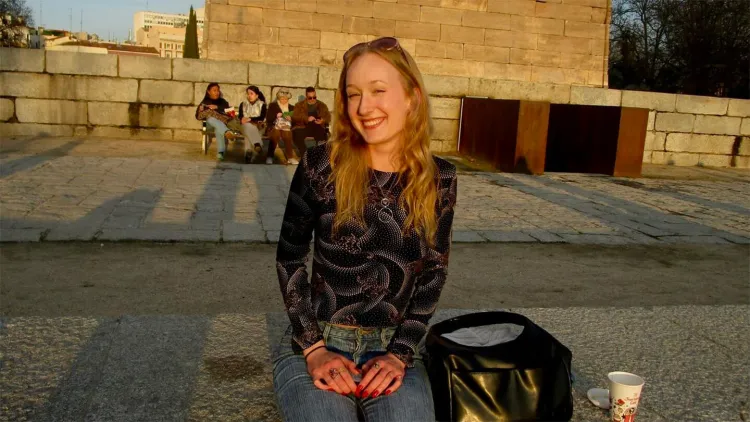
Determining How Three 19th Century Female Writers Became Part of the Literary Canon
Name: Sadie Pickering
Year: Senior
Majors/minor: English and Spanish double-major, psychological science minor
Research overview: “The research I'm doing is for my Honors College thesis, which is a cross-cultural inquiry housed in the English department. I'm writing a literary history about three nineteenth-century female authors—Jane Austen, George Eliot, and Emilia Pardo Bazán—and the ways they were received, responded to, and ultimately canonized. As a result, my research has essentially consisted of lots of reading. I've pored over a variety of primary and secondary sources in order to paint a picture of the gendered response faced by each of these authors. I've also extended my research into the twentieth century by exploring modern theories of canonization to establish how these authors were granted cultural value and significance.”
What has surprised her: “This level of critical reading is like any other kind of research, and I'm sometimes surprised by what I find! For example, Austen, Eliot, and Pardo Bazán all wrote novels that we can call realist. Realism was a nineteenth-century literary movement that revolved around objective description, psychological depth, and realistic characters. When I first started my project, I thought that writing realism was a kind of path to being taken seriously as a female author. However, I was surprised to learn through my research that this wasn't actually true.
“For Austen and Eliot, who were both English authors, realism wasn't enough to grant them access to high culture during their lifetimes. It was only during the twentieth century, amidst the changing role of literature, that my British authors were firmly established in the literary canon as two of the greatest novelists of all time. Spanish author Pardo Bazán's case was different, because the realist novel had gained status as Spain's national literature towards the end of the nineteenth century. Thus, through my research, I discovered how the historical and cultural contexts of these authors changed the context of their canonization.”
What she’s gained: “I've already learned a lot from this research. It has taught me self-discipline, flexibility, and the value of taking breaks. I've also used UVM's library and online databases extensively, learning how to fully take advantage of the resources around me! I hope to carry this experience and work ethic into my future opportunities.”

Developing a New Machine Learning Protocol to Study Signs of Water on Mars
Name: Mia Jane (MJ) Moline
Year: Senior
Majors: Geosciences and environmental science with a concentration in environmental geology
Research overview: “Gale Crater is an impact feature located just south of the Martian equator, which contains geomorphic evidence of past liquid water. Previous surveys of the region revealed features that indicate that the crater once housed an ancient lakebed, alongside mineral varieties which form only in hydrated conditions. As there are no human geologists on the surface of Mars, we rely on remote satellite imagery and limited chemical analysis from rovers and landers to determine the composition of the Martian regolith. I have developed a machine-learning protocol to classify satellite imagery from Mars Reconnaissance Orbiter into compositionally distinct clusters based on variations in wavelength values measured across the surface. Across the mapped region, four distinct mineral signatures were identified, corresponding to iron oxides, iron carbonates, sulfates, and mafic igneous material. This method provides a blueprint for the integration of orbital and rover investigation in the process of exploring remote extraterrestrial objects.”
What has surprised her: “The research I have completed thus far functions more similarly to a “proof of concept” rather than a body of discrete results, as my project concerns developing a new methodology rather than studying a new hypothesis. I was thrilled when the results from my satellite clustering mirrored prior surveys and were verifiable using the Curiosity drill samples as a ground-truthing tool, as I intended.”
What she hopes to gain: “I intend to continue pursuing research in my professional career, specifically concerning planetary geology, and comparative planetology. This project is funded by a grant from the EPSCOR NASA Space Grant program, which has connected me to some of the best planetary scientists in the field. I am starting a master’s program at the University of Iceland next fall and am planning to research Iceland’s diverse and geologically complex environments as potential analogs for the surface of Mars.”
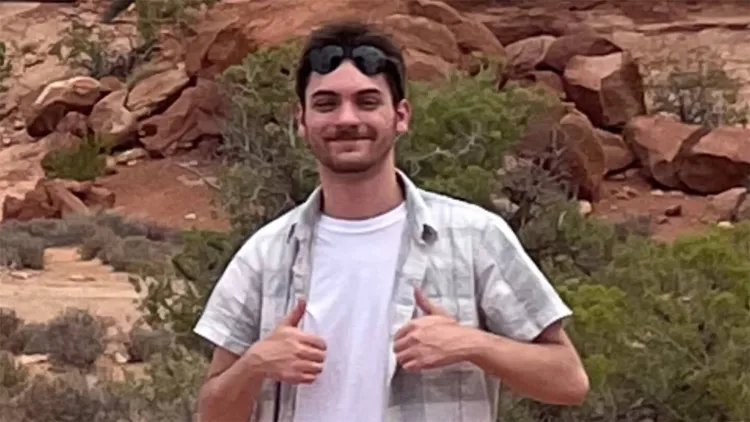
Investigating How Perceptions Influence Judgements About Health-Related Behavior
Name: John DePalma
Year: Senior
Major/minor: Psychological science major, Behavioral Change and Health Studies minor; enrolled in Clinical Psychology Accelerated Master's Program.
Research overview: “I am working on my honors thesis within the Cross-Cultural Lab, under the direction of Professor Antonio Cepeda Benito. My research analyzes the halo (where a positive trait influences the positive assessment of an unrelated trait ) and horns (where a perceived negative trait leads to a negative assessment of an unrelated trait) effects as a measure of health behavior stigma.
“We asked participants to rate how likely various individuals were to perform health-related behaviors (like drinking in moderation versus drinking excessively), then compared how more attractive versus less attractive individuals were scored on these behaviors. We wanted to see not only if those mentioned effects had any impact on their ratings, but also whether the gender of the person in the photo made a difference. The initial results seem promising, so we're gearing up for national distribution of the survey thanks to funding from the FOUR office and Department of Psychological Science.”
What has surprised him: “The most surprising aspect has been how much I have enjoyed doing the research and collaborating with the other members of my lab. I'm always excited to talk about the work and how we can extend it to other contexts. I also found presenting my work to be fun! I had the opportunity to present the project at the Neuroscience and Behavioral Health Forum here at UVM, and at the Eastern Psychological Association Annual Conference in Boston. The feedback and ideas people shared were really amazing, and I hope to go to more conferences in the future.”
What he hopes to gain: “Professionally, I hope to gain more experience with survey distribution, data collection, and data analysis. I also hope to gain more experience working with larger samples and running more advanced statistical tests. Personally, the process has helped me find something I love doing and hope to make a career out of. I'm beyond thankful for my lab, mentor, department, and university for the opportunities and advice they have given me!”
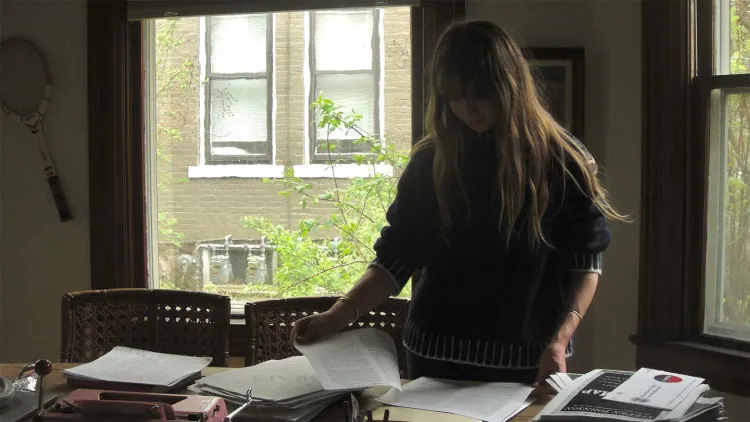
Questioning How Race Is Used and Misused in Stroke Research
Name: London Sinclair
Year: Senior
Majors/minors: Sociology and public health science double-major, statistics and Health and Society double-minor
Research overview: “My research examines how 'race' functions as an analytical category within the Reasons for Geographic and Racial Differences in Stroke (REGARDS) study here at UVM— the largest cardiovascular disease cohort study of its kind. Despite being explicitly designed to identify the reasons for racial and geographic disparities in stroke incidence and mortality, REGARDS has spent more than two decades and $140 million without resolving its namesake question.
“Through interviews, critical discourse analysis, and comparisons with other peer epidemiological research studies, I have found that this is the predictable consequence of how 'race' holds together the many constituencies that make a study like REGARDS possible. As a variable, 'race' needs to be flexible enough to function as a genetic marker, cultural proxy, social construct, statistical necessity, fiscal justification, and so forth, yet stable enough that everyone can claim they are studying ‘racial health disparities.’ The consequence is that racism, widely documented as a fundamental cause of health disparities, remains curiously limited from the study's analysis.”
What has surprised her: “The most striking finding has been the sheer disparity in the literature itself. Across REGARDS' 711 peer-reviewed publications, ‘race’ appears over 9,400 times while ‘racism’ appears in just 39 papers. What surprised me further was that REGARDS is not an aberration—a comparative analysis with two other major cardiovascular cohort studies reveals the same core pattern. The patterns documented in REGARDS are manifestations of a broader informational structure within cardiovascular epidemiology, one in which race is treated as an ever-present, self-evident explanatory variable while racism is deferred, diluted, or excluded altogether.”
What she hopes to gain: “This research is about a disparity in stroke mortality that has only widened over decades of study. It is about scientific knowledge being organized in ways that make the structural causes of that death unspeakable. It is about an era of public health in which vague, flexible science is being picked up and hardened into something far more violent. With this research, I hope to learn more about how the institutions that produce epidemiological research limit what they study and what kinds of claims become possible and legitimate."